
Monograph
Cayenne
Capsicum annuum
Updated October 4, 2026
Key points
-
01
Spice ≠ patch ≠ cream
Kitchen cayenne, OTC capsaicin creams, and 8% medical patches are different exposures by orders of magnitude.
-
02
Topical evidence is strongest
Labeled capsicum or capsaicin preparations can help some muscle and low-back pain; evidence for swallowing large doses is much more limited.
-
03
It burns on purpose
TRPV1 activation feels like heat; that is the mechanism at work, not a cleansing reaction.
-
04
Intact skin only
Do not put kitchen powder on broken skin, under wraps, or near eyes and mucous membranes.
-
05
Weight-loss effects are small
A small thermogenic effect does not make cayenne capsules a meaningful fat-loss treatment.
Cayenne is the dried, pungent fruit of hot Capsicum peppers—most often Capsicum annuum, sometimes small-fruited C. frutescens—whose heat comes from capsaicin and related capsaicinoids. In the kitchen it is a spice. In the clinic, standardized topical capsaicin is one of the few culinary plants with a well-described receptor, a licensed herbal use in Europe, and a separate high-strength prescription patch. Those are not the same product as a shaker of powder.
This monograph covers how Mesoamerican peoples domesticated chili, how capsaicin went from a burning curiosity to a well-understood TRPV1 agonist, and what the encouraging topical evidence supports. It also explains why swallowing large doses for “metabolism,” weight loss, or detox is not supported by research. Cayenne stimulates pain-sensing nerves, so it is not a gentle warming tea for everyone, and it is not a substitute for diagnosed pain care.
Nothing here is medical advice. Kitchen cayenne, over-the-counter creams, and 8% capsaicin patches differ by orders of magnitude in exposure. Do not put kitchen powder in the eye, on broken skin, or into a homemade “pain patch.”
In this monograph
01 The plant
Botanical profile
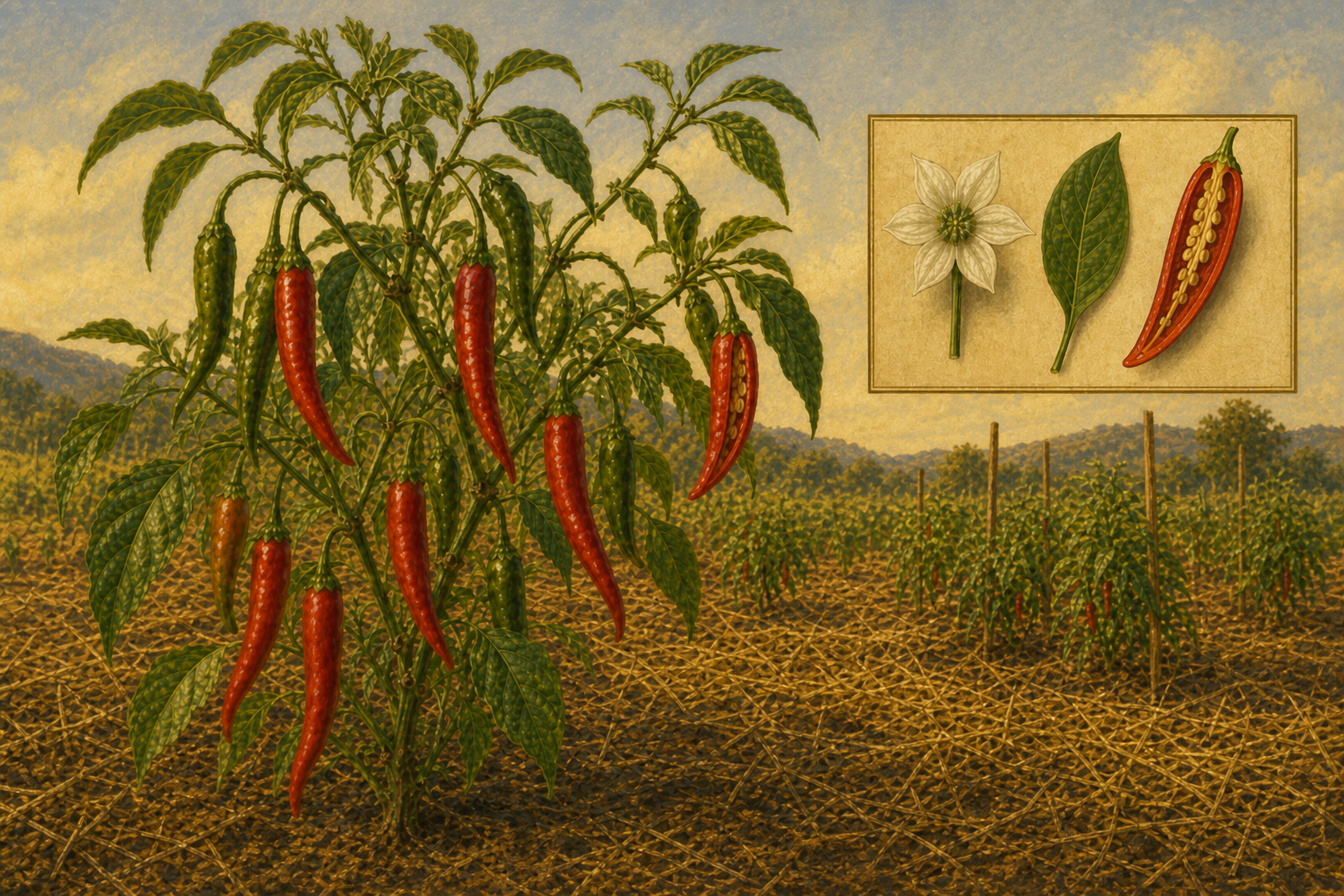
Capsicum belongs to the nightshade family (Solanaceae), along with tomato, potato, and tobacco. Plants are typically annuals in temperate gardens and short-lived perennials in frost-free climates. They are branching herbs or small shrubs with simple ovate leaves and pendant or erect berries that botanists still call fruits. The “pepper” of commerce is the hollow pericarp; the hottest tissue is the pale placenta that holds the seeds, not the seeds themselves.
Cayenne as a spice usually means long, slender, tapering pods of C. annuum, dried and ground to a brick-red powder. Heat is scored in Scoville units, which estimate capsaicinoid concentration. Culinary cayenne is often in the tens of thousands of Scoville units—hot, but far below habanero or pure capsaicin. Color comes from carotenoids; pungency is a separate chemistry.
The European herbal drug Capsici fructus is defined more tightly than grocery cayenne: Capsicum annuum var. minimum and small-fruited varieties of C. frutescens. Labels that say “cayenne,” “capsicum,” “chili,” or “African bird pepper” can therefore refer to overlapping but not identical material. Substitutions with milder paprika (also C. annuum, low capsaicin) change the pharmacology entirely.
The medicinal part is the dried ripe fruit. Leaves and roots are not the traditional drug. Fresh pods are food. Isolated capsaicin used in creams and patches is a single molecule purified or synthesized from this chemistry—not a whole-fruit powder.
02 Lineage
History
Chili peppers were domesticated in the Americas. Starch grains from chilies have been recovered at seven archaeological sites from the Bahamas to southern Peru, the oldest about 6,000 years old, often alongside maize (Perry and colleagues, Science 2007). For Capsicum annuum, the species behind most cayenne, a 2014 study combining genetic, archaeological, ecological, and linguistic evidence points to Mexico, most likely central-east Mexico near the Tehuacán Valley (Kraft and colleagues, PNAS). Chili served as food, as a pungent medicine, and as a ritual and trade good. Spanish and Portuguese ships carried the plant worldwide in the sixteenth century. Within a few generations it had entered Indian, West African, Chinese, and Hungarian cooking so thoroughly that later writers sometimes forgot it was New World.
European herbalists absorbed chili as a “heating” spice in humoral terms: a stimulant to move stagnant cold, a counterirritant on the skin, a digestive bitter-pungent. In nineteenth-century North America, Thomsonian and Physiomedical physicians made cayenne a signature internal stimulant—“the purest stimulant in nature”—used for fevers, collapse, and “cold” states. That tradition explains why American herbalism still talks about cayenne as a first-aid heat rather than only a kitchen pepper. It does not make those internal uses equivalent to modern trial evidence.
Capsaicin was isolated in the early nineteenth century (Christian Friedrich Bucholz, 1816) and its structure worked out in the early twentieth. The receptor story is much later. In 1997, David Julius’s group cloned TRPV1, the ion channel that capsaicin opens on pain-sensing neurons—the same channel that also responds to noxious heat. That finding turned a folk counterirritant into a named molecular tool and, eventually, into licensed high-concentration patches.
Today cayenne sits in three markets at once: spice aisle, dietary supplement, and dermatology. Keeping those markets separate matters: a cream that helps a knee is not a reason to swallow megadose capsules, and a prescription patch for shingles pain is not a reason to put kitchen powder on the skin.
03 Chemistry
Active compounds and how it works
Capsaicin is a selective agonist of TRPV1 (transient receptor potential vanilloid 1), a calcium-permeable channel on nociceptors. Binding feels like burn because the neuron is reporting heat and chemical irritation. With repeated or high exposure, those terminals can desensitize: they stop firing as readily, and at high concentrations the terminals can defunctionalize for weeks as the axon tip is damaged and later regenerates. That is the paradox of “fighting fire with fire.” Low-dose creams mainly irritate and then modestly quiet the same fibers; high-dose (8%) medical patches are a controlled ablation of epidermal nociceptor endings, not a spice rub.
Substance P depletion is the older textbook line. It is part of the story, not the whole mechanism. Calcium overload, mitochondrial stress in the terminal, and delayed regeneration better explain why a single high-dose application can last months—and why the first application hurts.
Swallowed cayenne stimulates TRPV1 in the mouth and gut: salivation, gastric blood flow, a sense of warmth, sometimes cramping or reflux. Claims that this speeds metabolism enough to treat obesity overstate a small thermogenic effect. Capsaicin is not a systemic NSAID and is not an opioid. Whole fruit also contains carotenoids, vitamin C (in the fresh pod), and flavonoids; those do not make a capsule a multivitamin or an anti-inflammatory drug.
04 In practice
Common uses
The use with the strongest clinical footing is topical. EMA’s herbal monograph on Capsici fructus supports well-established use of standardized capsicum extracts in cutaneous preparations for muscle pain, such as low-back pain, in adults. NCCIH similarly notes that topical cayenne (creams, plasters) can reduce low-back pain, citing herbal-medicine reviews. Cochrane-linked work on herbal treatments for low-back pain found Capsicum preparations reduced pain more than placebo, with evidence quality no better than moderate.
Over-the-counter capsaicin creams (often 0.025% to 0.075%) are used for minor arthritic and musculoskeletal aches. Guideline language for osteoarthritis is cautious: topical capsaicin is sometimes conditionally recommended for knee OA and not a first-line plan for every joint. High-concentration (8%) capsaicin patches are prescription products studied for postherpetic neuralgia and some peripheral neuropathic pain; a Cochrane review of high-concentration topical capsaicin found modest benefit in selected neuropathic conditions, with burning as the expected local cost. Those patches are not DIY cayenne.
Traditional internal uses—poor circulation, “sluggish” digestion, feverish colds, as a stimulant in collapse—have a long history but have not been well tested as capsules. Culinary amounts in food are a different exposure from gram-dose supplements. Weight-loss and “heart cleanse” claims for whole-fruit cayenne are not supported by current research. Capsaicin research in metabolism is interesting, and more research would help; it is not a reason to take large amounts of tincture.
Cayenne powder in the eyes or airways causes injury and has no therapeutic role. Do not use pepper this way on yourself or anyone else.
05 The apothecary
Preparations and traditional use
Food use is the baseline: dried pods, flakes, and powder in cooking. Heat is unpredictable between brands. Wash hands after handling; oils transfer easily to eyes and genitals.
Herbal products include encapsulated powder, liquid extracts, and topical plasters or creams standardized to capsaicinoids. European cutaneous medicines use soft extracts with defined capsaicinoid ranges—not kitchen cayenne taped to the lower back. Follow labeled contact time; do not occlude kitchen powder under plastic.
OTC capsaicin creams are applied thinly to intact skin, often several times daily, and require days of use before anyone can judge them. The first applications burn. High-strength 8% patches are applied in clinic, sometimes with local anesthetic, for a timed period, then removed. They are drugs, not spices.
There is no single “cayenne dose” that maps from soup to patch. If someone and their clinician choose a topical product, a labeled capsaicin percentage is more rational than a homemade paste. Internal supplements lack a comparably standardized, well-studied adult dose in the way willow’s salicin trials do.
Safety
Before you use cayenne
06 Caution
Side effects
Burning, stinging, redness, and coughing (from aerosolized powder) are the expected local effects of TRPV1 activation, not a sign of toxins leaving the body. Skin can blister or ulcerate if the preparation is too strong, left too long, or used on broken skin. Eyes, mouth, and mucous membranes are especially vulnerable. Inhaling powder can trigger bronchospasm in susceptible people.
Swallowed cayenne commonly causes heartburn, abdominal pain, diarrhea, and sweating. Large amounts can provoke severe gastritis-type pain. Memorial Sloan Kettering’s About Herbs entry notes that capsaicin may raise insulin and lower blood glucose—relevant if someone already uses diabetes medicines—and lists stomach irritation as a common oral effect, which matters for people with ulcers or IBS. Hypertension has been reported after very large amounts of chili.
Systemic absorption from intact-skin creams is limited compared with oral use, but whole-body burning and rare more serious reactions occur. Allergic contact dermatitis is possible. People with chili allergy should not experiment with concentrated capsaicin.
High-dose medical patches cause intense application-site pain by design. That is managed in a clinic. Recreating it at home with extract or essential-oil-style concentrates is how chemical burns happen.
07 Caution
Contraindications
Do not apply cayenne or capsaicin to broken, infected, or recently shaved skin, or to the face, eyes, or mucous membranes. Do not use topical products in children unless a clinician specifically directs a licensed product. Keep all forms away from infants.
Avoid concentrated oral cayenne if you have active peptic ulcer disease, severe reflux, or inflammatory bowel disease that flares with spice—food-level use is an individual tolerance question, not a protocol. People with aspirin or NSAID issues are not automatically allergic to chili, but anyone with a known Capsicum allergy should stay away. People with high blood pressure or heart conditions should talk with a clinician before taking cayenne supplements.
Pregnancy and breastfeeding: culinary amounts in food are generally treated as food. Medicinal-dose capsules and strong topicals over large areas are a clinician conversation; there is no good reason to start high-dose cayenne as an herb in pregnancy. Do not use cayenne to “bring on” labor or menses. Memorial Sloan Kettering advises avoiding cayenne supplements during pregnancy and breastfeeding, noting reports of skin redness in nursing infants whose mothers had eaten chili-seasoned food.
Asthma or reactive airways: powdered herb and aerosolized capsaicin are a poor idea. If a prescription 8% patch is being considered, that decision belongs to the prescribing clinician, not a spice aisle.
08 Caution
Drug and herb interactions
The practical interactions are mostly local and metabolic rather than a goldenseal-style CYP3A story. Capsicum may lower blood sugar; combining oral cayenne with diabetes medicines can theoretically add hypoglycemia risk. Memorial Sloan Kettering also notes that capsaicin widens blood vessels in the gut lining and may change how other oral drugs are absorbed, and that animal studies suggest it may increase theophylline absorption—enough to mention to a clinician, not enough to treat cayenne as a precision pharmacokinetic tool.
Transplant patients taking cyclosporine should avoid concentrated capsaicin: in animal studies, chronic high-dose capsaicin raised cyclosporine levels, and Memorial Sloan Kettering advises against combining them. Capsaicin may also affect blood pressure medicines.
Antiplatelet and anticoagulant caution is mild compared with willow, but high oral intake plus blood thinners is still a reason to tell the prescriber rather than stack “natural blood flow” products. Topical capsaicin plus other counterirritants (menthol, methyl salicylate, camphor) increases burn risk; so does a heating pad over a capsaicin plaster.
ACE inhibitors already cause cough in some people, and capsaicin may make that cough more likely; avoid inhaling pepper dust. If a surgeon has asked you to stop supplements, cayenne capsules count. Kitchen food usually does not.
Do not combine kitchen powder, OTC cream, and a medical patch. Duplicate capsaicin exposure is how people injure skin.
09 Questions
Frequently Asked Questions
Cayenne comes from chili peppers, which originated in the Americas. Chili starch grains have been found at seven archaeological sites from the Bahamas to southern Peru, the oldest about 6,000 years old, and a 2014 study combining genetic, archaeological, ecological, and linguistic evidence points to Mexico, most likely central-east Mexico, as where Capsicum annuum, the species behind most cayenne, was domesticated. Chilies are now grown and cooked worldwide, and cayenne today usually means long, slender red C. annuum pods dried and ground into a hot powder.
No. Cayenne is the fruit. Capsaicin is one pungent molecule in that fruit. Over-the-counter creams use low percentages of capsaicin; prescription 8% patches are a medical procedure-level dose that defunctionalizes nerve endings in the skin. Kitchen powder is not a substitute for either.
Topical cayenne or capsaicin preparations have encouraging evidence, especially for some low-back pain, though trial quality is moderate at best. They burn, they are for intact skin, and they are not a cure. Swallowing cayenne for joint pain is less studied and less standardized than using a labeled cream.
Capsaicin can produce a small thermogenic effect. That is not a meaningful weight-loss treatment. Research does not support capsules sold for “fat burning,” and they often upset the stomach. Food-level chili in a meal is not a drug regimen.
Please don’t: kitchen powder can blister skin or get into your eyes. If topical capsaicin is appropriate, use a labeled cream or plaster on intact skin and wash your hands. Do not occlude kitchen spice under wraps.
Anyone with a chili allergy; children, unless a clinician directs a licensed product; people applying it to broken skin; and people with significant ulcers, severe reflux, or reactive airways if the form is powder or a large oral dose. Culinary amounts in food are a separate, individual tolerance question. Ask a clinician before medicinal-dose capsules, especially with diabetes medicines.
10 References
Sources
These references support the history, clinical, and safety claims on this page. They are not an endorsement of any product.
-
Capsici fructus (capsicum)
European Medicines Agency, 2015
EU herbal monograph: well-established cutaneous use of standardized capsicum extracts for muscle pain such as low-back pain; capsaicin as a TRPV1 agonist that desensitizes cutaneous nociceptors.
-
Cayenne
Memorial Sloan Kettering Cancer Center (About Herbs), 2026
Clinical and consumer summary of cayenne: TRPV1 mechanism, small thermogenic effects, possible insulin increase and blood-glucose lowering, GI irritation, pregnancy and breastfeeding cautions, and interactions with cyclosporine, blood pressure medicines, and theophylline.
-
Capsaicin Topical
MedlinePlus, National Library of Medicine (NIH), 2023
Drug information for topical capsaicin: minor muscle and joint pain, application to intact skin, chili allergy, and the difference between a labeled medicine and a spice.
-
Low-Back Pain and Complementary Health Approaches: What You Need To Know
National Center for Complementary and Integrative Health (NIH), 2020
NCCIH consumer summary (last updated January 2020): there is evidence that topical cayenne reduces low-back pain, while other herbs such as devil’s claw and white willow bark “might be beneficial.”
-
Herbal medicine for low back pain: a Cochrane review
Spine, 2016
Gagnier et al. review of 14 trials: Capsicum frutescens reduced low-back pain more than placebo; evidence quality moderate at best—the trial base NCCIH cites for topical cayenne.
-
Topical capsaicin (high concentration) for chronic neuropathic pain in adults
Cochrane Database of Systematic Reviews, 2017
Derry et al. review of high-concentration (8%) capsaicin for neuropathic pain: modest benefit in selected conditions, local burning expected; not equivalent to culinary cayenne.
-
Capsaicin
StatPearls, NCBI Bookshelf, 2023
Clinical review of capsaicin as a TRPV1 agonist, historical isolation, and the range of formulations from low-dose creams to high-concentration patches.
-
Capsicum annuum L. (cayenne pepper)
USDA PLANTS Database, 2024
Federal plant profile for identity and classification of Capsicum annuum, the species that includes most culinary cayenne types.
-
Starch fossils and the domestication and dispersal of chili peppers (Capsicum spp. L.) in the Americas
Science (PubMed 17303753), 2007
Perry et al.: a chili-specific starch grain found at seven sites from the Bahamas to southern Peru, dating from 6,000 years ago to European contact, often with maize.
-
Multiple lines of evidence for the origin of domesticated chili pepper, Capsicum annuum, in Mexico
Proceedings of the National Academy of Sciences (PubMed 24753581), 2014
Kraft et al.: species distribution modeling, historical linguistics, genetics, and archaeobotany jointly support central-east Mexico, near the Tehuacán Valley, as the domestication area of C. annuum.