Monograph
White Willow
Salix alba
Updated October 4, 2026
Key points
-
01
Best for short-term back pain
EMA accepts one standardized extract for low back pain. In the key trial, 39% taking 240 mg of salicin daily were pain-free, versus 6% on placebo.
-
02
Not a substitute for aspirin
An extract with 240 mg of salicin gave salicylate levels like about 87 mg of aspirin, without aspirin’s lasting platelet effect. Never swap it for prescribed aspirin.
-
03
Weak results for arthritis
A six-week osteoarthritis trial found no meaningful benefit while diclofenac worked, and a small rheumatoid arthritis trial was negative.
-
04
Adults only, never children
EMA contraindicates willow bark under 18 because of Reye’s syndrome, in late pregnancy, and with aspirin or NSAID allergy or salicylate-sensitive asthma.
-
05
Care with blood thinners and NSAIDs
Willow may add to warfarin and antiplatelet drugs, and stacking it with aspirin or ibuprofen adds stomach and bleeding risk. Methotrexate users should check first.
White willow (Salix alba) is a tall, silvery-leaved willow of European and Asian riverbanks, and its bark is one of the oldest pain remedies still sold today. White willow bark is used mainly for low back pain, aching joints, headache, and fever with colds. It contains salicin and related compounds that the body converts into salicylic acid, a chemical cousin of aspirin, so it is often marketed as “herbal aspirin.” Both halves of that label need care. In Europe, medicinal willow bark means the bark of several Salix species, and the three named in the European Union monograph are purple, violet, and crack willow; white willow itself is relatively low in salicin. And a typical dose makes far less salicylic acid than a painkilling dose of aspirin: an extract supplying 240 mg of salicin gave blood salicylate exposure equivalent to about 87 mg of aspirin. White willow leaves have their own folk history, but modern products and studies use the bark.
The best evidence is for short flare-ups of low back pain. The European Medicines Agency (EMA) accepts one standardized willow bark extract, made with 70% ethanol and containing about 15% total salicin, as a well-established medicine for short-term treatment of low back pain in adults, on the strength of placebo-controlled trials. In the key trial, 39% of people taking an extract with 240 mg of salicin a day were pain-free in the final week, against 21% on 120 mg and 6% on placebo, and a 2014 Cochrane review rated the evidence for these doses as moderate quality. Arthritis results are weaker: a small two-week osteoarthritis trial found a modest benefit, but a larger six-week trial found no meaningful effect while the comparison drug, diclofenac, worked well, and a small rheumatoid arthritis trial was negative. EMA accepts willow bark teas, powders, and other extracts for minor joint pain, fever with colds, and headache only as traditional remedies, based on long use rather than proof.
Willow bark carries salicylate risks and is not a gentle alternative for everyone. EMA rules it out for anyone allergic to aspirin or other NSAIDs, people with salicylate-sensitive asthma, active stomach ulcers, clotting disorders, severe liver or kidney disease, or G6PD deficiency, women in the last three months of pregnancy, and everyone under 18, because of the link between salicylates and Reye’s syndrome. It may add to the effect of blood thinners such as warfarin, and EMA advises against combining it with aspirin or other NSAIDs without medical advice. Memorial Sloan Kettering Cancer Center (MSKCC) warns that willow bark should not replace aspirin prescribed to protect the heart, because its potency varies. Most side effects in trials were mild stomach upset or rashes, but serious allergic reactions have been reported. Nothing here is medical advice; a suddenly hot, swollen joint, a fever above 39°C (102°F), or back pain that is severe, persistent, or follows an injury deserves a doctor’s assessment rather than a supplement.
Featured in
Herbs for Headaches and Migraine Herbs for Joint Pain and Arthritis Herbs for Inflammation Herbs for Back and Muscle PainIn this monograph
01 The plant
Botanical profile
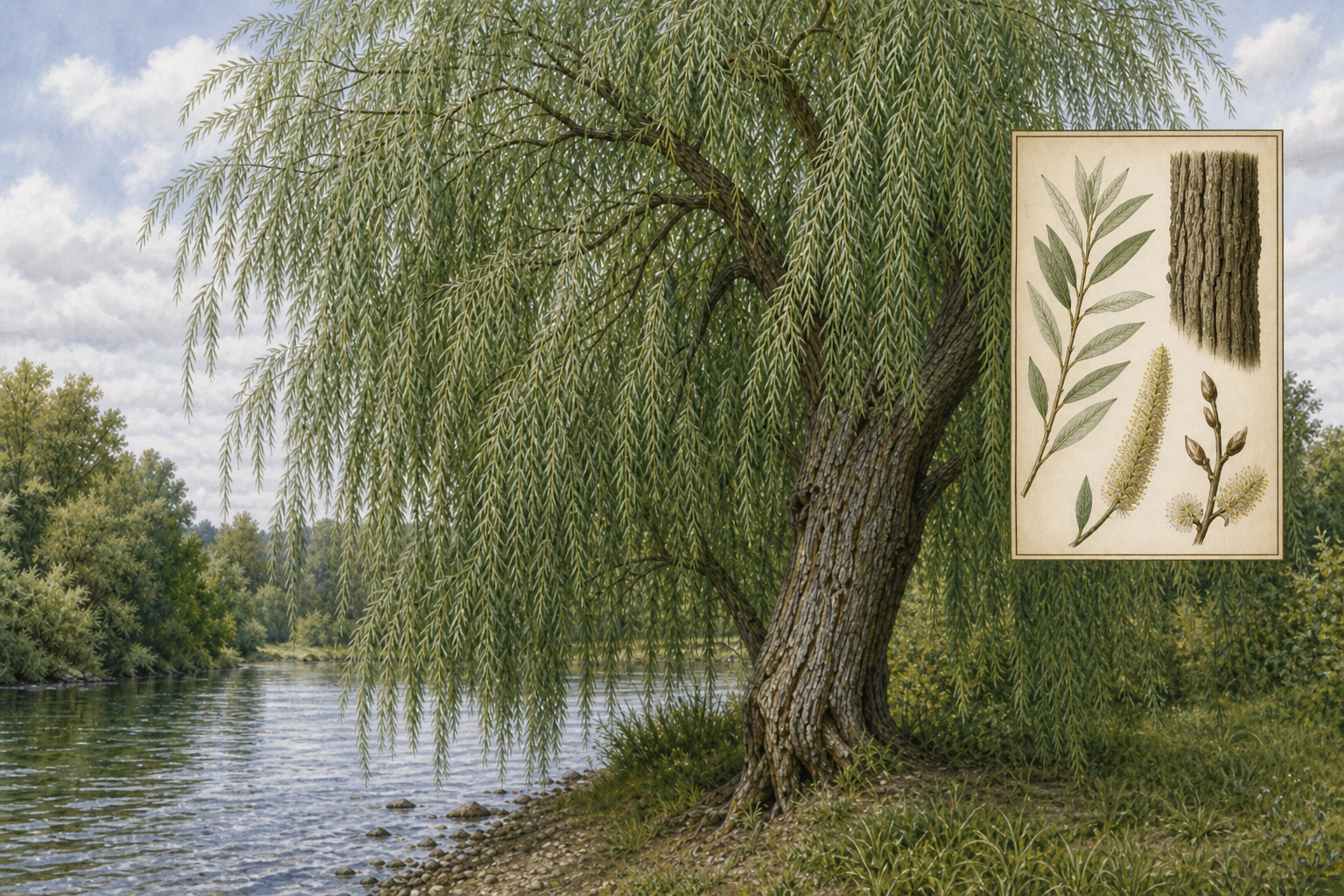
Salix alba L. belongs to Salicaceae, the willow family, and was first published by Linnaeus in Species Plantarum in 1753 (Kew’s Plants of the World Online, POWO). POWO gives its native range as Europe to northern China and north-west Africa, from Portugal, Spain, and Morocco through central Europe, Türkiye, Iran, and Central Asia to Xinjiang, Tibet, and Inner Mongolia. It has been introduced far beyond that, including Great Britain, Ireland, Scandinavia, much of the United States, parts of Canada, south-eastern Australia, Argentina, and Chile, and POWO accepts a subspecies, subsp. micans, alongside the typical plant. The Woodland Trust, which treats it as non-native in Britain, describes white willow as the largest of the willows, reaching up to 25 m, with an irregular, often leaning crown, grey-brown bark that develops deep fissures with age, and slender, flexible grey-brown twigs. Like most willows it grows on wet ground, along rivers and streams, where its branches make good nesting sites for birds.
The name white refers to the leaves. The Woodland Trust describes them as slender and oval, hairy all over when young and later downy underneath, and paler than most other willows because of a felty covering of fine, silky, silvery-white hairs on the underside. White willow is dioecious: male and female catkins grow on separate trees and appear in early spring, the male catkins 4–5 cm long and the female 3–4 cm. After pollination by insects, the female catkins lengthen into small capsules whose tiny seeds are wrapped in white down and carried by the wind. In winter the tree can be recognized by narrow, hairy, green to yellow-brown buds pressed close to the twig. Willows hybridize freely, which makes identification tricky; the Woodland Trust notes that the cricket bat willow is a hybrid of white willow and crack willow. The catkins are an early source of nectar and pollen for bees, and the leaves feed the caterpillars of moths such as the puss moth and eyed hawk-moth.
Medicinal willow bark is not one species. The EMA assessment report notes that there are about 500 Salix species; those of medical interest include white willow, black willow (S. nigra), and purple willow (S. purpurea), but violet willow (S. daphnoides), crack willow (S. fragilis), and purple willow give the greatest yield of salicin precursors. The European Pharmacopoeia defines willow bark as the dried bark of young branches, or pieces of current-year twigs, of various Salix species, containing at least 1.5% total salicylic derivatives expressed as salicin, and the EU monograph names purple, violet, and crack willow. Content varies widely: the assessment report puts total salicin at about 0.5% in white willow, 1–10% in crack willow, 4–8% in purple willow, and more than 4% in violet willow, with further shifts by season, growing conditions, and processing. According to the same report, the extracts in the main clinical trials were made from violet and purple willow bark, even though reviews such as Cochrane’s file the results under Salix alba. A label reading “white willow bark” therefore says little about how much salicin a product contains.
Besides salicin, the bark’s characteristic constituents are related salicylate glycosides, mainly salicortin, 2′-O-acetylsalicortin, and tremulacin, together with flavonoids, catechins, and condensed tannins, which make up 8–20% of the bark (EMA). The tannins give the bark its astringency, and EMA notes that they may interfere with the absorption of salicylic acid. An analysis of 57 white willow bark samples, cited by EMA, found its procyanidins, the building blocks of condensed tannins, dominated by procyanidins B3 and B4. The leaves are chemically different. Piątczak and colleagues (Biomolecules 2020) identified 29 phenolic compounds in white willow leaves and 34 in the bark. The leaves held more than twice the total phenolic content, about 5,576 versus 2,330 mg per 100 g of dry weight, and nearly half of their compounds were flavonols such as quercetin glycosides, whereas the bark was dominated by procyanidins. That study did not measure salicin, and neither the EU monograph nor the European Pharmacopoeia covers the leaf.
02 Lineage
History
Willow’s ancient reputation is real but often exaggerated. Reviews of aspirin’s history, such as Mahdi and colleagues (Cell Proliferation 2006), report that Assyrian clay tablets describe willow leaves for pain and inflammation, that the Ebers Papyrus of ancient Egypt lists willow leaves to “draw the heat out” of inflamed wounds, and that Chinese medicine used willow shoots (from Salix babylonica) and poplar bark for rheumatic fever, colds, and wounds. Many histories add that Hippocrates told patients to chew willow bark for fever and pain. Philippa Martyr, a pharmacology lecturer at the University of Western Australia, checked the Hippocratic writings and found essentially one reference to willow: burning the leaves to make smoke for fumigating the uterus after a miscarriage. Dioscorides recommended willow for stomach ache, tuberculosis, and contraception, rubbed burned bark soaked in vinegar on corns, and used a hot pack of willow leaves for gout, while Celsus applied warm willow poultices for prolapse. Martyr points out that many such remedies were used externally, and that their salicin content is impossible to judge.
The modern story begins with an English clergyman. Around 1757, Martyr recounts, the Reverend Edward Stone of Chipping Norton in Oxfordshire chewed some white willow bark out of curiosity, was struck by its bitterness, and wondered whether it might work like cinchona, the bitter bark that yields quinine. He dried about half a kilogram of bark, ground it to powder, and took small doses every four hours for his own fever, then tried it on sick parishioners. In 1763 he reported his results to the Royal Society in a letter published in its Philosophical Transactions as an account of the success of the bark of the willow in the cure of agues, ague meaning fevers usually taken to be malaria (Mahdi). The EMA assessment report likewise dates willow bark’s tradition as a fever remedy to the 18th century. Martyr adds that by early modern times willow had come to be considered largely useless as a medicine, so Stone was rediscovering it rather than continuing an unbroken ancient tradition.
Chemists then went looking for the active substance. According to Mahdi and colleagues, the Italians Brugnatelli and Fontana obtained a crude active extract in the 1820s; Johann Andreas Buchner at the University of Munich purified a yellowish substance in 1828 and named it salicin, after Salix; and the French pharmacist Henri Leroux obtained pure crystalline salicin in 1829. Raffaele Piria showed that salicin is made of glucose and salicyl alcohol, which can be oxidized to salicylic acid. A parallel route ran through meadowsweet, then called Spiraea ulmaria: in 1835 the Swiss pharmacist Pagenstecher extracted a compound from its flowers that the German chemist Löwig oxidized to salicylic acid. The Science History Institute records that Hermann Kolbe determined the structure of salicylic acid and synthesized it in 1859, and that from 1874 the Heyden company near Dresden sold synthetic salicylic acid more cheaply than extracts from willow bark. In 1876 the Scottish physician Thomas MacLagan treated acute rheumatism with salicin (Mahdi). Salicylic acid worked, but it irritated the stomach, and some patients simply could not tolerate it.
In 1897 Felix Hoffmann, a chemist at Bayer, acetylated salicylic acid to make acetylsalicylic acid. The Science History Institute notes the legend that he wanted something for his father’s rheumatic pains, and evidence that his colleague Arthur Eichengrün played a significant role that was later written out of the story. Bayer named the drug Aspirin, the A for acetyl and spirin from Spiraea, and registered the trade name on 6 March 1899 (Mahdi). Interest in willow bark then fell away, the EMA assessment report says, until demand for better-tolerated painkillers revived research. Germany’s Commission E approved willow bark in 1984 for feverish illnesses, rheumatic complaints, and headache. EMA’s herbal committee adopted its first willow bark monograph in 2009 and a revised version on 31 January 2017, which turned an earlier warning about use under 18 into an outright contraindication; in April 2025 it opened a call for new data for a further periodic review. In the United States, the US Pharmacopeia’s Salix species monograph now includes a cautionary labeling statement, described in its 2019 safety review.
03 Chemistry
Active compounds and how it works
Salicin is a prodrug: it does little until the body changes it. According to the EU monograph, the salicylate glycosides in willow bark break down to salicin, salicin is split into saligenin (salicyl alcohol) and glucose, and saligenin is oxidized in the blood and liver to salicylic acid. The EMA assessment report notes that rat studies suggested gut bacteria in the lower intestine do the splitting, but that human studies found salicylic acid in the blood within an hour, pointing to absorption higher in the gut. In the key human study, summarized by EMA, Schmid and colleagues (European Journal of Clinical Pharmacology 2001) gave 10 healthy volunteers 1,360 mg of a standardized extract, equal to 240 mg of salicin, in two doses three hours apart. Salicylic acid made up 86% of the salicylates in their blood, peaking within two hours at an average of 1.2 mg per liter, and total exposure matched what about 87 mg of aspirin would produce. EMA concludes that the salicylate levels reached at recommended doses are too low to explain willow’s pain-relieving effect on their own.
Salicylic acid can block cyclo-oxygenase (COX) enzymes, which make the prostaglandins involved in pain, fever, and inflammation, and EMA’s public summary says willow may work partly in this way, like aspirin. There are important differences, though. Aspirin permanently disables COX-1 by attaching an acetyl group to it, which is the basis of its lasting effect on platelets, whereas the assessment report notes that salicylic acid does not irreversibly acetylate COX-1. When three healthy volunteers took an extract equal to 240 mg of salicin, it did not significantly inhibit COX-1, COX-2, or the release of the inflammatory messengers TNF-alpha and IL-1beta in their blood (Wagner and colleagues, cited by EMA). Platelets are affected, but mildly. In a double-blind study by Krivoy and colleagues, summarized by EMA, arachidonic acid-induced platelet aggregation reached 61% of maximum in back pain patients taking willow extract with 240 mg of salicin a day, 78% on placebo, and 13% in heart patients on 100 mg of aspirin a day; collagen-induced aggregation was unaffected by either.
Researchers therefore look to the rest of the bark. The EMA assessment report suggests that flavonoids such as naringenin and eriodictyol, catechins, and salicin esters may contribute, and Knuth and colleagues, cited by EMA, detected catechol, a compound described as anti-inflammatory, in the blood of volunteers after an extract supplying 240 mg of salicin, peaking at about 1.5 mg per liter after 1.2 hours. In laboratory studies summarized by MSKCC, willow bark extract inhibited the inflammatory messengers TNF-alpha and COX-2 and the activation of NF-κB, a master switch for inflammatory genes, and raised low glutathione levels. For safety, though, the salicylate is what counts. The US Pharmacopeia review by Oketch-Rabah and colleagues (Planta Medica 2019) calculated that metabolizing 240 mg of salicin could yield 113 mg of salicylic acid, more than the 62 mg delivered by an 81 mg low-dose aspirin tablet, which must by law carry warnings. That is why regulators treat willow bark as a salicylate even though it is too weak and variable to replace aspirin.
04 In practice
Common uses
What is white willow used for? Mainly pain. MSKCC lists arthritis, fever, headaches, inflammation, influenza, pain, and weight loss among its purported uses, and the EMA assessment report records traditional use for muscle and joint rheumatism, influenza, gouty arthritis, and rheumatoid arthritis, with Germany’s Commission E approving it for feverish illness, rheumatic complaints, and headache. Modern regulation is narrower. EMA recognizes a single type of standardized extract as a well-established medicine for short-term low back pain, and other willow bark preparations as traditional medicines for minor joint pain, fever with a cold, and headache in adults. Those traditional indications rest on long use: EMA considered trials in joint pain and headache but judged them too small and too short to prove benefit. Willow bark is also added to weight-loss and sports products. MSKCC finds no studies showing that it aids weight loss, and notes a serious allergic reaction in a woman with an aspirin allergy who took a weight-loss product containing willow bark.
Low back pain has the strongest evidence. Chrubasik and colleagues (American Journal of Medicine 2000) randomized 210 adults with a flare-up of chronic low back pain, rated at least 5 out of 10, to willow bark extract supplying 120 mg or 240 mg of salicin a day, or placebo, for four weeks, with the painkiller tramadol as the only rescue medicine. In the final week, 39% of the high-dose group, 21% of the low-dose group, and 6% of the placebo group were pain-free without tramadol for at least five days. The high dose separated from placebo after the first week, and the low dose by the second. EMA’s assessor judged the study to be of good quality. An open trial in 228 patients by the same group (Rheumatology 2001) found no significant difference between 240 mg of salicin and 12.5 mg of the anti-inflammatory drug rofecoxib, but patients could use other treatments freely and the open design invites bias. Rofecoxib was withdrawn from the market in 2004, so that comparison is now mainly of historical interest.
Systematic reviews agree that the effect is real but only moderately well supported. Oltean and colleagues’ Cochrane review (2014), covering 14 trials of herbal medicines for low back pain, concluded that daily doses of willow bark standardized to 120 mg or 240 mg of salicin are probably better than placebo for short-term improvements in pain and in the use of rescue medicine, based on two trials with 261 participants and moderate-quality evidence; the rofecoxib comparison was graded very low quality. The review also found that willow minimally affected platelets compared with a heart-protective dose of aspirin, and that no significant adverse events were reported in the included trials. EMA adds that no new willow trials appeared between its first assessment and its 2016 review, and Cochrane’s authors suggested comparing willow with paracetamol (acetaminophen) rather than a withdrawn drug. In practical terms, willow bark is a reasonable short-term option for some adults with flare-ups of back pain, but it has not been tested over months or against today’s first-line treatments.
Arthritis results are disappointing. Schmid and colleagues (Phytotherapy Research 2001) gave 78 people with hip or knee osteoarthritis an extract supplying 240 mg of salicin a day or placebo for two weeks. Pain scores fell 14% with willow and rose 2% with placebo, a difference that only just reached statistical significance (p = 0.047). Biegert and colleagues (Journal of Rheumatology 2004) then ran a larger six-week trial in 127 people with hip or knee osteoarthritis, comparing the same salicin dose with 100 mg of diclofenac a day and with placebo. Pain fell 17% with willow, 47% with diclofenac, and 10% with placebo; diclofenac clearly beat placebo, but willow did not, and the authors concluded that the extract showed no relevant efficacy. In a parallel trial in 26 people with active rheumatoid arthritis, willow did no better than placebo. A 2009 systematic review by Vlachojannis and colleagues called the osteoarthritis evidence conflicting, described the rheumatoid trial as grossly underpowered, and asked whether doses above 240 mg of salicin a day might be needed.
For headache and fever the evidence is thinner still. MSKCC notes that willow bark is thought to lower fever as aspirin does, but that clinical trials have not been performed. The only headache study EMA describes was an open trial without a control group, in which 12 people with migraine took a combination of feverfew and white willow for 12 weeks and had fewer attacks, a design that cannot separate the herbs from placebo or from each other. Willow should not be used for heart protection: MSKCC states that it should not be substituted for aspirin because its potency varies, and Krivoy’s platelet study shows that it lacks aspirin’s strong antiplatelet effect. Laboratory studies have found anti-inflammatory and anticancer effects of willow extracts and salicin, but MSKCC stresses that human data are limited. In folk use, the EMA assessment report records dried willow bark applied to warts in central Italy and willow bark decoctions used to help wounds heal, though neither has been tested in modern trials.
05 The apothecary
Preparations and traditional use
Most of the evidence comes from one type of product: a dry extract made with 70% ethanol at a ratio of 8–14 parts bark to 1 part extract, containing on average 15% total salicin. The EU monograph doses it at 393–786 mg up to twice a day (393–1,572 mg daily) for adults only. The main back pain trial used 786 mg (120 mg of salicin) or 1,572 mg (240 mg of salicin) a day, divided into two doses, and EMA’s assessor advised the 240 mg daily dose. The monograph says to see a doctor or pharmacist if pain persists during the first week, and EMA limits use for back or joint pain to four weeks. ESCOP recommends extracts equivalent to 120–240 mg of total salicin a day and Commission E 60–120 mg (EMA). The European Pharmacopoeia requires willow bark dry extracts to contain at least 5% total salicin, but EMA stresses that extracts differ in their mix of salicylates and other constituents, so results for one extract cannot be assumed for another. The practical rule is to choose a product that states its salicin content per daily dose.
Teas, powders, and tinctures are covered by EMA only as traditional medicines. The monograph gives an infusion of 1–3 g of chopped bark in 150 ml of boiling water three times a day, or a decoction of 4 g boiled, covered, in 200 ml of water for 15 minutes, left to stand for 15 minutes, strained, and drunk warm three times a day after meals. Other traditional forms include powdered bark (260–500 mg three to eight times a day, after meals with plenty of hot water), dry water extracts (480–600 mg twice a day), a 1:1 liquid extract (1–3 ml three times a day), and a 1:5 tincture in 25% ethanol (15–24 ml a day). These deliver far less salicin than the trial extract. The assessment report cites an estimate that 1–3 g of bark three times a day supplies about 60–120 mg of salicin daily, and warns that bark decoctions will usually not match the doses used in trials. Expect a bitter, astringent drink: Martyr notes that white willow’s bitter tannins would cause stomach pain long before chewing or brewing delivered an effective dose.
In the United States willow bark is sold as a dietary supplement, and the USP review points out that, unlike low-dose aspirin, supplements are not required to carry warnings. USP’s Salix species monograph now asks that products bear the statement “Not for use in children, women who are pregnant or nursing, or by persons with known sensitivity to aspirin.” Check whether a label names the species and states the salicin per dose, and be wary of multi-ingredient weight-loss formulas that list willow among many other ingredients; the anaphylaxis case described by Boullata and colleagues involved such a product. Follow EMA’s time limits: no more than four weeks for back or joint pain, a doctor if fever lasts more than three days or headache more than one day, and prompt medical advice for fever above 39°C, fever with a severe headache, or symptoms that worsen. Do not combine willow with aspirin, other NSAIDs, or other salicylate products, and do not strip bark from wild trees: willows hybridize freely, and the species and salicin content of a wild tree are unknown.
Safety
Before you use white willow
06 Caution
Side effects
Willow bark is usually well tolerated in the short term. The EU monograph lists allergic reactions (rash, itching, hives, asthma, and widespread rash, or exanthema) and digestive symptoms (nausea, vomiting, abdominal pain, diarrhea, indigestion, and heartburn), with frequency unknown. Across published studies of single-ingredient willow preparations in 2,734 patients and volunteers, the EMA assessment report counted 95 mostly mild adverse events (3.5%), chiefly digestive and allergic, including two severe allergic reactions. In an observational study of 877 patients treated for rheumatic pain, 4.3% reported side effects, mostly digestive (3.1%) and skin-related (1.6%), with none serious. The USP review found no serious adverse effects in trials of extracts providing 120–240 mg of salicin daily for up to eight weeks, but every trial involved adults only, with none in children, pregnant or breastfeeding women, or other vulnerable groups. Longer use, and use by people with other illnesses or taking other medicines, has not been well studied.
Allergic reactions are the most important side effect to recognize. In Chrubasik’s back pain trial, one person taking the lower dose had a severe allergic reaction with a widespread rash, itching, and swollen eyes, and in Schmid’s osteoarthritis trial six of 38 people on willow had allergic skin reactions and one withdrew because of them (EMA). Boullata and colleagues (Annals of Pharmacotherapy 2003) described a 25-year-old woman with a known aspirin allergy who developed anaphylaxis, needing epinephrine and emergency fluids, after taking two capsules of a weight-loss supplement that contained willow bark among other ingredients. MSKCC also cites acute respiratory distress syndrome, a serious lung reaction, in a 61-year-old woman with no history of drug or supplement allergy after she took a willow bark supplement. The EMA assessment report warns that people with asthma, nasal polyps, or chronic hives are more prone to salicylate hypersensitivity, and that atopic people should be warned against willow bark. Stop it and seek urgent help for wheezing, breathlessness, swelling of the face or throat, or a spreading rash.
Stomach and bleeding effects follow from salicylate chemistry and the bark’s high tannin content. The EMA assessment report notes that the signs usually associated with salicylates, such as stomach and kidney irritation, blood in the stools, ringing in the ears, nausea, and vomiting, may occur, although no case of overdose has been reported and the bark’s tannins make swallowing large amounts unlikely. The effect on platelets is much smaller than aspirin’s, as Krivoy’s study showed, and EMA considers its clinical relevance in people with impaired platelet function or on blood thinners still to be established. In a study of 171 adults taking warfarin, cited by EMA, willow bark use was associated with bleeding events, although the link was no longer statistically significant after adjustment for other risk factors, and willow did not raise the INR, the standard measure of warfarin’s effect. Report black or bloody stools, vomiting blood, or unusual bruising promptly, especially if you also take an anticoagulant or another painkiller.
The most serious reported harms involved people willow is not meant for. Moro and colleagues, cited by EMA, described a 4-year-old boy who went into shock from severe stomach bleeding after taking a herbal syrup containing meadowsweet and willow, sold as a food and prescribed for a mild cold with fever; salicylates were confirmed in the syrup, and he recovered after intensive care. MSKCC cites fatal liver failure in a 28-month-old boy treated for a respiratory infection with acetaminophen and a tea containing willow bark, although a single case cannot show which substance was responsible. A woman with glucose-6-phosphate dehydrogenase (G6PD) deficiency, an inherited enzyme disorder, developed massive destruction of red blood cells after taking a herbal preparation containing salicin, which is one reason EMA contraindicates willow in that condition. No case of Reye’s syndrome after willow bark has been reported, EMA notes, but the risk is treated seriously because of the salicylate link and because the syndrome can be fatal.
07 Caution
Contraindications
Do not use willow bark if you are allergic to aspirin, other salicylates, or other NSAIDs such as ibuprofen or naproxen. The EU monograph gives examples of the reactions that count: angioedema (swelling of the face, lips, or throat), bronchial spasm, or chronic hives in response to salicylates or NSAIDs. It also excludes anyone with asthma caused by salicylate sensitivity. The assessment report explains that aspirin cross-reacts with other NSAIDs, that people with asthma plus nasal polyps or chronic hives react more often, and that although normal willow doses produce relatively low salicylate levels, reactions in sensitive people cannot be ruled out. MSKCC goes further, advising against willow bark for anyone with asthma, breathing problems, or chest or throat tightness, and for anyone with a current rash, hives, or itchy, swollen skin. The anaphylaxis case in a woman with aspirin allergy shows that a plant source of salicylates is not a safe workaround for an aspirin allergy.
Children and adolescents under 18 must not take willow bark. EMA made this a contraindication when it revised the monograph in 2017; the 2009 version had allowed use under 18 only on medical advice when other treatments had failed. The reason is Reye’s syndrome, which the National Institute of Neurological Disorders and Stroke (NINDS) describes as a rare disorder affecting the brain, blood, and liver that causes sudden, severe brain swelling, usually after a viral illness such as flu or chickenpox, and that can lead to seizures, coma, and death. Its cause is unknown, but studies link it to taking aspirin during a viral illness, so health professionals recommend acetaminophen or ibuprofen for children instead, and NINDS notes that salicylate is also found in other over-the-counter products. EMA acknowledges that no case after willow has been reported, but chose a contraindication as a precaution because of the syndrome’s lethal outcome, and MSKCC and USP give the same advice. A child or teenager who keeps vomiting or becomes very drowsy or confused after a viral illness needs emergency care.
Pregnancy and breastfeeding: EMA contraindicates willow bark in the third trimester and does not recommend it in the first and second trimesters or while breastfeeding. The assessment report explains that salicylates cross the placenta and that aspirin and other NSAIDs are contraindicated late in pregnancy because they raise bleeding risk, can delay labor, and can cause early closure of the ductus arteriosus, a blood vessel the fetus depends on. Reports on aspirin earlier in pregnancy conflict, and the safety of willow bark has not been established. Salicylates also pass into breast milk, where they have been reported to cause rashes in babies, and newborns eliminate them slowly. The USP review adds that no willow trial has included pregnant or nursing women, and EMA notes that there are no fertility data. Anyone taking aspirin in pregnancy on a doctor’s advice should not substitute willow bark or add it on top, and anyone wanting relief from pain or fever in pregnancy should ask a midwife, doctor, or pharmacist which medicine to use.
Other conditions that rule willow out under the EU monograph are active peptic ulcer, severe liver or kidney dysfunction, coagulation (clotting) disorders, and G6PD deficiency. The assessment report adds that people with hemophilia or other bleeding disorders and people with gout should be aware of the possible risks, as they are with aspirin. Willow is not meant for self-treating acute arthritis, a suddenly hot and swollen joint, which EMA says needs medical advice, and MSKCC advises stopping it before surgery or chemotherapy because of possible bleeding complications. Anyone who has been told never to take aspirin or NSAIDs, for example after a stomach bleed, should treat willow bark as off-limits unless a doctor who knows that history agrees. People with sensitive stomachs may find the tannins hard to tolerate. Finally, willow bark is not a substitute for a medical assessment of back pain that follows a fall or injury, keeps getting worse, or comes with fever, numbness, or weakness in the legs.
08 Caution
Drug and herb interactions
Blood thinners are the main concern. The EU monograph states that willow bark may increase the effects of anticoagulants such as coumarin derivatives, the family that includes warfarin, and the assessment report calls an interaction with oral anticoagulants plausible and of therapeutic importance. It gives two reasons: willow’s mild effect on platelets, shown in Krivoy’s study, and the fact that salicylates bind strongly to blood proteins and could displace other drugs. Williamson and colleagues, cited by EMA, recommend avoiding willow with antiplatelet drugs and, if the combination is felt desirable, warning patients to watch for bruising or bleeding. MSKCC says not to take willow bark with warfarin or other blood thinners. If you take warfarin, another anticoagulant, or an antiplatelet drug such as clopidogrel, ask your prescriber before using willow bark, and report nosebleeds, bleeding gums, unusual bruising, or black stools promptly.
Aspirin, NSAIDs, and other salicylates: EMA advises against combining willow bark with salicylates or other NSAIDs without medical advice, and MSKCC warns that taking it with NSAIDs may increase the risk of stomach and intestinal damage and bleeding. The assessment report notes that extra stomach irritation from the combination has never actually been described, so the warning is precautionary, but the logic is simple: the salicylate from 240 mg of salicin is comparable to that from a low-dose aspirin tablet, and stacking it on ibuprofen, naproxen, diclofenac, or aspirin adds to the same risks. If a doctor has prescribed daily low-dose aspirin, do not swap it for willow, which lacks aspirin’s lasting effect on platelets, and do not add willow on top. Medscape’s interaction listing for willow bark also flags additive effects with other salicylate medicines, including salsalate, diflunisal, mesalamine, and sulfasalazine.
Other medicines: Medscape flags methotrexate, because salicylates compete with it for removal by the kidneys and can raise its levels, and advises caution and monitoring; anyone taking methotrexate for arthritis, psoriasis, or cancer should check with their specialist first. It also lists carbonic anhydrase inhibitors such as acetazolamide, which can raise salicylate levels, and notes that large salicylate doses may add to the blood sugar–lowering effect of sulfonylureas and insulin. Medscape classes live chickenpox (varicella) vaccines, including the combined measles, mumps, rubella, and varicella vaccine, as a serious interaction because of the Reye’s syndrome risk, advising that salicylates be avoided for six weeks after vaccination. EMA adds that the bark’s tannins may interfere with the absorption of other products taken at the same time. Tell your pharmacist about any willow product, including combination joint or weight-loss formulas, and tell your surgical team before any procedure.
09 Questions
Frequently Asked Questions
Mainly pain and fever. People take it for low back pain, aching joints, headache, and fever with a cold. The European Medicines Agency accepts one standardized willow bark extract as a well-established medicine for short-term low back pain in adults, and other willow bark teas and extracts as traditional remedies for minor joint pain, fever with colds, and headache, based on long use. The evidence is strongest for flare-ups of back pain; arthritis trials have been disappointing, and there are no proper trials for headache or fever. Our guides to herbs for back pain and herbs for headaches compare it with other options, such as devil’s claw and feverfew.
No, though they are related. Willow bark contains salicin, which the body converts to salicylic acid. Aspirin is acetylsalicylic acid, first made at Bayer in 1897 by chemically modifying salicylic acid, and it permanently blocks an enzyme in platelets, which salicylic acid does not. An extract supplying 240 mg of salicin, the dose used in back pain trials, produced blood salicylate levels equivalent to only about 87 mg of aspirin. Memorial Sloan Kettering advises that willow bark should not be substituted for aspirin because its potency varies. It still shares aspirin’s risks: allergy, stomach irritation, bleeding with blood thinners, and Reye’s syndrome in children.
No. The European Medicines Agency contraindicates willow bark for anyone hypersensitive to salicylates such as aspirin or to other NSAIDs, including people who have had swelling of the face or throat, wheezing, or chronic hives after these drugs, and for anyone with asthma triggered by salicylates. A 25-year-old woman with an aspirin allergy developed anaphylaxis needing emergency treatment after taking a weight-loss supplement containing willow bark. Check the labels of joint, sports, and weight-loss formulas, which may include willow bark among many other ingredients.
Willow medicines use the bark. The European Pharmacopoeia and the European Medicines Agency define willow bark as the dried bark of young branches or current-year twigs, and all the clinical trials used bark extracts. Leaves have a different chemistry: a 2020 analysis of white willow found more than twice as many total phenolic compounds in the leaves as in the bark, many of them flavonols such as quercetin glycosides, while the bark was dominated by tannin-forming procyanidins. That study did not measure salicin. Many ancient references are to leaves, from Assyrian tablets and the Ebers Papyrus to the single Hippocratic mention of burning willow leaves, but no leaf product has been tested in modern trials, so the same salicylate cautions are sensible.
No. The European Medicines Agency contraindicates willow bark for everyone under 18 because of the risk of Reye’s syndrome, a rare but sometimes fatal illness that causes sudden brain swelling and liver problems, usually after flu, chickenpox, or another viral infection. Studies link it to aspirin taken during a viral illness, and willow bark delivers the same salicylate. No case has yet been linked to willow, but a 4-year-old given a willow and meadowsweet syrup for a cold developed severe stomach bleeding. For a child’s fever or pain, ask a pharmacist or doctor about acetaminophen or ibuprofen instead.
Not without your doctor’s or pharmacist’s agreement. The European Medicines Agency says willow bark may increase the effects of anticoagulants such as warfarin and advises against combining it with aspirin or other NSAIDs without medical advice, and Memorial Sloan Kettering says not to take it with blood thinners or NSAIDs because of bleeding and stomach risks. Its effect on platelets is milder than aspirin’s, but the salicylate adds up. It may also raise methotrexate levels. Never use it in place of aspirin prescribed for your heart, and stop it before surgery.
Expect days rather than minutes. Salicylic acid from willow peaks in the blood within about two hours, but in the main back pain trial the benefit of 240 mg of salicin a day over placebo became clear after the first week and grew over four weeks, while the 120 mg dose took about two weeks. The European Medicines Agency advises seeing a doctor or pharmacist if back pain persists during the first week, and not using willow for more than four weeks for back or joint pain. For fever, see a doctor if it lasts more than three days; for headache, more than one day.
Probably not much. A two-week trial in 78 people with hip or knee osteoarthritis found a small, borderline benefit, but a six-week trial in 127 people found that willow bark extract with 240 mg of salicin a day was no better than placebo, while diclofenac clearly worked. A small trial in rheumatoid arthritis was also negative. The European Medicines Agency accepts willow only as a traditional remedy for minor joint pain, for up to four weeks. A suddenly hot, swollen joint needs a doctor. Our guide to herbs for joint pain compares other options, including boswellia and turmeric.
10 References
Sources
These references support the history, clinical, and safety claims on this page. They are not an endorsement of any product.
-
European Union herbal monograph on Salix [various species including S. purpurea L., S. daphnoides Vill., S. fragilis L.], cortex
European Medicines Agency (EMA/HMPC/80630/2016), 2017
Adopted 31 January 2017: well-established use of a 70% ethanol dry extract (15% total salicin, 393–1,572 mg daily) for short-term low back pain; traditional use for minor joint pain, fever with colds, and headache; teas, powders, and tinctures; contraindications including under 18, third trimester, ulcers, coagulation disorders, and G6PD deficiency; coumarin interaction; salicin metabolism and the 87 mg aspirin equivalence.
-
Assessment report on Salix [various species including S. purpurea L., S. daphnoides Vill., S. fragilis L.], cortex
European Medicines Agency (EMA/HMPC/80628/2016), 2017
Species and salicin content (about 0.5% in white willow); history and Commission E; reviews of the back pain, osteoarthritis, and rheumatoid arthritis trials; platelet, catechol, and pharmacokinetic studies; adverse event totals; Reye’s syndrome, G6PD, pregnancy, and anticoagulant reasoning.
-
Salicis cortex: herbal medicinal product (willow bark summary for the public)
European Medicines Agency (EMA/97861/2017), 2017
Plain-language summary: dry extract for short-term lower back pain; traditional use for minor joint pain, fever with colds, and headache; adults only; no more than four weeks for back or joint pain; salicylic acid produced is small; 2025 call for data for periodic review.
-
Willow Bark
Memorial Sloan Kettering Cancer Center, About Herbs, 2021
Clinical summary (updated December 2021): back pain evidence, mixed osteoarthritis and negative rheumatoid arthritis results; no fever trials; not a substitute for aspirin; anaphylaxis, ARDS, and pediatric liver failure case reports; avoid with blood thinners, NSAIDs, asthma, and in children; stop before surgery.
-
Herbal medicine for low-back pain
Cochrane Database of Systematic Reviews (PubMed 25536022), 2014
Oltean et al.: 14 trials; willow bark standardized to 120 or 240 mg salicin probably better than placebo for short-term pain (two trials, 261 participants, moderate quality); rofecoxib comparison very low quality; no significant adverse events.
-
Treatment of low back pain exacerbations with willow bark extract: a randomized double-blind study
The American Journal of Medicine (PubMed 10936472), 2000
Chrubasik et al.: 210 patients, four weeks; pain-free in the final week 39% with 240 mg salicin, 21% with 120 mg, and 6% with placebo.
-
Efficacy and tolerability of a standardized willow bark extract in patients with osteoarthritis: randomized placebo-controlled, double blind clinical trial
Phytotherapy Research (PubMed 11406860), 2001
Schmid et al.: 78 patients, two weeks, 240 mg salicin daily; WOMAC pain down 14% versus up 2% with placebo (p = 0.047).
-
Efficacy and safety of willow bark extract in the treatment of osteoarthritis and rheumatoid arthritis: results of 2 randomized double-blind controlled trials
The Journal of Rheumatology (PubMed 15517622), 2004
Biegert et al.: 127 osteoarthritis patients, six weeks; pain fell 17% with willow, 47% with diclofenac, 10% with placebo; willow not significant; 26-patient rheumatoid arthritis trial also negative.
-
United States Pharmacopeia Safety Review of Willow Bark
Planta Medica (PubMed 31604354), 2019
Oketch-Rabah et al.: no serious adverse effects with 120–240 mg salicin daily for up to eight weeks in adults; 240 mg salicin could yield 113 mg salicylic acid; USP cautionary label for children, pregnancy, nursing, and aspirin sensitivity.
-
Anaphylactic reaction to a dietary supplement containing willow bark
The Annals of Pharmacotherapy (PubMed 12773073), 2003
Boullata et al.: anaphylaxis in a 25-year-old woman with aspirin allergy after two capsules of a willow-containing weight-loss supplement.
-
Hippocrates and willow bark? What you know about the history of aspirin is probably wrong
The Conversation (Philippa Martyr), 2020
Only one willow reference in the Hippocratic writings (leaf smoke for uterine fumigation); Dioscorides and Celsus uses; white willow low in salicin; Edward Stone’s experiments and 1763 letter to the Royal Society.
-
The historical analysis of aspirin discovery, its relation to the willow tree and antiproliferative and anticancer potential
Cell Proliferation (PubMed 16542349), 2006
Mahdi et al.: Assyrian and Egyptian willow leaf remedies; Stone and ague; Buchner (1828), Leroux (1829), Piria, Pagenstecher and Löwig on meadowsweet; MacLagan (1876); Aspirin trade name registered 6 March 1899.
-
Felix Hoffmann
Science History Institute, 2026
Hoffmann acetylated salicylic acid at Bayer in 1897; Kolbe synthesis (1859) and Heyden manufacture (1874); name from acetyl and Spirea; Eichengrün controversy.
-
Salix alba L.
Plants of the World Online, Royal Botanic Gardens, Kew, 2026
Accepted name, first published in Species Plantarum (1753); Salicaceae; native from Europe to northern China and north-west Africa; introduced in Britain, Scandinavia, North America, and Australia.
-
Willow, white (Salix alba)
Woodland Trust, 2026
Largest willow, up to 25 m; silky silvery-white hairs under the leaves; dioecious catkins in early spring; riverside habitat; cricket bat willow a hybrid with crack willow.
-
Identification and accumulation of phenolic compounds in the leaves and bark of Salix alba (L.) and their biological potential
Biomolecules (PubMed 33003576), 2020
Piątczak et al.: 29 phenolic compounds in leaves and 34 in bark; total phenolics about 5,576 versus 2,330 mg per 100 g dry weight; leaves rich in flavonols, bark in procyanidins.
-
Willow Bark (Herb/Suppl): interactions
Medscape Drugs and Diseases, 2026
Interaction listing: methotrexate (renal clearance competition, monitor); live varicella-containing vaccines (Reye’s risk, avoid salicylates for six weeks); acetazolamide; other salicylates; large salicylate doses with sulfonylureas and insulin.
-
Reye’s Syndrome
National Institute of Neurological Disorders and Stroke (NIH), 2026
Rare disorder affecting the brain, blood, and liver after viral illness; linked to aspirin (salicylate) use; acetaminophen or ibuprofen recommended for children instead.