
Monograph
Licorice
Glycyrrhiza glabra
Updated October 4, 2026
Key points
-
01
DGL vs. whole licorice is the critical distinction
Deglycyrrhizinated licorice (DGL) removes most glycyrrhizin, dramatically reducing the risk of pseudoaldosteronism. For GI uses, DGL is the rational first choice. If you are taking a licorice product that is not labeled as DGL, assume it contains glycyrrhizin and treat it accordingly.
-
02
Pseudoaldosteronism is the headline risk
Sustained glycyrrhizin intake can cause sodium retention, potassium loss, hypertension, edema, and in severe cases cardiac arrhythmias or rhabdomyolysis. This is not theoretical — it is well-documented, dose-dependent, and has caused hospitalizations and deaths.
-
03
Duration matters as much as dose
Treat four weeks as the upper limit for glycyrrhizin-containing licorice: EMA sets that limit for digestive use, and reported overdoses involve longer use or high intakes. Many case reports of toxicity involve habitual daily consumption — licorice tea drinkers and confectionery enthusiasts — rather than deliberate high-dose supplementation.
-
04
Check the drug interaction list carefully
Glycyrrhizin interacts dangerously with diuretics, digoxin, corticosteroids, and antihypertensives, and EMA now advises caution with drugs metabolized by CYP3A4. If you take any cardiovascular or potassium-affecting medication, glycyrrhizin-containing licorice is not for you.
-
05
Avoid in pregnancy — the evidence is concerning
Glycyrrhizin crosses the placenta and may disrupt fetal cortisol regulation. Cohort data link high maternal intake to adverse developmental outcomes. Neither glycyrrhizin-containing licorice nor DGL is recommended during pregnancy, and EMA also advises against licorice root while breastfeeding or for women who could become pregnant and are not using contraception.
Licorice (Glycyrrhiza glabra) is one of the oldest and most widely used medicinal plants in the world, with a documented history stretching back thousands of years across European, Middle Eastern, and Asian healing traditions. The root owes its characteristic sweetness — roughly 50 times sweeter than sucrose — to glycyrrhizin (glycyrrhizinic acid), a triterpene saponin that is also the source of most of licorice’s serious adverse effects.
Modern interest in licorice centers on two distinct product categories: whole-root or extract preparations that contain glycyrrhizin, and deglycyrrhizinated licorice (DGL), from which most glycyrrhizin has been removed. This distinction matters enormously for safety. Glycyrrhizin inhibits 11β-hydroxysteroid dehydrogenase type 2, the enzyme that normally inactivates cortisol in mineralocorticoid-sensitive tissues. The result, when exposure is sustained, is a syndrome of pseudoaldosteronism — sodium retention, potassium wasting, elevated blood pressure, and edema — that can become life-threatening.
For digestive complaints, particularly dyspepsia, DGL preparations are the most popular choice and have a far more reassuring safety profile, although the research is still limited: NCCIH notes that it is unclear whether licorice products on their own, rather than herbal blends, affect digestive symptoms. Some of the most encouraging recent findings involve the mouth and throat, where small studies suggest licorice gargles or lozenges may ease sore throat after surgery and licorice rinses may help canker sores. The European Medicines Agency (EMA) recognizes licorice root as a traditional herbal medicine, based on long-standing use rather than clinical trials, for two indications: relief of digestive symptoms such as a burning sensation and dyspepsia, and as an expectorant in cough associated with a cold. Its 2026 revision kept both as traditional use only and added new cautions on pregnancy, breastfeeding, and drug interactions.
The bottom line: licorice is a strong, pharmacologically active herb with a long and interesting history, and it can be genuinely dangerous when misused. DGL is the sensible choice for most people considering licorice supplementation. Anyone using glycyrrhizin-containing products needs to respect dose limits, duration limits, and a substantial list of contraindications and interactions.
Featured in
Herbs for Colds, Flu and Immunity Herbs for Digestion and Bloating Herbs for Cough and Sore Throat Herbs for Liver Health Herbs for Heartburn and Acid RefluxIngredient in
Iberogast (STW 5)In this monograph
01 The plant
Botanical profile
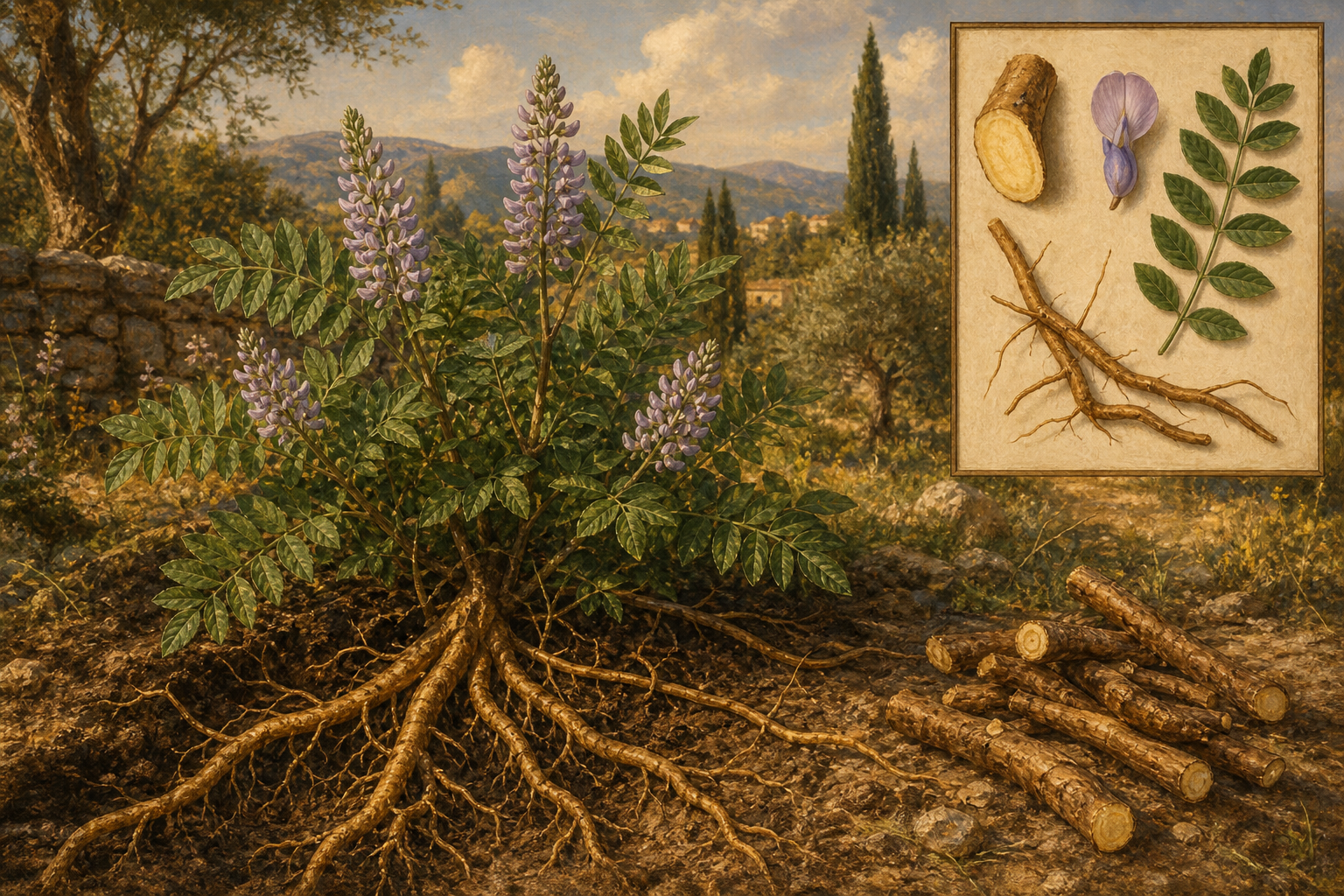
Glycyrrhiza glabra is a herbaceous perennial legume (family Fabaceae) native to southern Europe, the Middle East, and western Asia. The plant grows to roughly 1–1.5 meters tall, producing pinnate leaves with 9–17 leaflets and pale blue to violet flowers arranged in axillary racemes. The medicinally relevant part is the root and stolon system, which develops an extensive network of woody, yellowish-brown underground runners.
Several Glycyrrhiza species are used medicinally worldwide. G. glabra (European/Mediterranean licorice) and G. uralensis (Chinese licorice, gancao) are the most commercially important. G. inflata, the source of the flavonoid licochalcone A, is also used in Chinese medicine. The glycyrrhizin content varies between species and cultivars, typically ranging from 2–12% of dry root weight.
Key phytochemical constituents beyond glycyrrhizin include liquiritigenin and isoliquiritigenin (flavonoids with estrogenic and anti-inflammatory activity), glabridin (an isoflavane with antioxidant properties), and various coumarins and polysaccharides. The complexity of the root’s chemistry means that whole-extract pharmacology cannot be reduced to glycyrrhizin alone, though glycyrrhizin dominates both the therapeutic and toxicological profile of unprocessed root.
02 Lineage
History
Licorice root appears in the Ebers Papyrus (c. 1550 BCE), making it one of the earliest documented medicinal plants. Ancient Egyptian, Greek, and Roman physicians used it for coughs, throat complaints, and thirst. Theophrastus, writing around 300 BCE, described "Scythian root" — almost certainly licorice — as useful for asthma and dry cough.
In traditional Chinese medicine, gancao (G. uralensis) occupies a uniquely central role. Known as "the great harmonizer," it appears in more classical formulas than any other single herb, often serving as a moderating or synergizing ingredient rather than the primary therapeutic agent. The Shennong Ben Cao Jing (c. 200 CE) classified it as a superior herb.
European use intensified in the Middle Ages. Licorice cultivation in England (notably in Pontefract, Yorkshire) dates to at least the 13th century. By the 19th century, licorice extract was a standard ingredient in pharmacopoeias for throat lozenges, cough syrups, and as a flavoring agent to mask bitter medicines.
The modern scientific understanding of licorice’s risks began crystallizing in the 1940s–1960s, when Dutch physician F. E. Revers observed that licorice extract could heal peptic ulcers but also caused edema and hypertension. This led directly to the development of DGL in the 1970s as an attempt to retain the GI benefits while eliminating the mineralocorticoid side effects.
03 Chemistry
Active compounds and how it works
The dominant pharmacological mechanism of glycyrrhizin involves inhibition of 11β-hydroxysteroid dehydrogenase type 2 (11β-HSD2). This enzyme converts active cortisol to inactive cortisone in mineralocorticoid-sensitive tissues (kidneys, colon, salivary glands). When 11β-HSD2 is blocked, cortisol accumulates and activates mineralocorticoid receptors, producing aldosterone-like effects: sodium and water retention, potassium excretion, and blood pressure elevation. This is pseudoaldosteronism — the clinical picture of aldosterone excess without actual aldosterone elevation.
Glycyrrhizin and its aglycone glycyrrhetinic acid also demonstrate direct anti-inflammatory activity through inhibition of phospholipase A2, modulation of arachidonic acid metabolism, and suppression of complement activation. In vitro, glycyrrhizin shows antiviral activity against several viruses, including hepatitis C and some herpesviruses, though clinical translation of these findings remains limited.
The GI-protective effects attributed to DGL appear to involve stimulation of mucus secretion and enhancement of mucosal blood flow, likely mediated by flavonoid and saponin constituents other than glycyrrhizin. Some evidence suggests DGL may increase prostaglandin E2 production in gastric mucosa, supporting the mucosal defense barrier without the systemic mineralocorticoid effects of whole licorice.
Glabridin and other flavonoid components contribute antioxidant, mild phytoestrogenic, and antimicrobial activities. Liquiritigenin acts as a selective estrogen receptor β (ERβ) agonist in preclinical models, which has generated interest in menopausal symptom research, though clinical evidence remains preliminary.
04 In practice
Common uses
DGL is the licorice product most often used for indigestion and as an add-on in peptic ulcer care. One small randomized trial of a deglycyrrhizinated extract in 50 people with functional dyspepsia found that symptoms improved more than with placebo over 30 days, an encouraging result, though EMA judged the trial too small to establish efficacy. The older ulcer research is mixed: several placebo-controlled DGL trials from the 1970s found no clear benefit on ulcer healing or symptoms, while a few newer small trials reported some benefit when licorice was added to H. pylori eradication therapy. NCCIH notes that it is unclear whether licorice alone affects digestive symptoms. DGL is not a substitute for evidence-based ulcer treatment (test-and-treat for H. pylori, PPI therapy) but may offer complementary mucosal support.
The EMA recognizes glycyrrhizin-containing licorice root as a traditional herbal medicine used as an expectorant in cough associated with a cold. This rests on long-standing traditional use and pharmacological plausibility (demulcent and mild expectorant effects) rather than clinical trial data; EMA found no clinical evidence to support a well-established use. Its second traditional indication is relief of digestive symptoms, including a burning sensation and dyspepsia. NCCIH adds that a licorice gargle or lozenges used before surgery might help prevent or ease sore throat after intubation, and that a licorice mouth rinse might reduce the size and pain of recurrent canker sores.
In Japan, injectable glycyrrhizin (Stronger Neo-Minophagen C) has been used for decades as a hepatoprotective agent in chronic hepatitis, particularly hepatitis C. This is a specific pharmaceutical preparation administered under medical supervision, not comparable to oral supplementation, and is not widely used outside Japan.
Topical licorice extracts (particularly those standardized to glabridin) are used in dermatology and cosmetics for skin-lightening and anti-inflammatory effects. There is early evidence of benefit for melasma and atopic dermatitis, though most studies are small and more research would help.
05 The apothecary
Preparations and traditional use
DGL (deglycyrrhizinated licorice) is available as chewable tablets, capsules, and powders. The traditional recommendation is to chew DGL tablets 15–20 minutes before meals. Typical doses range from 380–760 mg of DGL extract per dose, taken two to three times daily. DGL has most of its glycyrrhizin removed, but the amount left can vary between products, so choose one that declares its glycyrrhizin content. NCCIH notes that oral DGL products might be safe for up to four months.
Glycyrrhizin-containing licorice root is available as dried root (for decoction), powdered root in capsules, fluid extracts, and solid extracts. For cough, EMA’s 2026 monograph gives 1.5–4.5 g of comminuted root in 150 ml of boiling water as an infusion or decoction, two to three times daily (3–13.5 g a day); for digestive symptoms, 1.5–2 g two to four times daily, one cup after meals (3–8 g a day). Both are for adults only; EMA does not recommend licorice root medicines for anyone under 18. Crucially, treat four weeks as the ceiling for any glycyrrhizin-containing preparation: EMA says not to use licorice root for digestive symptoms for more than four weeks, its assessors concluded that short-term use of no more than four weeks is safe, and reported overdoses involved longer use or high intakes. See a doctor if digestive symptoms last longer than two weeks or a cough lasts longer than a week.
Licorice root tea is widely available and popular, but consumers rarely consider glycyrrhizin content. A strong cup of licorice tea can deliver a pharmacologically relevant dose of glycyrrhizin: in a Dutch analysis cited by EMA, teas listing licorice as an ingredient averaged 126 mg of glycyrrhizin per liter and reached 450 mg per liter, so a 250 ml cup averages about 31 mg. Habitual daily consumption has caused documented cases of pseudoaldosteronism.
Standardized extracts vary enormously in glycyrrhizin content. Products may be standardized to glycyrrhizin (typically 10–25% in concentrated extracts) or to other marker compounds. Always check the label for glycyrrhizin content, and if it is not declared, assume the product contains a full glycyrrhizin load.
Safety
Before you use licorice
06 Caution
Side effects
The signature adverse effect of glycyrrhizin-containing licorice is pseudoaldosteronism. Symptoms develop with sustained intake (typically >50 mg glycyrrhizin per day for more than two weeks, though susceptibility varies) and include hypertension, hypokalemia, peripheral edema, headache, lethargy, and in severe cases, cardiac arrhythmias, rhabdomyolysis, and respiratory failure. Hypokalemia can become severe enough to cause paralysis. The syndrome is dose-dependent and reversible upon discontinuation, but recovery may take days to weeks.
The EU Scientific Committee on Food concluded that 100 mg of glycyrrhizin a day, the amount in about 60 g of licorice confectionery, is an upper limit for regular intake that protects most people, but warned that it may not protect everyone, including people with hypertension or conditions affecting electrolytes and fluid balance. A 2024 randomized crossover trial in 28 healthy young adults found that licorice providing 100 mg of glycyrrhizin a day for two weeks raised home systolic blood pressure by about 3 mm Hg, and its authors suggested the safe limit may need to be reconsidered. People with pre-existing hypertension, heart failure, renal disease, or electrolyte disturbances are at heightened risk and should avoid glycyrrhizin-containing licorice entirely.
Other reported adverse effects include menstrual irregularities (related to phytoestrogenic and cortisol-modulating activity), decreased testosterone levels in men at high doses, and potential exacerbation of estrogen-sensitive conditions.
DGL preparations are generally well tolerated. Because most glycyrrhizin has been removed, the mineralocorticoid side effects are largely absent at recommended doses. Mild GI symptoms (nausea, loose stools) are occasionally reported.
07 Caution
Contraindications
Glycyrrhizin-containing licorice is contraindicated in hypertension, heart failure, liver cirrhosis with portal hypertension, hypokalemia, and renal insufficiency. The mineralocorticoid effects can worsen all of these conditions, potentially catastrophically. EMA’s monograph likewise advises against licorice medicines for people with hypertension, kidney disease, liver or cardiovascular disorders, or hypokalemia, and warns that people taking a licorice medicine should not take other licorice-containing products.
Pregnancy is a firm contraindication for glycyrrhizin-containing products. Epidemiological data from Finland (the GLAKU cohort) found associations between high maternal licorice intake during pregnancy (at least 500 mg of glycyrrhizin a week) and adverse developmental outcomes in offspring, including earlier puberty and poorer cognitive performance. Glycyrrhizin crosses the placenta and may impair the fetal cortisol barrier normally maintained by placental 11β-HSD2. EMA’s 2026 monograph does not recommend licorice root during pregnancy or in women of childbearing potential who are not using contraception, citing reproductive toxicity in animal studies. It also does not recommend use while breastfeeding: glycyrrhizin has been detected in the breast milk of some women taking licorice, and the effect on infants is unknown.
Patients with cholestatic liver disease, severe hepatic impairment, or conditions requiring strict electrolyte control (e.g., those on dialysis) should avoid glycyrrhizin-containing preparations. EMA does not recommend licorice root medicines for children and adolescents under 18.
DGL has far fewer absolute contraindications. However, patients with known allergies to Fabaceae (legume) plants should exercise caution. Individuals on medications affected by even trace glycyrrhizin exposure should verify the glycyrrhizin content of any DGL product they use.
08 Caution
Drug and herb interactions
The most clinically important drug interactions involve the hypokalemia caused by glycyrrhizin. Co-administration with potassium-depleting diuretics (thiazides, loop diuretics) creates additive risk for dangerous hypokalemia. Cardiac glycosides (digoxin) become more toxic in the setting of low potassium, making concurrent licorice use potentially lethal. EMA also advises against combining licorice with stimulant laxatives or other medicines that can worsen electrolyte imbalance.
Corticosteroids: glycyrrhizin potentiates the effects of endogenous and exogenous corticosteroids by inhibiting their metabolic inactivation. This can result in amplified steroid side effects, including fluid retention, glucose dysregulation, and immunosuppression.
Antihypertensive medications may be rendered less effective by the sodium-retaining and blood-pressure-raising effects of glycyrrhizin. Patients on ACE inhibitors, ARBs, or other antihypertensives who use glycyrrhizin-containing licorice may experience unexplained loss of blood pressure control.
Warfarin and other anticoagulants: licorice may alter coumarin metabolism and has theoretical additive antiplatelet effects from some flavonoid constituents. Monitoring INR more closely is prudent if licorice use cannot be avoided.
CYP enzyme interactions: EMA’s 2026 revision added a caution for drugs metabolized by CYP3A4. In clinical studies, 300 mg of glycyrrhizin a day for 14 days modestly lowered blood levels of midazolam and omeprazole, apparently by speeding up their CYP3A4 metabolism, and EMA advises caution with any medicine whose metabolism depends on CYP3A4. MSKCC notes that glycyrrhizin induces CYP3A and CYP2D6, while other licorice constituents such as glabridin can inhibit these enzymes, and it lists a report that licorice reduced the oral bioavailability of cyclosporine. Caution is especially warranted with narrow-therapeutic-index drugs metabolized by these pathways (e.g., cyclosporine, certain statins).
09 Questions
Frequently Asked Questions
DGL (deglycyrrhizinated licorice) is licorice root extract that has had most of its glycyrrhizin removed. This is important because glycyrrhizin is responsible for both licorice’s distinctive sweetness and its most dangerous side effects (pseudoaldosteronism). DGL retains other bioactive compounds like flavonoids that may support GI mucosal health. The amount of glycyrrhizin left varies between products, so look for one that states its glycyrrhizin content. If your goal is digestive support, DGL is almost always the better and safer choice.
Yes, and this is not a rare or marginal effect. Glycyrrhizin blocks the enzyme (11β-HSD2) that normally keeps cortisol from activating mineralocorticoid receptors in the kidneys. The result is sodium retention, potassium loss, and blood pressure elevation — essentially mimicking aldosterone excess. Cases requiring hospitalization have been reported from habitual licorice tea consumption and licorice confectionery. The risk is dose- and duration-dependent, but individual susceptibility varies.
The EU Scientific Committee on Food concluded that 100 mg of glycyrrhizin a day is an upper limit for regular intake that protects most people, though not everyone. A 2024 trial found that even this amount, taken daily for two weeks, nudged blood pressure up in healthy young adults. EMA says licorice root medicines for digestive symptoms should not be used for more than four weeks, and it does not recommend them for anyone under 18; treat four weeks as the upper limit for any glycyrrhizin-containing product. Some individuals — particularly those with hypertension, heart disease, or kidney problems — may develop problems at lower intakes. There is no universally “safe” dose. DGL products sidestep most of this concern by removing the glycyrrhizin.
DGL is often used as an add-on for peptic ulcer disease and functional dyspepsia, but the evidence is mixed. Several older placebo-controlled DGL trials from the 1970s found no clear benefit on ulcer healing or symptoms, while a few newer small trials reported benefit when licorice was added to H. pylori eradication therapy. Modern proton pump inhibitors and H. pylori eradication therapy are the current standard of care. DGL should not replace evidence-based ulcer treatment but may offer complementary mucosal protection when used alongside conventional therapy under medical guidance.
Glycyrrhizin-containing licorice should be avoided during pregnancy. Data from the Finnish GLAKU birth cohort found associations between high maternal licorice intake and earlier puberty, lower cognitive scores, and behavioral issues in offspring. Glycyrrhizin crosses the placenta and may impair the protective cortisol barrier maintained by placental 11β-HSD2. There is insufficient safety data for DGL in pregnancy. EMA’s 2026 monograph does not recommend licorice root medicines during pregnancy, in women of childbearing potential who are not using contraception, or while breastfeeding, because glycyrrhizin has been found in the breast milk of some women taking licorice and its effect on infants is unknown.
Yes. Glycyrrhizin causes sodium retention and potassium loss, directly opposing the mechanisms of most antihypertensive drugs. Patients on ACE inhibitors, ARBs, calcium channel blockers, or diuretics may find their blood pressure control undermined. The combination with potassium-depleting diuretics (thiazides, furosemide) is particularly hazardous because both the drug and glycyrrhizin lower potassium, increasing the risk of dangerous hypokalemia. DGL products, with glycyrrhizin removed, are unlikely to cause these interactions at recommended doses.
Licorice has a long history of use for upper respiratory symptoms, and EMA recognizes licorice root as a traditional herbal medicine used as an expectorant in cough associated with a cold. That recognition rests on long-standing use rather than clinical trials. Licorice root acts as a demulcent (soothing irritated mucous membranes) and mild expectorant, and NCCIH notes that licorice gargles or lozenges before surgery might help prevent sore throat after intubation. For short-term use in otherwise healthy adults, this is one of the more reasonable applications — but glycyrrhizin-containing preparations should still be limited to four weeks maximum, are not recommended under 18, and a cough that lasts more than a week or brings fever, breathlessness, or discolored sputum needs a doctor.
It can be, if consumption is regular and substantial. Many reported cases of licorice toxicity involve habitual consumers of licorice confectionery rather than supplement users. An FDA consumer update (last revised in 2017) warned that adults 40 or older who eat 2 ounces of black licorice a day for at least two weeks could end up in the hospital with an irregular heart rhythm. Note that many "licorice" sweets, especially in North America, use anise flavoring rather than actual licorice root — these do not contain glycyrrhizin and do not carry the same risk.
10 References
Sources
These references support the history, clinical, and safety claims on this page. They are not an endorsement of any product.
-
Licorice Root: Usefulness and Safety
National Center for Complementary and Integrative Health (NCCIH), 2025
US government fact sheet, updated April 2025: not enough high-quality evidence to clearly support any use; unclear whether licorice alone affects digestive symptoms; early promise for canker sores and post-intubation sore throat; glycyrrhizin safety warnings; DGL might be safe for up to four months.
-
Licorice
Memorial Sloan Kettering Cancer Center (MSKCC), 2024
Clinical summary of licorice pharmacology, purported uses, adverse effects, and drug interactions, including glycyrrhizin’s induction of CYP3A and CYP2D6.
-
Glycyrrhiza glabra L. (NCBI Taxonomy)
National Center for Biotechnology Information (NCBI), 2024
Taxonomic classification and nomenclature for Glycyrrhiza glabra.
-
Glycyrrhizin (PubChem CID 14982)
National Library of Medicine — PubChem, 2024
Chemical data, pharmacology summary, and literature references for glycyrrhizin.
-
European Union herbal monograph on Glycyrrhiza glabra L.; Glycyrrhiza inflata Bat.; Glycyrrhiza uralensis Fisch., radix – Revision 1
European Medicines Agency (EMA/HMPC/108399/2024) — Committee on Herbal Medicinal Products, 2026
Adopted 4 March 2026, published 20 July 2026: traditional use only for digestive symptoms and for cough with a cold; not under 18; four-week limit for digestive use; caution with CYP3A4 substrates such as midazolam and omeprazole; not recommended in pregnancy, in women of childbearing potential not using contraception, or during breastfeeding.
-
Confounding effects of liquorice, hydrocortisone, and blood contamination on salivary cortisol but not cortisone
PubMed (Endocrine Connections), 2022
Imamovic et al.: randomized study in 30 healthy volunteers; salivary cortisol rose 49% and 97% with medium and high daily licorice doses and returned to baseline within four days of stopping.
-
Maternal licorice consumption during pregnancy and pubertal, cognitive, and psychiatric outcomes in children (GLAKU cohort)
PubMed (American Journal of Epidemiology), 2017
Räikkönen et al.: Finnish birth cohort study linking high prenatal glycyrrhizin exposure (at least 500 mg a week) to earlier puberty in girls and lower cognitive scores.
-
Licorice abuse: time to send a warning message
PubMed (Therapeutic Advances in Endocrinology and Metabolism), 2012
Review of pseudoaldosteronism case reports and pathophysiology of glycyrrhizin-induced mineralocorticoid excess.
-
Liquorice (Glycyrrhiza glabra): a phytochemical and pharmacological review
PubMed (Phytotherapy Research), 2018
Pastorino et al.: review of licorice constituents, including glycyrrhizin and glycyrrhetinic acid, and their antibacterial, anti-inflammatory, antiviral, antioxidant, and antidiabetic activities, with toxicological concerns.
-
Black Licorice: Trick or Treat?
US Food and Drug Administration (FDA), FDA Archive, 2017
FDA consumer update (content current as of 6 November 2017), preserved in FDA’s web archive after removal from fda.gov: 2 ounces of black licorice a day for at least two weeks may cause arrhythmia in adults 40 or older.
-
Assessment report on Glycyrrhiza glabra L.; Glycyrrhiza inflata Bat.; Glycyrrhiza uralensis Fisch., radix – Revision 1
European Medicines Agency (EMA/HMPC/108395/2024), 2026
No clinical data support well-established use; older DGL ulcer trials did not beat placebo; glycyrrhizin–midazolam and omeprazole studies; glycyrrhizin in tea and breast milk; Scientific Committee on Food upper limit of 100 mg a day for regular intake.
-
A low dose of daily licorice intake affects renin, aldosterone, and home blood pressure in a randomized crossover trial
PubMed (American Journal of Clinical Nutrition), 2024
af Geijerstam et al.: 28 healthy volunteers; licorice providing 100 mg glycyrrhizin a day for two weeks raised home systolic blood pressure by about 3 mm Hg and suppressed renin and aldosterone.