Natural Headache Remedies
By Admin User 4 min read
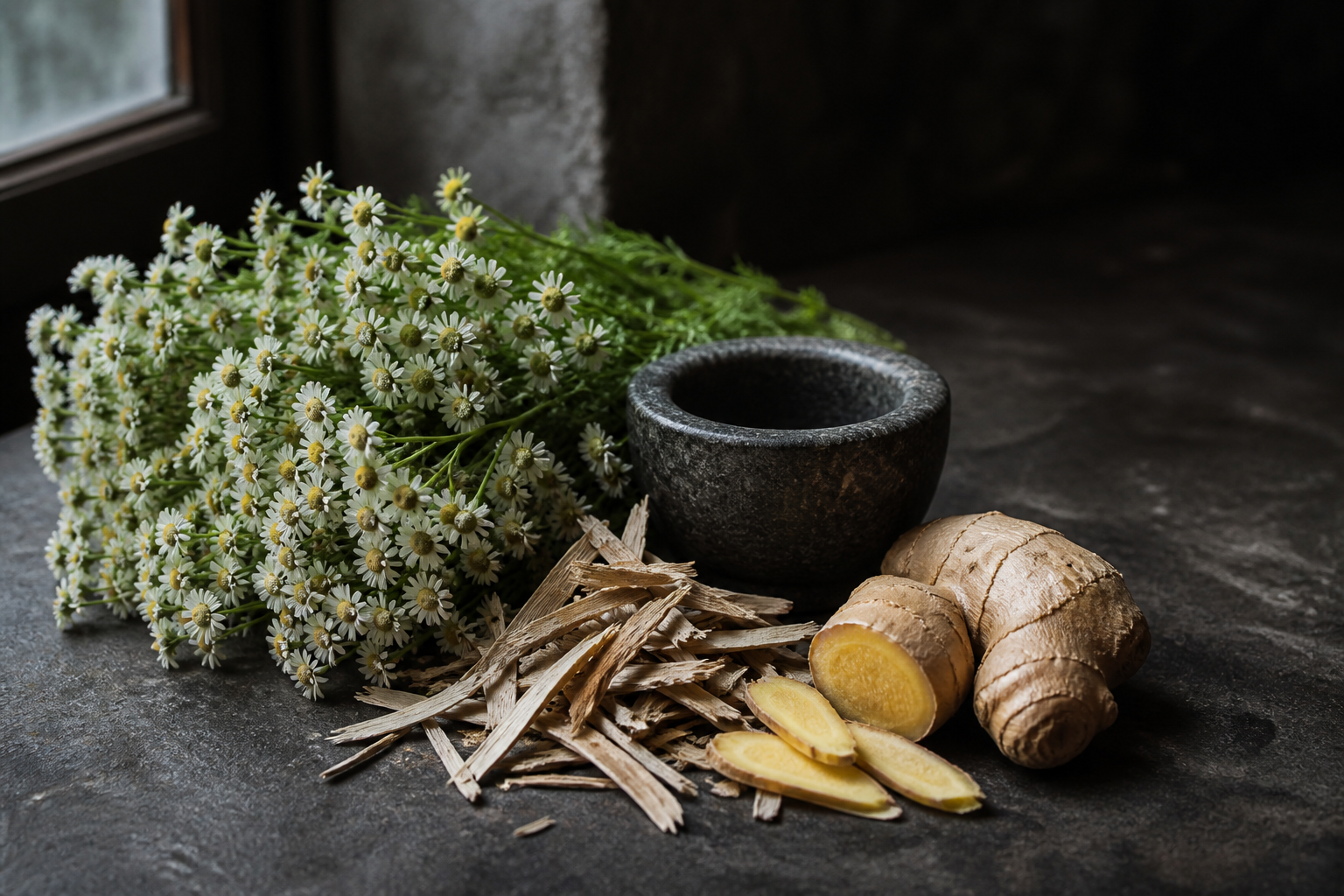
People reach for herbal headache remedies when a day is wrecked by pain and the usual tablet is unappealing, incomplete, or already overused. This expands our September 2022 post. It does not claim herbs are “just as effective” as prescription or over-the-counter medicines as a class, and it does not mix herbalism with homeopathy. Those are different systems. A sugar pellet is not white willow bark.
Headache is not one disease. Tension-type pain, migraine, cluster, sinus-pressure stories, caffeine withdrawal, and secondary headaches (infection, hemorrhage, tumor, preeclampsia) do not share a teabag. Thunderclap onset, neck stiffness with fever, new neurologic signs, a headache in pregnancy that is not your usual pattern, or “worst of my life” is emergency care, not feverfew.
Use and rebound are part of the same problem
The original article was right that improper use can fail or rebound. Medication-overuse headache is well described for triptans, opioids, combination analgesics, and caffeine. Guarana and other high-caffeine herbs can help an acute attack for some people and then train a rebound cycle if they become a daily habit. “Natural” does not exempt you from that pattern.
Herbs also have side effects and drug interactions. That sentence from 2022 stays. The later line that “many herbal remedies have no side effects” does not. Willow bleeds; feverfew can inflame the mouth; ginger can bother the gut; valerian can sedate. Know the plant the way you would know a tablet.
Feverfew is the one with a migraine file
Tanacetum parthenium (feverfew) is the herb most often studied for migraine prevention, usually as dried leaf, not as an acute rescue for a headache that has already peaked. Results are mixed: some trials and older reviews look modestly positive; others do not. It is not a proven treatment for every headache type. Chewing fresh leaves is a famous way to get mouth ulcers. Pregnancy is a do-not-use in most herbals. Stopping after daily use can be associated with a rebound of symptoms in anecdotal reports—taper with a clinician if you have been on it for months.
Combination “headache formulas” pile feverfew with willow, caffeine, and magnesium. That is a mixture, not stronger proof for any one plant.
White willow bark is not herbal aspirin
White willow bark contains salicylates, including salicin. Aspirin was inspired by that chemistry; it is not the same drug, not the same dose, and not safer in children. Do not give willow to kids with viral illness (Reye syndrome territory). Do not stack it with aspirin, other NSAIDs, or anticoagulants for a “natural boost.” It can relieve some pain and fever in traditional use; bleeding and stomach risk still apply. See the monograph rather than a blend label.
Ginger, guarana, valerian, ginkgo
- Ginger: some migraine trials use ginger powder as adjunct for nausea and pain. Culinary doses in food are not a 250 mg study capsule. It is a reasonable kitchen option for people who already tolerate it. See the ginger monograph.
- Guarana: a caffeine-rich Amazonian seed. Caffeine can abort some headaches and cause others. If you already drink coffee, adding guarana is a second caffeine source. Rebound is the honest caveat the original post got right.
- Valerian: a sedative root. If the headache is mostly “I cannot unclench,” sleep and down-regulation are the theory. It is not a migraine preventive with a clean file.
- Ginkgo: not a first-line headache herb. Vascular folklore is not a reason to add a bleeding-risk plant on top of willow or NSAIDs. See the ginkgo monograph.
Relaxation can shorten a tension headache. That is true with or without a capsule. Heat, darkness, hydration, and stopping the day’s tenth espresso are still part of the plan.
How to read a headache herb page
The original advice to notice whether a page is written by a clinician or “just some person writing a blog” still stands—including this one. We are an herbal index, not your neurologist. Look for: headache type, plant part and extract, duration (prevention vs rescue), who must skip it, and what the person already takes. A thunderclap or a changing pattern needs imaging and a workup, not a second bottle.
If you do not know how to use a remedy, ask a clinician or pharmacist who will look at the rest of your medicines. Improper use of herbs can be harmful. That 2022 warning was the part worth keeping.
Frequently asked questions
Are herbal headache remedies as strong as ibuprofen or a triptan?
Not as a class. Feverfew is mostly a prevention story with mixed trials. Willow is a salicylate-containing bark, not a measured aspirin tablet. Triptans and NSAIDs have clearer acute-migraine files. An herb can be an adjunct for some people. It is not a reason to skip indicated acute treatment while a migraine builds.
Can I take willow bark with aspirin?
No. Same chemical family, more bleeding and stomach risk. Pick one plan with a clinician.
When is a headache not a DIY herb problem?
Sudden worst-of-life pain, fever and stiff neck, weakness or vision loss, head injury, new headache in pregnancy, or a pattern that is changing fast. Those are urgent care. Herbs wait.