Where to Go For Traditional Chinese Medicine
By Admin User 4 min read
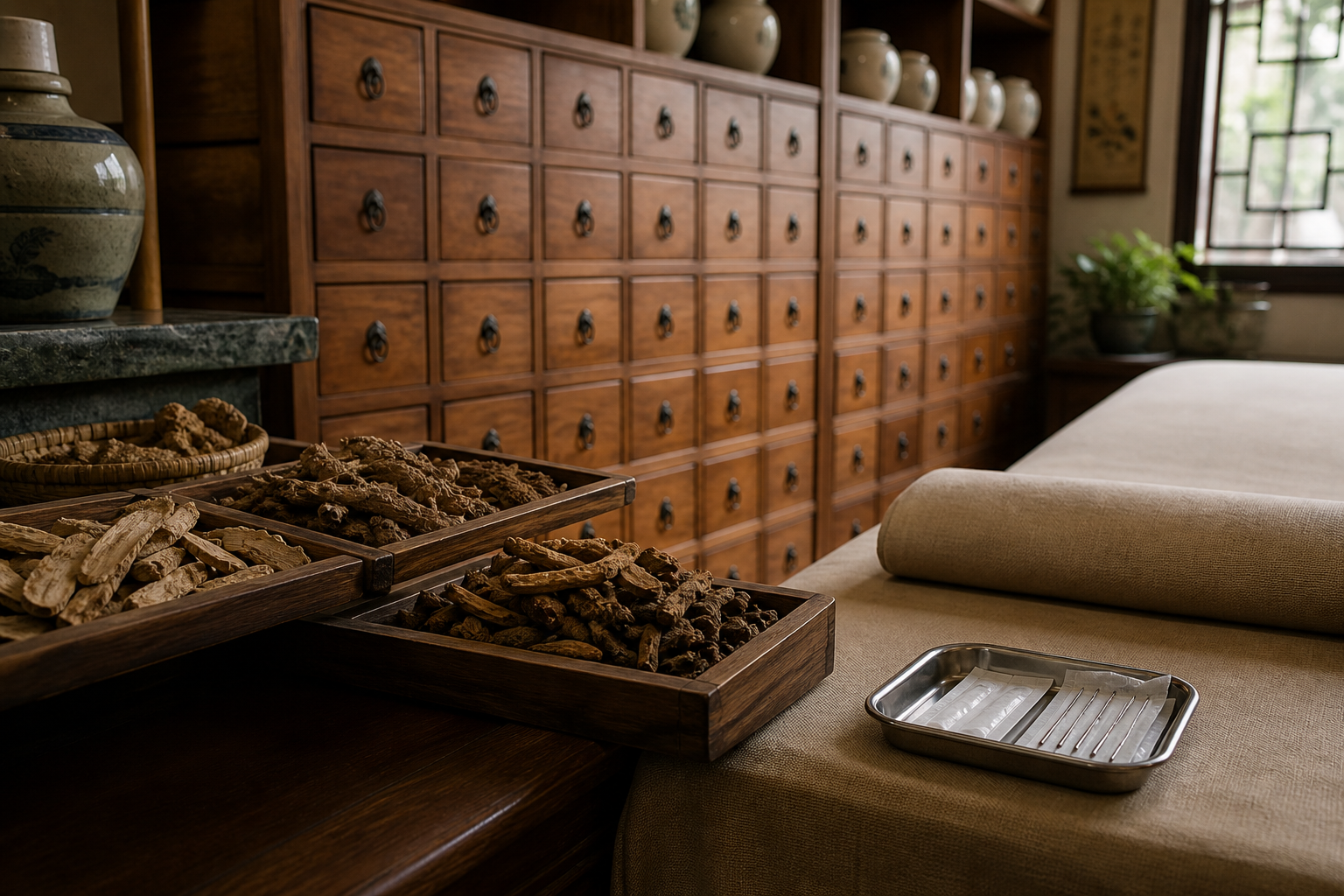
If you want to talk with a Traditional Chinese Medicine (TCM) practitioner, you are not the first person in that waiting room. TCM is a long medical culture—classical texts, pattern diagnosis, acupuncture, moxibustion, food as therapy, and a large herbal pharmacopeia. Millions of people have used parts of it. That history is real. It is not a reason to skip licensing, skip a diagnosis you already have, or swallow an unlabeled powder from a website.
This expands our September 2022 guide on where to go: how to find someone you can reasonably trust, not a tour of every syndrome in the Nei Jing. The hard part is still the same. Unless you already know the local community, a good practitioner is not obvious from a storefront.
Know what your state actually licenses
Start with the law where you live. In the United States, acupuncture and Oriental-medicine practice are regulated at the state level, and the schemes differ.
- Some states license acupuncturists with a defined scope (needles, maybe moxa, maybe adjunct techniques).
- Some license a broader acupuncture and herbal medicine or “Oriental medicine” credential that includes prescribing herbal formulas.
- A few have thinner or no specific acupuncture statute. In those places you have to be more diligent, not less.
Look up the state acupuncture or medical board, not a clinic’s marketing page. Ask whether the person may legally prescribe herbs, or only needle. A “TCM healer” with no license in a state that requires one is a different object from an L.Ac. with a clean board record.
Use national certification as a filter, not a halo
The National Certification Commission for Acupuncture and Oriental Medicine (NCCAOM) is the usual U.S. national exam-and-certification body. Many states require NCCAOM credentials (or used to grandfather them) as part of licensure. Their find-a-practitioner tools are a reasonable first list of people who at least sat the exams.
The old post also pointed at the American Association of Oriental Medicine for referrals. Professional associations change names and merge. Treat a current state association or the NCCAOM directory as the durable starting point, and confirm anything you find against the state license lookup.
Certification means a person passed a standard. It does not mean a formula will fix your condition, and it does not mean every herb in a patent pill was tested for aristolochic acid or undeclared drugs. Quality is a separate question.
Interview the person as if this were any other clinician
Comfort matters. People who feel safe in a treatment room are easier to treat; that is ordinary care, not mysticism. You are allowed to ask questions before you lie down.
- Training: college, hours, residency or apprenticeship, years in practice.
- Scope: acupuncture only, herbs, both, tuina, diet advice.
- Experience with your problem, in ordinary language, without promising a cure.
- Whether they want recent labs or a letter from your physician for something serious (cancer care, pregnancy, anticoagulants, transplant meds).
- Herb sourcing, if they prescribe: granular extracts from a known pharmacy, or bottled “patent” pills. Ask how they handle recall and contamination news.
A qualified professional will not be offended. If the pitch is that you must stop your cardiologist, that is a walk-out, not a personality clash.
Loop in the clinician you already have
Word of mouth from people who had the same kind of problem is useful. So is a conversation with your regular physician or NP. Plenty of medical clinicians are willing to say “this acupuncturist is licensed and I do not object to a time-limited trial for your back pain.” Plenty will also say “do not take that herb with your warfarin.” Both sentences can be true.
TCM herbs overlap plants we cover as monographs—ginger, ginseng, turmeric (as a cousin of jianghuang in some formulas), and others. A formula is not a single-herb capsule. A patent pill from an unknown factory is not the same as a licensed practitioner’s granular script. For cancer, pregnancy, liver disease, or polypharmacy, the monograph habit still applies: plant, part, dose, and the rest of the medication list in the same frame.
What this page is not
It is not a claim that acupuncture “is known to be very effective” for every condition, and it is not a health-insurance shopping guide. Insurance coverage for acupuncture varies by plan and diagnosis; ask the insurer and the clinic’s billing person. Effectiveness is condition-specific and often modest in independent reviews. Use TCM as one care path among others, with a licensed human you can question.
Frequently asked questions
Is NCCAOM the same as a state license?
No. NCCAOM is national certification. The state license is what lets a person practice in that state. Many states require both pieces. Always check the board.
Can I just buy TCM herbs online?
You can. You should be slower to. Identity, heavy metals, pesticides, and adulteration are documented problems in some unregulated herb products. A licensed herbalist who uses a dispensing pharmacy is a different supply chain from a mystery bottle.
Should I stop my other medicines if I start acupuncture?
Not as a default. Tell every clinician everything you take. Needling and a cup of ginger tea are not a reason to drop a prescribed drug unless the prescriber is in that decision.