Monograph
Cannabis
Cannabis sativa
Updated October 10, 2026
Key points
-
01
One species, many compounds
Hemp and marijuana are the same plant, Cannabis sativa. It makes more than 100 cannabinoids; THC causes the high, CBD does not, and heat activates both.
-
02
Proven medicines are specific
Purified CBD reduces seizures in three rare epilepsies, and a THC:CBD spray helps MS spasticity in people who respond to a trial. Shop products are untested.
-
03
Pain and sleep claims outrun data
A 2026 Cochrane review found no clinically relevant benefit for nerve pain, and the few trials of CBN for sleep mostly missed their main goals.
-
04
Regular THC has real risks
Daily use of high-potency cannabis is linked to psychosis, about 1 in 5 people who use cannabis develop use disorder, and it impairs driving.
-
05
CBD is not risk-free
Medicinal doses can raise liver enzymes and interact with drugs. UK regulators advise healthy adults to take no more than 10 mg of CBD a day.
Cannabis is a single species, Cannabis sativa, that people have grown for fiber, seed, medicine, and intoxication for thousands of years. Hemp and marijuana are not different plants but different uses and legal categories of the same one. In US federal law, hemp is cannabis with no more than 0.3% delta-9-tetrahydrocannabinol (THC) by dry weight, while “marijuana,” as the National Center for Complementary and Integrative Health (NCCIH) uses the word, means products with substantial amounts of THC, the compound that causes the high. NCCIH counts about 540 chemical substances in the plant, including more than 100 cannabinoids besides THC and cannabidiol (CBD). Most are made in tiny resin glands clustered on the female flowers, largely as acid forms such as THCA and CBDA that heat converts into THC and CBD. This monograph covers the plant and the main ways it is used: smoked, vaped, and eaten flower and extracts; hemp-derived CBD, CBN, and delta-8 THC products; licensed cannabinoid medicines; and hemp seed foods, which the US Food and Drug Administration (FDA) notes do not naturally contain THC.
The strongest evidence belongs to specific medicines, not to the plant. FDA has not approved cannabis itself, but it has approved Epidiolex, a purified CBD oral solution for seizures in three rare epilepsies, and dronabinol and nabilone, synthetic THC and a THC-like drug, for chemotherapy nausea or appetite loss in AIDS. Outside the US, Sativex (nabiximols), a mouth spray made from two cannabis extracts, is licensed for multiple sclerosis (MS) spasticity. A 2017 National Academies of Sciences, Engineering, and Medicine report found conclusive evidence that oral cannabinoids ease chemotherapy nausea and substantial evidence for chronic pain and MS spasticity. Later reviews are cooler: a 2026 Cochrane review of 21 trials in nerve pain found no clear, clinically relevant benefit, and England’s National Institute for Health and Care Excellence (NICE) advises against offering cannabis-based medicines for chronic pain. Popular uses such as sleep and anxiety, and the newer “minor” cannabinoids such as CBN and CBG, rest on small, short trials.
THC’s risks rise with dose, frequency, potency, and youth. The National Academies concluded that cannabis use likely increases the risk of schizophrenia and other psychoses, and a 2019 European study found that daily use of high-potency cannabis was linked to nearly five times the odds of a psychotic disorder. About 22% of people who use cannabis have cannabis use disorder (Leung and colleagues 2020). Cannabis impairs driving, and edibles eaten by young children have surged as a cause of poisoning. CBD does not cause a high, but at medicinal doses it can raise liver enzymes, cause sleepiness, and interact with other drugs; FDA concluded in 2023 that it does not fit the existing rules for foods and supplements, and UK food regulators advise healthy adults to take no more than 10 mg a day. Laws differ widely and are changing: in the US, most marijuana is still a Schedule I drug federally. Nothing here is medical advice; chest pain, fainting, repeated vomiting, or confusion or paranoia that does not settle after using cannabis needs urgent care, and a child who eats an edible needs an immediate call to a poison control center.
Ingredient in
Sativex (nabiximols)In this monograph
01 The plant
Botanical profile
Cannabis belongs to Cannabaceae, a small family it shares with hops (Humulus) and, since a recent reclassification, with hackberries (Celtis) and seven other trees and shrubs once placed in a separate family (McPartland, Cannabis and Cannabinoid Research 2018). Linnaeus named Cannabis sativa in Species Plantarum in 1753, describing a fiber plant from Europe, according to the International Plant Names Index (IPNI) and McPartland. In 1785 Lamarck coined Cannabis indica for intoxicating plants from India, Southeast Asia, and South Africa, which he said differed in eight morphological characters and in their strong odor and effect on the head. Botanists have argued over the split ever since. Small and Cronquist (1976) folded indica into C. sativa as a subspecies, and McPartland supports two subspecies: subsp. sativa, the mainly European hemp type with more CBD than THC, and subsp. indica, the mainly Asian drug type with more THC than CBD. Flora of China treats C. indica as a synonym and doubts that any split is justified beyond cultivated forms. A third name, C. ruderalis, was coined by Janischewsky in 1924 for weedy Russian plants, though he himself called it “a well marked variety.” McPartland traces the genus to the northeastern Tibetan Plateau, where it diverged from hops about 27.8 million years ago, and Ren and colleagues (Science Advances 2021), sequencing 110 genomes, concluded that cannabis was first domesticated in early Neolithic East Asia.
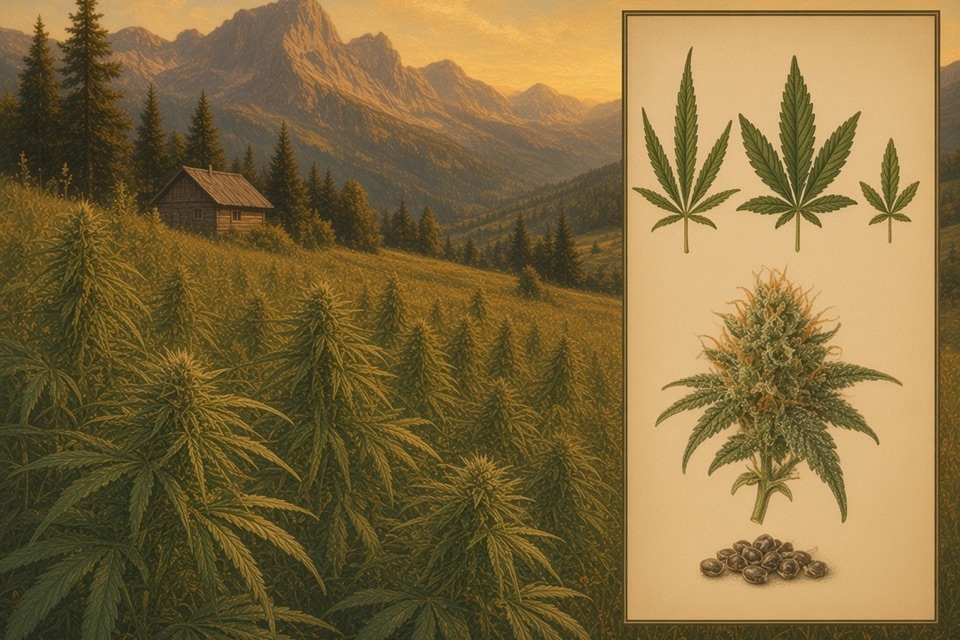
Flora of China describes an erect annual herb 1–3 m tall, usually with male and female flowers on separate plants (dioecious) but sometimes on the same plant, with furrowed stems. The leaves are palmately compound, with 5 to 11 leaflets low on the stem and only one to three near the top; leaflets are lance-shaped to linear, typically 7–15 cm long and 0.5–1.5 cm wide, coarsely toothed, and long-pointed, dark green above and whitish green beneath with scattered brownish resin dots. Male flowers are yellowish green, nodding, and petal-less, in loose clusters up to about 25 cm long. Female flowers are green and stalkless, crowded in the upper leaf axils among glandular, leaf-like bracts, the parts used as a drug; each ripens into a flattened, finely netted achene, the “seed,” 2–5 mm long. Leaf shape varies widely. Schultes described Afghan drug plants as short (under 1.3 m) and densely branched with broad leaflets, while Lamarck’s original indica was tall and loosely branched with narrow leaflets (McPartland). The narrow-leaflet and broad-leaflet leaves in our illustration reflect this range, not reliable species or effect markers.
Cannabinoid chemistry is concentrated in glandular trichomes, tiny resin-filled hairs that Andre and colleagues (Frontiers in Plant Science 2016) describe as mostly on the female flowers. In those glands the plant joins olivetolic acid to geranyl diphosphate to make cannabigerolic acid (CBGA), the shared precursor; three enzymes then turn CBGA into THCA, CBDA, or cannabichromenic acid (CBCA). Drug-type plants are dominated by THCA and fiber hemps by CBDA, and young plants by CBCA. Ren and colleagues found loss-of-function changes in the genes for one or the other of the two competing pathways in fiber and drug cultivars, consistent with breeding that pushed plants toward high CBD or high THC. Variants with a shorter side chain, such as tetrahydrocannabivarin (THCV), are built from a related precursor. The acids lose a carbon dioxide group slowly in the plant and much faster when heated, which is why smoking, vaping, and baking activate the plant. Andre and colleagues count more than 100 terpenes, which give each strain its smell. Potency has climbed: ElSohly and colleagues (Biological Psychiatry 2016), analyzing 38,681 US seizure samples, found average THC rising from about 4% in 1995 to about 12% in 2014 while CBD fell, so the THC-to-CBD ratio rose from 14 to about 80.
02 Lineage
History
Cannabis is one of the oldest cultivated plants. Ren and colleagues place its domestication in early Neolithic East Asia, and every modern hemp and drug cultivar they sequenced descended from an ancestral pool still represented by feral plants and landraces in China. Its use as a drug is also ancient: Ren and colleagues (Science Advances 2019) found chemical residues in wooden braziers from the Jirzankal Cemetery in the eastern Pamirs, dated to about 500 BCE, showing that cannabis plants with high levels of psychoactive compounds were burned in funeral rites at least 2,500 years ago. Zuardi’s history of cannabis as a medicine (Revista Brasileira de Psiquiatria 2006) traces Chinese medical use to the Pen-ts’ao ching, the oldest Chinese pharmacopoeia, traditionally linked to the legendary emperor Shen-Nung of about 2700 BCE, which recommended cannabis for rheumatic pain, constipation, female reproductive disorders, and malaria. The surgeon Hua T’o (AD 110–207) is said to have mixed it with wine as an anesthetic, though Chinese medicine came to use mainly the seeds, as a laxative. In India, the Atharva Veda names cannabis as one of five sacred plants, and Zuardi describes a long tradition of religious and medical use.
Western medicine adopted cannabis in the 19th century. In 1839 William O’Shaughnessy, a physician working in India, published “On the preparations of the Indian hemp, or gunjah,” describing its use for rheumatism, convulsions, and the muscle spasms of tetanus and rabies, and in 1845 the French psychiatrist Jacques-Joseph Moreau published a book on hashish and mental illness. Zuardi records that the Ohio State Medical Society held a conference on cannabis in 1860, that more than 100 papers on its therapeutic use followed in the second half of the century, and that extracts were sold by firms including Merck, Burroughs-Wellcome, Bristol-Myers Squibb, Parke-Davis, and Eli Lilly. Medical use declined in the early 20th century because extracts varied unpredictably in potency and because new drugs, among them chloral hydrate and barbiturates, became available. In the United States, the Marihuana Tax Act of 1937 imposed a tax of one dollar an ounce for medical use and one hundred dollars an ounce for other uses, and cannabis was removed from the US Pharmacopeia in 1941. The Controlled Substances Act placed marijuana in Schedule I in 1970 (FDA).
Science caught up later. In 1964 Gaoni and Mechoulam identified the structure of THC (Zuardi; Russo 2011). In 1990 Matsuda and colleagues cloned a brain receptor for cannabinoids, now called CB1; in 1992 Devane and colleagues isolated anandamide, a molecule from pig brain that binds that receptor; and in 1993 Munro and colleagues found a second receptor, CB2, in immune cells of the spleen, revealing the body’s own cannabinoid signaling system. FDA approved dronabinol for appetite loss in AIDS in 1992 (NCCIH); its other cannabinoid approvals are nabilone and the purified CBD medicine Epidiolex. The UK licensed Sativex in June 2010. Laws have since loosened unevenly. The 2018 Farm Bill removed hemp from the Controlled Substances Act; in 2020 the UN Commission on Narcotic Drugs removed cannabis from Schedule IV, the most restrictive list, of the 1961 Single Convention; and on April 28, 2026, a US final rule moved FDA-approved marijuana drug products and state-licensed medical marijuana to Schedule III, leaving other marijuana in Schedule I while the Drug Enforcement Administration (DEA) held a separate hearing, from June 29, 2026, on rescheduling marijuana as a whole. The fiscal 2026 agriculture appropriations law (Public Law 119-37) narrows the federal definition of hemp to count THCA toward the 0.3% limit and to exclude finished products with more than 0.4 mg total THC per container. The Congressional Research Service (CRS) reports that the change was scheduled to take effect on November 12, 2026, and that Congress has debated delaying most of it.
03 Chemistry
Active compounds and how it works
Cannabis works mainly because it borrows a signaling system the body already has. Matsuda and colleagues (Nature 1990) cloned the first cannabinoid receptor, CB1, a G protein-coupled receptor found in the brain regions known to bind cannabinoids and more responsive to psychoactive than non-psychoactive cannabinoids; they suggested it underlies the changes in mood and thinking people feel. Devane and colleagues (Science 1992) then found the body’s own key for that lock, anandamide, a fatty molecule derived from arachidonic acid. Munro and colleagues (Nature 1993) identified CB2, expressed not in the brain but in immune cells. The Sativex product information explains that these receptors sit mostly at nerve endings, where endocannabinoids act as a feedback brake on the release of neurotransmitters such as glutamate. Each plant cannabinoid touches this system differently, which is why THC, CBD, CBN, and their relatives cannot be treated as interchangeable. Pertwee’s review (British Journal of Pharmacology 2008) is a useful map: THC partly switches on both receptors, CBD can block other compounds from switching them on, and THCV behaves as a blocker at low doses and an activator at higher ones.
THC (delta-9-tetrahydrocannabinol) is, in Grotenhermen’s words (Clinical Pharmacokinetics 2003), the main source of the plant’s effects, both the high and the medicinal benefits. As a partial agonist at CB1 and CB2 receptors, it mimics the effects of the body’s endocannabinoids (Sativex product information). Route changes everything. Inhaled, its effects begin within seconds to minutes, peak after 15 to 30 minutes, and fade within two to three hours; swallowed, they start 30 to 90 minutes later, peak at two to three hours, and last four to twelve hours, which is why taking a second edible because the first seems not to work can lead to an unexpectedly strong effect. Swallowed THC passes through the liver, which converts part of it into 11-hydroxy-THC, its first metabolite, and then into THC-COOH, the main breakdown product in urine (Sativex product information). Stored in body fat, THC and CBD can linger for up to four weeks. Delta-8 THC is a close chemical cousin that FDA says occurs only in tiny amounts in the plant; concentrated delta-8 is typically made from hemp-derived CBD using chemicals that FDA calls potentially harmful, and FDA warns that delta-8 has psychoactive and intoxicating effects similar to delta-9 THC.
CBD (cannabidiol) does not cause a high and works differently. Epidiolex’s US prescribing information states that its anticonvulsant mechanism is unknown and that it does not appear to work through cannabinoid receptors. In an abuse-potential study described in the same label, single doses of 750 to 4,500 mg of CBD produced drug-liking scores in the placebo range, unlike dronabinol, a synthetic THC. CBD is not inert, though: it is a moderate inhibitor of the liver enzyme CYP2C19 and affects several other drug-handling enzymes, the source of its interactions, and its long half-life of about 56 to 61 hours means it builds up with daily dosing. Taken with a high-fat meal, CBD’s peak blood level rose about fivefold and total exposure fourfold. A popular idea holds that CBD “balances” THC. Englund and colleagues (Neuropsychopharmacology 2023) tested this in 46 healthy volunteers who inhaled 10 mg of THC with 0, 10, 20, or 30 mg of CBD; THC impaired memory and caused short-lived psychotic symptoms, and no dose of CBD lessened either effect, leading the authors to conclude that the CBD-to-THC ratios common in medical and recreational products do not protect against THC’s acute harms.
The minor cannabinoids are now sold on their own, often ahead of the evidence. CBN (cannabinol) is not one of the three cannabinoids the plant’s enzymes make from CBGA; Lavender and colleagues (Journal of Sleep Research 2026) describe it as an oxidation by-product of THC. In rats, Arnold and colleagues (Neuropsychopharmacology 2025) found that CBN altered sleep patterns and that its metabolite 11-hydroxy-CBN activates CB1 receptors much as THC does. CBG (cannabigerol) is the neutral form of CBGA, the shared precursor of THC and CBD, and Russo notes that conventional breeding has produced plants rich in CBG, THCV, or CBC for study. THCV (tetrahydrocannabivarin) is THC’s shorter-chained relative; in Jadoon and colleagues’ diabetes trial (Diabetes Care 2016) it was described as non-psychoactive at 5 mg twice daily, but a closely related compound, delta-8-THCV, produced euphoric mood at the highest doses tested and made 78 of 79 urine drug screens positive for THC in an 18-person safety study (Peters and colleagues, Cannabis and Cannabinoid Research 2023). CBC (cannabichromene) is the third product of CBGA and the dominant cannabinoid in young plants (Andre and colleagues). Acid forms such as THCA and CBDA count too: the 2025 federal hemp definition adds THCA to THC, because heat turns one into the other.
Terpenes are cannabis’s other big chemical family. Andre and colleagues note that more than 100 terpenes have been identified, that they give each variety its smell and taste, and that they probably influenced which plants people selected. Russo (British Journal of Pharmacology 2011) proposed an “entourage effect,” in which terpenes such as myrcene, limonene, α-pinene, linalool, and β-caryophyllene, along with minor cannabinoids, shape THC’s effects; he presented it as a hypothesis worth testing rather than an established fact. Some evidence fits the idea that labels follow aroma rather than chemistry: Watts and colleagues (Nature Plants 2021) genotyped more than 100 commercial samples and found that those labeled “Sativa” and “Indica” were genetically indistinct across the genome, with labels tracking only a few terpenes controlled by a small set of genes. McPartland concluded that ubiquitous interbreeding has made the vernacular terms “almost meaningless,” despite the widespread claim that “Sativa” energizes and “Indica” sedates. In practice, the dose of THC, the amount of CBD, the route, and the person matter far more than a strain name, and the Englund trial is a reminder that plausible synergy does not always appear in people.
04 In practice
Common uses
The National Academies’ 2017 report, which reviewed more than 10,000 study abstracts and reached nearly 100 conclusions, remains the broadest assessment. It found conclusive evidence that oral cannabinoids prevent and treat chemotherapy-induced nausea and vomiting, substantial evidence that cannabis or cannabinoids are effective for chronic pain in adults, and substantial evidence that oral cannabinoids improve patient-reported MS spasticity. For most other conditions the evidence was limited, insufficient, or absent. The committee also noted that the plant’s Schedule I status impeded research. FDA’s approvals follow the same contours: purified CBD for rare epilepsies, and dronabinol and nabilone for chemotherapy nausea or AIDS-related appetite loss. These approvals cover specific products at specific doses, and FDA has not approved cannabis itself for any condition. Most of the shop products people buy have never been tested in trials like those described below, and results from a pharmaceutical extract at a controlled dose cannot be assumed for a dispensary flower, a gummy, or a hemp CBD oil, whose contents, NCCIH warns, may not match their labels.
Epilepsy is CBD’s clearest success. Devinsky and colleagues (New England Journal of Medicine 2017) randomized 120 children and young adults with Dravet syndrome to 20 mg/kg/day of CBD or placebo on top of their usual drugs; convulsive seizures fell from a median of 12.4 to 5.9 a month on CBD, against 14.9 to 14.1 on placebo, and 5% became seizure-free compared with none on placebo. In Lennox-Gastaut syndrome, Thiele and colleagues (Lancet 2018) found that drop seizures fell by 43.9% on CBD and 21.8% on placebo in 171 patients, and Devinsky and colleagues (New England Journal of Medicine 2018) found reductions of 41.9% at 20 mg/kg and 37.2% at 10 mg/kg against 17.2% on placebo in 225 patients. Thiele and colleagues (JAMA Neurology 2021) found that 25 mg/kg cut seizures by 48.6% against 26.5% on placebo in 224 people with tuberous sclerosis complex. The drug’s developer, GW Pharmaceuticals, funded the trials. NICE recommends CBD, with clobazam, for Lennox-Gastaut and Dravet syndromes, and CBD for tuberous sclerosis complex, stopping if seizure frequency has not fallen by at least 30%. These doses, often hundreds of milligrams a day, dwarf those in shop CBD oils.
MS spasticity is the main use of Sativex, a spray of two cannabis extracts giving 2.7 mg of THC and 2.5 mg of CBD per puff. According to its UK product information, the first phase 3 trial found a statistically significant but clinically questionable difference of 0.5 to 0.6 points on a 0–10 spasticity scale, and a second 14-week trial found no significant effect. A third trial used a different design: Novotna and colleagues (European Journal of Neurology 2011) gave 572 people with resistant MS spasticity four weeks of Sativex, then randomized the 241 eligible responders to continue or switch to placebo for 12 weeks; those who continued held their improvement, and the groups differed by 0.84 points, with fewer spasms and less sleep disruption on Sativex. This is why NICE advises a four-week trial, continuing only if spasticity falls by at least 20%. NCCIH also cites a 2014 American Academy of Neurology guideline and a 2010 analysis of 666 people in which about a third of those taking nabiximols improved by 30% or more. A separate trial of Sativex in 72 children with cerebral palsy or brain injury was negative.
Chronic pain is the most common reason people give for medical cannabis, and the evidence has grown less encouraging over time. NCCIH describes a 2018 review of 47 studies with 4,743 participants in which 29% of people taking cannabinoids reached a 30% reduction in pain against 26% on placebo, a small difference. The 2026 Cochrane review of chronic neuropathic (nerve) pain by Ateş and colleagues, covering 21 studies with 2,187 participants, found no clear evidence that THC-dominant products achieved substantial (50%) pain relief, while nervous-system side effects rose; balanced THC-CBD products increased the proportion with moderate (30%) relief by 7 percentage points, which the authors did not consider clinically relevant, and there was no evidence for CBD-dominant products. In two phase 3 trials in advanced cancer pain not controlled by opioids, Sativex missed its primary goal (Fallon and colleagues, British Journal of Pain 2017). NICE advises that nabilone, dronabinol, THC, and THC with CBD should not be offered to manage chronic pain, and that CBD should be used for chronic pain only in a clinical trial.
Nausea, appetite, and several other uses have older or smaller studies. For chemotherapy nausea, NCCIH cites a 2015 review of 23 studies with 1,326 participants, mostly from the 1980s and 1990s; NICE suggests considering nabilone for adults whose chemotherapy nausea persists despite optimized conventional treatment. Dronabinol was approved for appetite loss with weight loss in AIDS in 1992, based on a study of 139 people (NCCIH). Glaucoma is a cautionary tale: cannabis lowers eye pressure only briefly, so NCCIH says it is not a useful treatment. A Cochrane review found no evidence that cannabis brings inflammatory bowel disease into remission. For Tourette syndrome there are two small studies with 36 people in total, and for post-traumatic stress disorder (PTSD) a nabilone study of 10 people with nightmares (NCCIH). THCV lowered fasting blood glucose more than placebo in Jadoon and colleagues’ 13-week pilot trial of 62 people with type 2 diabetes, though its primary target, HDL cholesterol, was unchanged. None of these findings establishes cannabis as a treatment.
Sleep and anxiety are the fastest-growing consumer uses, especially for CBD, CBN, and CBG products. NCCIH says the evidence on cannabis and sleep is limited and uncertain. For CBN, Corroon (Cannabis and Cannabinoid Research 2021) concluded that evidence was insufficient to support sleep claims. In the largest trial since, Bonn-Miller and colleagues (Experimental and Clinical Psychopharmacology 2024) randomized 293 adults with sleep complaints; 20 mg of CBN reduced night awakenings and overall sleep disturbance, but the main measure, sleep quality, did not differ significantly from placebo, and adding CBD did not help. Lavender and colleagues (2026) gave 20 adults with insomnia single 30 or 300 mg doses of CBN; neither changed time awake after falling asleep, the main outcome, though 300 mg improved time to fall asleep and perceived quality. In 63 veterans, CBG made no difference to sleep (Emerson and colleagues 2026). For anxiety, Bergamaschi and colleagues (Neuropsychopharmacology 2011) found that 600 mg of CBD reduced anxiety during a simulated public speech in 24 people with social anxiety, and Cuttler and colleagues (Scientific Reports 2024) found that 20 mg of CBG reduced anxiety and stress without impairment in 34 healthy adults. These are single-dose or short studies.
05 The apothecary
Preparations and traditional use
Cannabis reaches people in very different forms. Dried female flowers are smoked or vaporized; concentrates and oils are vaped, dabbed, or dropped under the tongue; and edibles, drinks, and capsules are swallowed. The route sets the timing: inhaled THC acts within minutes and fades in two to three hours, while swallowed THC takes 30 to 90 minutes to start and lasts four to twelve hours (Grotenhermen). The dose depends on potency, which has risen steeply; ElSohly and colleagues found average US seizure samples at about 12% THC by 2014, three times the 1995 level, and concentrates are far stronger. Hemp-derived CBD oils, gummies, and creams, and products containing CBN, CBG, or delta-8 THC, are widely sold, but NCCIH warns that cannabis and CBD products may be contaminated or mislabeled, and FDA notes that delta-8 products have not been evaluated or approved for safe use. Hemp seed foods are a separate category: FDA has no questions about hulled hemp seed, hemp seed protein, and hemp seed oil as safe food ingredients, noting that the seeds pick up only trace THC and CBD from other plant parts and cannot make people “high.”
Licensed medicines have exact doses. Epidiolex is an oral solution of 100 mg of CBD per milliliter; for Lennox-Gastaut and Dravet syndromes the label starts at 5 mg/kg/day, divided into two doses, rising to a maintenance dose of 10 mg/kg/day and up to 20 mg/kg/day, and for tuberous sclerosis complex it targets 25 mg/kg/day. Because food changes absorption, doses should be taken consistently with or without food, and the drug should be stopped gradually. Sativex is sprayed onto the lining of the mouth, varying the site each time, starting with one spray in the evening and rising by about one spray a day to a maximum of 12, at least 15 minutes apart; the median dose in trials was eight sprays a day, and a meal can more than double the amount absorbed. Consumer CBD sits at the other end of the scale. The UK Food Standards Agency (FSA) advises healthy adults to limit CBD from food to 10 mg a day, about four to five drops of a 5% oil, and the European Food Safety Authority (EFSA) set a provisional safe intake in 2026 of about 2 mg a day for a 70 kg adult for highly purified CBD supplements, against Epidiolex doses that can exceed 1,000 mg a day.
Practical points, for adults in places where cannabis is legal: assume any product affects driving and do not drive or operate machinery after using it. With edibles, wait at least two hours before considering more, since effects can take that long to peak, and remember that they may last most of the day. Prefer products from regulated sources that state their THC and CBD content per serving, and be wary of very high-potency concentrates; the Di Forti study linked daily use of cannabis with 10% THC or more to the highest psychosis risk. Avoid illicit THC vape cartridges, which NCCIH links to serious lung injury, and treat delta-8 products as intoxicating. Store every cannabis product, especially sweets and baked goods, locked up and out of children’s sight, in its original labeled packaging. Do not combine cannabis with alcohol. If you take prescription medicines, ask a pharmacist before using CBD or cannabis, and tell your doctor, even where it is legal, because the interactions below are real. Never stop a prescribed epilepsy medicine to switch to a shop CBD oil.
Safety
Before you use cannabis
06 Caution
Side effects
The short-term effects of THC are the reason people seek it and also the main hazards. The National Academies found that cannabis use immediately impairs learning, memory, and attention, and that driving under its influence increases the risk of a crash. Grotenhermen lists anxiety and panic attacks as the most important effects of an overdose, along with a faster heart rate and changes in blood pressure, and NCCIH adds dizziness on standing and a higher risk of injuries in older adults. In Sativex trials, dizziness and fatigue were the most common problems, usually in the first weeks, and the product information lists disorientation, depressed mood, hallucinations, paranoia, fainting, mouth pain, and ulcers; at 18 sprays twice daily, three of 41 healthy volunteers developed a short-lived toxic psychosis. CBD’s side effects at medicinal doses are different. In Epidiolex trials, sleepiness affected 32% of patients against 11% on placebo, and liver enzymes rose above three times the upper limit of normal in 13% against 1%, mostly in people also taking valproate. NCCIH adds diarrhea and notes that people using CBD may also experience drowsiness.
Mental health effects are the most important long-term concern. The National Academies concluded that cannabis use likely increases the risk of schizophrenia and other psychoses, with the highest risk among the most frequent users, and that regular use is likely linked to social anxiety disorder and, to a lesser extent, depression. Di Forti and colleagues (Lancet Psychiatry 2019), comparing 901 people with a first psychotic episode with 1,237 controls across 11 European sites, found that daily use tripled the odds of psychosis (odds ratio 3.2) and daily use of high-potency cannabis raised it nearly fivefold (4.8); they estimated that 30.3% of new cases in London and 50.3% in Amsterdam, where potent cannabis is widely available, could be attributed to high-potency use. Cannabis use disorder, which ranges from mild problems to dependence, affected about 22% of people who use cannabis in Leung and colleagues’ meta-analysis (Addictive Behaviors 2020), and the risk of dependence among young people who use regularly was about one in three. NCCIH notes that people who start in adolescence are four to seven times more likely to develop the disorder.
The heart, lungs, and gut can also be affected. In 434,104 adults surveyed by the US Behavioral Risk Factor Surveillance System, Jeffers and colleagues (Journal of the American Heart Association 2024) found that daily cannabis use was associated with 25% higher odds of heart attack and 42% higher odds of stroke, after adjustment for tobacco; among people who had never smoked tobacco, the odds were higher still. The National Academies found limited evidence that smoking cannabis may trigger a heart attack and substantial evidence that regular smoking brings more frequent bronchitis episodes and chronic cough, but no link to lung or head and neck cancer. NCCIH warns that THC vape products, particularly from informal sources, were linked to a 2019 outbreak of serious lung injury. Cannabinoid hyperemesis syndrome causes repeated bouts of severe vomiting in regular users. In Sorensen and colleagues’ systematic review (Journal of Medical Toxicology 2017), 97.4% of reported cases involved at least weekly use, 92.3% found relief in hot baths or showers, and stopping cannabis was the only reliable cure.
Children and product quality are a growing concern. Tweet and colleagues (Pediatrics 2023) counted 7,043 edible cannabis exposures in children under 6 reported to US poison centers from 2017 to 2021, rising from 207 to 3,054 a year; 70% caused central nervous system depression, such as drowsiness or coma, and 22.7% of children were admitted to hospital. FDA reported 2,362 poison center cases involving delta-8 THC products between January 2021 and February 2022, 41% involving children, one of whom died. NCCIH lists contamination and mislabeling among the risks of cannabis products. FDA’s 2023 statement on CBD highlighted potential harm to the liver, interactions with medications, and possible harm to the male reproductive system, and EFSA identified data gaps for effects on the liver, hormone, nervous, and reproductive systems. Because THC and CBD are stored in body fat and released slowly, both can stay in the body for weeks. Withdrawal after heavy use is usually mild, with irritability, sleep problems, and appetite changes (Grotenhermen; Sativex product information).
07 Caution
Contraindications
Psychosis and young people: the Sativex product information contraindicates it in anyone with a known or suspected personal or family history of schizophrenia or other psychotic illness, a history of severe personality disorder, or another significant psychiatric disorder, and the same caution applies with even more force to high-THC products bought in shops. People who have had psychotic symptoms, or who have a close relative with schizophrenia or another psychotic illness, should avoid THC. Teenagers and young adults face the highest risks of cannabis use disorder and early harm to learning and memory, according to NCCIH and the National Academies. EFSA concluded that the safety of CBD supplements had not been established in people under 25, and the FSA advises that people under 18 avoid CBD foods altogether. A substance use disorder, including alcohol problems, is also a reason for caution, since the Sativex information notes that people with such a history may be more prone to misuse.
Pregnancy, breastfeeding, and trying to conceive: the American College of Obstetricians and Gynecologists (ACOG) advises that people who are pregnant or considering pregnancy be encouraged to stop using cannabis, including for medical purposes, because of concerns about the baby’s brain development, and that cannabis be discouraged while breastfeeding, since data on infants are insufficient. The National Academies linked smoking cannabis in pregnancy with lower birth weight. Epidiolex may cause fetal harm based on animal studies, and Sativex is contraindicated while breastfeeding because animal studies found cannabinoids concentrated in breast milk at 40 to 60 times the level in blood; NICE likewise advises against Sativex or nabilone while breastfeeding. Sativex may weaken hormonal contraception, so its information advises an additional barrier method during treatment and for three months after stopping. The FSA and EFSA advise against CBD foods and supplements for anyone pregnant, breastfeeding, or trying to conceive.
Heart, liver, and other medical conditions: Sativex is not recommended in serious cardiovascular disease, because pulse and blood pressure can change and fainting has occurred, and the Jeffers study suggests the same caution for daily use of any form, especially smoking. People with heart disease or a past stroke should discuss any cannabis use with their cardiologist. Epidiolex can raise liver enzymes, especially with valproate, so people with liver disease need their prescriber’s close supervision; Sativex is not advised in moderate or severe liver impairment. The FSA advises people taking any medication or with weakened immunity to check with a health professional before using CBD. Older adults face more dizziness, falls, and injuries (NCCIH), and the Sativex information warns that reduced muscle tone can increase falls in people with weak legs. Lung disease is a reason to avoid smoking or vaping anything.
Driving, safety-critical work, and when not to self-treat: do not drive, fly, or operate machinery while impaired. In the UK, the Sativex product information notes that it is an offense to drive while impaired by the medicine. Do not use cannabis or CBD to replace an effective prescribed treatment for epilepsy, MS, pain, mood, or sleep without your prescriber’s involvement. Seek urgent care for chest pain, a racing or irregular heartbeat, fainting, severe confusion, paranoia or hallucinations that do not fade, or repeated vomiting; cyclic vomiting with relief from hot showers in a regular user points to cannabinoid hyperemesis syndrome, which stopping cannabis cures. If a child eats any cannabis product, call a poison control center at once, even if the child seems fine, because symptoms may be delayed. People who find they cannot cut down, use more than intended, or keep using despite problems may have cannabis use disorder and can ask a doctor for help.
08 Caution
Drug and herb interactions
CBD has the best-documented interactions, from the Epidiolex prescribing information. Clobazam, an epilepsy drug, interacts both ways: CBD raises blood levels of clobazam’s active metabolite N-desmethylclobazam, which can add to sleepiness, and pneumonia was more common in trial patients taking both. Combining CBD with valproate sharply raises the risk of liver injury; in trials, liver enzymes rose above three times normal in 30% of patients taking both valproate and clobazam, 21% taking valproate alone, 4% taking clobazam alone, and 3% taking neither. CBD moderately inhibits CYP2C19 and can affect drugs handled by UGT1A9, CYP1A2, CYP2C8, and the P-glycoprotein transporter, so doses of drugs such as everolimus may need adjusting, and strong enzyme inducers such as rifampin can lower CBD levels. Alcohol raised CBD’s peak level by 93% in one study. Shop CBD products are lower in dose, but NCCIH and FDA both list drug interactions among CBD’s risks, so anyone taking a medicine with a narrow safety margin, such as an anticoagulant, antiepileptic, or immunosuppressant, should ask a pharmacist first.
THC interactions follow from the liver enzymes that break it down. In the Sativex product information, the antifungal ketoconazole, a strong CYP3A4 inhibitor, raised THC exposure 1.8-fold, its primary metabolite 3.6-fold, and CBD twofold; fluconazole, which inhibits CYP2C9, raised 11-hydroxy-THC about 2.5-fold. Strong enzyme inducers work the other way: rifampicin cut THC, its metabolite, and CBD levels by 20% to 87%, and the product information advises avoiding inducers such as carbamazepine, phenytoin, phenobarbital, and St John’s wort where possible. Sedating medicines, sleeping pills, opioids, benzodiazepines, muscle relaxants such as baclofen, and alcohol can add to drowsiness, unsteadiness, and impaired driving, and the Sativex information advises avoiding alcohol, especially when starting or changing dose. Sativex may induce the enzymes that clear some drugs and may reduce the effectiveness of hormonal contraceptives. Smoked and eaten cannabis carry the same chemistry, often at higher and less predictable doses.
Herbs, supplements, and tests: sedating herbs such as hops, valerian, kava, and passionflower may add to cannabis’s drowsiness, and kava carries its own liver warnings that overlap with CBD’s. St John’s wort, a strong enzyme inducer, may lower THC and CBD levels. Combining several cannabis products, such as a CBD oil, a CBN gummy, and a THC edible, makes doses hard to track; the FSA advises avoiding multiple CBD products on the same day. Because NCCIH warns that cannabis and CBD products can be mislabeled, and because delta-8-THCV produced positive urine tests for THC in nearly every sample in one study, people subject to workplace or sports drug testing should not assume that a hemp or “THC-free” product is safe. Before surgery or any procedure, tell the team about cannabis and CBD use, since both interact with sedating drugs and with the liver enzymes that clear many medicines. Finally, cannabis-related drugs vary: dronabinol, nabilone, Sativex, and Epidiolex each have their own interaction lists, so check the leaflet for the specific product.
09 Questions
Frequently Asked Questions
Both are cannabinoids made by the same plant, mostly as acids that heat activates. THC (delta-9-tetrahydrocannabinol) partly switches on the brain’s CB1 receptors, causing the high, impairment, and most of the risks. CBD (cannabidiol) does not cause a high, works mainly through other targets, and is the active ingredient in the epilepsy drug Epidiolex, but it can raise liver enzymes, cause sleepiness, and interact with medicines. In a trial of 46 volunteers, adding CBD did not blunt THC’s effects on memory or psychotic symptoms. Sativex combines the two in roughly equal amounts.
CBN (cannabinol) forms as THC oxidizes and is sold for sleep; the few trials, using 20 to 300 mg, mostly missed their main goals. CBG (cannabigerol) comes from CBGA, the precursor of THC and CBD; one trial of 34 adults found less anxiety and stress after 20 mg. THCV (tetrahydrocannabivarin) lowered blood glucose in a small diabetes trial. Delta-8 THC is usually made chemically from hemp CBD, is intoxicating, and has been linked to poisonings, according to FDA. None of these has an approved medical use.
Botanically, yes: both are Cannabis sativa. The difference is legal and chemical. In US federal law, hemp contains no more than 0.3% delta-9 THC by dry weight, and a recent law adds THCA to that count and limits finished products to 0.4 mg of total THC per container. Hemp is grown for fiber, seed, and CBD. Hemp seeds, hemp seed protein, and hemp seed oil have been reviewed by FDA as safe food ingredients; they contain only traces of THC and cannot make you high. Hemp-derived CBD, CBN, and delta-8 THC products are a different matter.
Not in the way shop labels suggest. Botanists use sativa and indica for subspecies or historical names, but the labels on dispensary products follow a different, informal system. A 2021 study of more than 100 samples found that “Sativa” and “Indica” products were genetically indistinct, with the labels tracking only a few aroma compounds, and a leading taxonomist calls the terms “almost meaningless” after decades of cross-breeding. Narrow and broad leaflets do occur, but they do not reliably predict effects. THC dose, CBD content, and route matter more.
Purified CBD works for seizures in three rare epilepsies, at doses of 10 to 25 mg per kilogram of body weight a day, far above typical shop products. For anxiety, pain, and sleep, the human evidence is small. UK food regulators advise healthy adults to take no more than 10 mg of CBD a day, about four to five drops of a 5% oil, and Europe’s food safety authority set a provisional limit of about 2 mg a day for pure CBD supplements. Avoid CBD if pregnant, breastfeeding, trying to conceive, or taking medicines without advice; St John’s wort is another supplement with major interactions.
The evidence is weak. NCCIH calls it limited and uncertain, a 293-person trial of 20 mg CBN improved night awakenings but not overall sleep quality, and a trial of 30 or 300 mg CBN in people with insomnia did not change time awake during the night. THC can make people drowsy, but regular use risks dependence, and withdrawal itself disturbs sleep. Gentler options such as valerian and hops have their own modest evidence, and persistent insomnia deserves a doctor’s assessment.
Yes. Hops (Humulus lupulus) and cannabis are the two best-known members of the small Cannabaceae family, which now also includes hackberry trees. One analysis estimates that the two genera diverged about 27.8 million years ago, probably on the northeastern Tibetan Plateau. Hops are best known for flavoring beer and as a mild sleep herb, while cannabis is grown for fiber, seed, and cannabinoids. Their chemistry, effects, and legal status are very different.
It can raise the risk of both. The National Academies concluded that cannabis use likely increases the risk of schizophrenia and other psychoses, and a European study found that daily use of high-potency cannabis was linked to nearly five times the odds of a first psychotic episode. About 22% of people who use cannabis meet criteria for cannabis use disorder, and people who start as teenagers are four to seven times more likely to develop it. Anyone with a personal or family history of psychosis should avoid THC. Help is available through a doctor if cutting down feels hard.
10 References
Sources
These references support the history, clinical, and safety claims on this page. They are not an endorsement of any product.
-
Cannabis (Marijuana) and Cannabinoids: What You Need To Know
National Center for Complementary and Integrative Health (NIH), 2019
About 540 chemical substances and more than 100 cannabinoids; evidence summaries for pain, MS, nausea, appetite, glaucoma, sleep, anxiety, and PTSD; safety risks including impairment, use disorder, vape lung injury, child exposures, contamination, and CBD harms.
-
FDA and Cannabis: Research and Drug Approval Process
U.S. Food and Drug Administration, 2023
FDA has not approved cannabis itself; approved Epidiolex (CBD), Marinol and Syndros (dronabinol), and Cesamet (nabilone); marijuana in Schedule I since 1970; the 2018 Farm Bill removed hemp with no more than 0.3% THC.
-
Health Effects of Marijuana and Cannabis-Derived Products Presented in New Report
National Academies of Sciences, Engineering, and Medicine, 2017
More than 10,000 abstracts and nearly 100 conclusions: conclusive evidence for chemotherapy nausea, substantial for chronic pain and MS spasticity; crash risk, psychosis, problem use, bronchitis, lower birth weight; no link to lung cancer.
-
EPIDIOLEX (cannabidiol) oral solution: prescribing information
U.S. National Library of Medicine, DailyMed, 2026
Indications from age 1; dosing by weight; liver enzyme elevations (13% vs 1%) and valproate and clobazam effects; somnolence 32% vs 11%; CYP2C19 and other interactions; food and alcohol effects; mechanism not via cannabinoid receptors; low abuse potential.
-
Sativex Oromucosal Spray: Summary of Product Characteristics
SVX Therapeutics Ltd, via the Electronic Medicines Compendium, 2026
Composition (2.7 mg THC and 2.5 mg CBD per spray); MS spasticity indication and titration; psychosis and breastfeeding contraindications; cardiovascular and psychiatric warnings; ketoconazole, fluconazole, and rifampicin data; THC and CBD metabolism; three phase 3 trials.
-
Cannabis-based medicinal products (NG144): Recommendations
National Institute for Health and Care Excellence (NICE), 2019
Four-week trial of THC:CBD spray for MS spasticity; do not offer cannabis-based medicines for chronic pain; consider nabilone for persistent chemotherapy nausea; CBD for Lennox-Gastaut, Dravet, and tuberous sclerosis; not in breastfeeding.
-
FDA Concludes that Existing Regulatory Frameworks for Foods and Supplements are Not Appropriate for Cannabidiol, Will Work with Congress on a New Way Forward
U.S. Food and Drug Administration, 2023
January 2023: a new regulatory pathway is needed for CBD; concerns about liver harm, drug interactions, and the male reproductive system, and about exposure in children and pregnancy.
-
5 Things to Know about Delta-8 Tetrahydrocannabinol – Delta-8 THC
U.S. Food and Drug Administration, 2022
Delta-8 THC occurs naturally only in small amounts and is usually made by converting hemp CBD with chemicals; psychoactive; 104 adverse event reports and 2,362 poison center cases, 41% involving children.
-
Food Standards Agency and Food Standards Scotland update consumer advice for CBD
Food Standards Agency (UK), 2023
Healthy adults should limit CBD from food to 10 mg a day (about 4–5 drops of 5% oil); provisional ADI 0.15 mg/kg; liver and thyroid effects at higher intakes; vulnerable groups advised to avoid CBD.
-
Cannabidiol as a novel food: EFSA sets provisional safe level
European Food Safety Authority (EFSA), 2026
Provisional safe intake of 0.0275 mg/kg/day (about 2 mg/day for a 70 kg adult) for CBD of at least 98% purity; safety not established under 25, in pregnancy or lactation, or with medicines; data gaps for liver, endocrine, nervous, and reproductive systems.
-
FDA Responds to Three GRAS Notices for Hemp Seed-Derived Ingredients for Use in Human Food
U.S. Food and Drug Administration, 2018
No questions on hulled hemp seed, hemp seed protein powder, and hemp seed oil (GRN 765, 771, 778); seeds do not naturally contain THC and carry only traces; cannot make consumers high.
-
Schedules of Controlled Substances: Rescheduling of Food and Drug Administration Approved Products Containing Marijuana From Schedule I to Schedule III; Corresponding Change to Permit Requirements
Drug Enforcement Administration, Federal Register, 2026
Final rule effective April 28, 2026: FDA-approved marijuana drug products and state-licensed medical marijuana placed in Schedule III; other marijuana remains in Schedule I.
-
Schedules of Controlled Substances: Rescheduling of Marijuana
Drug Enforcement Administration, Federal Register, 2026
Notice of a new DEA hearing, beginning June 29, 2026, on the 2024 proposal to move marijuana as a whole into Schedule III, under Executive Order 14370.
-
Changes to the Statutory Definition of Hemp and Implications for Agricultural Policy (IF13136)
Congressional Research Service, 2026
Updated August 17, 2026: Public Law 119-37 counts THCA toward a 0.3% total THC limit and excludes finished products with more than 0.4 mg total THC per container; scheduled to take effect November 12, 2026, with a delay under debate.
-
Cannabis sativa L.
International Plant Names Index (IPNI), 2026
Name record for Cannabis sativa L., published by Linnaeus in Species Plantarum (1753).
-
Cannabis sativa Linnaeus
Flora of China, Vol. 5, via eFloras, 2003
Annual herb 1–3 m; palmately compound leaves with lanceolate, coarsely toothed leaflets and resin dots; male panicles and female flowers among bracts; achene 2–5 mm; C. indica treated as a synonym; probably native to Central Asia.
-
Cannabis Systematics at the Levels of Family, Genus, and Species
Cannabis and Cannabinoid Research (PubMed 30426073), 2018
McPartland: Cannabaceae now includes Humulus, Celtis, and other former Celtidaceae; divergence from Humulus about 27.8 million years ago on the Tibetan Plateau; subsp. sativa and subsp. indica; vernacular Sativa and Indica labels almost meaningless.
-
Cannabis labelling is associated with genetic variation in terpene synthase genes
Nature Plants (PubMed 34650264), 2021
Watts et al.: more than 100 samples genotyped at over 100,000 markers; Sativa- and Indica-labelled samples genetically indistinct; labels associated with a few terpenes.
-
Large-scale whole-genome resequencing unravels the domestication history of Cannabis sativa
Science Advances (PubMed 34272249), 2021
Ren et al.: 110 genomes; first domesticated in early Neolithic East Asia; hemp and drug cultivars derive from a Chinese ancestral pool; loss of function in competing cannabinoid synthesis genes.
-
The origins of cannabis smoking: Chemical residue evidence from the first millennium BCE in the Pamirs
Science Advances (PubMed 31206023), 2019
Ren et al.: residues in wooden braziers at Jirzankal Cemetery (about 500 BCE) show high-THC cannabis burned in mortuary rituals at least 2,500 years ago.
-
History of cannabis as a medicine: a review
Revista Brasileira de Psiquiatria (PubMed 16810401), 2006
Zuardi: Chinese and Indian use; O’Shaughnessy (1839) and Moreau (1845); 19th-century extracts and their decline; Marihuana Tax Act (1937); removal from the US Pharmacopeia (1941); THC structure (1964).
-
Cannabis sativa: The Plant of the Thousand and One Molecules
Frontiers in Plant Science (PubMed 26870049), 2016
Andre et al.: biosynthesis from olivetolic acid and GPP to CBGA, then THCA, CBDA, and CBCA; decarboxylation by heat; glandular trichomes on female flowers; more than 100 terpenes.
-
Changes in Cannabis Potency Over the Last 2 Decades (1995-2014): Analysis of Current Data in the United States
Biological Psychiatry (PubMed 26903403), 2016
ElSohly et al.: 38,681 DEA seizure samples; THC rose from about 4% to about 12%; CBD fell; THC:CBD ratio rose from 14 to about 80.
-
Structure of a cannabinoid receptor and functional expression of the cloned cDNA
Nature (PubMed 2165569), 1990
Matsuda et al.: cloning of the G protein-coupled brain cannabinoid receptor (CB1), more responsive to psychoactive cannabinoids.
-
Isolation and structure of a brain constituent that binds to the cannabinoid receptor
Science (PubMed 1470919), 1992
Devane et al.: anandamide (arachidonylethanolamide) isolated from pig brain as a natural ligand for the cannabinoid receptor.
-
Molecular characterization of a peripheral receptor for cannabinoids
Nature (PubMed 7689702), 1993
Munro et al.: cloning of CB2, expressed in macrophages of the spleen rather than the brain.
-
The diverse CB1 and CB2 receptor pharmacology of three plant cannabinoids: delta9-tetrahydrocannabinol, cannabidiol and delta9-tetrahydrocannabivarin
British Journal of Pharmacology (PubMed 17828291), 2008
Pertwee: THC is a CB1 and CB2 partial agonist; CBD can antagonize CB1 and CB2 agonists; THCV is a CB1 antagonist that can activate CB1 at higher doses.
-
Pharmacokinetics and pharmacodynamics of cannabinoids
Clinical Pharmacokinetics (PubMed 12648025), 2003
Grotenhermen: inhaled THC acts within minutes and fades in 2–3 hours; oral THC starts after 30–90 minutes and lasts 4–12 hours; anxiety, panic, and heart rate changes in overdose; mild withdrawal.
-
Does cannabidiol make cannabis safer? A randomised, double-blind, cross-over trial of cannabis with four different CBD:THC ratios
Neuropsychopharmacology (PubMed 36380220), 2023
Englund et al.: 46 healthy volunteers inhaled 10 mg THC with 0–30 mg CBD; CBD did not reduce THC’s effects on memory, psychotic symptoms, or other measures.
-
Taming THC: potential cannabis synergy and phytocannabinoid-terpenoid entourage effects
British Journal of Pharmacology (PubMed 21749363), 2011
Russo: review proposing that terpenoids such as limonene, myrcene, α-pinene, linalool, and β-caryophyllene and minor cannabinoids modify THC’s effects; Mechoulam isolated and synthesized THC in 1964.
-
Trial of Cannabidiol for Drug-Resistant Seizures in the Dravet Syndrome
New England Journal of Medicine (PubMed 28538134), 2017
Devinsky et al.: 120 patients; 20 mg/kg/day CBD; monthly convulsive seizures fell from 12.4 to 5.9 versus 14.9 to 14.1 on placebo; 5% seizure-free.
-
Cannabidiol in patients with seizures associated with Lennox-Gastaut syndrome (GWPCARE4): a randomised, double-blind, placebo-controlled phase 3 trial
Lancet (PubMed 29395273), 2018
Thiele et al.: 171 patients; drop seizures fell 43.9% on CBD versus 21.8% on placebo.
-
Effect of Cannabidiol on Drop Seizures in the Lennox-Gastaut Syndrome
New England Journal of Medicine (PubMed 29768152), 2018
Devinsky et al.: 225 patients; drop seizures fell 41.9% (20 mg/kg) and 37.2% (10 mg/kg) versus 17.2% on placebo.
-
Add-on Cannabidiol Treatment for Drug-Resistant Seizures in Tuberous Sclerosis Complex: A Placebo-Controlled Randomized Clinical Trial
JAMA Neurology (PubMed 33346789), 2021
Thiele et al.: 224 patients; seizures fell 48.6% on 25 mg/kg/day CBD versus 26.5% on placebo.
-
A randomized, double-blind, placebo-controlled, parallel-group, enriched-design study of nabiximols (Sativex), as add-on therapy, in subjects with refractory spasticity caused by multiple sclerosis
European Journal of Neurology (PubMed 21362108), 2011
Novotna et al.: 572 patients in a 4-week single-blind phase; 241 responders randomized; spasticity difference 0.84 points in favor of continued Sativex.
-
Sativex oromucosal spray as adjunctive therapy in advanced cancer patients with chronic pain unalleviated by optimized opioid therapy: two double-blind, randomized, placebo-controlled phase 3 studies
British Journal of Pain (PubMed 28785408), 2017
Fallon et al.: two phase 3 trials in opioid-resistant cancer pain did not meet their primary endpoints.
-
Cannabis-based medicines for chronic neuropathic pain in adults
Cochrane Database of Systematic Reviews (PubMed 41548880), 2026
Ateş et al.: 21 studies, 2,187 participants; no clear evidence for substantial relief with THC-dominant products; balanced THC-CBD added 7% moderate relief, not clinically relevant; no evidence for CBD-dominant products.
-
The contribution of cannabis use to variation in the incidence of psychotic disorder across Europe (EU-GEI): a multicentre case-control study
Lancet Psychiatry (PubMed 30902669), 2019
Di Forti et al.: 901 cases and 1,237 controls; daily use OR 3.2; daily high-potency use OR 4.8; 30.3% of London and 50.3% of Amsterdam cases attributable to high-potency use.
-
What is the prevalence and risk of cannabis use disorders among people who use cannabis? a systematic review and meta-analysis
Addictive Behaviors (PubMed 32485547), 2020
Leung et al.: about 22% of people who use cannabis have cannabis use disorder; risk of dependence about one in three among young regular users.
-
Association of Cannabis Use With Cardiovascular Outcomes Among US Adults
Journal of the American Heart Association (PubMed 38415581), 2024
Jeffers et al.: 434,104 adults; daily use associated with higher odds of myocardial infarction (1.25) and stroke (1.42), and more so in never-tobacco smokers.
-
Pediatric Edible Cannabis Exposures and Acute Toxicity: 2017-2021
Pediatrics (PubMed 36594224), 2023
Tweet et al.: 7,043 edible exposures in children under 6; from 207 in 2017 to 3,054 in 2021; 70% CNS depression; 22.7% admitted.
-
Cannabinoid Hyperemesis Syndrome: Diagnosis, Pathophysiology, and Treatment-a Systematic Review
Journal of Medical Toxicology (PubMed 28000146), 2017
Sorensen et al.: 183 articles; at least weekly use in 97.4%, relief with hot baths in 92.3%, resolution after stopping in 96.8%; cessation is the best treatment.
-
Committee Opinion No. 722: Marijuana Use During Pregnancy and Lactation
Obstetrics and Gynecology, American College of Obstetricians and Gynecologists (PubMed 28937574), 2017
People who are pregnant or considering pregnancy should be encouraged to stop cannabis, including medical use; use during breastfeeding discouraged because data are insufficient.
-
Cannabinol and Sleep: Separating Fact from Fiction
Cannabis and Cannabinoid Research (PubMed 34468204), 2021
Corroon: published evidence is insufficient to support sleep claims for CBN.
-
A double-blind, randomized, placebo-controlled study of the safety and effects of CBN with and without CBD on sleep quality
Experimental and Clinical Psychopharmacology (PubMed 37796540), 2024
Bonn-Miller et al.: 293 adults; 20 mg CBN reduced awakenings and overall disturbance, but sleep quality did not differ significantly from placebo; adding CBD did not help.
-
Cannabinol for Acute Treatment of Insomnia Disorder in a Randomized Placebo-Controlled Crossover Trial
Journal of Sleep Research (PubMed 41698831), 2026
Lavender et al.: 20 adults with insomnia; 30 or 300 mg CBN did not change wake after sleep onset; 300 mg shortened sleep onset; CBN described as an oxidation by-product of THC.
-
A sleepy cannabis constituent: cannabinol and its active metabolite influence sleep architecture in rats
Neuropsychopharmacology (PubMed 39528623), 2025
Arnold et al.: in rats, CBN’s metabolite 11-OH-CBN activates CB1 receptors with THC-like potency.
-
Acute effects of cannabigerol on anxiety, stress, and mood: a double-blind, placebo-controlled, crossover, field trial
Scientific Reports (PubMed 39003387), 2024
Cuttler et al.: 34 healthy adults; 20 mg CBG reduced anxiety and stress without impairment.
-
Effect of Cannabigerol on Sleep and Quality of Life in Veterans: A Decentralized, Randomized, Placebo-Controlled Trial
Medical Cannabis and Cannabinoids (PubMed 41574318), 2026
Emerson et al.: 63 veterans; CBG did not improve sleep compared with placebo.
-
Efficacy and Safety of Cannabidiol and Tetrahydrocannabivarin on Glycemic and Lipid Parameters in Patients With Type 2 Diabetes: A Randomized, Double-Blind, Placebo-Controlled, Parallel Group Pilot Study
Diabetes Care (PubMed 27573936), 2016
Jadoon et al.: 62 adults for 13 weeks; THCV 5 mg twice daily lowered fasting glucose; HDL, the primary endpoint, unchanged; CBD and THCV well tolerated.
-
A Two-Phase, Dose-Ranging, Placebo-Controlled Study of the Safety and Preliminary Test of Acute Effects of Oral Δ8-Tetrahydrocannabivarin in Healthy Participants
Cannabis and Cannabinoid Research (PubMed 37721990), 2023
Peters et al.: 18 participants; euphoric mood at the highest doses; 78 of 79 urine drug screens positive for THC.
-
Cannabidiol reduces the anxiety induced by simulated public speaking in treatment-naïve social phobia patients
Neuropsychopharmacology (PubMed 21307846), 2011
Bergamaschi et al.: 24 people with social anxiety; a single 600 mg dose of CBD reduced anxiety and cognitive impairment during a simulated speech.