Monograph
Fenugreek
Trigonella foenum-graecum
Updated October 4, 2026
Key points
-
01
Modest blood sugar effect
Meta-analyses of small, mostly low-quality trials suggest seed powder lowers fasting glucose and HbA1c in diabetes, mainly at higher doses. EMA did not accept it.
-
02
Limited breast milk evidence
A Cochrane review could not pool the lactation trials and rated the evidence very low certainty. Help with latch and feeding frequency comes first.
-
03
A legume allergen
EMA contraindicates fenugreek with peanut, soya, or other legume allergy. Cross-reactivity with peanut and chickpea is documented, and food labels are unreliable.
-
04
Avoid in pregnancy
NCCIH and EMA advise against medicinal amounts in pregnancy; animal studies and Moroccan data link fenugreek to birth defects and premature birth.
-
05
Maple-syrup odor and sprouts
Sotolon can make a newborn smell like maple syrup urine disease. Raw sprouts from Egyptian seed caused the deadly 2011 European E. coli outbreak.
Fenugreek is a kitchen spice with a long medicinal history and some encouraging early evidence, especially for blood sugar. The seeds of this clover-like legume smell and taste of maple syrup, and they have long been used in curries, breads, and flavorings as well as in traditional medicine across India, the Middle East, and North Africa. Today they are sold as supplements for blood sugar, breast milk supply, and men’s testosterone. The EU’s herbal committee recognizes only two traditional uses: temporary loss of appetite and a warm seed poultice for minor skin inflammation. NCCIH, the US government’s complementary health center, says there is not enough high-quality evidence to judge fenugreek for diabetes and that breastfeeding studies have mixed results.
The most consistent clinical signal is on blood sugar. Meta-analyses of small, mostly low-quality trials find that seed powder lowers fasting glucose and HbA1c in people with diabetes, mainly at doses of several grams or more a day, probably in part because the seed is rich in gel-forming fiber. The evidence for lactation and testosterone is more limited. A Cochrane review could not pool the breast milk trials and rated the evidence very low certainty, and a 2026 meta-analysis concluded that the evidence does not support claims that fenugreek raises testosterone.
Safety is where fenugreek parts company with an ordinary spice. It is a legume, and EMA contraindicates it in people allergic to peanut, soya, or other legumes. It is not recommended in pregnancy: NCCIH links it to birth defects. It can add to the effect of diabetes medicines. Its maple-syrup aroma passes into sweat and urine, and newborns whose mothers took it during labor have been wrongly suspected of having maple syrup urine disease, a serious inherited disorder. In 2011, sprouts grown from one lot of fenugreek seeds imported from Egypt caused a European E. coli outbreak with more than 4,000 cases and 50 deaths. Nothing here is medical advice; diabetes and low milk supply both deserve proper medical and lactation care.
In this monograph
01 The plant
Botanical profile
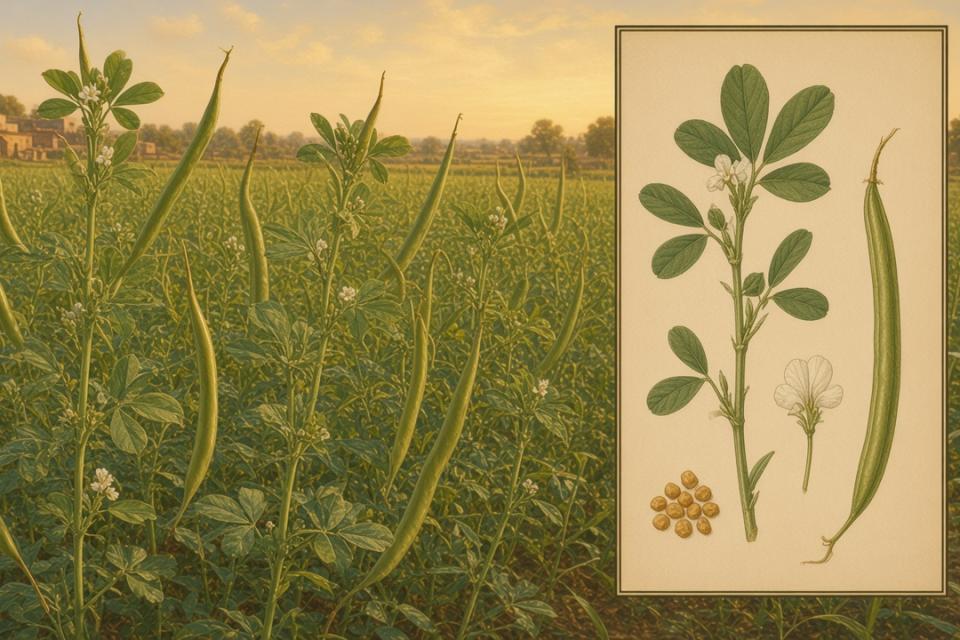
Trigonella foenum-graecum L. is an annual herb of Fabaceae, the legume or pea family, growing 20–60 cm tall (EMA). NCBI Taxonomy files it as taxon 78534. NCCIH describes it as a clover-like herb native to the Mediterranean region, southern Europe, and western Asia, while EMA’s assessment says it originates in India and northern Africa, so the sources disagree on exactly where it began. The leaves are trefoil, divided into three leaflets like clover, and the small flowers are pale. The seeds mature in long, slender pods (EMA). Its species name means Greek hay, and MSKCC lists common names including Greek hayseed, bird’s foot, methi in India, hu lu ba in China, and Bockshornsame in German.
The seed is the medicinal part (EMA), although the leaves are also eaten as a vegetable and the seeds are sprouted and eaten raw. EMA, citing the World Health Organization, describes a seed that is mostly food: about 30% protein, 7% fat, and 48% dietary fiber, of which 20% is soluble. Much of that soluble fiber is mucilage made of galactomannans, which make up 25–45% of the seed and swell into a gel in water. The European Pharmacopoeia sets quality standards for the seed but prescribes no assay for any active constituent (EMA).
EMA lists the seed’s secondary compounds as protoalkaloids, including trigonelline (up to 0.37%) and choline; steroidal saponins (0.6–1.7%) derived from diosgenin, yamogenin, and tigogenin; sterols such as β-sitosterol; flavonoids including orientin, isoorientin, and isovitexin; and a trace of essential oil. MSKCC highlights 4-hydroxyisoleucine, an unusual amino acid that stimulated insulin release in diabetic rats. The maple-syrup smell comes from sotolon (PubChem CID 62835, C6H8O3), a furanone that, as Korman and colleagues note, fenugreek shares with maple syrup and with the urine of people with maple syrup urine disease.
02 Lineage
History
NCCIH says fenugreek has been used as a medicinal plant for about 6,000 years: as a tonic or laxative, for menstrual cramps, menopause symptoms, and kidney stones, and to stimulate milk production. EMA’s assessment records that fenugreek was used in ancient Egypt in incense and to embalm mummies, and that in modern Egypt it is still added to wheat and maize flour for bread. In ancient Rome it was purportedly used to aid labor and delivery. In traditional Chinese medicine the seeds are a tonic and a treatment for weakness and swelling of the legs, and in India fenugreek is both a common condiment and a lactation stimulant. Folk uses range from indigestion to baldness (EMA).
European and Indian pharmacy formalized fenugreek mostly as an appetite stimulant and a poultice. EMA notes that the Indian Materia Medica of 1908 recommended two teaspoonfuls of powdered seed a day for appetite, that the Ayurvedic pharmacopoeia lists it for arthritis and as an adjunct in diabetes and high cholesterol, and that Germany’s Commission E approved 6 g a day of seed for loss of appetite and a hot seed poultice for local inflammation. The ESCOP monograph went further, suggesting 25 g of powdered seed a day as an adjunct in diabetes or high cholesterol. Fenugreek has been marketed in Poland since at least 1962, and two extracts were sold in France from 1970 to 2016. The EU’s herbal committee adopted its first monograph on 27 January 2011 and a revision on 24 November 2021, granting traditional use only.
Fenugreek’s most dramatic modern episode was a food-safety disaster. In May 2011 Germany saw a large outbreak of hemolytic uremic syndrome (HUS), a kidney-damaging complication of infection, caused by a rare Shiga toxin-producing strain, E. coli O104:H4. Restaurant studies and trace-back work implicated raw sprouts from one German farm. In June a smaller cluster near Bordeaux, France, was linked specifically to fenugreek sprouts (King, Clinical Infectious Diseases 2012), and European Food Safety Authority trace-back investigations identified one lot of fenugreek seeds imported from Egypt as the common source. The EU banned imports of fenugreek and certain other seeds and beans from Egypt on 5 July 2011. CDC’s summary counts 4,075 cases, 908 with HUS, and 50 deaths in 16 countries.
03 Chemistry
Active compounds and how it works
For blood sugar, the best-supported mechanism is the fiber. MSKCC attributes fenugreek’s glucose-lowering activity to its galactomannan fiber and saponins, which reduce absorption of glucose and cholesterol from the gut and increase excretion of bile acids. The amino acid 4-hydroxyisoleucine increased insulin secretion in diabetic rats when injected, and in people fenugreek intake has been associated with more insulin binding sites on red blood cells (MSKCC). In the three-year prediabetes trial by Gaddam and colleagues, serum insulin rose and insulin resistance appeared to fall. Neelakantan and colleagues found that the glucose effect was confined to medium and high doses in people with diabetes, consistent with a dose-dependent fiber effect rather than a strong drug-like action.
The other claimed actions are less certain. For lactation, LactMed says the effect may be primarily psychological, although some studies suggest fenugreek might increase insulin, prolactin, and oxytocin secretion. MSKCC reports that fenugreek acts as an estrogen receptor modulator in the laboratory and stimulated the growth of breast cancer cells in vitro. EMA notes reduced levels of the thyroid hormone T3 in rodents given hydroethanolic extracts at 110 mg/kg a day and above. In a case of serotonin syndrome, the authors pointed to animal studies suggesting 4-hydroxyisoleucine may increase serotonin turnover in the brain (MSKCC). None of these findings has been shown to matter clinically. The maple-syrup odor is the one effect nobody disputes. Sotolon is absorbed and excreted, and LactMed notes that it can give a maple-syrup smell to urine, sweat, feces, and possibly breast milk. Because sotolon is also the compound that gives maple syrup urine disease its name, the smell can mislead doctors examining a baby.
04 In practice
Common uses
Blood sugar in diabetes: Neelakantan and colleagues (Nutrition Journal 2014) pooled 10 trials lasting at least a week. Compared with control, fenugreek lowered fasting blood glucose by 0.96 mmol/l, glucose two hours after a glucose load by 2.19 mmol/l (seven trials), and HbA1c by 0.85 percentage points (three trials). Heterogeneity was high, significant effects were seen only with medium or high doses in people with diabetes, and most trials were of low methodological quality. Kim and colleagues (International Journal of Molecular Sciences 2023) pooled 10 randomized trials with 706 participants with type 2 diabetes or prediabetes and found reductions in fasting glucose, two-hour glucose, and HbA1c, but no significant change in insulin resistance. Total cholesterol, triglycerides, and HDL cholesterol improved; LDL cholesterol and body mass index did not.
Preventing diabetes: Gaddam and colleagues (Journal of Diabetes and Metabolic Disorders 2015) followed 140 adults aged 30–70 with prediabetes for three years at an endocrinology department in Hyderabad, India. The 66 who took 5 g of fenugreek powder twice daily before meals developed diabetes less often than 74 matched controls, who had 4.2 times the chance of progressing; fasting and after-meal glucose and LDL cholesterol fell in the fenugreek group. It was a single-center study, and the abstract describes matched controls rather than a placebo. NCCIH says many fenugreek diabetes studies are not of high quality, and EMA concluded that the newer glucose and lipid trials were of limited value because of short duration, small size, and design problems.
Breast milk supply: Foong and colleagues (Cochrane 2020) included 41 trials with 3,005 mothers of healthy term babies. For natural galactagogues, including fenugreek, they could not pool infant weight or milk volume because the studies differed too much (I² 99% for milk volume), and they were very uncertain whether fenugreek improves infant weight; overall certainty was low to very low. Reported side effects included maple-syrup-smelling urine in mothers and hives in infants. LactMed notes that one meta-analysis found a mild galactagogue effect and another found no good evidence, that many studies used multi-ingredient products, and that in a US survey of 122 mothers who used fenugreek, 43% thought it increased their supply and 5% thought it decreased it. Both stress that galactagogues should never replace help with latch, feeding frequency, and other modifiable factors.
Testosterone and libido: fenugreek extracts are widely marketed to men. Yang and colleagues (Frontiers in Nutrition 2026) included 13 placebo-controlled trials. Six studies showed a small favorable effect on total testosterone, but the free testosterone estimate was imprecise and inconsistent, no trial was at low risk of bias, and the certainty of evidence was very low. The authors concluded that current evidence does not support clinical or commercial claims that fenugreek raises testosterone. EMA judged a 12-week trial of 600 mg of extract a day in 120 healthy men aged 43–70 not relevant to medicinal claims because it was small, short, and limited to healthy men. Trials typically test branded, standardized extracts, so results may not apply to plain seed.
Other uses: EMA accepts fenugreek only as a traditional remedy for temporary loss of appetite and, as a poultice, for minor skin inflammation, based on long-standing use rather than trials. NCCIH says the evidence on menstrual cramps is low quality and uncertain, and too limited for other conditions. MSKCC notes small studies in menopausal symptoms, polycystic ovary syndrome, and blood lipids, all needing confirmation. Older reference works went further, with ESCOP and the Ayurvedic pharmacopoeia suggesting fenugreek as an adjunct in diabetes and high cholesterol, but EMA judged the clinical trials insufficient to support well-established use for any indication.
05 The apothecary
Preparations and traditional use
EU traditional use for temporary loss of appetite (EMA/HMPC/179591/2018, revision 1, adopted 24 November 2021), adults and the elderly: herbal tea, 1–6 g of seed a day in 250 ml of boiling water before meals; comminuted seed, 1–2 g with liquid three times daily before meals; a cold macerate of 0.5 g of comminuted seed soaked in 150 ml of cold water for three hours, strained, three times daily; powdered seed, 380–1,100 mg three times daily (1,140–3,300 mg a day); a dry extract (4:1, ethanol 20%), 295 mg twice daily; or a soft extract (5–6:1, ethanol 60%), 500 mg twice daily. See a doctor if symptoms last more than two weeks. Not recommended under 18.
EU traditional use for minor skin inflammation: 50 g of seed or powdered seed in 250 ml of water, used while still warm as a poultice over the affected area two to three times daily; see a doctor if symptoms last more than a week (EMA). Doses in diabetes research are far larger: 10 g of powder a day in the Gaddam prediabetes trial, and 25 g a day in the older ESCOP recommendation. LactMed says doses used for milk supply are typically 1–6 g a day, and that about 25 g a day or more may lower cholesterol and blood sugar. EMA notes that 25–100 g a day of seed powder caused diarrhea and wind in 4 of 10 people in one study.
Food amounts are a different matter from supplements. NCCIH considers fenugreek safe for adults and children in amounts commonly found in foods, and the US FDA lists it as generally recognized as safe as a flavoring (LactMed). Sprouts are the exception to that kitchen safety: raw fenugreek sprouts were the vehicle of the 2011 outbreak, and thorough cooking is the main way to reduce that risk at home. If you take fenugreek for blood sugar, agree on a dose and a glucose-monitoring plan with your diabetes team rather than adding it on your own.
Safety
Before you use fenugreek
06 Caution
Side effects
Digestive effects are the most common. EMA lists wind, diarrhea, and dizziness after oral use, of unknown frequency, and NCCIH adds nausea and other digestive symptoms. In the 2023 meta-analysis by Kim and colleagues, side effects were mild and gastrointestinal, with no liver or kidney toxicity observed. NCCIH warns that large doses may cause a harmful drop in blood sugar. In a small study described by EMA, a single dose of aqueous extract lowered blood potassium by 14.1% in 20 young men, and about a third felt hungry, passed urine more often, or felt dizzy over the next day.
Allergy can be serious. EMA reports allergic reactions after skin application (facial swelling and wheezing) and after eating fenugreek (asthma and allergic rhinitis). MSKCC describes IgE-mediated anaphylaxis, with hives, abdominal pain, nausea, and breathlessness, in a woman with multiple food allergies, confirmed by challenge testing. Fenugreek is a hidden ingredient in curry powders and spice blends, so reactions may occur without anyone realizing what caused them. Because Faeste and colleagues found that most people sensitized to fenugreek were also sensitized to peanut, anyone with a peanut or other legume allergy should treat it as a likely trigger.
The maple-syrup odor is harmless in adults but can cause confusion in babies. Korman and colleagues (J Paediatr Child Health 2001) described mothers who took fenugreek during labor whose newborns had a maple-syrup odor, prompting a false suspicion of maple syrup urine disease. EMA’s assessment describes a five-week-old infant who had a brief episode of unconsciousness after drinking an Egyptian fenugreek tea (helba); his body and urine smelled of maple syrup, metabolic tests were normal, and sotolon was found in both his urine and the tea. If you have taken fenugreek late in pregnancy or while breastfeeding, tell your baby’s doctors.
Rarer reports include a case of serotonin syndrome in a woman taking the antidepressant sertraline who also took fenugreek to aid lactation, severe clotting failure in a patient with cirrhosis who ate excessive amounts of fenugreek milk porridge, and a pulmonary embolism in a 75-year-old man taking a fenugreek-containing supplement for erectile dysfunction (MSKCC). LactMed notes reports of liver toxicity from fenugreek alone and in combinations, a case of toxic epidermal necrolysis in a nursing mother, and a US survey in which 45% of 85 mothers who used it reported an adverse reaction.
07 Caution
Contraindications
Legume allergy: EMA contraindicates fenugreek in anyone allergic to it, to peanut, to soya, or to other plants of the legume family. Its assessment cites cross-reactions with peanut, soy, lupin, lentil, pea, bean, and chickpea. Faeste and colleagues (Journal of Allergy and Clinical Immunology 2009) found high levels of fenugreek-specific IgE in most sera from 29 people sensitized to peanut and other legumes, concluded that fenugreek sensitization is usually a consequence of cross-reactivity in peanut allergy, and found that about 2 mg of fenugreek provoked symptoms in an open food challenge. In their survey of spiced foods, only about a third of products containing fenugreek were labeled correctly.
Pregnancy: NCCIH says fenugreek is not safe in pregnancy in amounts greater than those found in food, because its use has been linked to birth defects in animals and people. EMA cites animal studies at high doses showing embryo loss, fetal death, growth retardation, malformations, and altered behavior in offspring, and Moroccan studies in which fenugreek use in pregnancy was among the risk factors for congenital malformations and premature birth; Morocco’s pharmacovigilance center received eight reports of malformations in six months and advised against its use in pregnancy. Its traditional use to aid labor is another reason for caution. EMA does not recommend medicinal fenugreek in pregnancy, while breastfeeding, or in women of childbearing potential not using contraception, because animal studies also show reduced male and female fertility.
Breastfeeding and children: although fenugreek is widely used to increase milk supply, EMA does not recommend medicinal use while breastfeeding, NCCIH says little is known about safety in larger-than-food amounts, and LactMed urges caution with high doses in women with diabetes or on warfarin. EMA does not recommend medicinal fenugreek under 18 because of incomplete safety data. Do not give fenugreek teas to babies: the infant case in EMA’s assessment, a five-week-old who briefly lost consciousness after drinking helba tea, is reason enough for extra care.
Other cautions: if you are treated for diabetes, EMA advises close monitoring of blood glucose, because fenugreek may lower it. MSKCC advises people with hormone-sensitive cancers to consult their doctors because of laboratory estrogenic effects, and advises those taking SSRI antidepressants to avoid more than food amounts. EMA’s finding of reduced T3 in rodents has not been studied in people, but anyone with thyroid disease should mention fenugreek to their doctor. Because allergic reactions after eating fenugreek have included asthma (EMA), people with asthma and multiple food allergies should be particularly careful.
08 Caution
Drug and herb interactions
Diabetes medicines: fenugreek’s glucose-lowering effect is the interaction most likely to matter. EMA advises close monitoring of glycemic control in people treated for diabetes, NCCIH warns that large doses may cause a harmful drop in blood sugar, and LactMed advises caution with high doses in women with diabetes. The risk is greatest with medicines that can themselves cause hypoglycemia, such as insulin and sulfonylureas. Check your glucose more often when starting or stopping fenugreek, and tell your diabetes team.
Warfarin: MSKCC says case reports indicate fenugreek may increase the effect of warfarin, and LactMed says it can interact to cause bleeding. EMA is more doubtful. The main case involved a woman taking boldo and fenugreek together whose INR rose from her usual range to 3.1 and then 3.4, fell after she stopped and rose again when she restarted; EMA judged the evidence very limited because of confounding and decided against a warning. Given the clotting-failure case in cirrhosis, people on warfarin should have their INR checked if they start or stop regular fenugreek.
Other drugs: MSKCC reports a case of serotonin syndrome in a woman taking sertraline who also used fenugreek to aid lactation, and notes animal evidence that 4-hydroxyisoleucine may increase serotonin turnover in the brain, so people on SSRI antidepressants should avoid supplemental doses. It also notes that fenugreek interfered with cyclophosphamide in animals and altered theophylline bioavailability in dogs, both of unknown clinical relevance. EMA lists no established interactions for its traditional preparations. Because fenugreek often appears in multi-ingredient lactation and blood sugar products, tell your doctor and pharmacist about every supplement you take, not just those labeled fenugreek.
09 Questions
Frequently Asked Questions
Modestly, in people with diabetes. Meta-analyses found lower fasting glucose and HbA1c with fenugreek seed, mainly at medium to high doses, but most trials were small and low quality, and NCCIH says the evidence is not strong enough to judge. It is not a substitute for diabetes treatment. Cinnamon is another kitchen spice promoted for blood sugar.
It is uncertain. A Cochrane review could not combine the trials and rated the evidence very low certainty, and LactMed says the effect may be mainly psychological. Other herbal galactagogues, such as milk thistle extract, have similarly limited evidence, while chasteberry may actually reduce milk supply. A lactation consultant can check latch and feeding frequency, which matter more.
The evidence does not support it. A 2026 meta-analysis of 13 placebo-controlled trials found at most a small effect on total testosterone, no consistent effect on free testosterone, and very low certainty overall. Similar claims are made for maca. Symptoms of low testosterone deserve a blood test and a medical assessment.
Fenugreek contains sotolon, the same aroma compound found in maple syrup. It passes into urine and sweat, and possibly breast milk. The smell is harmless in adults and should fade once you stop taking fenugreek.
It can cause a false alarm. Newborns whose mothers took fenugreek during labor, and an infant given fenugreek tea, have smelled of maple syrup and been investigated for maple syrup urine disease, a serious inherited metabolic disorder, before tests came back normal. Tell your baby’s doctors if you have taken fenugreek.
Normal food amounts in cooking are considered safe, but supplements are not. NCCIH says amounts greater than those in food are not safe in pregnancy because fenugreek has been linked to birth defects, and EMA does not recommend it in pregnancy, while breastfeeding, or when trying to conceive.
Avoid it unless an allergist says otherwise. EMA contraindicates fenugreek in people allergic to peanut, soya, or other legumes, and studies show strong cross-reactivity with peanut. It is often hidden in curry powders and spice blends, and one survey found that only about a third of foods containing it were labeled correctly.
Raw sprouts carry a real risk. In 2011, sprouts grown from one lot of fenugreek seeds imported from Egypt caused a European outbreak of E. coli O104:H4 with 4,075 cases, 908 cases of kidney-damaging hemolytic uremic syndrome, and 50 deaths. Cooking sprouts thoroughly reduces the risk, and anyone at higher risk of severe infection may prefer to avoid raw sprouts altogether.
10 References
Sources
These references support the history, clinical, and safety claims on this page. They are not an endorsement of any product.
-
Fenugreek
National Center for Complementary and Integrative Health (NIH), 2025
Consumer evidence summary (updated February 2025): not enough high-quality evidence for diabetes; mixed lactation results; not safe in pregnancy above food amounts; allergy and low blood sugar warnings.
-
Fenugreek
Memorial Sloan Kettering Cancer Center, About Herbs, 2023
Clinical summary (updated December 2023): fiber and 4-hydroxyisoleucine mechanisms; warfarin, SSRI, and cyclophosphamide interactions; anaphylaxis and serotonin syndrome cases; false maple syrup urine disease.
-
European Union herbal monograph on Trigonella foenum-graecum L., semen (Revision 1)
European Medicines Agency (EMA/HMPC/179591/2018), 2021
Adopted 24 November 2021: traditional use for loss of appetite and minor skin inflammation; doses; peanut, soya, and legume allergy contraindication; not recommended in pregnancy, lactation, or under 18.
-
Assessment report on Trigonella foenum-graecum L., semen (Revision 1)
European Medicines Agency (EMA/HMPC/179590/2018), 2021
Reviews composition, history, reproductive toxicity, Moroccan pregnancy data, allergy cross-reactivity, the helba tea case, and a poorly supported warfarin case; clinical trials judged insufficient for well-established use.
-
Fenugreek
Drugs and Lactation Database (LactMed), NCBI Bookshelf, 2026
Lactation summary (updated July 2026): conflicting meta-analyses; effect possibly psychological; typical 1–6 g doses; adverse reactions, warfarin and diabetes cautions; maple-syrup odor.
-
Effect of fenugreek (Trigonella foenum-graecum L.) intake on glycemia: a meta-analysis of clinical trials
Nutrition Journal (PubMed 24438170), 2014
Neelakantan et al.: 10 trials; fasting glucose −0.96 mmol/l and HbA1c −0.85%; effects only at medium or high doses in diabetes; mostly low quality.
-
The Effect of Fenugreek in Type 2 Diabetes and Prediabetes: A Systematic Review and Meta-Analysis of Randomized Controlled Trials
International Journal of Molecular Sciences (PubMed 37762302), 2023
Kim et al.: 10 RCTs, 706 participants; lower fasting glucose, two-hour glucose, and HbA1c; no change in insulin resistance or LDL; mild GI effects.
-
Role of Fenugreek in the prevention of type 2 diabetes mellitus in prediabetes
Journal of Diabetes and Metabolic Disorders (PubMed 26436069), 2015
Gaddam et al.: 140 adults with prediabetes; 10 g a day for three years; controls had 4.2 times the chance of developing diabetes.
-
Oral galactagogues (natural therapies or drugs) for increasing breast milk production in mothers of non-hospitalised term infants
Cochrane Database of Systematic Reviews (PubMed 32421208), 2020
Foong et al.: 41 RCTs, 3,005 mothers; natural galactagogue data too heterogeneous to pool; very uncertain whether fenugreek helps; maple-syrup urine reported.
-
Effects of oral fenugreek-derived preparations on testosterone-related outcomes in adult men: a systematic review and meta-analysis of randomized placebo-controlled trials
Frontiers in Nutrition (PubMed 42688439), 2026
Yang et al.: 13 RCTs; small effect on total testosterone, none consistent on free testosterone; very low certainty; does not support testosterone-raising claims.
-
Pseudo-maple syrup urine disease due to maternal prenatal ingestion of fenugreek
Journal of Paediatrics and Child Health (PubMed 11532065), 2001
Korman et al.: fenugreek taken during labor gave newborns a maple-syrup odor from sotolon, prompting false suspicion of maple syrup urine disease.
-
Allergenicity and antigenicity of fenugreek (Trigonella foenum-graecum) proteins in foods
Journal of Allergy and Clinical Immunology (PubMed 18930518), 2009
Faeste et al.: high cross-reactivity with peanut in 29 sensitized patients; about 2 mg elicited symptoms; only a third of fenugreek-containing foods labeled correctly.
-
Outbreak of Shiga toxin-producing Escherichia coli O104:H4 associated with organic fenugreek sprouts, France, June 2011
Clinical Infectious Diseases (PubMed 22460976), 2012
King et al.: 24 cases near Bordeaux, 7 with HUS; fenugreek the only sprout independently linked to illness (RR 5.1); led to Europe-wide control measures.
-
Outbreak of Escherichia coli O104:H4 infections associated with sprout consumption - Europe and North America, May-July 2011
MMWR Morbidity and Mortality Weekly Report (PubMed 24352067), 2013
CDC: EFSA traced one lot of fenugreek seeds from Egypt; EU import ban on 5 July 2011; 4,075 cases, 908 with HUS, and 50 deaths in 16 countries.
-
Sotolon
PubChem, National Library of Medicine (NIH), 2026
Maple-syrup aroma compound in fenugreek seed; CID 62835, C6H8O3.