
Monograph
Lapacho (Pau d'Arco)
Handroanthus impetiginosus
Updated October 12, 2026
Key points
-
01
Lab promise, little human proof
Lapachol and beta-lapachone kill cancer cells and microbes in the lab, but human studies of the bark are two tiny trials without comparison groups.
-
02
The cancer story did not hold up
The NCI tested lapachol in people in the 1970s, and MSKCC reports no clinical effect in leukemia. No trial shows that the bark treats cancer.
-
03
A warfarin-like effect
Lapachol blocks the same vitamin K enzyme as warfarin. Avoid pau d’arco with blood thinners or bleeding disorders, and tell your surgeon.
-
04
Avoid in pregnancy
Lapachol killed 99% or more of fetuses in pregnant rats at doses that did not harm the mothers. There are no human safety data.
-
05
Uncertain products, pressured trees
Products vary widely, and some contain no naphthoquinones at all. The ipê trees are Near Threatened, and their timber has been CITES-listed since 2024.
Lapacho, better known in English as pau d’arco, is the inner bark of large South American trumpet trees, brewed as a tea and sold in capsules and tinctures for cancer, candida and other infections, inflammation, and immune support. The short answer is that none of these uses has been shown to work in controlled human trials: the cancer-fighting and antimicrobial effects of its compounds have been seen in the laboratory, not in patients. The bark also has real risks, including a warfarin-like effect on blood clotting and severe harm to unborn young in animal studies.
The trees belong to the genus Handroanthus, above all Handroanthus impetiginosus, the pink- to purple-flowered ipê roxo. Lapacho goes by many names: Memorial Sloan Kettering Cancer Center (MSKCC) lists ipe-roxo, lapacho, trumpet bush, and taheebo, and two scientific reviews translate the Portuguese pau d’arco as “bow tree.” In the most-cited scientific review, Gómez Castellanos, Prieto, and Heinrich (Journal of Ethnopharmacology 2009) describe red lapacho tea as a decoction of the inner bark and heartwood, drunk across South America for bacterial and fungal infections, fever, syphilis, malaria, trypanosomiasis, and stomach and bladder disorders. In the 1960s it was hailed in Brazil and Argentina as a “wonder drug” for cancer, and that reputation, far more than any clinical trial, still drives sales of lapacho teas and capsules around the world.
The science has two halves that rarely meet. Two naphthoquinones from the tree, lapachol and beta-lapachone, kill cancer cells, bacteria, and fungi in the laboratory, and the US National Cancer Institute (NCI) took lapachol into people after it proved active against Walker 256 tumors in rats in the 1960s. MSKCC summarizes the result: lapachol had no clinical effect in patients with chronic myelocytic leukemia, and the study reported nausea, vomiting, and discolored urine. A modern intravenous drug based on beta-lapachone, ARQ 761, produced stable disease at best in a 2018 trial of 42 patients with advanced cancer. Human studies of the bark itself amount to two small trials without comparison groups: a lapacho-based oral solution taken by 40 people during radiotherapy for head and neck cancer, and pau d’arco capsules taken by 12 women with period pain. MSKCC’s verdict is that antibacterial and anticancer effects seen in the laboratory have not been shown in humans.
The safety signals are clearer than the benefits. Lapachol blocks the same vitamin K–recycling enzymes that warfarin does, and MSKCC advises against pau d’arco for anyone taking anticoagulant or antiplatelet drugs. In pregnant rats, lapachol killed 99.2% of fetuses at a dose that left the mothers unaffected, and high single doses damaged chromosomes in rat bone marrow. Products are unpredictable: Health Canada scientists found no detectable lapachol in authenticated lapacho bark and no naphthoquinones at all in three commercial concentrates. The trees themselves are under pressure from the ipê timber trade, and the IUCN rates H. impetiginosus as Near Threatened. Nothing here is medical advice. Pau d’arco is not a treatment for cancer or any infection, and anyone with cancer, a bleeding problem, or a pregnancy should talk to their clinician before using it.
In this monograph
01 The plant
Botanical profile
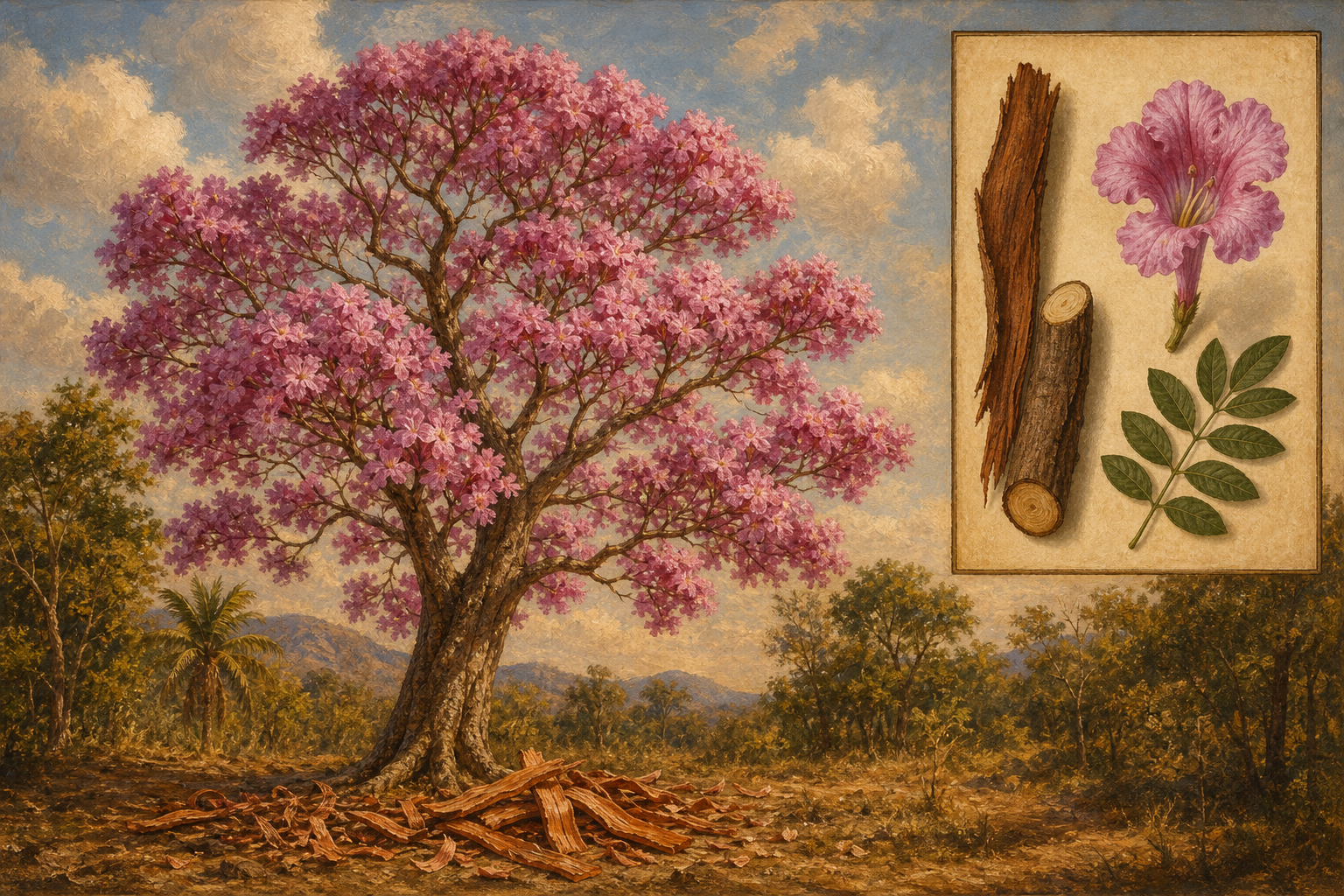
Handroanthus impetiginosus (Mart. ex DC.) Mattos belongs to Bignoniaceae, the trumpet-creeper or catalpa family. Plants of the World Online (POWO), the Kew taxonomic database, accepts the name and dates it to the journal Loefgrenia in 1970, where J. R. Mattos proposed Handroanthus as a new genus for the ipês of Brazil. For most of its history the tree was a Tabebuia. POWO records that Martius used the name Tecoma impetiginosa without a description in his 1843 work on Brazilian medicinal plants, that it was formally published in de Candolle’s Prodromus in 1845, and that Standley moved it to Tabebuia in 1936; it lists 18 synonyms in all, including Tabebuia avellanedae Lorentz ex Griseb. (1879), the name used in many lapacho studies. A 2022 CITES proposal explains that Tabebuia, created by de Candolle in 1838, was shown by the 2007 molecular work of Grose and Olmstead to contain three separate lineages, now the genera Tabebuia, Handroanthus, and Roseodendron, with 113 species between them. Alwyn Gentry’s 1992 Flora Neotropica treatment kept the species in Tabebuia, which is why both names remain in use. Zhang and colleagues (Molecules 2020) note that the epithet comes from impetigo, the contagious skin infection, because the plant was believed to treat it.
Zhang and colleagues describe a deciduous tree up to 30 m tall that sheds its leaves in the dry season. The leaves are palmately compound, with serrated, elliptic to oblong leaflets, and are arranged in opposite or nearly opposite pairs. Showy purple, dark pink, or pink trumpet-shaped flowers have a bell-shaped to tubular, five-lobed calyx, and the fruit is a long, cylindrical capsule holding thin seeds. The CITES proposal adds that the species can reach 50 m tall and 2 m in trunk diameter, growing as large trees in remnant Atlantic Forest but staying much smaller in the Brazilian cerrado savanna, that the trees need light, and that in Bolivia the seeds of Handroanthus species are dispersed by wind and stay viable for no more than three months. POWO gives the native range as central Mexico through Central America to Colombia, Venezuela, French Guiana, Suriname, Peru, Bolivia, Brazil, Paraguay, and northwestern Argentina. According to the CITES proposal, the species grows in tropical and subtropical climates with seasonal rainfall of 500 to 1,200 mm a year, from sea level to 1,400 m, on well-drained plateaus, slopes, and even steep terrain. It is naturally sparse: a 1970s survey of the Brazilian Amazon found 0.11 trees per hectare, against 2.5 per hectare in Bolivian forest inventories.
The wood is the tree’s main commercial product. The CITES proposal describes ipê wood as very hard, heavy, and durable, resistant to fungi and termites, with yellowish-brown to dark olive heartwood whose channels contain a greenish-yellow deposit known as lapachol or ipeina. Medicinal chemistry is less tidy. Gómez Castellanos and colleagues list flavonoids, cyclopentene dialdehydes, benzoic acid derivatives, furanonaphthoquinones, naphthoquinones, and anthraquinones in the bark and heartwood, and Zhang and colleagues report that beta-lapachone is found mainly in the heartwood, while 19 glycosides, along with oxalic acid and sugars, have been isolated from the bark. Park and colleagues (Journal of Ethnopharmacology 2006) isolated lapachol and two anthraquinones from dried inner bark sold as taheebo. Yet a Health Canada team working with Gentry (Awang and colleagues, Journal of Herbs, Spices and Medicinal Plants 1994) found no detectable lapachol in bark from three authenticated Tabebuia species and less than 0.001% in the wood, and the naphthoquinones they did find in bark differed from those usually reported. Several species are sold as lapacho: MSKCC lists Tabebuia heptaphylla alongside H. impetiginosus, and a Paraguayan crude drug called tayï pytá is the bark and trunkwood of that species (Schmeda-Hirschmann and Papastergiou, 2003).
02 Lineage
History
Gómez Castellanos and colleagues describe a long tradition of local use in South America, with the bark peeled and rasped once or twice a year and boiled into a decoction. They give the Guarani and Tupi name as tajy, which they gloss as “to have strength and vigor,” and report that biomedical uses of pau d’arco were recorded as early as 1873. Local uses vary by region. Portillo and colleagues (Journal of Ethnopharmacology 2001) studied lapacho as one of 14 Paraguayan plants used in traditional medicine for skin diseases, and in Paraguay tayï pytá, from the related Tabebuia heptaphylla, is taken for cancer, wounds, and inflammation. De Miranda and colleagues (BMC Pharmacology 2001) report that in northeastern Brazil the inner bark is used as a painkiller, anti-inflammatory, anticancer remedy, and diuretic. A 2022 systematic review by Lima Bezerra and colleagues (Toxicon) found five Handroanthus species used for cancer in the traditional medicine of Brazil, Bolivia, and Argentina, with bark the part used in 88% of reported preparations. Even the species name comes from medicine: it first appeared in Martius’s 1843 account of Brazilian medicinal plants (POWO).
The modern cancer reputation began in Brazil. Gómez Castellanos and colleagues write that the bark came back to the attention of clinicians and the public in 1967 after Brazilian press reports, when the news magazine O Cruzeiro began describing “miraculous” cures in cancer patients at a hospital. Scientific interest grew in parallel. Between 1960 and 1990 the NCI screened plant extracts from around the world for anticancer compounds, and lapachol was identified as the compound responsible for the activity attributed to the tree. In an NCI-funded study, Rao, McBride, and Oleson (Cancer Research 1968) isolated lapachol from extracts of another tree, Stereospermum suaveolens, and found highly significant activity against the Walker 256 carcinosarcoma in rats by injection and by mouth, with the best results from oral doses twice a day. Block and colleagues reported early clinical studies of oral lapachol in 1974. MSKCC summarizes the outcome as no clinical effect in patients with chronic myelocytic leukemia, with nausea, vomiting, and urine discoloration. A decade later, Preusch and Suttie (Archives of Biochemistry and Biophysics 1984) showed that lapachol blocks vitamin K recycling, explaining anticoagulant effects that had already been seen in rats and in people. Lapachol never became an approved cancer drug, and later drug development focused on beta-lapachone.
By 2009 Gómez Castellanos and colleagues were describing red lapacho as a global commodity, sold as loose tea or tea bags and promoted as a wonder drug for cancer, and as a case study in how local knowledge is globalized and commercialized. Regulators have occasionally stepped in. In 2003 the US Federal Trade Commission (FTC) sued the marketers of Seasilver, a liquid supplement containing pau d’arco among other ingredients, which the FTC said was advertised as a cure for cancer and hundreds of other diseases; a 2004 settlement judgment barred them from claiming that any product containing pau d’arco treats cancer without reliable scientific evidence. In 2012 the European Food Safety Authority (EFSA) included Tabebuia bark in its compendium of botanicals containing substances of possible concern, citing lapachol and beta-lapachone. Meanwhile the trees were being felled for timber. After a proposal led by Colombia, the European Union, and Panama, parties to CITES voted in November 2022 to list all ipê species (Handroanthus, Tabebuia, and Roseodendron) in Appendix II, and the US Fish and Wildlife Service notes that the listing took effect on November 25, 2024.
03 Chemistry
Active compounds and how it works
The best-characterized action is on blood clotting. Preusch and Suttie showed that lapachol is a potent inhibitor of vitamin K epoxide reductase and vitamin K quinone reductase in rat liver, the enzymes that recycle vitamin K so it can keep activating clotting proteins. The inhibition resembled that of coumarin anticoagulants such as warfarin. It was not seen in liver from warfarin-resistant rats, and the authors proposed that lapachol takes on a shape similar to the 4-hydroxycoumarins. MSKCC describes this as an action similar to warfarin’s. A second route may involve platelets: Son and colleagues (Journal of Ethnopharmacology 2006) found that fractions of an inner-bark extract inhibited rabbit platelet clumping triggered by collagen and arachidonic acid, partly by suppressing the release of arachidonic acid. How much of either effect survives in a cup of tea is unknown, because lapachol content in bark products varies so widely.
Beta-lapachone is the compound behind most cancer research. Gómez Castellanos and colleagues call it the main antitumor compound, with cell-death effects seen in the test tube. Its mechanism depends on NQO1, an enzyme found at high levels in many solid tumors. Bey and colleagues (Molecular Cancer Therapeutics 2013) showed in breast cancer cells that NQO1 drives beta-lapachone through a futile redox cycle, generating about 120 moles of superoxide per mole of drug in two minutes. The resulting reactive oxygen species break DNA strands, overactivate the repair enzyme PARP1, drain the cell’s NAD+ and ATP, and trigger programmed necrosis; adding the antioxidant enzyme catalase protected the cells. MSKCC lists further laboratory effects, including reduced COX-2 and telomerase activity in prostate cancer cells and apoptosis through mitochondrial signaling. In people, the drug version ARQ 761 caused anemia in 79% of patients and possible methemoglobinemia, a form of hemoglobin that cannot carry oxygen, showing that the same oxidative chemistry that kills tumor cells can harm healthy ones.
Antimicrobial and anti-inflammatory effects are laboratory and animal findings. In Portillo’s screen, lapacho extracts were among the most active of 14 Paraguayan plants against 11 fungal strains, including yeasts. Park and colleagues found that lapachol and two anthraquinones from taheebo inner bark inhibited Helicobacter pylori at 2 to 8 micrograms per milliliter, stronger than metronidazole but far weaker than amoxicillin or tetracycline. Byeon and colleagues (Journal of Ethnopharmacology 2008) reported that a water extract suppressed prostaglandin E2 and nitric oxide in mouse immune cells and, at 100 mg/kg by mouth for a week, prevented ear swelling caused by arachidonic acid in mice, and de Miranda and colleagues found that an inner-bark extract reduced pain behavior in mice by 44% to 64% and paw swelling in rats by 13%. MSKCC adds antipsoriatic, immunomodulating, and antidepressant-like effects in laboratory and animal studies and stresses that human studies are needed. It also warns that effects are hard to predict because species, plant part, extraction method, absorption, dose, and route all vary.
04 In practice
Common uses
Cancer: this is why most people buy pau d’arco, and it is the use with the least support. No clinical trial has tested lapacho bark as a cancer treatment. The only human data on its compounds come from lapachol, which MSKCC says had no clinical effect in chronic myelocytic leukemia, and from ARQ 761, an intravenous beta-lapachone drug. In that phase 1 trial, Gerber and colleagues (British Journal of Cancer 2018) treated 42 people with advanced solid tumors; among 32 who could be evaluated, the best response was stable disease in 12, with some tumor shrinkage in 6, and the authors described only modest activity. Lima Bezerra and colleagues’ 2022 review of 78 studies found that Handroanthus extracts are cytotoxic to many cancer cell lines, but that toxicology results were inconclusive and caution is needed. Laboratory results also depend on the preparation: Pires and colleagues (Molecules 2015) found that a methanol extract of the bark was toxic to four human cancer cell lines, while an infusion, pills, and syrup made from the same plant material were not.
Mouth sores during radiotherapy: Giacomelli and colleagues (Nutrition and Cancer 2015) gave Orasol Plus, a lapacho-based swallowable solution, three times a day to 40 consecutive adults throughout radiotherapy for head and neck cancer. Grade 2 oral mucositis developed in 27.5% and grade 3 in 10%, and no one reached the most severe grade, 4; no one had to stop radiotherapy because of mouth sores, and the solution was well tolerated. MSKCC counts this among preliminary findings of benefit. But the study was designed mainly to test tolerance and safety, it had no control group, and the abstract does not describe the product’s full composition, so it cannot show that lapacho prevented anything. The authors themselves called for a phase III trial. People having radiotherapy should follow their treatment team’s mouth-care plan and ask before adding any product.
Period pain: McClure and colleagues (Advances in Integrative Medicine 2022) gave 12 generally healthy women aged 18 to 45 with primary dysmenorrhea 1,050 mg a day of encapsulated pau d’arco (Tabebuia avellanedae) for eight weeks. The trial was single-arm and open-label, and its main purpose was safety. Nine of the 12 finished. Pain intensity fell significantly from baseline after the first dose and at four and eight weeks, while pain interference, quality of life, sexual function, and the inflammation marker hs-CRP improved but not significantly. The authors called the capsules generally safe with moderate tolerability and said efficacy studies are warranted. Without a placebo group, a fall in pain over two months cannot be separated from expectation or natural variation, so this is a starting point for research, not evidence that pau d’arco works for cramps.
Infections: lapacho is widely promoted for candida, other fungal infections, and bacterial infections, and traditionally for malaria and trypanosomiasis. Laboratory support is real: Portillo’s antifungal screen and Park’s Helicobacter pylori work both found activity, and MSKCC lists antibacterial and antifungal effects in laboratory studies. But MSKCC states plainly that these effects have not been tested in humans. No controlled trial has asked whether pau d’arco tea or capsules clear thrush, vaginal yeast infections, H. pylori, or any other infection, and concentrations that work on a lab plate may never be reached in the body. Proven antifungal, antibiotic, and antiparasitic treatments remain the standard, and an infection that is not improving needs medical review rather than more tea.
Inflammation, pain, and other claims: anti-inflammatory and pain-relieving effects are supported by mouse and rat studies (Byeon, de Miranda) and by cell work, and lapacho products are also promoted for arthritis, immunity, psoriasis, and mood. Zhang and colleagues’ 2020 review of the plant’s immune-related research concluded that most work is still in cell and mouse models and that further evidence from clinical trials on effects and safety is required. Gómez Castellanos and colleagues were blunter: the bioscientific evidence for products derived from the tree is insufficient, and progress depends first on establishing proper quality control. For now pau d’arco has no use supported by controlled human evidence.
05 The apothecary
Preparations and traditional use
Traditionally, lapacho is a decoction rather than a steeped tea: Gómez Castellanos and colleagues describe inner bark and heartwood, peeled and rasped, boiled in water, and sold internationally as loose material or in tea bags. Modern products include shredded bark, capsules and tablets of powdered bark, liquid extracts, and multi-ingredient tonics. There is no regulator-approved or clinically established dose. The only oral amounts tested in recent human studies are 1,050 mg a day of encapsulated bark for eight weeks in the period-pain trial and a lapacho-based solution taken three times a day during radiotherapy, neither of which established that the dose was effective. MSKCC does not publish a dose for the public. Label directions and traditional recipes are not based on dose-finding studies, and it is not known how much lapachol or beta-lapachone, if any, a given cup or capsule delivers.
Product quality is the central problem. Awang and colleagues analyzed 15 lapacho, pau d’arco, and taheebo products sold in Canada and 2 from Brazil. Naphthoquinones were present in all the plant samples except 2, but none were detected in the 3 Canadian concentrates; both Brazilian products contained lapachol, with about 1.0% in the woody material. The authors concluded that most products probably did come from Tabebuia species, but that naphthoquinone levels were highly variable, suggesting changes after harvest. Gómez Castellanos and colleagues add that lapacho products are generally not characterized chemically or pharmacologically and that quality assurance is lacking from crude drug to final product. Different species are sold under the same names, and the CITES proposal notes that the wood of Handroanthus, Tabebuia, and Roseodendron cannot be told apart even under a microscope.
If you decide to try pau d’arco despite the thin evidence, treat it as an unstandardized product with real risks. Avoid concentrated extracts and anything sold as isolated lapachol or beta-lapachone, and look for products that name the species and plant part and come from a manufacturer that tests identity. Do not take it if you are pregnant, could become pregnant, are breastfeeding, have a bleeding disorder, or take blood thinners, and tell your doctor, dentist, and pharmacist that you use it. Stop and seek medical advice if you notice unusual bruising, nosebleeds, bleeding gums, blood in urine or stool, or black stools. Never use it to delay or replace cancer treatment or treatment for an infection. Multi-ingredient tonics deserve extra caution: the Seasilver case involved a blend of pau d’arco with aloe vera and other ingredients sold with sweeping disease claims.
Safety
Before you use lapacho (pau d'arco)
06 Caution
Side effects
Human side-effect data are sparse. The early clinical study of oral lapachol reported nausea, vomiting, and urine discoloration (MSKCC). In the 2022 period-pain trial, 9 of 12 women reported an adverse event while taking 1,050 mg of pau d’arco a day, most of them mild, none serious by FDA criteria, and 3 did not complete the study; most laboratory markers stayed within normal limits, with a few clinically mild abnormalities. In the 40-patient radiotherapy study, the lapacho solution was well tolerated and adherence was described as optimal. Neither study had a control group, so side effects cannot be separated from background symptoms, and no long-term safety studies exist. Gómez Castellanos and colleagues judged the bark generally safe but singled out interference with vitamin K as one of its most important interactions.
Bleeding is the main concern. Preusch and Suttie found that lapachol blocks vitamin K recycling in a warfarin-like way and noted that its anticoagulant activity had already been observed in rats and humans, and MSKCC warns that pau d’arco may increase bleeding risk with anticoagulant and antiplatelet drugs, while adding that the clinical relevance is not known. Son and colleagues’ platelet findings suggest a second route. The period-pain trial monitored prothrombin time, a clotting test, and reported only a few mild abnormalities at 1,050 mg a day, which is reassuring for that dose in healthy young women but says nothing about stronger extracts, longer use, or people already taking blood thinners. Watch for easy bruising, nosebleeds, bleeding gums, heavy periods, or blood in urine or stool.
Animal studies of purified lapachol raise further flags. MSKCC reports that large, long-term doses caused anemia in animals, that short-term dosing reduced the weight of the seminal vesicles in male rodents (the original study by da Silveira e Sá and Guerra, Phytotherapy Research 2007, used rats, and found no change in sperm production), and that lapachol is toxic to fetuses. Maistro and colleagues (Planta Medica 2010) gave male rats single oral doses of 122, 244, or 365 mg/kg and found that the highest dose significantly increased micronuclei and chromosome aberrations in bone marrow cells, a sign of chromosome damage. These doses are far above what a cup of tea is likely to contain, and the bark itself has looked milder: de Miranda and colleagues found low acute toxicity for an aqueous inner-bark extract in mice. Lima Bezerra and colleagues concluded that toxicology across the genus is inconclusive and depends on dose and duration of use. The anemia and possible methemoglobinemia seen with the intravenous drug ARQ 761 show what concentrated beta-lapachone can do, although they do not translate directly to bark products.
Some claims about side effects go beyond the evidence. LiverTox, the US National Institutes of Health’s database of drug- and supplement-induced liver injury, has no separate entry for pau d’arco, and none of the studies summarized here documented liver or kidney damage from lapacho bark. That absence reflects how little the bark has been studied rather than proof of safety. EFSA’s 2012 compendium flags the naphthoquinones in Tabebuia bark as substances of possible concern, while noting that inclusion is a hazard flag, not a judgment that a product is unsafe. Because products vary so much in species, plant part, and chemistry, the side-effect profile of any particular tea or capsule is genuinely unknown, which is a reason for caution rather than reassurance.
07 Caution
Contraindications
Pregnancy, trying to conceive, and breastfeeding: avoid pau d’arco. In two studies by Guerra and colleagues, pregnant rats given lapachol by mouth on days 8 to 12 of pregnancy lost 100% of embryos at 20 mg (Contraception 1999) and 99.2% of fetuses at 10 mg (Brazilian Journal of Biology 2001), while the mothers showed no signs of harm. Felício and colleagues (Contraception 2002) gave 100 mg/kg late in pregnancy and found fetal growth retardation, again without maternal toxicity; their work also noted that lapachol did not interfere with development before implantation. MSKCC lists fetotoxicity and chromosomal abnormalities among animal findings. No human pregnancy or breastfeeding data exist. Because the harm in rats came without warning signs in the mothers, feeling well is no guide to safety.
Bleeding disorders, blood thinners, and surgery: MSKCC lists use of anticoagulant or antiplatelet drugs as a reason not to take pau d’arco. That includes warfarin, whose target lapachol shares, as well as heparins, newer oral anticoagulants, and antiplatelet drugs such as clopidogrel and aspirin. People with hemophilia, von Willebrand disease, low platelet counts, or a history of unexplained bleeding should also avoid it. Before surgery, dental extraction, or other invasive procedures, tell the team you use pau d’arco and follow their advice on when to stop; no study has worked out a specific stopping interval for this herb, so the decision should be made with the clinician who knows your bleeding risk.
Cancer: pau d’arco should never delay or replace evidence-based cancer treatment. MSKCC notes that its anticancer effects in the laboratory have not been shown in humans, and the only cancer-setting study of a lapacho product, in head and neck radiotherapy, had no control group. People having chemotherapy, radiotherapy, or surgery should discuss any supplement with their oncology team. No studies have examined how lapacho products interact with specific cancer drugs, and the related drug ARQ 761 caused anemia in most patients who received it, a reminder that these compounds are biologically active.
Other groups: no study has tested pau d’arco in children, so it should not be given to them. People with anemia have reason for caution, given anemia in animal studies of lapachol and in patients given ARQ 761. Men trying to father a child may wish to avoid it, given the rat seminal vesicle findings, although sperm production was not affected. Anyone with a serious infection, including persistent thrush or H. pylori, should rely on proven treatment, since no human study shows that lapacho clears any infection. And because the identity and strength of products are uncertain, people with chronic liver or kidney disease, who may handle unknown compounds less well, should ask a clinician before using it.
08 Caution
Drug and herb interactions
Anticoagulants and antiplatelet drugs are the important interaction. Lapachol inhibits vitamin K epoxide reductase, the same enzyme targeted by warfarin, and Preusch and Suttie found that its inhibition closely resembled that of coumarin anticoagulants. MSKCC lists anticoagulant and antiplatelet drugs as an interaction that may increase their activity and bleeding risk, while noting that its clinical relevance is not known. Platelet effects of bark extracts in rabbit cells (Son) add a possible second route. If you take warfarin, starting or stopping a pau d’arco product could in principle change your INR, the blood test used to adjust warfarin, so the simplest advice is not to combine them; if you already have, tell your anticoagulation clinic so they can check your INR.
Drug-metabolizing enzymes: Dubin and colleagues (Biochemical Pharmacology 1990) found that beta-lapachone and related ortho-naphthoquinones inhibited cytochrome P450-catalyzed reactions in liver microsomes, a test-tube preparation of liver enzymes, at micromolar concentrations, apparently by diverting the electrons those enzymes need. Cytochrome P450 enzymes break down many prescription drugs, but no study has tested whether lapacho products change drug levels in people, and beta-lapachone is found mainly in heartwood and may be scarce in bark products. The clinical significance is unknown. No interaction studies exist for chemotherapy, targeted cancer drugs, immunosuppressants, or other narrow-margin medicines, so anyone taking these should check with their prescriber before using pau d’arco.
Combination products and other supplements: pau d’arco often appears in multi-ingredient tonics, cleanses, and immune blends, where its amount and source may not be stated. The Seasilver case shows how such blends can be sold with sweeping claims. Read labels for pau d’arco, lapacho, taheebo, ipê roxo, Tabebuia, or Handroanthus, and avoid stacking several products that each contain it. Tell your pharmacist about any pau d’arco product, including teas, if you take blood thinners, antiplatelet drugs, or several medicines at once, and mention it before any surgery or dental procedure.
09 Questions
Frequently Asked Questions
It is traditionally drunk in South America for infections, fever, and stomach and bladder complaints, and is sold worldwide for cancer, candida, inflammation, and immune support. None of these uses is backed by controlled human trials. Its compounds lapachol and beta-lapachone kill cancer cells, bacteria, and fungi in the laboratory, but MSKCC states that these effects have not been shown in people. The only human studies of the bark are two small trials without comparison groups, in mouth sores during radiotherapy and in period pain.
No. Its compounds lapachol and beta-lapachone kill cancer cells in the laboratory, but MSKCC states that these effects have not been shown in humans. When the NCI tested lapachol in people, it had no clinical effect in chronic myelocytic leukemia, and a modern intravenous beta-lapachone drug produced stable disease at best. Pau d’arco can also raise bleeding risk. Anyone with cancer should rely on evidence-based treatment and discuss every supplement with their oncology team.
There is no human evidence that it does. Lapacho extracts were among the most active of 14 Paraguayan plants against fungi, including yeasts, in a laboratory screen, but MSKCC notes that its antifungal and antibacterial effects have not been tested in humans. Concentrations that work on a lab plate may not be reached in the body, and products vary widely. Thrush or a vaginal yeast infection is best confirmed and treated with proven antifungal medicine, especially if it keeps coming back.
No one knows. There are no long-term safety studies and no clinically established dose. The only recent tests used 1,050 mg of capsules a day for eight weeks in 12 women, with mostly mild side effects, and a lapacho-based solution during radiotherapy. Products vary so much that one tea may contain naphthoquinones and another almost none. If you use it, keep to modest amounts, avoid concentrated extracts, and tell your doctor, especially if you take any medicine.
Traditionally it is a decoction, not a quick steep. The inner bark and heartwood are peeled, rasped, and boiled in water, and the same shredded material is sold internationally as loose tea or in tea bags. No study has worked out how long to boil it or how much bark to use, and it is not known how much lapachol or beta-lapachone, if any, ends up in the cup. Products that name the species and plant part, from a supplier that tests identity, are the safer choice.
Human data are sparse. Oral lapachol caused nausea, vomiting, and discolored urine in an early cancer study. In a 2022 trial of 1,050 mg of capsules a day, 9 of 12 women reported side effects, mostly mild. The bigger concerns are bleeding, because lapachol blocks the same vitamin K enzyme as warfarin, and pregnancy, because lapachol killed nearly all fetuses in pregnant rats. Purified lapachol also caused anemia and chromosome damage in animals at high doses. Stop and seek advice if you notice unusual bruising or bleeding.
No. Lapachol blocks vitamin K epoxide reductase, the same enzyme warfarin targets, and anticoagulant effects have been seen in rats and people. MSKCC advises against pau d’arco with anticoagulant or antiplatelet drugs, while noting the clinical relevance is not fully known. Before surgery or dental work, tell the team you use it and follow their advice on stopping. If you take warfarin and have been using pau d’arco, let your anticoagulation clinic know so they can check your INR.
No. In pregnant rats, lapachol killed 99% to 100% of embryos and fetuses at doses that did not harm the mothers, and later in pregnancy it slowed fetal growth. MSKCC also lists chromosomal abnormalities in animal studies. There are no human data for pregnancy or breastfeeding. Avoid pau d’arco in any form, including tea, if you are pregnant, trying to conceive, or breastfeeding.
It has not been shown to. One open-label study gave 12 women 1,050 mg a day for eight weeks; pain scores fell from baseline, but there was no placebo group and three women did not finish. The trial was designed mainly to check safety. Other herbs have a larger body of period-pain trials, covered in our ginger and fennel monographs. Period pain that disrupts daily life deserves a medical assessment.
Mostly. All are names for the bark of Handroanthus impetiginosus, long called Tabebuia impetiginosa or Tabebuia avellanedae, and its close relatives. MSKCC also lists Tabebuia heptaphylla, and Paraguay’s tayï pytá comes from that species. Traditional decoctions use inner bark and heartwood, and the chemistry differs between them: one Health Canada analysis found no detectable lapachol in authenticated bark. Because species and plant parts vary, products sold under these names are not interchangeable.
The main threat is timber, not tea. Ipê wood, which comes from several species, is prized for decking and flooring, and more than 469,000 cubic meters were exported from four South American countries between 2017 and 2021. The IUCN rates Handroanthus impetiginosus as Near Threatened and declining, and since November 2024 its timber has been regulated under CITES Appendix II. The CITES proposal found no sign that herbal bark trade harms wild populations, but trade data for it do not exist, so buying from a transparent supplier is sensible.
10 References
Sources
These references support the history, clinical, and safety claims on this page. They are not an endorsement of any product.
-
Pau D’arco
Memorial Sloan Kettering Cancer Center, About Herbs, 2023
Last updated April 2023: laboratory antibacterial and anticancer effects not shown in humans; preliminary mucositis and dysmenorrhea findings; lapachol without clinical effect in chronic myelocytic leukemia; nausea, vomiting, urine discoloration; anemia, reproductive and chromosomal toxicity in animals; avoid with anticoagulant or antiplatelet drugs.
-
Red Lapacho (Tabebuia impetiginosa)--a global ethnopharmacological commodity?
Journal of Ethnopharmacology (PubMed 18992801), 2009
Gómez Castellanos, Prieto, and Heinrich: traditional decoction of inner bark and heartwood; uses for infections, fever, syphilis, malaria, and trypanosomiasis; 1873 reports; 1967 Brazilian press and O Cruzeiro; NCI screening; lapachol and beta-lapachone; vitamin K interference; variable product quality; insufficient evidence.
-
Tabebuia impetiginosa: A Comprehensive Review on Traditional Uses, Phytochemistry, and Immunopharmacological Properties
Molecules (PubMed 32962180), 2020
Zhang et al.: synonyms, epithet from impetigo, common names, botanical description (deciduous, palmately compound leaves, pink to purple trumpet flowers, cylindrical capsule), bark constituents, beta-lapachone mainly in heartwood; clinical evidence still lacking.
-
Handroanthus impetiginosus (Mart. ex DC.) Mattos
Plants of the World Online, Royal Botanic Gardens, Kew, 2026
Accepted name, first published in Loefgrenia 50 (1970); native range central Mexico to southern tropical America; 18 synonyms including Tecoma impetiginosa (1843, 1845), Tabebuia impetiginosa (1936), and Tabebuia avellanedae (1879).
-
Proposal for amendment of Appendix I or II: Handroanthus spp., Roseodendron spp. and Tabebuia spp. (CoP19 Prop. 44)
CITES Secretariat (proponents Colombia, European Union, and Panama), 2022
Taxonomic history of Tabebuia and Handroanthus; 113 species; ecology, size, and density of H. impetiginosus; IUCN Near Threatened status; ipê timber trade of 469,613 m³ from 2017 to 2021; lapachol deposits in wood; herbal bark trade not shown to affect wild populations.
-
CITES-listed Timber and Wood Updates
US Fish and Wildlife Service, 2024
CITES Appendix II listing of trumpet trees or ipê (Handroanthus, Roseodendron, and Tabebuia), adopted at CoP19, entered into force on November 25, 2024.
-
Naphthoquinone Constituents of Commercial Lapacho/Pau d’arco/Taheebo Products
Journal of Herbs, Spices & Medicinal Plants, 1994
Awang et al. (Health Canada, with A. H. Gentry): no detectable lapachol in authenticated Tabebuia bark, under 0.001% in wood; 17 commercial products analyzed; no naphthoquinones in three Canadian concentrates; highly variable levels.
-
Recognition and Evaluation of Lapachol as an Antitumor Agent
Cancer Research (American Association for Cancer Research), 1968
Rao, McBride, and Oleson: NCI-funded isolation of lapachol from Stereospermum suaveolens; highly significant activity against Walker 256 carcinosarcoma in rats by several routes, best with twice-daily oral dosing.
-
Lapachol inhibition of vitamin K epoxide reductase and vitamin K quinone reductase
Archives of Biochemistry and Biophysics (PubMed 6497379), 1984
Preusch and Suttie: lapachol potently inhibits both vitamin K–recycling enzymes in rat liver microsomes, resembling coumarin anticoagulants; explains anticoagulant activity previously seen in rats and humans.
-
Toxicology of Lapachol in rats: embryolethality
Brazilian Journal of Biology (PubMed 11340475), 2001
Guerra et al.: 10 mg lapachol by gavage on days 8–12 of pregnancy; mothers unaffected; 99.2% fetal mortality.
-
Fetal growth in rats treated with lapachol
Contraception (PubMed 12413627), 2002
Felício et al.: 100 mg/kg on days 17–20 of pregnancy; no maternal toxicity but fetal growth retardation; earlier work cited showing no effect before implantation and high fetal death during organogenesis.
-
Lapachol induces clastogenic effects in rats
Planta Medica (PubMed 20112181), 2010
Maistro et al.: single oral doses of 122, 244, and 365 mg/kg in male rats; the highest dose increased micronuclei and chromosome aberrations in bone marrow.
-
Oral Lapacho-Based Medication: An Easy, Safe, and Feasible Support to Prevent and/or Reduce Oral Mucositis During Radiotherapy for Head and Neck Cancer
Nutrition and Cancer (PubMed 26451712), 2015
Giacomelli et al.: single-arm phase II study of Orasol Plus three times daily in 40 patients; grade 2 mucositis 27.5%, grade 3 10%, no grade 4; no radiotherapy discontinuation; phase III needed.
-
Safety and tolerability of Pau d’ Arco (Tabebuia avellanedae) for primary dysmenorrhea: A single-arm, open-label trial on adults ages 18-45
Advances in Integrative Medicine (PubMed 36960315), 2022
McClure et al.: 1,050 mg/day for eight weeks in 12 women; 9 completed; 9 reported mostly mild adverse events, none serious; prothrombin time and anemia monitored; pain intensity fell from baseline.
-
Phase 1 study of ARQ 761, a β-lapachone analogue that promotes NQO1-mediated programmed cancer cell necrosis
British Journal of Cancer (PubMed 30318513), 2018
Gerber et al.: 42 patients with refractory solid tumors; dose-limiting anemia; anemia 79%, transient grade 3 hypoxia from possible methemoglobinemia 26%; best response stable disease; modest activity.
-
Catalase abrogates β-lapachone-induced PARP1 hyperactivation-directed programmed necrosis in NQO1-positive breast cancers
Molecular Cancer Therapeutics (PubMed 23883585), 2013
Bey et al.: NQO1-driven futile redox cycle forming about 120 moles of superoxide per mole of beta-lapachone in two minutes; DNA strand breaks, PARP1 hyperactivation, NAD+ and ATP loss, programmed necrosis; cell-culture work.
-
Compendium of botanicals reported to contain naturally occuring substances of possible concern for human health when used in food and food supplements
EFSA Journal, European Food Safety Authority, 2012
Lists Tabebuia spp. bark as containing naphthoquinones such as lapachol and beta-lapachone; compendium is a hazard-identification tool covering botanicals restricted in at least one EU member state, with no legal force.
-
Seasilver USA, Inc., et al.
US Federal Trade Commission, 2008
Case record from the 2003 complaint to the 2008 appeal: a supplement containing pau d’arco, aloe vera, and other ingredients marketed as curing cancer and other diseases; the 2004 stipulated judgment bars unsubstantiated cancer claims for any product containing pau d’arco.