
Monograph
Moringa
Moringa oleifera
Updated October 12, 2026
Key points
-
01
Nutritious greens, not a miracle
Raw leaves give 9.4 g protein and 4.0 mg iron per 100 g. Vitamin C varies widely and drying can destroy much of it, so powder rarely matches the claims.
-
02
Blood sugar evidence is weak
Small trials disagree. A 2025 meta-analysis of nine trials rated the evidence very low certainty, and moringa is no substitute for diabetes care.
-
03
Some promise for milk supply
LactMed cites a 2026 meta-analysis of 14 studies showing more milk and prolactin, but trials are small and short, and infant benefits are unclear.
-
04
Avoid root, bark and pregnancy
Bark was used in India to cause abortion and leaf extract ended pregnancies in rats. Avoid medicinal moringa in pregnancy and never use root or bark.
-
05
Check powders for recalls
Moringa leaf powder caused US Salmonella outbreaks in 2015–2016 and 2025, and tested powders have exceeded EU limits for lead and cadmium.
Moringa is the fast-growing drumstick tree, Moringa oleifera, native according to Kew’s Plants of the World Online to northeastern Pakistan and northwestern India and now planted across the tropics, from West Africa to the Pacific islands; in the Philippines it is called malunggay. Almost every part is used. The long young pods are the “drumsticks” of South Asian curries, the leaves and flowers are cooked as greens, the pungent root was once used like horseradish, and the seeds yield ben oil and contain proteins that settle the mud in cloudy water. Over the past two decades the dried leaf has been sold worldwide as a green “superfood” powder, tea, and capsule, with claims about energy, blood sugar, cholesterol, inflammation, and breast milk supply. This page separates moringa the vegetable, which has a long record as everyday food, from moringa the supplement, whose medical claims rest on small and often short trials.
The honest headline is that moringa leaves are a genuinely nutritious green, but not a miracle. US Department of Agriculture (USDA) data list 100 g of raw leaves at 9.4 g of protein, 4.0 mg of iron, and 51.7 mg of vitamin C, about the same vitamin C as an orange; other analyses of fresh leaves report several times more, but drying can destroy much of it, and a teaspoon of powder is a far smaller serving than 100 g of leaves. For blood sugar, a 2025 meta-analysis of nine randomized trials found no consistent cardiometabolic benefit and rated the evidence very low certainty, while a 2026 analysis of 20 studies in people with metabolic disease found modest falls in fasting glucose that its authors called preliminary. For breastfeeding, the US National Library of Medicine’s LactMed database cites a 2026 meta-analysis of 14 studies in 865 women showing more milk and higher prolactin, but the trials are small and short. In a Ghanaian trial, adding 5 g of powder a day to infant food did not raise hemoglobin.
Leaves eaten as food are generally well tolerated, but there are real cautions. Powdered bark was used in India to cause abortion, and leaf extract ended pregnancies in rats, so concentrated moringa is best avoided in pregnancy, and root and bark should not be used at all. Moringa may add to the effects of diabetes and blood pressure medicines, and LactMed advises caution in anyone at high risk of blood clots after a reported pulmonary embolism. Contamination is documented: moringa leaf powder carried Salmonella in US outbreaks in 2015–2016 and 2025, and tested powders have exceeded European limits for lead. The National Institutes of Health’s LiverTox database records one convincing case of liver injury that recurred on restarting. Nothing here is medical advice. Anyone who is pregnant, has diabetes, thyroid disease, or a history of blood clots, or is worried that a baby is not getting enough milk should talk to a clinician or lactation specialist before relying on moringa.
In this monograph
01 The plant
Botanical profile
Moringa oleifera Lam. was published by Lamarck in the Encyclopédie méthodique in 1785 and is the accepted name in Kew’s Plants of the World Online (POWO), which places it in the small family Moringaceae within the order Brassicales, the same order as cabbage, mustard, and capers. POWO lists 18 synonyms, including the Linnaean Guilandina moringa (1753) and Moringa pterygosperma Gaertn. (1791), a name still used in older pharmacy books and in LactMed. Leone and colleagues (International Journal of Molecular Sciences 2015) count 13 species in the single genus Moringa, most of them native to Kenya, Ethiopia, Somalia, Namibia, Angola, and Madagascar; two relatives, Moringa stenopetala of Kenya and Ethiopia and Moringa peregrina of the Red Sea and Horn of Africa, are also used, but products labeled “moringa” normally mean M. oleifera. POWO gives the native range as northeastern Pakistan to northwestern India, in the seasonally dry tropical biome, and lists introductions to dozens of countries across Africa, Asia, the Pacific, the Caribbean, Central America, Florida, California, and Arizona. It records uses as food, medicine, animal food, and fuel, and also as a poison.
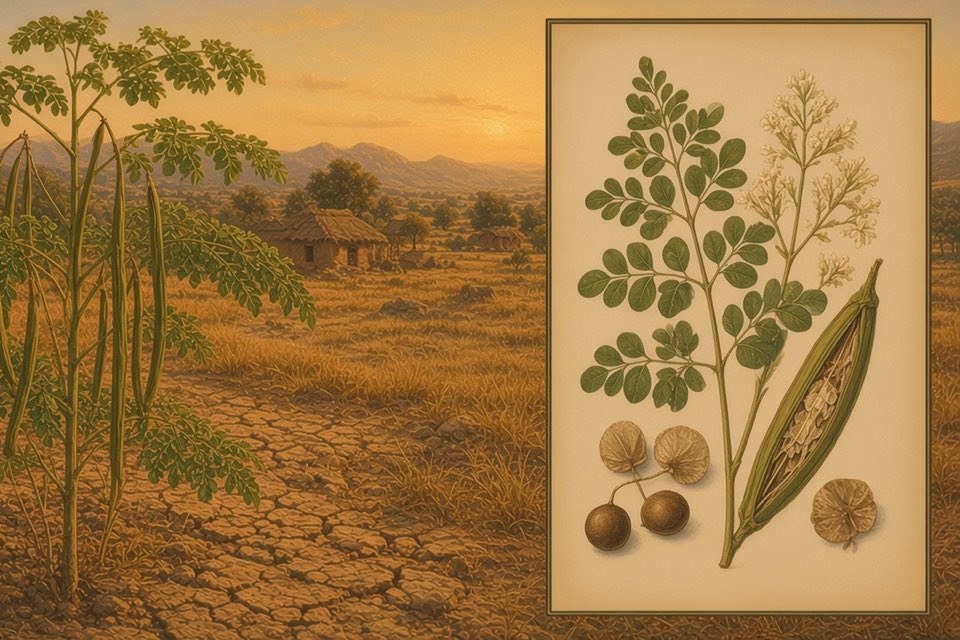
The Flora of China describes a tree up to 12 m tall with pale bark, smooth to rough but not fissured. The leaves are three times pinnate (divided into leaflets on side branches of side branches), 25 to 60 cm long, with small stalked glands at the bases that often ooze a clear or amber liquid. The leaflets come in four to six pairs and are oval and only 1 to 2 cm long, which gives the crown its lacy, feathery look. Fragrant white to cream flowers hang in widely spreading clusters 10 to 30 cm long and look somewhat like an upside-down pea flower. The fruit is a long, three-valved capsule, 20 to 50 cm by 1 to 3 cm, that splits open when ripe; these are the drumsticks. Inside are roundish, three-angled seeds 8 to 15 mm across, usually with three papery wings 0.5 to 1 cm wide. The Flora notes flowering through the year and roots with a pungent taste. Leone and colleagues describe an exceptionally fast-growing tree that can reach 3 m in three months and 12 m in a few years, sprouts vigorously after cutting, and is usually pollarded into a bush so that leaves and pods can be picked.
Moringa’s defining chemistry is the mustard-oil system it shares with its Brassicales relatives. Leaves and seeds store glucosinolates (sulfur-containing compounds), chiefly glucomoringin, which the plant enzyme myrosinase converts into the isothiocyanate moringin when tissue is crushed or soaked in water; Fahey and colleagues (Nutrients 2019) found that a cold-water leaf extract released essentially all of it within 30 minutes. Chodur and colleagues (Scientific Reports 2018) grew 36 accessions side by side and found that domesticated trees carry more glucomoringin and much less of a second glucosinolate, glucosoonjnain, than wild ones, changing the taste. The leaves also contain flavonoids such as quercetin and kaempferol, phenolic acids, carotenoids, tannins, saponins, and the anti-nutrients phytic acid and oxalate, in amounts that vary widely with variety, climate, and drying. The seeds are rich in oil: Cervera-Chiner and colleagues (Foods 2024) obtained a 19% yield by pressing, with oleic acid up to 77.8% and behenic acid about 7%. Reviews describe the root and bark as containing alkaloids, including spirochin and moringinine, along with benzyl isothiocyanate.
02 Lineage
History
Moringa’s home is the dry foothill country of the northwestern Indian subcontinent, where it has long been both a kitchen tree and a medicine. Leone and colleagues write that Ayurvedic tradition credits it with preventing 300 diseases and that a study in Tamil Nadu found it among the plants used by traditional Siddha healers. Its English names track the parts people valued: drumstick tree for the pods, horseradish tree for the root, and ben oil tree for the seeds. The Flora of Pakistan records that the root served as a substitute for horseradish and was used by Anglo-Indians as a vesicant (a blistering agent), and that the flowers and young fruits were eaten in curries. The traditional uses that Leone and colleagues summarize are wide: leaves for malaria, typhoid, parasites, skin disease, high blood pressure, and diabetes, to bring in breast milk, and as a contraceptive; bark drinks for stomach complaints, toothache, and uterine disorders; roots for toothache and as sex tonics. A darker use is also recorded. A 1978 report in the Journal of the Indian Forensic Sciences described powdered moringa bark used in Bengal as an abortifacient that caused violent uterine contractions, sometimes with fatal results.
Moringa seed oil traveled west long before the leaf powder did. Leone and colleagues note that ancient Egyptians used moringa oil in cosmetics and skin preparations. In Europe ben oil, also spelled behen or behn, was prized because it had almost no smell and was slow to go rancid. The Dictionary of Traded Goods and Commodities 1550–1820 describes “huile antique,” a fashionable perfume of the eighteenth and early nineteenth centuries made by layering cotton soaked in ben oil with flowers in a sealed tin and warming it for a day, so that the oil absorbed their scent. P. L. Simmonds, in The Commercial Products of the Vegetable Kingdom (1854), called ben oil a “clear limpid oil having no perceptible smell,” “much esteemed by watchmakers and perfumers,” and reported that the tree grew luxuriantly in Jamaica and Trinidad, where, according to a correspondent he quoted, young pods were cooked and served at planters’ tables like asparagus. The Flora of Pakistan likewise notes that watchmakers used ben oil to lubricate fine machinery.
The modern moringa boom began with water and hunger. Leone and colleagues date wider scientific interest to the 1990s, when researchers began studying the seeds for clarifying water; promotion of the leaves’ nutritional and medical properties followed, the tree spread through almost all tropical countries, and the first international moringa conference was held in Tanzania in 2001, by which time it had acquired nicknames such as “miracle tree” and “mother’s best friend.” Researchers in Ghana, Senegal, Kenya, and elsewhere tested leaf powder in porridge, infant food, and diets for nursing mothers, and in the Philippines malunggay became a widely used galactagogue (a food or medicine taken to increase breast milk). From there it reached Western health-food shelves as a dried superfood powder, tea, and capsule. LiverTox notes that moringa is sold in the United States as a dietary supplement in capsules, powders, and solutions, and that it is not approved for any medical condition.
03 Chemistry
Active compounds and how it works
Most mechanistic work comes from the laboratory and from animals. Fahey and colleagues describe glucomoringin and moringin as having potent anti-inflammatory and cytoprotective activity, acting mainly as indirect antioxidants that switch on the body’s own defenses rather than mopping up free radicals directly, and they developed standardized moringa teas because earlier human studies had no way of delivering a measured dose. Leaf extracts reliably lower blood glucose in diabetic rodents: Watanabe and colleagues (Molecules 2021) pooled 44 rodent studies and found large falls in blood glucose, triglycerides, and cholesterol, with substantial variation between studies. MSKCC (Memorial Sloan Kettering Cancer Center’s About Herbs database) summarizes proposed mechanisms from preclinical work, including leaf fiber and the flavonoid quercetin-3-glucoside improving glucose tolerance and inhibition of HMG-CoA reductase, the enzyme that statin drugs block. In people, Leone and colleagues (Nutrients 2018) tested moringa leaf powder against alpha-amylase, a starch-digesting enzyme, and suggested that slower starch digestion could explain a smaller rise in blood sugar after meals.
As a food, moringa’s value depends on what the body can absorb. Grosshagauer and colleagues (Frontiers in Nutrition 2021), in a review of moringa food chemistry, point out that dried leaves contain notable amounts of phytic acid and tannins, which bind iron and other minerals, and up to 1,050 mg of oxalate per 100 g in one analysis. In iron-depleted rats, iron from air-dried leaf powder was poorly absorbed compared with standard iron salts, which the investigators blamed on its high phytate content. Beta-carotene, the plant source of vitamin A, was abundant in raw leaves at 630 µg per g of dry matter, yet less than 5 µg per g was released in a laboratory digestion model; drying at moderate temperatures and fine grinding improved this. Vitamin C depends heavily on processing: the same review reports that freeze-drying preserved almost all of it, while a 2021 review by Trigo and colleagues (Foods) tabulates only 17.3 mg per 100 g in ordinary dried leaves. These are reasons why claims based on the best figure for fresh leaves do not transfer to a jar of powder.
Other effects are less well understood. How moringa might increase milk supply is unknown; trials that measured prolactin, the milk-making hormone, report increases, but LactMed notes that one study found no link between prolactin and milk volume. In rats, an aqueous leaf extract lowered the active thyroid hormone T3 by about 30% and raised T4, suggesting slower conversion of T4 to T3 (Tahiliani and Kar, Pharmacological Research 2000). Water extracts, including root extracts, changed the lining of the rat uterus and had anti-implantation effects in studies from the 1980s, and a leaf extract was abortive in rats. A case report of a pulmonary embolism, cited by LactMed, raised the possibility that leaf extract promotes clotting, but there are no controlled human data. Leaf extracts also inhibit CYP3A4, a major drug-metabolizing liver enzyme, in human liver preparations in the test tube (Monera and colleagues, Journal of Infection in Developing Countries 2008), at concentrations whose relevance to normal intake is unknown.
04 In practice
Common uses
Nutrition and anemia: moringa is a useful vegetable where diets lack greens, but marketing outruns the data. USDA FoodData Central lists 100 g of raw leaves at 64 kcal with 9.4 g protein, 185 mg calcium, 4.0 mg iron, 378 µg of vitamin A (as retinol activity equivalents), and 51.7 mg vitamin C, against 99 mg calcium and 2.71 mg iron in raw spinach and 53.2 mg vitamin C in a raw orange. The popular claim of “seven times the vitamin C of oranges” rests on the highest fresh-leaf analyses, not on dried powder. Trials of powder for anemia are mixed. Boateng and colleagues (Food Science and Nutrition 2019) randomized infants aged 8 to 12 months in Ghana to complementary food with 5 g of moringa powder a day, blended in or sprinkled on, or to the same food without it, and after four months found no difference in hemoglobin or growth among the 237 who finished. Brar and colleagues (Phytotherapy Research 2022), reviewing seven human studies, found that 14 to 30 g a day improved hemoglobin in children with iron-deficiency anemia and in postmenopausal women, but doses under 10 g did not. In Senegalese nursing mothers, 100 g of powder a week did not change iron stores over three months, while iron-folate tablets corrected deficiency in most women given them. Verdict: a good food, not a reliable treatment for iron deficiency.
Blood sugar: this is the most-studied medical use, and the human evidence is small and inconsistent. In a double-blind trial in Madrid, Gómez-Martínez and colleagues (Nutrients 2022) gave 2.4 g a day of dried leaf powder or placebo for 12 weeks to adults with prediabetes (31 on moringa, 34 on placebo); fasting glucose fell slightly on moringa, from about 103 to 101 mg/dL, and rose on placebo, from 104 to 106, with HbA1c (a three-month average of blood sugar) moving in the same opposite directions. The trial was publicly funded, although a Spanish supplement company that grows moringa supplied the capsules. In Thailand, Taweerutchana and colleagues (Evidence-Based Complementary and Alternative Medicine 2017) gave 8 g a day of leaf capsules or placebo for four weeks to 32 people with untreated type 2 diabetes and found no difference in fasting glucose or HbA1c. Leone and colleagues found that adding 20 g of powder to a meal blunted the rise in blood sugar in 17 people with diabetes but not in 10 healthy volunteers, and noted that the dose tasted poor. Pooled analyses disagree: Crișan and colleagues (Nutrients 2025) found no significant effect on most outcomes across nine randomized trials and rated the certainty very low, while Mokgalaboni and colleagues (Metabolism Open 2026), pooling 20 studies in people with metabolic disease, reported a fall in HbA1c of about 0.6 percentage points that they called preliminary. Verdict: unproven, and no substitute for diabetes care.
Blood pressure, cholesterol, weight, and immunity: Samarin and colleagues (Food Science and Nutrition 2026) pooled eight randomized trials and reported lower blood pressure, by 6.0 mmHg systolic and 7.3 mmHg diastolic, but no change in body weight or body mass index. Crișan and colleagues, who graded certainty with the GRADE system, found only a small fall in diastolic pressure that did not hold up in sensitivity analyses, and no consistent effect on cholesterol, triglycerides, or body measurements, with very high heterogeneity. MSKCC describes human studies as quite limited, with preliminary signs of a small effect on blood lipids. In adults living with HIV, a frequent focus of moringa programs in Africa, Jin and colleagues (Frontiers in Nutrition 2025) pooled seven studies, randomized and nonrandomized, and reported higher CD4 counts and body mass index with supplementation, while calling for larger studies; moringa cannot replace antiretroviral therapy. LiverTox states that claims for energy, immunity, asthma, growth, obesity, lactation, diabetes, and high cholesterol have not been convincingly demonstrated in clinical studies. Verdict: early and mixed.
Breastfeeding: moringa has more lactation trials than most herbs, and a strong following in the Philippines. LactMed’s 2026 summary cites a meta-analysis of 14 studies in 865 women concluding that moringa increases serum prolactin and milk volume and quality, while stressing that long-term benefit to infants has not been well studied and that galactagogues should never replace help with modifiable factors such as latch and feeding frequency. Individual trials are small. In Bangkok, Fungtammasan and Phupong (European Journal of Obstetrics and Gynecology and Reproductive Biology X 2022) randomized 88 new mothers to 450 mg leaf capsules twice a day or placebo in a university-funded trial; median milk volume on day 3 was 73.5 ml versus 50 ml, 47% higher, but the difference was not statistically significant. In Kenya, Attia and colleagues (Current Developments in Nutrition 2025) randomized 50 mother-infant pairs by location to 20 g of leaf powder a day in porridge or porridge alone for three months, in a single-blinded pilot funded by the US National Institutes of Health; mothers on moringa expressed more milk (947 versus 618 ml) but their babies did not grow faster. The 2020 Cochrane review of oral galactagogues rated the evidence for all natural products very low certainty, and Cragg and colleagues (European Journal of Clinical Nutrition 2026) found only low-certainty evidence for moringa capsules in mothers of preterm babies. Verdict: some promise for short-term milk volume, not proven.
Seeds and water: the seeds have a separate, practical use. The Flora of China calls them “a powerful flocculant of use in clarifying turbid water,” and Nouhi and colleagues (Scientific Reports 2019) describe the seed proteins as cationic (positively charged) and among the most efficient natural coagulants, clumping suspended particles so they settle. Clearing cloudiness is not the same as disinfecting. In a six-month randomized pilot in rural South India, Firth and colleagues (American Journal of Tropical Medicine and Hygiene 2010) compared moringa seeds, closed containers, chlorination, and no treatment in 126 families: neither moringa seeds nor containers reduced fecal (thermotolerant) coliform bacteria in household water, while chlorine brought counts to drinkable levels. The authors noted that moringa had worked against E. coli in distilled water in the laboratory and in other studies, so village water conditions may matter. Ben oil pressed from the seeds is a stable cooking and cosmetic oil with no established medicinal use. Verdict: the seeds can help settle muddy water, but the water still needs boiling, chlorination, or proper filtration before drinking.
05 The apothecary
Preparations and traditional use
Moringa is sold as dried leaf powder, capsules and tablets of powder or extract, tea, and seed oil, and in South Asia, Africa, and the Philippines the fresh leaves, flowers, and young pods are cooked as vegetables. LiverTox notes that supplements typically contain 100 mg to 1 g per unit, with labeled daily amounts from 500 mg to 5 or 6 g, and a Benin survey summarized by Grosshagauer and colleagues estimated about 40 g a day from package recommendations on local powders. Doses in trials span a wide range: 900 mg a day of leaf capsules for milk supply, 2.4 g a day for 12 weeks in prediabetes, 8 g a day for four weeks in type 2 diabetes, 5 g a day added to infant food, 20 g a day in porridge for Kenyan mothers, and 14 to 30 g a day in anemia studies. Products differ in plant part, drying, and whether they are whole powder or extract, and few state their glucosinolate or isothiocyanate content. In the United States moringa is a food and dietary supplement, not an approved medicine, and we found no official medicinal dosage from any regulator.
Quality is the most practical issue. Moringa powder is a raw agricultural product usually stirred into water or smoothies without cooking, which is how two US Salmonella outbreaks happened. In 2015–2016 a raw organic powdered meal-replacement shake made with moringa leaf powder imported from South Africa caused 35 Salmonella Virchow infections in 24 states, with 6 hospitalizations (Gambino-Shirley and colleagues, Clinical Infectious Diseases 2018). In 2025 the US Food and Drug Administration (FDA) and the Centers for Disease Control and Prevention traced 11 Salmonella Richmond infections in 7 states, with 3 hospitalizations and no deaths, to a single lot of organic moringa leaf powder from Vallon Farmdirect of Jodhpur, India; Food To Live moringa and supergreens powders, Africa Imports moringa powder, and all Member’s Mark Super Greens powder sold at Sam’s Club were recalled. Because these powders keep for a long time, FDA advised checking homes for recalled products. Moringa can also take up metals from soil: Grosshagauer and colleagues summarize a Benin study in which 58.3% of 24 leaf powders exceeded the EU limit for lead in leafy vegetables and 75% exceeded the cadmium limit, a Thai survey that also found arsenic and mercury, and potentially toxin-producing molds in moringa seed samples from Haiti. The Benin authors judged the overall risk to consumers low, but individual samples were well above legal limits, and the review calls for proper risk assessment and regulation.
Practical points: fresh leaves, flowers, and young pods cooked as vegetables are the traditional and best-tested way to eat moringa, and cooking also lowered tannin levels in leaves and pods in one analysis. If you use powder, choose a brand that tests each batch for microbes and heavy metals, keep to food-like amounts, check FDA recall notices, and treat “super greens” blends as possible moringa products. Do not give supplements to infants or young children without medical advice; the infant trials used carefully prepared foods, and EU limits for lead and cadmium in infant food are far lower than for adult foods. Seed oil sold for cooking or skin care is a different product from leaf powder, and root, root bark, and stem bark preparations should not be used at all.
Safety
Before you use moringa
06 Caution
Side effects
In trials, moringa leaf has generally been well tolerated. LiverTox notes that clinical trials reported moringa to be well tolerated, without changes in routine blood and liver tests, and the Spanish prediabetes trial found no differences in liver or kidney markers between groups, while the Thai diabetes trial reported no adverse effects. LactMed states that studies have found no serious short-term adverse effects in nursing mothers who took moringa leaves or in their breastfed infants, and the Cochrane review of galactagogues found only minor complaints reported across natural products. The main everyday problem is taste: moringa leaves are bitter and grassy, Leone and colleagues found a 20 g meal poorly accepted, and in the Ghanaian infant trial children ate less of the moringa foods than the control food (61% versus 80% of the food provided).
Rare but serious allergic reactions have been reported. MSKCC summarizes a case of Stevens-Johnson syndrome, a severe blistering reaction of the skin and mucous membranes, reported in the Ceylon Medical Journal in a 53-year-old man who became ill about 14 hours after eating food containing moringa leaves, after a similar episode three months earlier following a curry containing them; a case of skin toxicity in a 57-year-old woman taking moringa powder for weight loss; and anaphylaxis in a 50-year-old woman. That last case, reported by Ichrak (Clinical Case Reports 2022) from Tunisia and described as the third reported case of moringa anaphylaxis, involved widespread swelling, breathing difficulty, and a raised tryptase level after eating moringa leaves, with skin prick testing confirming the allergy. Anyone who develops blistering skin, mouth sores, swelling of the face or throat, or difficulty breathing should stop moringa and seek emergency care.
Liver injury appears very rare. LiverTox rates moringa a possible rare cause of clinically apparent liver injury (likelihood score D) on the basis of a 60-year-old woman in Brazil whose liver enzymes rose a month after she started moringa capsules, four twice daily, together with the cholesterol drug ezetimibe. Her tests improved after she stopped both, then rose higher, with an ALT of 1,080 U/L, within a month of restarting moringa alone, and recovered again after stopping. She was never jaundiced, and the product was not tested for contaminants. Blood clots are another rare signal. Ebhohon and Miller (International Journal of Emergency Medicine 2022) described a 63-year-old woman with obesity and type 2 diabetes who developed clots in both lungs after five months of moringa leaf extract with no other major trigger. A single case cannot prove cause, but LactMed now advises caution in anyone at high risk of blood clots.
Because some trials suggest falls in blood sugar and blood pressure, people taking medicines for diabetes or hypertension could see added effects. We found no published case reports of moringa-related hypoglycemia, but shakiness, sweating, confusion, or dizziness on standing after starting moringa are reasons to check blood sugar and blood pressure. At very high doses in animals, MSKCC notes that moringa was genotoxic in rodents at 3,000 mg per kg of body weight, far beyond food intake. Contaminated powder brings its own side effects: Salmonella infection usually begins 12 to 72 hours after eating the food, with diarrhea, fever, and stomach cramps lasting four to seven days, and FDA notes that children under five, older adults, and people with weakened immune systems are more likely to become seriously ill.
07 Caution
Contraindications
Pregnancy: avoid medicinal moringa, and never use root or bark. Bark preparations have a documented history as abortifacients in India, and in rats a water extract of the leaves given in early pregnancy at 175 mg per kg ended every pregnancy (Nath and colleagues, Journal of Ethnopharmacology 1992); water extracts, including root extracts, also had anti-implantation effects in rats. MSKCC advises pregnant and breastfeeding women to avoid moringa, and a 2021 Phytotherapy Research review by Bernstein and colleagues lists Moringa oleifera among medicinal plants to avoid in pregnancy. Leaves are eaten as a vegetable by pregnant women in parts of Africa and Asia, and an Ethiopian cross-sectional study of 460 pregnant women linked eating fresh leaves to hemoglobin about 0.9 g/dl higher after adjustment, but that design cannot show cause and effect, and capsules and extracts are a different matter.
Breastfeeding: the two main references differ. LactMed is cautiously positive about moringa leaf as a short-term galactagogue and reports no serious short-term harm in studied mothers or infants, while MSKCC advises avoiding it. Low milk supply should first be assessed by a lactation specialist or doctor, because positioning, latch, feeding frequency, and the health of mother and baby are the usual fixable causes. A baby who is not gaining weight, has few wet diapers, or seems unusually sleepy needs prompt medical review rather than a supplement. If a nursing mother chooses moringa, a tested product and food-like amounts are the sensible limits, and anyone with a personal or family history of blood clots should discuss it with a doctor first, given LactMed’s caution.
Other people who should avoid moringa or use it only with medical advice: anyone with a history of blood clots, a clotting disorder, or high clot risk; people with liver disease or unexplained raised liver enzymes; people with diabetes or low blood pressure who take medicines; people with thyroid disease, given the rat and small human studies showing changes in thyroid hormones; and anyone allergic to moringa. Children should not be given moringa supplements without medical advice. Before surgery, tell the surgical team about any moringa products, as possible effects on blood sugar, blood pressure, and clotting matter around an operation.
When not to self-treat: diabetes and prediabetes need proper diagnosis and monitoring, and moringa should never replace prescribed medicines. Anemia needs a cause found, whether blood loss, iron deficiency, or another disease, and iron deficiency is treated with iron, not leaf powder. Sudden breathlessness, chest pain, or a swollen, painful leg can signal a blood clot and need emergency care. Yellowing of the skin or eyes, dark urine, or unusual fatigue and nausea while taking moringa should prompt a liver test. Diarrhea, fever, and stomach cramps within a few days of using a powder may be Salmonella infection, and bloody diarrhea, high fever, or signs of dehydration need medical attention, especially in young children, older adults, and people with weakened immunity.
08 Caution
Drug and herb interactions
Diabetes and blood pressure medicines: moringa may lower blood sugar, and MSKCC flags this as a possible interaction with blood glucose tests and treatment. Taking it with insulin, sulfonylureas, or other glucose-lowering drugs could add to their effect. The picture is not simple: in diabetic rats, long-term moringa leaf extract actually blunted the glucose-lowering effect of sitagliptin (Olurishe and colleagues, Journal of Ethnopharmacology 2016), and the clinical relevance is unknown. Anyone with diabetes who starts or stops regular moringa should monitor glucose more closely and tell their prescriber. The blood pressure reductions seen in pooled trials suggest possible added effects with antihypertensive drugs, so people on them should watch for dizziness and have their pressure checked.
Drug-metabolizing enzymes and thyroid treatment: leaf extracts inhibited CYP3A4 in human liver preparations in the test tube (Monera and colleagues 2008), and Fantoukh and colleagues (Phytomedicine 2019) identified several leaf compounds responsible, while finding no notable effect on CYP2D6. In rats, moringa increased the bioavailability of the tuberculosis drug rifampicin, according to MSKCC. The clinical relevance has not been established, but Monera and colleagues warned of possible interactions with antiretroviral and other drugs, so people taking HIV medicines or other drugs with a narrow safety margin should check with a pharmacist. For thyroid medicines, a rat study found slower conversion of T4 to T3, and in an open study in India, 8 people with hypothyroidism who took a fresh-leaf decoction for 45 days had lower TSH and higher T3 and T4 (Alam and colleagues, Drug Metabolism and Personalized Therapy 2021). No interaction with levothyroxine has been studied, but anyone on thyroid treatment who starts or stops regular moringa should have thyroid levels checked.
Blood thinners and doubling up: because of the pulmonary embolism case and LactMed’s caution, people taking warfarin or other anticoagulants for a clot should not add moringa without medical advice, and moringa must never be used in place of them. Moringa is now a common ingredient in green powder blends and lactation products alongside other herbs, so check labels for hidden moringa, especially when a recall has been announced; the 2025 outbreak involved a supergreens blend as well as straight moringa powder. Other glucose-lowering herbs such as fenugreek and cinnamon could add to moringa’s effect. Before surgery, and whenever a new prescription is started, tell your doctor or pharmacist about any moringa products, including teas and powders taken as food.
09 Questions
Frequently Asked Questions
Moringa leaves are a nutritious green vegetable, with protein, calcium, iron, and vitamin A, and the seeds help settle mud in cloudy water. Medical benefits are less certain. Small trials suggest modest effects on blood sugar, blood pressure, and breast milk volume, but pooled analyses rate much of this evidence low or very low certainty. Claims about energy, immunity, inflammation, and cancer rest mainly on laboratory and animal work, and LiverTox says none has been convincingly shown in people.
It is a good leafy green, not a miracle. Per 100 g, raw leaves have about 9.4 g protein and 4.0 mg iron, more than spinach, but USDA lists vitamin C at about the level of an orange, and drying can destroy much of it. Phytate and tannins limit how much iron is absorbed, and in Ghanaian infants 5 g of powder a day did not raise hemoglobin. A teaspoon of powder is also a much smaller serving than 100 g of fresh leaves.
Moringa leaf is usually well tolerated in trials, and its bitter taste is the most common complaint. Rare reported harms include severe allergic reactions such as Stevens-Johnson syndrome and anaphylaxis, one convincing case of liver injury that recurred on restarting, and one pulmonary embolism case. Contaminated powders have caused Salmonella outbreaks. Root and bark preparations are not safe, and moringa may add to the effects of diabetes and blood pressure medicines.
Possibly a little, but the evidence is weak. In a 12-week Spanish trial in prediabetes, 2.4 g a day nudged fasting glucose down slightly versus placebo, while a four-week Thai trial in type 2 diabetes found no effect at 8 g a day. A 2025 meta-analysis rated the evidence very low certainty. If you take diabetes medicines, monitor your glucose and tell your prescriber. Our blood sugar guide compares moringa with fenugreek and cinnamon.
It may help in the short term. LactMed cites a 2026 meta-analysis of 14 studies in 865 women showing more milk and higher prolactin, and in Kenya mothers eating 20 g a day expressed more milk, though their babies did not grow faster. A Thai placebo-controlled trial found 47% more milk on day 3, not statistically significant. Galactagogues such as moringa and fenugreek should not replace help from a lactation specialist.
Medicinal moringa is best avoided. Powdered bark was used in India to cause abortion, and a leaf extract ended pregnancies in rats at 175 mg per kg. MSKCC advises pregnant women to avoid moringa. Leaves eaten as an ordinary cooked vegetable are part of traditional diets in Asia and Africa, but capsules, concentrated extracts, root, and bark are a different matter. If you are pregnant and anemic, ask your clinician about iron treatment rather than relying on moringa.
Yes. In 2025 FDA and CDC linked 11 Salmonella Richmond infections in 7 states, with 3 hospitalizations, to one lot of organic moringa leaf powder from India; Food To Live moringa and supergreens powders, Africa Imports moringa powder, and all Member’s Mark Super Greens were recalled. In 2015–2016 a raw meal-replacement powder containing moringa from South Africa caused 35 infections in 24 states. These powders have a long shelf life, so check your cupboard against recall notices.
Ask a pharmacist first. No study has tested moringa with levothyroxine, but a rat study and a small open study in people with hypothyroidism showed changes in thyroid hormones, so have your levels checked if you start or stop regular use. Moringa inhibited the liver enzyme CYP3A4 in test-tube studies, which matters for HIV medicines and other drugs with a narrow safety margin. It may also add to diabetes and blood pressure medicines, and LactMed urges caution in anyone at high risk of blood clots.
10 References
Sources
These references support the history, clinical, and safety claims on this page. They are not an endorsement of any product.
-
Moringa oleifera Lam.
Plants of the World Online, Royal Botanic Gardens, Kew, 2026
Accepted name, first published in Lamarck’s Encyclopédie (1785); Moringaceae, order Brassicales; native range northeastern Pakistan to northwestern India; 18 synonyms including Moringa pterygosperma; widely introduced; uses include food, medicine, fuel, and poison.
-
Moringa
Drugs and Lactation Database (LactMed), National Institute of Child Health and Human Development, 2026
Use as a galactagogue, especially in the Philippines; 2026 meta-analysis of 14 studies (865 subjects) showing higher prolactin and milk volume; no serious short-term harm in mothers or infants; caution in people at high risk of blood clots; summaries of individual lactation trials.
-
Moringa
LiverTox, National Institute of Diabetes and Digestive and Kidney Diseases, 2024
Likelihood score D; one Brazilian case of anicteric hepatitis with positive rechallenge; supplement strengths and labeled doses; claims for energy, immunity, lactation, and diabetes not convincingly demonstrated; not approved for any condition in the United States.
-
Moringa oleifera
Memorial Sloan Kettering Cancer Center, About Herbs, 2023
Limited human evidence; preclinical mechanisms; avoid in pregnancy and breastfeeding; case reports of Stevens-Johnson syndrome, skin toxicity, and anaphylaxis; CYP3A4 and rifampicin findings; sitagliptin interaction in rats; genotoxicity at 3,000 mg/kg in rodents.
-
Outbreak Investigation of Salmonella: Moringa Leaf Powder (October 2025)
U.S. Food and Drug Administration, 2025
11 Salmonella Richmond infections in 7 states, 3 hospitalizations, no deaths; single lot of organic moringa leaf powder from Vallon Farmdirect, Jodhpur, India; recalled Food To Live, Africa Imports, and Member’s Mark Super Greens products; symptoms and onset.
-
Multistate Outbreak of Salmonella Virchow Infections Linked to a Powdered Meal Replacement Product-United States, 2015-2016
Clinical Infectious Diseases (PubMed 29522200), 2018
Gambino-Shirley et al.: 35 cases in 24 states, 6 hospitalizations; outbreak strain isolated from organic moringa leaf powder imported from South Africa, an ingredient in a raw powdered shake.
-
Effects of Moringa oleifera Lam. Supplementation on Cardiometabolic Outcomes: A Meta-Analysis of Randomized Controlled Trials with GRADE Assessment
Nutrients (PubMed 41305552), 2025
Crișan et al.: nine RCTs, 649 participants; no significant effect on most outcomes; small diastolic blood pressure reduction not robust; very low certainty for all outcomes.
-
Moringa oleifera on hyperglycemia and hypertension in metabolic diseases: Systematic review, exploratory meta-analysis and meta-regression
Metabolism Open (PubMed 41816507), 2026
Mokgalaboni et al.: 20 clinical studies in metabolic disease; HbA1c mean difference -0.62%, fasting glucose and blood pressure reductions; findings called preliminary and hypothesis-generating because of heterogeneity and study quality.
-
Moringa oleifera Leaf Supplementation as a Glycemic Control Strategy in Subjects with Prediabetes
Nutrients (PubMed 35010932), 2022
Gómez-Martínez et al.: double-blind RCT, 2.4 g/day leaf powder (n = 31) or placebo (n = 34) for 12 weeks; fasting glucose and HbA1c changed in opposite directions; no liver or kidney differences; publicly funded, capsules from a Spanish supplement maker.
-
Oral galactagogues (natural therapies or drugs) for increasing breast milk production in mothers of non-hospitalised term infants
Cochrane Database of Systematic Reviews (PubMed 32421208), 2020
Foong et al.: 41 RCTs; natural galactagogues including moringa may benefit milk volume and infant weight in subgroup analyses, but evidence very low certainty; only minor adverse effects reported.
-
The effect of Moringa oleifera capsule in increasing breast milk volume in early postpartum patients: A double-blind, randomized controlled trial
European Journal of Obstetrics and Gynecology and Reproductive Biology X (PubMed 36440058), 2022
Fungtammasan and Phupong: 88 women, 900 mg/day leaf capsules or placebo; day-3 milk volume 73.5 versus 50 ml (47% higher), not statistically significant; university-funded.
-
Effect of Maternal Moringa oleifera Leaf Supplementation on Maternal and Infant Nutritional Status and Human Milk Output: A Pilot Single-Blinded Cluster-Randomized Trial
Current Developments in Nutrition (PubMed 41282517), 2025
Attia et al.: 50 Kenyan mother-infant pairs, 20 g/day powder in porridge for three months; expressed milk 947 versus 618 ml; no effect on infant growth or milk fat and protein; NIH-funded.
-
The impact of Moringa oleifera leaf supplementation on human and animal nutrition, growth, and milk production: A systematic review
Phytotherapy Research (PubMed 35302264), 2022
Brar et al.: seven human and 26 animal studies; 14–30 g/day, but not under 10 g/day, improved hemoglobin in children with iron-deficiency anemia and postmenopausal women; evidence limited.
-
The Future of Moringa Foods: A Food Chemistry Perspective
Frontiers in Nutrition (PubMed 34796194), 2021
Grosshagauer et al.: phytate, tannins, and oxalate; poor iron bioavailability in rats; low beta-carotene bioaccessibility; Ghana and Senegal trials; lead and cadmium above EU limits in Benin powders; arsenic, mercury, PAHs, and molds.
-
Point-of-use interventions to decrease contamination of drinking water: a randomized, controlled pilot study on efficacy, effectiveness, and acceptability of closed containers, Moringa oleifera, and in-home chlorination in rural South India
American Journal of Tropical Medicine and Hygiene (PubMed 20439952), 2010
Firth et al.: 126 families over six months; moringa seeds and closed containers did not reduce thermotolerant coliforms in household water, while chlorine did.
-
Drumstick leaves, raw (FDC ID 168416)
USDA FoodData Central (SR Legacy), 2019
Per 100 g: 64 kcal, 9.4 g protein, 185 mg calcium, 4.0 mg iron, 378 µg vitamin A RAE, 51.7 mg vitamin C. Comparison values from the same database: raw orange 53.2 mg vitamin C; raw spinach 99 mg calcium and 2.71 mg iron.
-
Cultivation, Genetic, Ethnopharmacology, Phytochemistry and Pharmacology of Moringa oleifera Leaves: An Overview
International Journal of Molecular Sciences (PubMed 26057747), 2015
Leone et al.: 13 Moringa species; growth and cultivation; Ayurvedic, Siddha, and Egyptian uses; 1990s water-clarification research and 2001 Tanzania conference; traditional uses of leaves, bark, roots, seeds; leaf phytochemistry.
-
The Commercial Products of the Vegetable Kingdom
P. L. Simmonds, via Project Gutenberg, 1854
Oil of ben from Moringa pterygosperma: a clear, smell-free oil esteemed by watchmakers and perfumers; tree growing in Jamaica and Trinidad; young pods cooked like asparagus.