Monograph
Myrtle
Myrtus communis
Updated October 10, 2026
Key points
-
01
Myrtol is mostly not myrtle
GeloMyrtol forte is a distillate of eucalyptus, sweet orange, myrtle, and lemon oils in a 66:32:1:1 ratio. Myrtle oil is only about 1% of the mixture.
-
02
Distillate trials, not myrtle trials
The distillate eased acute bronchitis in 413 patients and sinusitis in 463. Those results belong to that product, not to myrtle on its own.
-
03
Small trials of myrtle alone
Myrtle fruit syrup, a mouth-ulcer paste, and a hemorrhoid ointment have been tested in small Iranian and Indian trials, with modest or mixed results.
-
04
Never swallow the oil
Myrtle oil is rich in 1,8-cineole, like eucalyptus oil. Keep it away from children’s faces, avoid it under 2, and never take it by mouth.
-
05
A plant of love and ritual
Sacred to Venus in Rome, one of the four species at Sukkot, and carried by royal brides since 1858, myrtle also flavors the liqueur mirto.
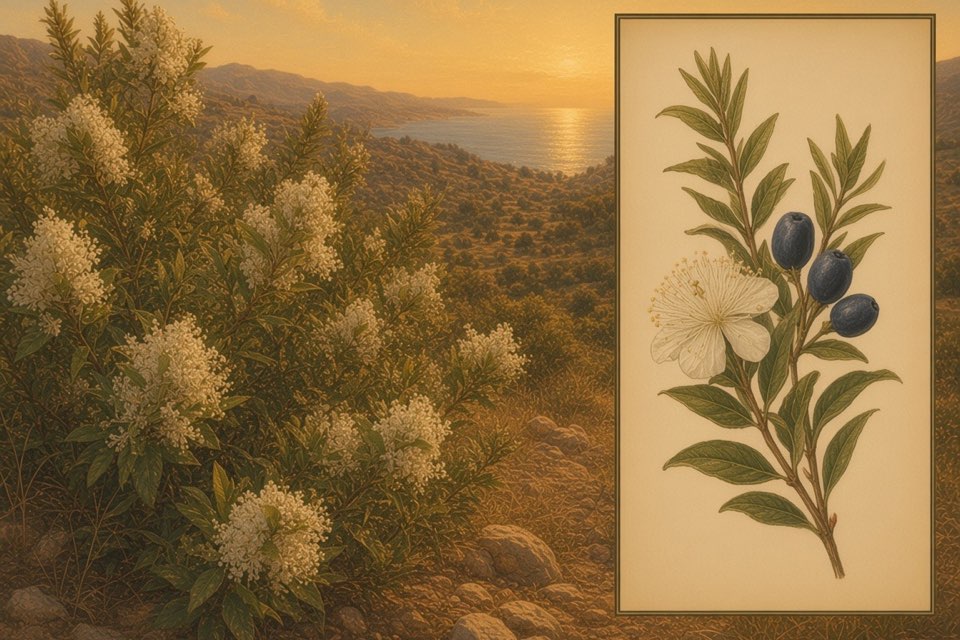
Myrtle is the evergreen shrub of the Mediterranean hillside, with glossy, aromatic leaves, white starry flowers full of stamens, and blue-black berries. Myrtus communis belongs to the myrtle family, Myrtaceae, which also includes eucalyptus and tea tree, and few plants carry as much culture. The Roman writer Pliny the Elder called Venus its tutelary goddess and recorded that Roman generals celebrating a lesser triumph, the ovation, wore myrtle crowns. The rabbinic tradition counts myrtle among the four species bound together at the festival of Sukkot. English Heritage traces a myrtle growing at Osborne House to a posy given to Queen Victoria in 1845, and sprigs have appeared in royal wedding bouquets since 1858. In Sardinia and Corsica the berries are steeped to make a dark, resinous liqueur, mirto. Medicinally, myrtle fruit and leaves were used in Iranian traditional medicine, where Avicenna’s Canon named the fruit habb al-aas, and nineteenth-century American Eclectic physicians gave the leaf oil in capsules for bronchitis and excess mucus.
The name causes a real mix-up. The best-tested product with myrtle on its label, the German capsule GeloMyrtol forte (the distillate known in trials as Myrtol standardized or ELOM-080), contains a 300 mg distillate of eucalyptus, sweet orange, myrtle, and lemon oils in a ratio of 66:32:1:1, so myrtle oil is only about 1% of it. That product has placebo-controlled trials in acute bronchitis (413 patients) and acute viral sinusitis (463 patients), but its results belong to the mixture, which is mostly eucalyptus and orange oil, not to myrtle. The name is historical: a century ago “myrtol” meant a fraction distilled from myrtle oil itself. Studies of myrtle alone are few and small. Iranian and Indian trials tested a fruit syrup or powder for heavy menstrual bleeding in 30 to 40 women, a paste for mouth ulcers in 45 patients, and an ointment for hemorrhoids in 134 women, with modest or mixed results and no large confirmatory trials.
Safety centers on the essential oil. Myrtle leaf oil is rich in 1,8-cineole, the same compound that dominates eucalyptus oil, and America’s Poison Control warns that essential oils can cause serious poisoning when swallowed or misused, especially by children. The European Medicines Agency (EMA) contraindicates cineole-rich eucalyptus oil under 2 years because it can trigger a spasm of the voice box, and the maker of GeloMyrtol forte does not allow it under age 6, with inflammatory gut or bile duct disease, or with severe liver disease. Safety in pregnancy has not been established. In the United States, federal food rules list myrtle leaves as a natural flavoring for alcoholic beverages only. Nothing here is medical advice; a cough lasting more than a few weeks, breathlessness, a high fever, coughing up blood or discolored phlegm, and unusually heavy or prolonged periods all deserve a medical assessment, and anyone who has swallowed an essential oil should call a poison control center.
Ingredient in
Myrtol (GeloMyrtol forte)In this monograph
01 The plant
Botanical profile
Myrtus communis L. was named by Linnaeus in Species Plantarum in 1753 and is the accepted name in Kew’s Plants of the World Online (POWO), which places it in Myrtaceae and recognizes two subspecies, subsp. communis and subsp. tarentina. Dabbaghi and colleagues (Physiological Reports 2023) describe Myrtaceae as a large family of about 5,500 species in 144 genera, and Myrtus as its only genus in Europe; its better-known relatives include eucalyptus and the tea tree of Australia. POWO gives the native range as Macaronesia to Pakistan: the Azores, Madeira, and the Canary Islands, the Mediterranean from Portugal, Spain, Morocco, Algeria, Tunisia, and Libya through France, Corsica, Sardinia, Sicily, Italy, the Balkans, Greece, Crete, Cyprus, and Türkiye, east to Lebanon, Syria, Palestine, Iraq, Iran, Afghanistan, and Pakistan, and south to Saudi Arabia, Yemen, Eritrea, and Ethiopia. It has been introduced to California, Texas, Louisiana, Cuba, Puerto Rico, the Leeward and Windward Islands, and South Africa’s Cape Provinces. POWO describes it as a shrub or tree of the subtropical biome used as medicine, food, and fuel.
King’s American Dispensatory (1898) describes an evergreen shrub 6 to 8 feet high with grayish, fissured bark, while English Heritage notes that it can reach 4 to 5 m in a sheltered garden. The leaves are opposite, ovate to lance-shaped, glossy, and, held up to the light, dotted with tiny translucent oil glands; Dabbaghi and colleagues give their length as 2 to 5 cm. The fragrant flowers grow singly from the leaf axils, star-shaped, white or pale pink, with a conspicuous puff of numerous stamens. The fruit is a round, bluish-black berry with two or three chambers and several kidney-shaped seeds, and King’s noted that flowers, leaves, and berries are all fragrant while the bark is astringent. Dabbaghi and colleagues describe pollination by insects and seed dispersal by birds. On Corsica, where it is a shrub of the maquis scrubland, the Corsican distiller Maison Damiani reports flowering in June and small black, resinous, peppery berries in November and December. English Heritage advises a warm, dry, free-draining site, reflecting the plant’s Mediterranean origins, and says it has been cultivated in Britain since the sixteenth century.
The leaves carry an essential oil. King’s recorded a yield of 0.56% of greenish oil from leaves and twigs, and Yarahmadi and colleagues (Plants 2024) found 0.48 to 1.48% across 12 wild Iranian populations, with 1,8-cineole at 22 to 46%, alpha-pinene at 19 to 36%, linalool at 8 to 19%, and alpha-terpineol at 5 to 9%. Other regions produce a different profile: Barboucha and colleagues (International Journal of Molecular Sciences 2025) analyzed an Algerian oil that was 58% myrtenyl acetate and only 18% cineole, and a review by Al-Snafi and colleagues (Naunyn-Schmiedeberg’s Archives of Pharmacology 2024) cites Montenegrin samples with 5 to 22% myrtenyl acetate. Myrtle oil is therefore not one standard product, and its cineole content varies widely. The same review describes leaf compounds called myrtucommulones, a family of acylphloroglucinols labeled A to L, along with triterpenes, and berries whose skins are rich in anthocyanin pigments and tannins. The 1918 Dispensatory of the United States named pinene, cineol, and myrtenol in the oil.
02 Lineage
History
Myrtle was the plant of Venus. In his Natural History, Pliny the Elder wrote that the Romans and Sabines purified themselves with myrtle sprigs at the place where, in his day, the statues of Venus Cluacina stood, that Venus, who presides over unions, was the tree’s tutelary divinity, and that two ancient myrtles, the Patrician and the Plebeian, grew before the temple of Quirinus. He also recorded that Posthumius Tubertus entered Rome in an ovation crowned with the myrtle of Venus Victrix, and that ovation wreaths were made of myrtle from then on; household gods, the Lares, were crowned with it too. King’s American Dispensatory adds that myrtle was worn by Athenian judges, wreathed for victors in Greece and Rome, and that an Islamic tradition held that Adam carried a sprig of myrtle out of Eden. English Heritage notes a gold myrtle wreath from Vergina in northern Greece dating to between 300 and 30 BC. In Persian medicine, Qaraaty and colleagues (DARU 2014) write that Avicenna’s Canon of Medicine, completed in 1025, called the plant mourd or aas and the fruit habb al-aas, and that later Persian pharmacopoeias of 1765 and 1781 gave a recipe for myrtle fruit syrup.
Myrtle has a place in Jewish ritual and royal weddings. Leviticus 23:40 commands the taking of “a branch of a thick tree” at Sukkot, and Maimonides, in the twelfth-century Mishneh Torah, identified it as the myrtle whose leaves cover its wood, with three or more leaves on one stem; a branch whose leaves grow in opposite pairs with the third leaf above them is not “thick” and is called wild myrtle. The festival bundle holds three myrtle branches, two willow branches, and a palm frond, held with a citron. King’s also mentions myrtle as a token of peace and a bridal decoration among Jews. In Britain, English Heritage tells how Prince Albert’s grandmother, the Dowager Duchess of Saxe-Gotha-Altenburg, gave Queen Victoria a nosegay containing myrtle in 1845, and a sprig was raised into the bush that still grows at Osborne House on the Isle of Wight. Myrtle carried a German association with innocence, and in 1858 the Queen’s eldest daughter, Princess Victoria, married with orange flowers and myrtle. Royal brides since, including Elizabeth II, Diana, Catherine, and Meghan, have carried myrtle in their bouquets, traditionally from the Osborne plant.
Medicinal use revived in nineteenth-century Europe. King’s credits the French physician Delioux de Savignac with reintroducing myrtle in 1876, and the Eclectic physicians used it for excess mucous discharges, fetid bronchitis (giving the oil in 2-minim capsules), hemorrhoids, and heavy menstrual bleeding; the French distilled a perfumed water called eau d’ange from the leaves and flowers. King’s also records that “myrtol” was once thought to be a single constituent of the oil but was really a mixture of pinene, cineol, and dipentene. The 1918 Dispensatory of the United States described myrtol as the fraction of myrtle oil distilling at 160 to 180 °C and recommended it, at 1 to 2 minims in capsules several times a day, as an antiseptic for the lungs and urinary tract in chronic bronchitis, cystitis, and pyelitis. Today’s Myrtol capsules reuse the name for a different mixture made mainly from eucalyptus and orange oils. Meanwhile myrtle stayed in the kitchen: King’s noted that leaves, berries, and twigs flavored food and wine, and Sardinian and Corsican families still macerate the berries in spirit to make mirto.
03 Chemistry
Active compounds and how it works
Myrtle’s essential oil behaves in the laboratory much like other cineole-rich oils, but there are no human studies of the oil on its own. Dănilă and colleagues (Molecules 2026) tested a myrtle leaf oil containing about 42% eucalyptol and 21% alpha-pinene: it was active mainly against Gram-positive bacteria and the yeast Candida parapsilosis, and was not toxic to human skin cells at concentrations up to 125 µg/ml. Li and colleagues (Pharmaceuticals 2024) found that a myrtle oil blocked two common-cold coronaviruses, 229E and OC43, in cell culture with low toxicity to the cells, but it had no effect in the SARS-CoV-2 systems they tested. Test-tube activity like this is common among essential oils and does not show that inhaling, swallowing, or rubbing on myrtle oil treats an infection. The oil’s main compound, 1,8-cineole, is the same one found in eucalyptus oil, which EMA accepts for cough with a cold only as a traditional remedy, based on long use rather than trials.
The leaves also contain myrtucommulones, unusual compounds that have drawn pharmacological interest. Knauthe and colleagues (International Journal of Molecular Sciences 2022) describe myrtucommulone A as an acylphloroglucinol, chemically related to hyperforin from St John’s wort, and found that it inhibited Wnt/beta-catenin signaling and anchorage-independent growth in colon cancer cells at concentrations up to 10 micromolar without major toxicity. Al-Snafi and colleagues summarize work showing that myrtucommulone A and a related compound, semimyrtucommulone, inhibit two enzymes that make inflammatory messengers, 5-lipoxygenase and cyclooxygenase-1, at micromolar concentrations in laboratory assays. The berries contribute anthocyanins and other polyphenols with antioxidant activity in the test tube, and Tuberoso and colleagues (Food Chemistry 2013) found that liqueurs made by cold maceration of the berries relaxed isolated blood vessels by about half. None of these findings has been tested in people, and we found no studies of how myrtle’s own compounds are absorbed or handled by the human body.
For the Myrtol capsules, the pharmacology belongs to the mixture. The product’s German prescribing information (Fachinformation) reports that cineole, limonene, and alpha-pinene reach peak levels in the blood one to three hours after a dose, with cineole exposure about 20 times that of the others; with myrtle oil at about 1% of the distillate, most of that cineole comes from eucalyptus oil and the limonene from orange oil. In animal experiments by Begrow and colleagues (Advances in Therapy 2012), the distillate sped up the beating of the tiny hairs (cilia) lining rat airways and the clearance of mucus in mice. Han and colleagues (American Journal of Rhinology and Allergy 2009) gave 900 mg a day for 10 days to 22 people with chronic nonallergic rhinitis and found faster mucus transport through the nose and better nasal airflow than in 10 untreated controls, although the distillate did not change ciliary beating in cultured cells. Seibel and colleagues (Planta Medica 2023), from a competing manufacturer, found in three beagle dogs that taking the capsules with food delayed absorption.
04 In practice
Common uses
Coughs and sinusitis are where the name myrtle appears in good trials, but the product tested is the eucalyptus–orange–myrtle–lemon distillate. Gillissen and colleagues (Drug Research 2013) randomized 413 people with acute bronchitis to GeloMyrtol forte, 300 mg four times a day, or placebo for 14 days. After about a week, coughing fits had fallen by 62.1% on the distillate and 49.8% on placebo, and the distillate also brought faster improvement, fewer daytime fits, less disturbed sleep, and better bronchitis severity scores, with good tolerability. Pfaar and colleagues (Laryngoscope 2023) randomized 463 people with acute viral rhinosinusitis to one capsule four times a day or placebo; symptom scores were better by day 4, and remission came about three days sooner, although sense of smell improved equally in both groups. That trial was funded by the manufacturer, G. Pohl-Boskamp, and two authors were company employees. A later manufacturer-funded trial in 2025 in outpatients with COVID-19 missed its main goal of reducing coughing fits. None of these results can be credited to myrtle, which makes up about 1% of the capsule.
Heavy menstrual bleeding is the best-studied use of myrtle on its own, drawing on its place in Iranian traditional medicine. Qaraaty and colleagues (DARU 2014) ran a randomized, double-blind pilot trial in women with heavy or prolonged bleeding: 35 were randomized and 30 finished. The myrtle group took a fruit syrup, 5 ml three times a day for seven days from the start of each period, for three cycles. Bleeding days fell from 10.6 to 8.2 and pads used from 22.7 to 16.4, and quality of life improved, while the placebo group did not change significantly. These were before-and-after comparisons within each small group rather than a robust head-to-head difference. In India, Umarami and colleagues (Journal of Complementary and Integrative Medicine 2020) randomized 40 women with heavy periods to powdered myrtle fruit, called habbul aas in Unani medicine, or the standard drug tranexamic acid for the first five days of two cycles, with only patients blinded; both reduced blood loss scores. Two small trials do not establish an effect, and heavy bleeding can signal fibroids, a bleeding disorder, or anemia that needs proper diagnosis.
Mouth ulcers have one encouraging trial. Babaee and colleagues (Clinical Oral Investigations 2010) studied 45 people with recurrent aphthous stomatitis, the common painful canker sores. Each person used a placebo paste during one ulcer episode and a myrtle paste during the next, four times a day for six days. With myrtle, ulcers shrank more and pain, redness, and discharge eased more than with placebo, and no side effects were reported. Mahboubi (Journal of Ethnopharmacology 2016) notes that Iranian traditional medicine called these ulcers gholaa and counted myrtle among its best-known treatments for them. A single, small trial cannot show that a myrtle paste works as well as standard treatments, and it compared myrtle only with a placebo paste, not with the steroid or antiseptic preparations a dentist might suggest. Ulcers that last longer than a few weeks, or come with fever or feeling unwell, should be checked by a dentist or doctor.
Other trials are small or negative. Malekuti and colleagues (Journal of Complementary and Integrative Medicine 2019) randomized 134 women in Tehran with grade I or II internal hemorrhoids after childbirth to a myrtle ointment or a standard anti-hemorrhoid ointment, applied rectally twice a day for four weeks, under triple blinding. Symptoms improved in both groups with no difference in severity or quality of life, although itching was lower and satisfaction higher with myrtle. A 2026 trial of a cream combining myrtle with three other herbs found no difference from the comparison cream, and only 49 of 110 randomized patients were analyzed. Paknejad and colleagues (Phytotherapy Research 2021) added a myrtle fruit syrup or a placebo syrup to omeprazole in children aged 1 to 7 with reflux disease, and reflux scores did not differ after eight weeks, though fewer children in the myrtle group refused to eat. Kamali and colleagues (BMC Complementary Medicine and Therapies 2026) gave 500 mg capsules of a myrtle extract or placebo for four weeks to 50 nursing home residents with Alzheimer’s disease and reported higher scores on a standard cognitive test (23.4 versus 19.6 on the Mini-Mental State Examination), an unusually large effect for so short and small a study that needs independent confirmation.
Several things are missing. We found no trial of myrtle alone for cough, bronchitis, or sinusitis, and no EMA herbal monograph setting a medicinal dose for myrtle leaf, fruit, or oil. Laboratory reports of antimicrobial, antiviral, and anti-inflammatory activity have not been followed by human trials of those effects. In skin care, Dănilă and colleagues found that their myrtle oil caused no irritation in human patch tests, but only after dilution to 0.05% in ethanol, so the test says nothing about stronger mixtures. Myrtle’s main role today is culinary and cultural. In the United States, federal food regulations list myrtle leaves among the natural flavorings permitted only in alcoholic beverages, and in Sardinia and Corsica the berries, and sometimes the leaves, are made into mirto liqueur. In Britain it has been a garden plant since the sixteenth century, and the Osborne bush supplied a royal bridal bouquet as recently as 2018. Anyone looking for a cough remedy with better evidence will find more on the eucalyptus, thyme, and pelargonium pages.
05 The apothecary
Preparations and traditional use
Traditional myrtle preparations used in trials were simple. Qaraaty and colleagues made their syrup from a recipe in Persian pharmacopoeias of the eighteenth century: 63 g of dried myrtle fruit soaked for 24 hours in 200 ml of water, boiled for 15 minutes, strained, and sweetened with 108 g of sugar, taken as 5 ml three times a day for a week from the start of each period. The Indian trial used powdered fruit, the mouth ulcer trial a paste applied to the sore four times a day, and the hemorrhoid trial an ointment used twice daily, while the Alzheimer’s trial used 500 mg capsules of a standardized water-alcohol extract. None of these is a standardized product with a stated content of active compounds, and doses differ between studies. The Eclectic physicians gave myrtle oil by mouth in 2-minim capsules, but that historical practice is not a modern recommendation, and the essential oil sold today for aromatherapy is not made or labeled for swallowing.
GeloMyrtol forte is the commercial product most people will meet. According to its German prescribing information, each enteric-coated soft capsule contains 300 mg of a distillate of rectified eucalyptus, sweet orange, myrtle, and lemon oils (66:32:1:1). It is sold without prescription in pharmacies to loosen mucus in acute and chronic bronchitis and in sinusitis, for adults and children from age 6. Adults take three to four capsules a day for acute symptoms and two to three for chronic ones, with lower doses for children aged 6 to 12, half an hour before meals with plenty of cold liquid. The capsule contents must not be inhaled, and they contain sorbitol, which matters for people with hereditary fructose intolerance. A lower-strength 120 mg version is sold under the name Myrtol. In the beagle study, food delayed absorption, with peak levels after six to eight hours, consistent with the advice to take it before meals.
Mirto, the myrtle liqueur of Sardinia and Corsica, is the most familiar way to taste the plant. Montoro and colleagues (Journal of Pharmaceutical and Biomedical Analysis 2006) studied berry extracts made by a typical Sardinian recipe and found that the anthocyanins, which give the liqueur its color, were the least stable compounds, recommending that it be drunk within about three months. Tuberoso and colleagues found that cold-macerated berry liqueurs were rich in polyphenols, about 1.7 g per liter measured as gallic acid equivalents, but this is a laboratory measure, not evidence of a health effect, and mirto remains an alcoholic drink; the Corsican Fleur de Myrte from Maison Damiani, made from leaves and fruit, is 30% alcohol by volume. Practical points: buy plants and products labeled Myrtus communis, keep essential oils in their original child-resistant bottles out of reach, never swallow them, and dilute them in a carrier oil before any skin use, as Poison Control advises for essential oils in general.
Safety
Before you use myrtle
06 Caution
Side effects
Most information about side effects comes from the Myrtol distillate rather than myrtle. The German prescribing information for GeloMyrtol forte lists stomach and upper-abdominal complaints as common; gastritis, nausea, vomiting, diarrhea, and changes in taste as uncommon; and allergic reactions such as rash, hives, itching, facial swelling, or breathlessness, as well as headache and dizziness, also as uncommon. Very rarely, existing kidney or gallstones have been set moving, and severe allergic reactions (anaphylaxis) have been reported at an unknown frequency. A 2025 systematic review by Matl and colleagues (Laryngoscope Investigative Otolaryngology) of five trials of essential-oil capsules in acute sinusitis found mild stomach upset to be the most common adverse event. In the bronchitis trial by Gillissen and colleagues, the distillate was well tolerated. People who notice persistent stomach pain, signs of allergy, or the sudden pain of a moving stone should stop and seek medical advice.
The small trials of myrtle on its own reported few problems. In the mouth ulcer trial, Babaee and colleagues recorded no side effects from the myrtle paste, and in the hemorrhoid trial women were more satisfied with the myrtle ointment than with the standard one. In the heavy bleeding trial, the two withdrawals for increased bleeding came from the placebo group. These studies enrolled at most 134 people and lasted weeks, so they could not detect uncommon harms or effects of long-term use. On the skin, Dănilă and colleagues saw no irritation from myrtle oil in human patch tests, but at a dilution of 0.05%. Like other essential oils, undiluted myrtle oil may irritate the skin or cause allergic rashes, and Poison Control advises diluting essential oils in a carrier oil and keeping them off damaged skin. The sugar in traditional syrups and the alcohol in mirto carry their own familiar downsides.
Swallowed essential oil is the main danger. Poison Control warns that essential oils can cause serious poisoning when misused, that inhaling the liquid into the lungs while swallowing can cause pneumonia, that children may be at higher risk because of their thinner skin and immature livers, and that eucalyptus oil in particular can cause seizures when swallowed. Myrtle oil can contain roughly 18 to 46% 1,8-cineole, the same compound responsible for many of eucalyptus oil’s effects, so it is sensible to treat it with the same caution, although we found no published poisoning cases involving myrtle oil specifically. EMA’s eucalyptus oil monograph adds that overdose can cause depression of the central nervous system and convulsions. The overdose section in GeloMyrtol forte’s prescribing information draws on eucalyptus oil data, because that is what the capsule mostly contains. If a child swallows any essential oil, call Poison Control at 1-800-222-1222 in the United States, or the local poison center elsewhere, right away.
07 Caution
Contraindications
Babies and young children: EMA contraindicates eucalyptus oil, which like myrtle oil is rich in 1,8-cineole, in children under 2 years because cineole preparations, like other essential oils, can trigger laryngospasm, a dangerous spasm of the voice box, and in children with a history of seizures, with or without fever. In the absence of myrtle-specific data, the same limits are a sensible minimum for myrtle oil, and no essential oil should be put on or near the face of a baby or young child. GeloMyrtol forte is not approved under age 6. Its prescribing information warns that the capsule contents must never be inhaled by children and that people with asthma, whooping cough, or other easily irritated airways should use it only on medical advice. The only trial of myrtle in young children tested a fruit syrup, not the oil, so it says nothing about the safety of myrtle oil at those ages.
Pregnancy and breastfeeding: GeloMyrtol forte’s prescribing information states that there is no experience of use in pregnancy, that 1,8-cineole crosses the placenta in rats, and that it should be used in pregnancy only after a doctor has carefully weighed the benefits and risks; it expects the oils to pass into breast milk and gives the same advice for breastfeeding. EMA does not recommend eucalyptus oil in pregnancy or breastfeeding. We found no safety data for medicinal doses of myrtle fruit, leaf, or oil in pregnancy, and the heavy bleeding trials were not designed to answer that question. Myrtle liqueur contains alcohol and is unsuitable in pregnancy for that reason alone. Until better data exist, medicinal myrtle and myrtle oil are best avoided while pregnant or breastfeeding, while a sprig in a wedding bouquet or a leaf in the kitchen garden poses no known problem.
Digestive and liver conditions: GeloMyrtol forte is contraindicated in inflammatory diseases of the stomach, intestines, or bile ducts, in severe liver disease, and in anyone allergic to eucalyptus, orange, myrtle, or lemon oil or to cineole. Because it can, very rarely, set kidney or gallstones moving, people with known stones should ask a doctor first, and its sorbitol content rules it out with hereditary fructose intolerance. Anyone who has reacted to myrtle oil or to cineole-rich oils should avoid myrtle oil, on the skin as well as by mouth. Skin conditions also matter: Poison Control advises keeping essential oils off damaged or broken skin, diluting them in a carrier oil, and watching for allergic rashes, and the only published skin-safety test of myrtle oil used a 0.05% dilution. Cuts, burns, weeping eczema, and the delicate skin around the eyes and genitals are not suitable places for myrtle oil.
When not to self-treat: the prescribing information advises seeing a doctor if symptoms last longer than expected, or if breathlessness, fever, or pus-filled or bloody phlegm appears. A cough that lasts more than three weeks, chest pain, or wheezing needs a medical review rather than another capsule. Heavy or prolonged periods, bleeding between periods or after menopause, or bleeding that leaves you tired and pale deserve investigation before any herbal remedy is tried, because the causes range from fibroids to bleeding disorders. Mouth ulcers that do not heal within a few weeks should be examined by a dentist or doctor, and hemorrhoid bleeding should be checked at least once to rule out other causes. Memory problems in an older person need a proper diagnosis, and a single four-week trial of myrtle capsules is no substitute for established care.
08 Caution
Drug and herb interactions
Medicines with a narrow safety margin: GeloMyrtol forte’s prescribing information urges caution in people taking drugs where small changes in blood levels matter. It explains that high doses of 1,8-cineole induced liver enzymes of the cytochrome P450 family in older animal studies and in one older human study, and that eucalyptus oil inhibited the enzyme CYP3A4 in the test tube at 100 µg/ml, but that no such interactions have been seen in people at normal doses. Myrtle oil’s cineole content makes the same theoretical concern reasonable for any concentrated myrtle product taken by mouth, which is one more reason not to swallow the essential oil. Poison Control also notes that essential oils may interact with medications. People taking blood thinners, anti-seizure medicines, immune suppressants after a transplant, or other drugs that need close monitoring should check with a pharmacist before using any cineole-containing capsule.
Myrtle on its own has not been studied for drug interactions, and no interactions were reported in the small trials. The reflux trial in children gave myrtle syrup alongside the acid-reducing drug omeprazole, and the Indian bleeding trial compared myrtle fruit with tranexamic acid rather than combining them, so neither tells us whether myrtle changes the effect of other drugs. Myrtucommulones inhibit inflammatory enzymes, including cyclooxygenase-1, only in laboratory studies, and we found no reports of bleeding or other interactions with anticoagulants or anti-inflammatory painkillers in people. People with diabetes should remember that the traditional syrup is made with a large amount of sugar, about 108 g in each batch of the trial recipe, and that mirto is an alcoholic drink, which interacts with many medicines, including sedatives. Myrtle leaves used as a flavoring, or a sprig in a bouquet, are not expected to cause interactions, but concentrated extracts and capsules are a different matter, and anyone taking regular prescription medicines should mention them to a pharmacist.
Doubling up: because GeloMyrtol forte is mostly eucalyptus oil, it should not be stacked with eucalyptus capsules, pure cineole capsules, or other products containing the same oils, and chest rubs and inhalations add further cineole. Many cold products combine several essential oils and menthol, so check every ingredient on the label. The capsules are also not interchangeable with myrtle leaf, fruit, or essential oil: if a doctor or pharmacist asks what you are taking, give the full product name rather than just “myrtle.” Before surgery, tell your surgical team about any herbal capsules or essential oil products you use. People with allergies to eucalyptus, tea tree, orange, or lemon oil should consider that the Myrtol capsules contain three of those four oils, and that myrtle oil itself is chemically close to eucalyptus oil.
09 Questions
Frequently Asked Questions
Only a little. GeloMyrtol forte contains a 300 mg distillate of eucalyptus, sweet orange, myrtle, and lemon oils in a 66:32:1:1 ratio, so myrtle oil is about 1% of it and the rest is mostly eucalyptus and sweet orange oil, with a little lemon. The name dates from a century ago, when myrtol meant a fraction distilled from myrtle oil itself. The capsules have good trials in acute bronchitis and sinusitis, but those results belong to the mixture, not to myrtle.
Myrtle on its own has not been tested for either. The trials people quote used the Myrtol distillate, which is mostly eucalyptus and orange oil: it cut coughing fits in 413 people with acute bronchitis and eased symptoms in 463 people with viral sinusitis, but a later trial in COVID-19 missed its main goal. For a chesty cough, thyme combinations and pelargonium have more trials. See a doctor for a cough lasting over three weeks, breathlessness, high fever, or bloody phlegm.
Possibly, but the evidence is thin. In an Iranian pilot trial in 30 women, myrtle fruit syrup taken during periods for three cycles reduced bleeding days from about 10.6 to 8.2, and in an Indian trial of 40 women, powdered myrtle fruit and tranexamic acid both reduced blood loss scores. Both studies were small and need confirmation. Heavy or prolonged bleeding can signal fibroids, a bleeding disorder, or anemia, so it deserves a medical assessment before any herbal remedy is tried.
No. Myrtle oil contains large amounts of 1,8-cineole, the main compound in eucalyptus oil, and Poison Control warns that essential oils can cause serious poisoning, including seizures and pneumonia if the oil reaches the lungs. We found no poisoning cases involving myrtle oil specifically, but the same caution makes sense. Commercial Myrtol capsules are a licensed medicine made for swallowing, with enteric coating and set doses. If anyone swallows an essential oil, call Poison Control at 1-800-222-1222 in the United States.
With great care, if at all. EMA contraindicates cineole-rich eucalyptus oil under 2 years because it can trigger a dangerous spasm of the voice box, and in children with a history of seizures; myrtle oil deserves the same limits. GeloMyrtol forte is not approved under age 6, and its capsule contents must never be inhaled. Never put any essential oil on or near a young child’s face, and keep bottles locked away. Peppermint oil and menthol rubs carry similar warnings.
Mirto is the myrtle liqueur of Sardinia and Corsica, made by steeping the blue-black berries, and sometimes leaves, in alcohol and sweetening the result. Its color comes from anthocyanins, which researchers found are the least stable compounds, so it is best drunk within about three months. Berry liqueurs are rich in polyphenols, but that is a laboratory measure, and mirto is an alcoholic drink, not a remedy. US food regulations allow myrtle leaves as a flavoring only in alcoholic beverages.
English Heritage traces the tradition to a nosegay containing myrtle that Prince Albert’s grandmother gave Queen Victoria in 1845; a sprig was grown into the bush that still stands at Osborne House. Myrtle carried a German association with innocence, and in 1858 the Queen’s eldest daughter wore orange flowers and myrtle at her wedding. Elizabeth II, Diana, Catherine, and Meghan are among the royal brides who have carried it since. The link with love is ancient: the Romans held myrtle sacred to Venus.
All three belong to the myrtle family, Myrtaceae, a large family of about 5,500 species in 144 genera; Myrtus is its only genus in Europe. The family is rich in essential oils, and myrtle oil, like eucalyptus oil, is often dominated by 1,8-cineole, while tea tree oil has a different main compound. Shared chemistry means shared cautions: none of these oils should be swallowed, and all can irritate or sensitize the skin if used undiluted.
10 References
Sources
These references support the history, clinical, and safety claims on this page. They are not an endorsement of any product.
-
Myrtus communis L.
Plants of the World Online, Royal Botanic Gardens, Kew, 2026
Accepted name, published by Linnaeus in Species Plantarum (1753); Myrtaceae; native range Macaronesia to Pakistan with introductions in the Americas and South Africa; subspecies communis and tarentina; used as medicine, food, and fuel.
-
Fachinformation GeloMyrtol forte (magensaftresistente Weichkapseln)
G. Pohl-Boskamp GmbH & Co. KG, 2021
German prescribing information: 300 mg distillate of eucalyptus, sweet orange, myrtle, and lemon oils (66:32:1:1); bronchitis and sinusitis from age 6; dosing; contraindications; pregnancy and breastfeeding; side effects; cytochrome P450 cautions; pharmacokinetics.
-
Food Interactions Observed in a Pharmacokinetic Investigation Comparing Two Marketed Cold Preparations (BNO1016 and ELOM-080) after Administration to Beagle Dogs - A Pilot Study
Planta Medica (PubMed 35523231), 2023
Seibel et al.: confirms the 66:32:1:1 composition of ELOM-080; three beagle dogs; food delayed absorption with peaks at six to eight hours; authors from a competing manufacturer.
-
A multi-centre, randomised, double-blind, placebo-controlled clinical trial on the efficacy and tolerability of GeloMyrtol® forte in acute bronchitis
Drug Research (PubMed 23447044), 2013
Gillissen et al.: 413 patients with acute bronchitis; 300 mg four times daily for 14 days; coughing fits fell 62.1% versus 49.8% on placebo after about a week; well tolerated.
-
Phytomedicine ELOM-080 in Acute Viral Rhinosinusitis: A Randomized, Placebo-Controlled, Blinded Clinical Trial
The Laryngoscope (PubMed 36222438), 2023
Pfaar et al.: 463 patients; better symptom scores by day 4 and remission about three days earlier than placebo; smell improved equally; manufacturer-funded with employee authors.
-
Randomised, Placebo-Controlled, Double-Blind Trial to Assess Efficacy and Safety of ELOM-080 in Outpatients with COVID-19
Advances in Therapy (PubMed 39812754), 2025
Dreher et al.: the distillate did not meet its primary endpoint of reducing coughing fits in COVID-19 outpatients; benefits appeared only in post hoc subgroup analyses; manufacturer-funded.
-
Effect of myrtle fruit syrup on abnormal uterine bleeding: a randomized double-blind, placebo-controlled pilot study
DARU Journal of Pharmaceutical Sciences (PubMed 24888316), 2014
Qaraaty et al.: 30 women completed; syrup 5 ml three times daily for seven days per cycle over three cycles; bleeding days 10.6 to 8.2 and pads 22.7 to 16.4; Avicenna’s names for myrtle; traditional syrup recipe.
-
The efficacy of a paste containing Myrtus communis (Myrtle) in the management of recurrent aphthous stomatitis: a randomized controlled trial
Clinical Oral Investigations (PubMed 19306024), 2010
Babaee et al.: 45 patients used placebo and myrtle pastes in consecutive ulcer episodes; myrtle reduced ulcer size, pain, and redness more than placebo, with no side effects reported.
-
Comparison of the effect of Myrtus communis herbal and anti-hemorrhoid ointments on the hemorrhoid symptoms and quality of life in postpartum women with grade I and II internal hemorrhoid: A triple-blinded randomized controlled clinical trial
Journal of Complementary and Integrative Medicine (PubMed 31433782), 2019
Malekuti et al.: 134 women; myrtle ointment versus standard anti-hemorrhoid ointment for four weeks; no difference in symptom severity or quality of life, less itching and higher satisfaction with myrtle.
-
The therapeutic value of Myrtus communis L.: an updated review
Naunyn-Schmiedeberg’s Archives of Pharmacology (PubMed 38319389), 2024
Al-Snafi et al.: review of essential oil chemotypes, myrtucommulones and their 5-lipoxygenase and cyclooxygenase-1 inhibition in the laboratory, berry anthocyanins and tannins, and traditional uses.
-
Natural Diversity in Total Phenol, Flavonoids, Antioxidant Properties, and Essential Oil Composition of Iranian Populations of Myrtus communis L.
Plants (PubMed 39771156), 2024
Yarahmadi et al.: 12 wild populations; oil yield 0.48–1.48%; 1,8-cineole 22–46%, alpha-pinene 19–36%, linalool 8–19%, alpha-terpineol 5–9%.
-
Myrtus.—Myrtle. (King’s American Dispensatory)
Felter and Lloyd, King’s American Dispensatory, via Henriette’s Herbal Homepage, 1898
Botanical description; Greek, Roman, Jewish, and Islamic traditions; revival by Delioux de Savignac in 1876; Eclectic uses for bronchitis, discharges, and hemorrhoids; 0.56% leaf oil; old myrtol a mixture of pinene, cineol, and dipentene.
-
Natural History, Book 15, Chapter 36: The myrtle
Pliny the Elder, translated by John Bostock and H. T. Riley, Perseus Digital Library, 1855
Romans and Sabines purified with myrtle where statues of Venus Cluacina stood; Venus as the tree’s tutelary divinity; Patrician and Plebeian myrtles; following chapters record myrtle crowns for ovations.
-
The history of Osborne myrtle in royal weddings
English Heritage, 2018
Nosegay from the Dowager Duchess of Saxe-Gotha-Altenburg in 1845; Princess Victoria’s 1858 wedding; later royal brides; German symbol of innocence; Vergina gold myrtle wreath; growing advice.
-
Mishneh Torah, Laws of Shofar, Sukkah, and Lulav, Chapter 7
Maimonides, via Mechon Mamre, 2026
Identifies the “boughs of thick trees” of Leviticus 23:40 as myrtle whose leaves cover the wood, three or more leaves per point; three myrtle branches in the festival bundle.
-
21 CFR 172.510: Natural flavoring substances and natural substances used in conjunction with flavors
Electronic Code of Federal Regulations, U.S. Food and Drug Administration, 2026
Lists myrtle leaves (Myrtus communis L.) as a natural flavoring permitted in alcoholic beverages only.