Monograph
Psyllium
Plantago ovata
Updated October 12, 2026
Key points
-
01
An EU-approved bulk laxative
EMA accepts ispaghula husk and seed as well-established medicines for constipation and for softening stool with fissures, hemorrhoids, or after anal surgery.
-
02
Soluble fiber for IBS
Meta-analyses find soluble fiber such as psyllium helps IBS while bran does not, and the ACG suggests it. A 275-patient trial favored psyllium over placebo.
-
03
Modest LDL lowering
About 10 g a day lowers LDL cholesterol by roughly 0.33 mmol/L in pooled trials, and the FDA allows a heart health claim. No trials have measured heart attacks or deaths.
-
04
Always with plenty of liquid
Take at least 30 ml of liquid per gram. Too little can cause choking or blockage. Avoid it with swallowing problems, bowel narrowing, or impaction.
-
05
Allergy and spacing medicines
Psyllium can cause asthma and anaphylaxis, especially in workers who handle the powder. Take it ½–1 hour apart from other medicines.
Psyllium is the papery husk of the seed of Plantago ovata, a small plantain grown mostly in western India, and it is one of the best-documented herbal medicines in this index. The EU’s herbal committee accepts ispaghula husk and seed, as psyllium is called in European pharmacy, as well-established medicines for habitual constipation and for situations where an easy bowel movement with soft stool is desirable, such as after anal surgery or with fissures and hemorrhoids. It also accepts the husk as a fiber supplement alongside treatment for constipation-predominant irritable bowel syndrome (IBS) and alongside diet for high cholesterol. Since 1998 the US Food and Drug Administration has allowed foods containing soluble fiber from psyllium husk to carry a health claim about reduced risk of coronary heart disease.
Psyllium is not a stimulant laxative. The husk is mostly soluble fiber that soaks up water and forms a gel, adding bulk and lubrication to stool. That simple mechanism has respectable evidence behind it: meta-analyses support it for chronic constipation, the American College of Gastroenterology suggests soluble fiber such as psyllium for IBS, and pooled trials show a modest fall in LDL cholesterol of about a third of a millimole per liter. Some of the blood sugar and statin research was written by employees of a company that sells psyllium, and that is worth knowing when reading the numbers.
The limits are practical rather than exotic. Psyllium must be taken with plenty of liquid, because a dry gel-forming powder can block the throat, esophagus, or bowel; people with swallowing problems or any narrowing or blockage of the gut should not take it. It can be a strong allergen, and nurses and care workers who handle the powder every day can become sensitized. It also slows the absorption of some medicines, so EMA advises taking it at least half an hour to an hour apart from other drugs. Nothing here is medical advice, and a sudden change in bowel habit lasting more than two weeks, rectal bleeding, or unexplained weight loss needs a doctor, not a fiber supplement.
Featured in
Herbs for Heart and Circulation Herbs for Blood Sugar Herbs for IBS Herbs for ConstipationIn this monograph
01 The plant
Botanical profile
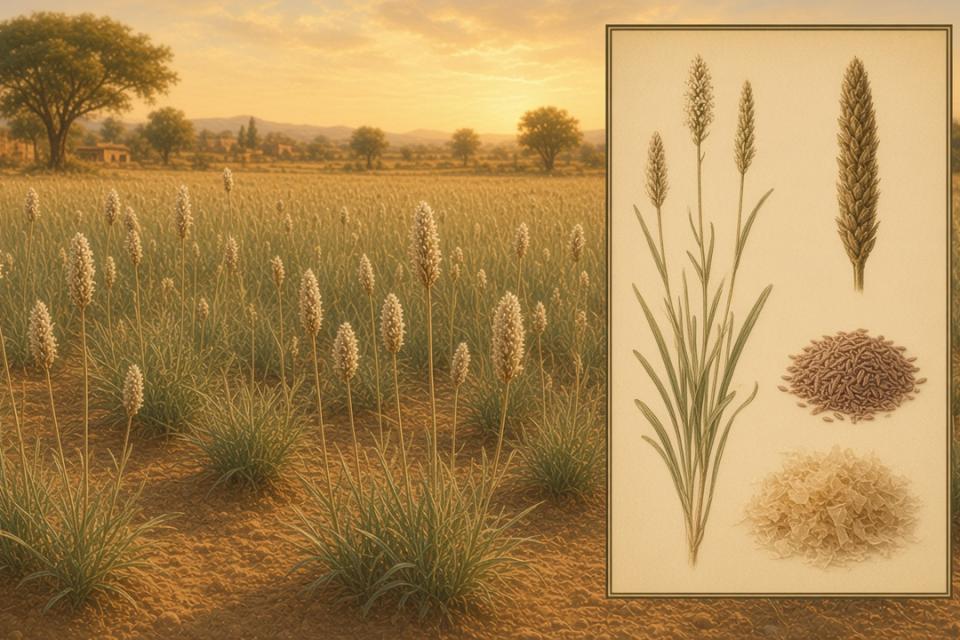
Plantago ovata Forssk. (synonym P. ispaghula Roxb.) belongs to Plantaginaceae, the plantain family; NCBI Taxonomy files it as taxon 185002. Das and Trivedi (Indian Horticulture 2023), writing in the Indian Council of Agricultural Research’s horticulture magazine, note that the genus Plantago contains about 200 species and that P. ovata is native to the Mediterranean region and West Asia, extending east to the Sutlej and Sindh in Pakistan, with populations in the Canary Islands, southern Spain, North Africa, and the Middle East. It is a low annual herb that bears short flower spikes above its leaves; the Indian variety Gujarat Isabgol-1, released in 1976, grows to about 50 cm, with spikes of 4.0–4.5 cm, and matures in 110–115 days. The Hindi and Gujarati name isabgol comes, the same authors explain, from Persian words meaning horse’s ear, for the boat-like shape of the seed. In trade it is called blond psyllium, a name also used in US federal regulations.
India dominates the crop. Das and Trivedi describe it as introduced and cultivated in north Gujarat and adjoining western Rajasthan and Madhya Pradesh, now spreading to Punjab, Haryana, Uttar Pradesh, and Karnataka; India supplies roughly 80% of the psyllium husk powder on the world market, and 90–95% of Indian production is exported. The plant is fussy about weather. Seeds germinate best at 20–25°C but need 30–35°C and dry conditions at maturity, because unseasonal rain or even heavy dew makes the ripe seeds swell and drop, which can destroy a harvest. Regions with winter rain are unsuitable. Most of the crop is exported as husk rather than whole seed.
Two medicinal products come from the plant. Ispaghula husk is the outer seed coat (episperm) and collapsed adjacent layers removed from the seed (EMA). EMA’s assessment report describes it as about 85% water-soluble fiber, a highly branched arabinoxylan made of roughly 65% xylose, 20% arabinose, 6% rhamnose, and 9% galacturonic acid, able to absorb up to 40 times its own weight in water. Whole ispaghula seed has 20–30% mucilage in its coat and absorbs up to 10 times its weight, so seed doses are larger. In EU terminology psyllium seed means the darker seeds of two related species, Plantago afra and P. indica, sometimes sold as black psyllium, which have their own monograph at higher doses. None of these should be confused with the common lawn and roadside plantains, broadleaf plantain (P. major) and ribwort plantain (P. lanceolata), although Bernedo and colleagues (Journal of Investigational Allergology and Clinical Immunology 2008) found mild allergic cross-reactivity between P. ovata seed and ribwort plantain pollen.
02 Lineage
History
Plantain seeds are old medicines. EMA’s assessment report notes that Dioscorides, in the first century AD, described three plantain species: seeds of one were taken with wine for diarrhea and for vomiting blood, and the seeds of Plantago psyllium were considered cooling and were applied as a compress, with attar of roses, vinegar, and water, for gout, swellings, dislocations, and headache. The same report records that psyllium appears in ancient Indian Ayurvedic prescriptions, and that in Unani medicine in Pakistan the husk is used for fevers, catarrh, and kidney complaints, a decoction of the seed for coughs and colds, and crushed seeds as a poultice for rheumatic and glandular swellings. Across traditions, EMA summarizes, psyllium was used as an emollient, demulcent, and diuretic in the USA, Europe, India, and China.
European pharmacy gradually narrowed the uses to the bowel. EMA cites Hager’s German pharmacy handbook of 1927, which described oral and topical use of Plantago psyllium seed mucilage for inflammation; a 1966 text listing cough, catarrh, whooping cough, diarrhea, and urethritis; and a 1967 reference that mentions only chronic constipation, dysentery, and chronic diarrhea. The World Health Organization published a monograph on plantain seed covering P. afra, P. indica, P. ovata, and P. asiatica in 1999. Licensed products appeared early: EMA records ispaghula granules on the Belgian market since 1963 and powder since 1984. In India, agricultural research developed commercial varieties for Gujarat and Rajasthan from the 1970s, building an export crop that now supplies most of the world.
Modern regulation came on two fronts. In the United States, the FDA’s health claim for soluble fiber and coronary heart disease (21 CFR 101.81), first written for oats, was amended in February 1998 to include psyllium husk, provided a food supplies at least 1.7 g of psyllium soluble fiber per serving toward a daily total of 7 g, and foods containing dry psyllium husk must carry a warning to eat them with a full glass of liquid. EMA’s assessment report adds that because of esophageal obstruction with granular psyllium laxatives taken without enough liquid, the FDA in 2007 stopped psyllium granules from being sold over the counter without an approved application. In Europe, the herbal committee adopted its first monographs on ispaghula husk and seed in July 2006 and revised them on 14 May 2013. The American College of Gastroenterology’s 2021 IBS guideline suggested soluble fiber, graded as a strong recommendation.
03 Chemistry
Active compounds and how it works
Psyllium works physically in the bowel. EMA’s monograph explains that when ispaghula husk is taken with enough liquid, at least 30 ml per gram, it swells into a mucilage that increases the volume of intestinal contents; the resulting stretch stimulus triggers defecation, and the swollen gel forms a lubricating layer that eases transit. EMA’s assessment report cites data that psyllium increases stool weight by about 3.7 g for each gram consumed, and a 15-person study by Marlett and colleagues in which part of the husk survived the colon unfermented as a viscous gel, producing stools that were bulkier and moister than with comparable amounts of other fibers. The husk is only partly fermented (about 72% resisted fermentation in laboratory tests), which is why it bulks stool rather than simply feeding gut bacteria. The laxative effect usually begins within 12–24 hours, sometimes taking two to three days to peak. EMA’s assessment report also records national authorizations in several EU countries for use as an adjunct in diarrhea, including diarrhea in IBS.
The cholesterol effect is thought to run through bile acids. In a crossover trial cited by EMA, 20 men with moderately raised cholesterol took 15 g of husk daily for 40 days; those whose LDL cholesterol fell by more than 10% showed a significant rise in bile acid synthesis. In another, 23 adults taking 10.2 g daily for eight weeks had LDL cholesterol 6.5% lower than baseline, with rises in cholesterol precursors, suggesting the liver was drawing on cholesterol to replace bile acids lost in the stool. For blood sugar, viscous gel-forming fibers are thought to blunt the rise in glucose after meals, and Gibb and colleagues (American Journal of Clinical Nutrition 2015) found the effect greatest in people whose glucose control was worst.
Psyllium is barely digested. Its sugar chains are joined by bonds human enzymes cannot break; EMA notes that less than 10% of the mucilage is hydrolyzed in the stomach, releasing arabinose, of which 85–93% is absorbed. The same gel that bulks stool can trap or slow other substances in the gut, which is the basis for the advice to space psyllium away from medicines and for EMA’s caution about minerals, vitamin B12, and several narrow-margin drugs.
04 In practice
Common uses
Constipation is the core indication. EMA accepts ispaghula husk and seed as well-established medicines for habitual constipation and for conditions in which easy defecation with soft stool is desirable, such as painful defecation after rectal or anal surgery, anal fissures, and hemorrhoids, and advises that bulk-forming laxatives be tried before other laxatives if dietary change fails. Van der Schoot and colleagues (American Journal of Clinical Nutrition 2022) pooled 16 randomized trials with 1,251 adults with chronic constipation: 66% responded to fiber supplements versus 41% to control (risk ratio 1.48), and fiber increased stool frequency and improved consistency. Psyllium and pectin were the fibers with significant effects, and the benefit appeared mainly at doses above 10 g a day taken for at least four weeks. Flatulence was more common with fiber, and the authors cautioned that results varied considerably between trials.
Irritable bowel syndrome: Moayyedi and colleagues (American Journal of Gastroenterology 2014) pooled 14 trials with 906 patients and found that fiber reduced the risk of persistent IBS symptoms (relative risk 0.86, ten patients needing treatment for one to benefit), with the benefit confined to soluble fiber such as psyllium (relative risk 0.83, number needed to treat 7); wheat bran did not help. The largest single trial, by Bijkerk and colleagues (BMJ 2009), randomized 275 primary-care patients to 10 g of psyllium, 10 g of bran, or rice-flour placebo daily for 12 weeks. Adequate symptom relief was reported by 57% on psyllium versus 35% on placebo in the first month and 59% versus 41% in the second, and symptom severity fell by 90 points versus 49 at three months, with no difference in quality of life. Bran helped only in the third month, and dropouts were highest in the bran group, mainly because symptoms worsened. The ACG’s 2021 guideline, citing seven ispaghula trials with 499 patients, suggests soluble but not insoluble fiber for global IBS symptoms, graded a strong recommendation based on moderate-quality evidence. EMA’s monograph covers the husk only as an adjunct in constipation-predominant IBS.
Cholesterol: Jovanovski and colleagues (American Journal of Clinical Nutrition 2018) pooled 28 randomized trials with 1,924 participants. A median dose of about 10.2 g of psyllium a day lowered LDL cholesterol by 0.33 mmol/L (roughly 13 mg/dL), non-HDL cholesterol by 0.39 mmol/L, and apolipoprotein B by 0.05 g/L, with moderate-quality evidence for LDL. EMA describes an LDL reduction of about 7% in mild to moderate hypercholesterolemia, notes that no studies have measured heart attacks, strokes, or deaths, and says use as an adjunct to diet in high cholesterol requires medical supervision. Brum and colleagues (American Journal of Cardiology 2018) pooled three trials lasting 4–12 weeks and reported that adding psyllium to a statin lowered LDL by about as much as doubling the statin dose; three of the five authors worked for Procter & Gamble.
Blood sugar: Gibb and colleagues (American Journal of Clinical Nutrition 2015) analyzed 35 randomized trials and reported that in people being treated for type 2 diabetes, psyllium taken before meals for several weeks lowered fasting glucose by 37.0 mg/dL and HbA1c by 0.97 percentage points. There was no glucose lowering in people with normal blood sugar and only a modest effect in prediabetes. The analysis was written mainly by Procter & Gamble employees and drew partly on the company’s own clinical records, so independent confirmation matters. EMA advises that people with diabetes take ispaghula husk only under medical supervision because diabetes medicines may need adjusting.
05 The apothecary
Preparations and traditional use
EU well-established use, ispaghula husk (EMA/HMPC/199774/2012, adopted 14 May 2013): for constipation or to soften stool, adolescents, adults, and older people take 7–11 g a day in one to three doses; children aged 6 to 12 take 3–8 g a day, and use under 6 is not recommended. As a fiber supplement in constipation-predominant IBS or alongside diet for high cholesterol, adults take 7–20 g a day in one to three doses, not recommended under 12. The laxative effect starts after 12–24 hours. If constipation persists for more than three days of use, consult a doctor or pharmacist.
EU well-established use, ispaghula seed (EMA/HMPC/304390/2012, adopted 14 May 2013): 8–40 g a day in two or three doses for adolescents and adults, 4–25 g for children aged 6 to 12, for constipation and stool softening only. Psyllium seed from P. afra or P. indica has a separate monograph at 25–40 g a day in three doses. For every product, EMA’s method of use is the same: take at least 30 ml of water, milk, fruit juice, or similar liquid for each gram, either mixing the product into the liquid or swallowing it and then drinking enough liquid, and keep drinking adequately through the day. Take it during the day, not immediately before bed, and at least half an hour to an hour before or after other medicines. When preparing powder, avoid breathing it in, to reduce the risk of becoming sensitized.
In food, the US health claim applies to products providing at least 1.7 g of soluble fiber from psyllium husk per serving, as part of a diet low in saturated fat and cholesterol that supplies 7 g or more a day. Such foods containing dry or incompletely hydrated husk must carry a notice that they should be eaten with at least a full glass of liquid, may cause choking otherwise, and should not be eaten by people with difficulty swallowing. EMA notes that flatulence usually settles as treatment continues. The fluid rule applies to capsules and granules as well as loose powder.
Safety
Before you use psyllium
06 Caution
Side effects
Wind and bloating are the usual complaints. EMA lists flatulence, which generally disappears as treatment continues, and abdominal distension. In van der Schoot’s constipation meta-analysis, flatulence was significantly more common with fiber than with control. In IBS trials reviewed by the ACG, adverse events were not significantly more frequent with fiber than with placebo (relative risk 1.06).
The serious risk is blockage. EMA warns that when bulk-forming agents are taken with too little fluid they can obstruct the throat and esophagus, causing choking, and can obstruct the bowel; fecal impaction may also occur. Warning signs include chest pain, vomiting, and difficulty swallowing or breathing, which need urgent medical help. Overdose may cause abdominal discomfort, flatulence, and intestinal obstruction. This is why EMA specifies 30 ml of liquid per gram and contraindicates psyllium in people with swallowing difficulties, throat problems, or narrowing of the gut.
Psyllium contains strong allergens. EMA notes that exposure can occur by mouth, through the skin, and, with powders, by inhalation, and that reactions include rhinitis, conjunctivitis, bronchospasm, rash, itching, and in some cases anaphylaxis. Khalili and colleagues (Annals of Allergy, Asthma and Immunology 2003) reported a 42-year-old woman who died of anaphylaxis after taking a psyllium-based product; their literature review found hypersensitivity well described in health care workers and pharmaceutical plant employees and a clear association with atopy, the inherited tendency to allergy.
Occupational allergy is the best-documented allergy risk. EMA’s pharmacovigilance working party concluded that about 9% of people with prolonged occupational exposure to the powder have allergic symptoms confirmed by testing, that cases can be serious, including asthma and anaphylaxis with low blood pressure, and that people with atopy are at higher risk, while the evidence does not suggest a relevant risk in the general population. Bernedo and colleagues studied 58 staff in Spanish geriatric care homes who prepared psyllium laxatives daily and 63 unexposed health professionals: 13.8% of the exposed group were sensitized and 8.6% had clinical allergy, with no sensitization in the unexposed group. Once someone is sensitized, EMA advises stopping exposure immediately and permanently.
07 Caution
Contraindications
EMA lists these contraindications: hypersensitivity to psyllium; a sudden change in bowel habit that has persisted for more than two weeks; undiagnosed rectal bleeding; failure to have a bowel movement after using a laxative; abnormal narrowing of the gastrointestinal tract; diseases of the esophagus and the cardia (the junction with the stomach); potential or existing intestinal blockage (ileus), paralysis of the bowel, or megacolon; and difficulty swallowing or any throat problems. These are not formalities: each describes a situation in which a swelling gel could cause or worsen an obstruction or delay diagnosis of something serious.
Do not use psyllium for fecal impaction or with abdominal pain, nausea, and vomiting unless a doctor advises it, because these can signal a blockage (EMA). Stop it and seek medical advice if abdominal pain develops or stools become irregular. EMA says frail or debilitated people and older people should use it under medical supervision, and that combining it with drugs that slow gut movement, such as opioids, should happen only under supervision because of the risk of obstruction.
Children: EMA does not recommend psyllium for constipation under 6 or as a fiber supplement under 12, because of insufficient data on efficacy. Pregnancy and breastfeeding: EMA notes fewer than 300 recorded pregnancy outcomes and insufficient animal data, but says ispaghula husk may be considered during pregnancy and breastfeeding if necessary and if a change of diet has not worked, and that bulk-forming laxatives should be tried before other laxatives.
People who are allergic to psyllium, including health care workers sensitized by handling the powder, should avoid it in all forms, including fiber-enriched foods. IBS and chronic constipation should be diagnosed, not assumed. The ACG guideline suggests testing for celiac disease in people with IBS and diarrhea, and checking fecal calprotectin to look for inflammatory bowel disease; rectal bleeding, weight loss, anemia, or new symptoms in later life need medical evaluation before any self-treatment.
08 Caution
Drug and herb interactions
Absorption is the main issue. EMA warns that psyllium may delay the absorption of minerals, vitamins such as B12, cardiac glycosides such as digoxin, coumarin anticoagulants such as warfarin, carbamazepine, and lithium, and advises taking it at least half an hour to an hour before or after other medicines. For drugs with narrow safety margins, consistency matters as much as spacing: starting or stopping regular psyllium could shift drug levels, so tell your prescriber.
EMA says people taking thyroid hormones should use psyllium only under medical supervision because the thyroid dose may need adjusting, and that people with diabetes should do the same because their treatment may need changing; Gibb’s meta-analysis found the largest glucose reductions in people already being treated for type 2 diabetes. Psyllium may add to the LDL-lowering effect of statins, which is helpful but worth discussing with whoever manages your cholesterol.
Drugs that slow the gut, particularly opioids, raise the risk of obstruction, and EMA advises combining them with psyllium only under medical supervision. Because psyllium is barely absorbed (EMA), its interactions arise in the gut rather than through the liver enzymes that process many drugs, which is why spacing doses and keeping intake consistent are the main precautions.
09 Questions
Frequently Asked Questions
Stir it into, or wash it down with, at least 30 ml of water or other liquid for every gram, and keep drinking well through the day. EMA’s adult dose of husk for constipation is 7–11 g a day in one to three doses. Take it during the day rather than just before bed, at least half an hour to an hour away from other medicines, and avoid breathing in the powder.
EMA says the laxative effect usually starts within 12–24 hours, sometimes taking two to three days to reach its maximum. In trials for chronic constipation, the clearest benefits came with more than 10 g a day for at least four weeks. If constipation has not improved after three days of use, EMA advises seeing a doctor or pharmacist.
For many people, modestly. Meta-analyses find soluble fiber such as psyllium reduces persistent IBS symptoms, with about seven people needing treatment for one to benefit, while wheat bran does not help and can make symptoms worse. The American College of Gastroenterology suggests soluble fiber. Peppermint oil is the other plant remedy with guideline support for IBS. Get IBS diagnosed before treating it yourself.
Yes, a little. Pooled trials found about 10 g a day lowered LDL cholesterol by about 0.33 mmol/L (roughly 13 mg/dL), and the FDA allows foods with psyllium soluble fiber to carry a heart disease risk claim. That is smaller than the effect of a statin, no trials have measured heart attacks or deaths, and EMA says using it for high cholesterol needs medical supervision.
For most adults who drink enough fluid, regular use appears well tolerated; wind and bloating are the usual side effects and often settle. It is not safe for people with swallowing difficulties, narrowing or blockage of the bowel, or fecal impaction, and frail or older people should use it under medical supervision. Stop and seek help for chest pain, vomiting, or trouble swallowing or breathing after a dose.
Yes. Psyllium contains strong allergens that can cause rhinitis, asthma, rash, and, in rare cases, fatal anaphylaxis. The risk is highest in nurses, care workers, and pharmaceutical workers who breathe in the powder regularly, especially those with other allergies; one Spanish study found 8.6% of care-home staff who prepared it had clinical allergy. Anyone who reacts should avoid psyllium in all forms, including fortified foods.
It comes from a plantain, but not the familiar lawn weed. Psyllium husk is from Plantago ovata, an annual grown mainly in India; broadleaf plantain (P. major) and ribwort plantain (P. lanceolata) are different species, though ribwort pollen shows mild allergic cross-reactivity with psyllium seed. The darker seeds of P. afra and P. indica are sold in Europe as psyllium seed. Other mucilage-rich herbs include slippery elm and marshmallow root.
It can slow the absorption of minerals, vitamin B12, digoxin, warfarin-type anticoagulants, carbamazepine, and lithium, so EMA advises a gap of half an hour to an hour. People on thyroid hormones or diabetes medicines should use it under medical supervision because doses may need adjusting, and combining it with opioids raises the risk of bowel obstruction.
10 References
Sources
These references support the history, clinical, and safety claims on this page. They are not an endorsement of any product.
-
Community herbal monograph on Plantago ovata Forssk., seminis tegumentum
European Medicines Agency (EMA/HMPC/199774/2012), 2013
Adopted 14 May 2013: well-established use of ispaghula husk for constipation, stool softening, and as fiber in IBS-C and hypercholesterolemia; doses; 30 ml liquid per gram; contraindications; occupational allergy; drug absorption interactions.
-
Community herbal monograph on Plantago ovata Forssk., semen
European Medicines Agency (EMA/HMPC/304390/2012), 2013
Adopted 14 May 2013: well-established use of whole ispaghula seed for constipation and stool softening at 8–40 g a day; seed absorbs up to 10 times its weight in water.
-
Assessment report on Plantago ovata Forssk., seminis tegumentum
European Medicines Agency (EMA/HMPC/199775/2012), 2013
History from Dioscorides to Unani medicine; arabinoxylan composition; stool bulking and bile acid studies; FDA 2007 action on granules; occupational allergy in about 9% of exposed workers.
-
21 CFR 101.81 Health claims: soluble fiber from certain foods and risk of coronary heart disease (CHD)
US Food and Drug Administration, Electronic Code of Federal Regulations, 2026
Authorized health claim, amended to include psyllium husk in 1998 (63 FR 8119): 7 g a day of psyllium soluble fiber, at least 1.7 g per serving; choking warning required under 101.17(f).
-
ACG clinical guideline: management of irritable bowel syndrome
American Journal of Gastroenterology (PubMed 33315591), 2021
Lacy et al.: suggests soluble but not insoluble fiber for global IBS symptoms (graded strong recommendation, moderate-quality evidence); seven ispaghula trials with 499 patients.
-
The effect of fiber supplementation on irritable bowel syndrome: a systematic review and meta-analysis
American Journal of Gastroenterology (PubMed 25070054), 2014
Moayyedi et al.: 14 RCTs, 906 patients; soluble fiber RR 0.83 (NNT 7) for persistent symptoms; bran no benefit.
-
Soluble or insoluble fibre in irritable bowel syndrome in primary care? Randomised placebo controlled trial
BMJ (PubMed 19713235), 2009
Bijkerk et al.: 275 patients, 10 g psyllium, bran, or placebo for 12 weeks; psyllium improved adequate relief (57% vs 35% in month one) and severity; bran did not.
-
The effect of fiber supplementation on chronic constipation in adults: an updated systematic review and meta-analysis of randomized controlled trials
American Journal of Clinical Nutrition (PubMed 35816465), 2022
Van der Schoot et al.: 16 RCTs, 1,251 participants; response 66% vs 41% (RR 1.48); psyllium effective, best above 10 g a day for at least four weeks; more flatulence.
-
Effect of psyllium (Plantago ovata) fiber on LDL cholesterol and alternative lipid targets, non-HDL cholesterol and apolipoprotein B: a systematic review and meta-analysis of randomized controlled trials
American Journal of Clinical Nutrition (PubMed 30239559), 2018
Jovanovski et al.: 28 trials, 1,924 participants; median 10.2 g a day lowered LDL by 0.33 mmol/L, non-HDL by 0.39 mmol/L, and apoB by 0.05 g/L.
-
Meta-analysis of usefulness of psyllium fiber as adjuvant antilipid therapy to enhance cholesterol lowering efficacy of statins
American Journal of Cardiology (PubMed 30078477), 2018
Brum et al.: three RCTs of 4–12 weeks; psyllium plus statin lowered LDL about as much as doubling the statin dose; three authors from Procter & Gamble.
-
Psyllium fiber improves glycemic control proportional to loss of glycemic control: a meta-analysis of data in euglycemic subjects, patients at risk of type 2 diabetes mellitus, and patients being treated for type 2 diabetes mellitus
American Journal of Clinical Nutrition (PubMed 26561625), 2015
Gibb et al.: 35 RCTs; in treated type 2 diabetes, fasting glucose fell 37.0 mg/dL and HbA1c 0.97%; no effect with normal glucose; largely Procter & Gamble authors and data.
-
Allergy to laxative compound (Plantago ovata seed) among health care professionals
Journal of Investigational Allergology and Clinical Immunology (PubMed 18564629), 2008
Bernedo et al.: 58 exposed care-home workers vs 63 unexposed; 13.8% sensitized and 8.6% clinically allergic in the exposed group; mild cross-reactivity with ribwort plantain pollen.
-
Psyllium-associated anaphylaxis and death: a case report and review of the literature
Annals of Allergy, Asthma and Immunology (PubMed 14700444), 2003
Khalili et al.: fatal anaphylaxis in a 42-year-old woman after a psyllium product; review of hypersensitivity in health care and pharmaceutical workers and its link with atopy.
-
Isabgol: a potential medicinal plant with commercial and trade value
Indian Horticulture, Indian Council of Agricultural Research, 2023
Das and Trivedi: native range, Persian origin of the name isabgol, cultivation in Gujarat, Rajasthan, and Madhya Pradesh; India supplies about 80% of world psyllium husk powder.
-
Plantago ovata
NCBI Taxonomy, National Library of Medicine (NIH), 2026
Taxonomic record for blond psyllium, taxon 185002, family Plantaginaceae.