Monograph
Uva Ursi (Bearberry)
Arctostaphylos uva-ursi
Updated October 9, 2026
Key points
-
01
Traditional, short-term, women only
EMA accepts bearberry leaf only as a traditional remedy for burning and frequency in mild recurrent bladder infections in women, for up to one week.
-
02
Trials have been disappointing
It eased symptoms no better than placebo in ATAFUTI and, against one antibiotic dose in REGATTA, left more symptoms and more kidney infections.
-
03
Arbutin becomes hydroquinone
The leaf’s arbutin is excreted as hydroquinone, mostly in bound forms; the old advice to make urine alkaline is doubtful.
-
04
Hydroquinone limits the dose
Hydroquinone caused tumors in rodents at high doses, and the leaf lacks adequate genotoxicity testing, so long-term or daily use is not advised.
-
05
Who should avoid it
Not for men, under-18s, pregnancy, breastfeeding, or kidney disorders; see a doctor for fever, back pain, blood in urine, or lingering symptoms.
Uva ursi, or bearberry, is a low evergreen shrub of northern heaths and pine woods whose small, glossy, leathery leaves have been used for bladder complaints for at least eight centuries. Its Greek genus name and Latin species name both mean “bear’s grape,” after the bears said to relish its red berries (Grieve), and in North America it is also called kinnikinnick, from an Algonquian word for a smoking mixture in which the leaves were used (Merriam-Webster). The medicine is in the leaf: between 5% and 16% of its dry weight is arbutin, a compound the body breaks down to hydroquinone, which is passed into the urine (EMA). Today the European Medicines Agency (EMA) accepts bearberry leaf only as a traditional herbal medicine, for short-term relief of burning and frequent urination in women with mild, recurrent lower urinary tract infections (UTIs), once a doctor has ruled out anything serious.
The evidence that it works is thin. When EMA last revised its monograph in 2018, there were no clinical trials of bearberry on its own, and the agency relied on laboratory findings and long use. Two trials have since been published. In ATAFUTI, a UK primary-care trial of 382 women with suspected UTIs (Moore et al. 2019), uva ursi did not ease symptoms more than placebo or significantly cut antibiotic use. In REGATTA, a German trial of 398 women (Gágyor et al. 2021), starting with uva ursi instead of a single dose of the antibiotic fosfomycin reduced antibiotic courses by nearly two-thirds, but left women with more symptoms and more kidney infections. For preventing repeat infections, the only trial tested uva ursi combined with dandelion, and Germany’s Institute for Quality and Efficiency in Health Care (IQWiG) judged that it offered no more than a hint of benefit (IQWiG 2022).
Safety limits shape everything about bearberry. Hydroquinone caused kidney tumors in male rats and other tumors in rodents given high doses for two years, and it is banned from cosmetic skin lighteners in Europe (EMA; BfR). EMA therefore limits use to one week and does not recommend bearberry for men, anyone under 18, during pregnancy or breastfeeding, or for people with kidney disorders. Nausea, vomiting, and stomach-ache are the reported side effects, urine may turn greenish-brown, and one woman who drank the tea for three years developed damage to both retinas (Wang & Del Priore 2004). Nothing here is medical advice. A suspected UTI deserves a call to a doctor, and an urgent one if there is fever, back or side pain, or blood in the urine, if you are pregnant, if the symptoms are in a man or a child, or if they are not improving.
Featured in
Herbs for Urinary Tract HealthIn this monograph
01 The plant
Botanical profile
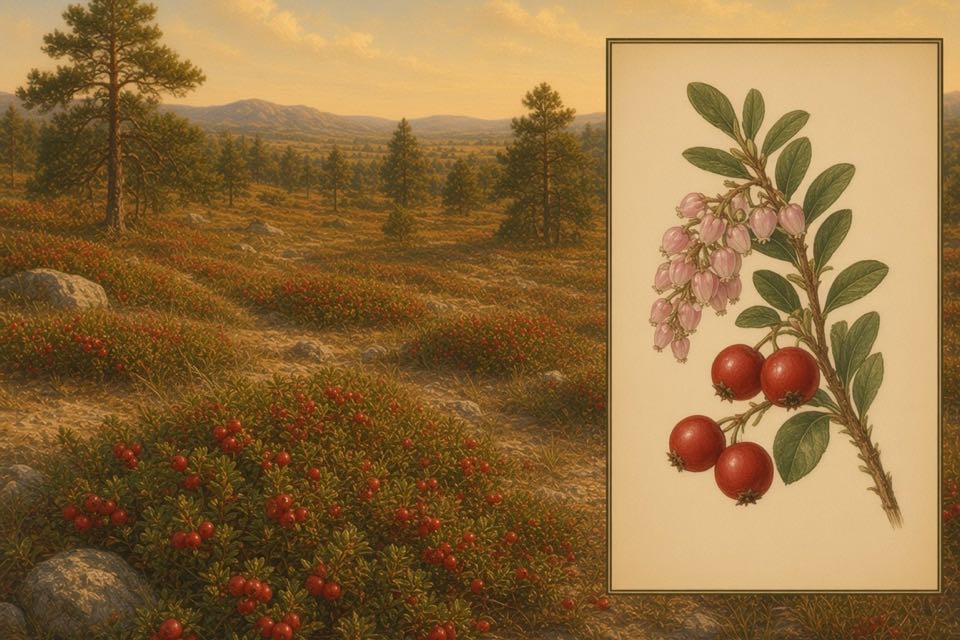
Arctostaphylos uva-ursi belongs to the heather family, Ericaceae. Linnaeus named it Arbutus uva-ursi in 1753, and it received its current name in 1825, according to Kew’s Plants of the World Online (POWO). The genus name comes from the Greek for bear and grape, and the species name repeats the idea in Latin (Grieve). Common names include bearberry and kinnikinnick (FEIS) and, in nineteenth-century America, upland cranberry (King’s American Dispensatory). Its range circles the Northern Hemisphere: POWO records it as native from the subarctic south through northern, western, and central North America, and across Europe and Asia from Iceland and Norway to Spain, Greece, Siberia, and Mongolia. In North America it grows from Alaska and northern California across Canada to Newfoundland and New England, south in the Rocky Mountains to New Mexico, along the Atlantic coast to New Jersey, and down the Appalachians to Virginia (FEIS). In Britain, Grieve found it common in the Scottish Highlands and as far south as Yorkshire, and it also grows in northwest Ireland.
It is a prostrate evergreen shrub with long trailing stems that root where they touch the ground, forming dense mats, and its bark flakes with age (FEIS). The leaves are thick and leathery, dark glossy green above and paler beneath, about 1 to 3 cm long, rounded at the tip and narrowing toward the base; the European Pharmacopoeia’s description, quoted by EMA, notes a network of sunken veins that gives the upper surface a grainy look, and only young leaves have fine hairs at the margin. Small urn-shaped flowers, white or pinkish with a red lip, hang in drooping clusters of about 3 to 15 at the stem tips in spring (Grieve). They are followed by bright red berries 6 to 10 mm across, usually containing five hard seeds, with dry, mealy, tasteless flesh, and the fruit hangs on through winter (FEIS; Grieve). Bears eat the berries in autumn and especially in early spring, and grouse, wild turkey, songbirds, deer, and small mammals take them too, while hummingbirds visit the flowers (FEIS).
Bearberry is a plant of poor ground. It thrives on dry, acidic, nutrient-poor soils, on rocky outcrops, sand dunes, heaths, and alpine slopes, and forms the main ground cover in open jack pine, lodgepole pine, and ponderosa pine forests; its roots have been traced more than a meter down, and it spreads mainly by its rooting stems (FEIS). Gardeners and road builders use it as ground cover and for erosion control (FEIS). The leaf’s chemistry is dominated by arbutin, a molecule of glucose joined to hydroquinone. EMA reports 5% to 16% arbutin, varying with the season, up to 4% methylarbutin, less than 0.3% free hydroquinone, 10% to 20% tannins including gallotannins and corilagin, 0.8% to 1.5% of the flavonoid hyperoside, and triterpenes including ursolic acid. Medicinal leaf must contain at least 7% arbutin to meet the European Pharmacopoeia standard. Grieve gave a much lower tannin figure, 6% to 7%. Hydroquinone is not unique to bearberry: EMA notes that it occurs in pears, blueberries, coffee beans, and wheat products.
02 Lineage
History
Bearberry’s medical history begins in northern Europe. Grieve records that it was used in the thirteenth century by the Welsh “Physicians of Myddfai,” and EMA’s assessment report notes that it seems to have been a folk remedy in northern regions long before it reached central Europe. The Flemish botanist Carolus Clusius described it in his Rariorum Plantarum Historia, published in Antwerp in 1601, and Linnaeus included it in his Materia Medica of 1749 (EMA). Gerhard of Berlin and others recommended it for medicinal use in 1763, and it entered the London Pharmacopoeia in 1788, though it was probably in use long before (Grieve). In Germany it was used on a larger scale from the middle of the eighteenth century and became official in the early nineteenth. Physicians once prescribed it for dropsy, stones, diabetes, and gonorrhea, but its use later narrowed to a urinary antiseptic and diuretic (EMA). The tannin-rich leaves had another job: they were used to tan leather in Sweden and Russia (Grieve) and in Scandinavia generally (FEIS).
In North America, bearberry was part of daily life long before it entered pharmacy. EMA notes its use by Native Americans for urinary diseases, and LiverTox describes Native American use for urinary symptoms and as a diuretic. FEIS reports that smoking the leaves as a tobacco substitute is the most widely mentioned human use of the plant, and that Native Americans also powdered the leaves for sores and ate the berries fried or mixed into pemmican. The word kinnikinnick, first recorded in English in 1799, comes from an Algonquian language and means a mixture; it named a blend of dried leaves and bark, sometimes with tobacco, smoked by Indigenous Americans and pioneers, and then the plants used in it, especially bearberry (Merriam-Webster). By 1898, King’s American Dispensatory listed uva ursi as official in the United States Pharmacopoeia, recommended it for chronic bladder irritation and catarrh, and warned that the leaves were often adulterated with whortleberry or cowberry leaves, which can be told apart because only uva ursi has a fine network of veins beneath.
Chemistry gradually explained the old remedy. King’s records that Kawalier announced the isolation of arbutin in 1852, that an earlier chemist had attributed the leaf’s diuretic power to a crystalline substance he called ursin, and that acids split arbutin into sugar and hydroquinone. EMA dates the idea that hydroquinone released from arbutin is the active antibacterial agent to 1883. In the twentieth century, Germany’s Commission E endorsed bearberry for inflammatory disorders of the lower urinary tract, with no more than a week’s use and no more than five times a year without a doctor, and WHO and ESCOP published monographs in 2002 and 2003. EMA adopted its first European Union monograph in 2011, revised it in 2012, and issued the current second revision in January 2018, restricting use to women and to one week. In March 2025, EMA’s herbal committee completed a periodic review that summarized the two new clinical trials, but judged that they did not trigger a revision at that time.
03 Chemistry
Active compounds and how it works
Arbutin is a prodrug, a compound that does little until the body changes it. In a study by Schindler and colleagues (Journal of Clinical Pharmacology 2002), 16 healthy volunteers took a bearberry extract as film-coated tablets or as a solution; on average about two-thirds of the arbutin dose was recovered in the urine as hydroquinone and its conjugates, peaking around 4 hours after the dose, with considerable variation between individuals. Almost all of it arrives in the urine bound to glucuronic acid or sulfate, forms that are not themselves antibacterial. In a study of 12 volunteers given 420 mg of arbutin, Siegers and colleagues, summarized by EMA, found that only about 0.6% of the dose appeared as free hydroquinone, and in half the volunteers none could be detected. The theory is that free hydroquinone, released from these conjugates within the bladder, is what acts against bacteria, which would explain why bearberry was always described as a urinary antiseptic rather than a general antibiotic.
How free hydroquinone is released has been argued over for decades. Laboratory work in the 1970s found that urine collected after arbutin or bearberry tea inhibited Staphylococcus aureus and Escherichia coli when it was alkaline, at pH 8, but not at pH 6 (Frohne 1970; Kedzia 1975, summarized by EMA). This is why older handbooks told patients to take sodium bicarbonate or eat a vegetable diet. But keeping urine alkaline is hard: in one experiment, 10 g of sodium bicarbonate raised urine pH from 6.5 to 7.4 on average, and therapeutic levels of free hydroquinone were reached only when the pH reached 8, which happened in one case for an hour. EMA concludes that whether alkalizing helps in the body is doubtful. Siegers’s group offered another explanation: E. coli itself released hydroquinone from its conjugates more efficiently than a laboratory enzyme mixture, suggesting that bacteria free the active compound where they are, without any need to alter urine pH. All of this comes from laboratory and volunteer studies, not from trials in people with infections.
The leaf’s other main constituents, its tannins, act on the gut rather than the bladder. EMA attributes bearberry’s nausea and vomiting to tannins and notes that boiling the leaf extracts much more of them than steeping it in cold water, which is why it recommends an infusion or cold macerate rather than a decoction. Arbutin also blocks tyrosinase, the enzyme that makes melanin pigment: EMA cites laboratory work in which both a bearberry extract and arbutin inhibited the enzyme, and this is the basis of arbutin’s use in skin-lightening cosmetics. Germany’s Federal Institute for Risk Assessment (BfR) considers such cosmetic use a health concern, because arbutin can be broken down in the skin, partly by skin bacteria, into hydroquinone. The same melanin-blocking effect was suggested as the cause of retinal damage in a long-term tea drinker. EMA also notes laboratory evidence that leaf extracts inhibit CYP3A drug-metabolizing enzymes, but no clinical reports of interactions.
04 In practice
Common uses
Relief of mild bladder infection symptoms is bearberry’s one accepted use, and it rests on tradition rather than proof. EMA’s monograph allows it as a traditional herbal medicine for relief of symptoms of mild recurrent lower urinary tract infections, such as a burning sensation during urination and frequent urination, in women, after serious conditions have been excluded by a doctor, on the strength of long-standing use. EMA’s assessors concluded that there were no clinical studies to support a well-established use, but that laboratory evidence of antibacterial activity, together with centuries of use, made short-term traditional use plausible. Earlier references cast the net wider: Commission E listed inflammatory disorders of the lower urinary tract, ESCOP listed uncomplicated lower urinary tract infections such as cystitis when antibiotic treatment is not considered essential, and the British Herbal Pharmacopoeia of 1983 named acute catarrhal cystitis with painful urination and highly acid urine. The European indication is deliberately narrow: it covers mild, recurrent, lower urinary infections in women whose doctor has already excluded serious causes, not a first episode of unexplained symptoms or a possible kidney infection.
The first large placebo-controlled trial was disappointing. In the ATAFUTI trial, Moore and colleagues (Clinical Microbiology and Infection 2019) randomized 382 women aged 18 to 70 who consulted in primary care with a suspected uncomplicated UTI. Using a factorial design, they tested uva ursi extract against placebo and, separately, advice to take ibuprofen against no such advice; every woman also received a delayed, or back-up, antibiotic prescription. On days 2 to 4, symptom scores for frequency of urination barely differed between uva ursi and placebo (a difference of 0.06 points, with a confidence interval from 0.33 lower to 0.21 higher). Antibiotics were used by 39.9% of women on uva ursi and 47.4% on placebo, a difference that was not statistically significant. Advice to take ibuprofen, by contrast, did reduce antibiotic use, from 51.0% to 34.9%. There were no safety concerns and no upper urinary tract infections. EMA’s 2025 review notes that the extract contained 20% arbutin and that only 286 symptom diaries were returned.
REGATTA asked whether uva ursi could replace an antibiotic as the first treatment. Gágyor and colleagues (Clinical Microbiology and Infection 2021) randomized 398 women with suspected uncomplicated UTIs in 42 German family practices to two 105 mg uva ursi tablets three times a day for five days or a single 3 g dose of fosfomycin, each with a matching placebo so that neither the women nor their doctors knew who had which. Over 28 days, the uva ursi group used 63.6% fewer antibiotic courses. But their total symptom burden was 136.5% of that in the fosfomycin group, so uva ursi failed the test of being no worse than the antibiotic, and eight women in the uva ursi group developed pyelonephritis, a kidney infection, compared with two on fosfomycin, a difference that narrowly missed statistical significance. Other adverse events were similar. The authors concluded that starting with uva ursi reduced antibiotic use but led to a higher symptom burden and more safety concerns. Taken together, the two trials do not show that bearberry relieves symptoms, and REGATTA raises the concern that relying on it instead of an antibiotic may let some infections reach the kidneys.
Prevention has even less evidence, and it sits awkwardly with the safety limits. The only trial usually cited is a preliminary report by Larsson and colleagues (Current Therapeutic Research 1993), as summarized by LiverTox: 57 women with recurrent cystitis took UVA-E, a combination of uva ursi with dandelion, or placebo for one month, and in the following year none of the 30 on the combination had cystitis, against 5 of the 27 on placebo. The dose is not known. IQWiG, in a 2022 health technology assessment of herbal remedies for recurrent bladder infections, found only a hint of benefit for this uva ursi and dandelion preparation, noted that it and another combination of uva ursi with birch were either unavailable or inadequately described, and concluded that, apart from cranberry, the data were too limited to judge whether herbal preventives are a good option. Because EMA limits use to one week at a time, daily bearberry is not a prevention strategy, and the one known case of retinal damage occurred in a woman who drank bearberry tea for three years to ward off infections.
Other uses are untested. The WHO monograph, as summarized by EMA, records folk use as a diuretic, to stimulate uterine contractions, and for diabetes, poor eyesight, kidney and bladder stones, rheumatism, and venereal disease, and topically to lighten the skin; none has clinical support. LiverTox concludes that, despite extensive traditional use, there is no convincing medical evidence that uva ursi is effective for urinary infections or urinary symptoms, and notes that it now appears in multi-ingredient supplements marketed for weight loss, wellness, anti-aging, and energy. Long-term use of such products goes beyond anything EMA considers acceptable for bearberry. Its reputation as a diuretic is also shaky: King’s American Dispensatory remarked in 1898 that the leaf was said not to act as a diuretic in healthy people. Laboratory studies summarized by EMA report antiviral activity and anti-inflammatory effects in mice, but these have not been studied in people. For preventing repeat UTIs, cranberry has better evidence (see the FAQs below).
05 The apothecary
Preparations and traditional use
EMA’s monograph covers five preparations, all for adult women and all for no more than one week; if symptoms last more than four days, a doctor should be consulted. As a tea, 1.5 to 4 g of the cut leaf is steeped in 150 ml of boiling water as an infusion, or soaked in 150 ml of water as a macerate, two to four times a day, up to 8 g a day; the macerate should be drunk immediately after it is made. The powdered leaf is taken at 700 to 1,050 mg twice a day, up to 1.75 g a day. Two standardized dry extracts, one made with 60% ethanol and one with water, are dosed by their content of hydroquinone derivatives calculated as arbutin: 100 to 210 mg two to four times a day, or 200 to 840 mg a day in total. A 1:1 liquid extract in 25% ethanol is taken at 1.5 to 4 ml up to three times a day, to a maximum of 8 ml. EMA’s assessors judged doses corresponding to 840 mg of arbutin a day for one week to be safe, based on long experience. ESCOP allowed up to two weeks.
How the tea is made matters. EMA notes that decoction, or boiling, extracts large amounts of tannin, while cold maceration prevents it, and recommends infusion or maceration to keep stomach upset to a minimum. Older recipes were stronger: Grieve gave an ounce of leaves to a pint of boiling water, and German pharmacy handbooks described boiling the powdered leaf for 15 minutes (EMA). The arbutin content of the leaf varies with the season, from about 5% to 16% (EMA), so an unstandardized tea delivers an uncertain dose, while the clinical trials used standardized extracts; REGATTA’s two 105 mg tablets three times a day kept women within EMA’s daily limit. LiverTox notes that supplements are typically sold as tablets and capsules of 150, 455, and 505 mg, taken one to three times a day. EMA’s assessment also lists many combination bladder and kidney teas and tablets in which bearberry is mixed with birch leaf, horsetail, goldenrod, juniper, buchu, and other herbs, and taking several such products together can add up to more arbutin than intended.
In practice, bearberry is for short courses, not daily use. Commission E’s rule of no more than a week at a time and no more than five times a year without a doctor is a sensible ceiling, and needing it more often is a reason to discuss recurrent infections with a doctor, who can offer prevention strategies (MedlinePlus). Expect urine to turn greenish-brown, which EMA attributes to hydroquinone oxidizing on contact with air. There is no need to take sodium bicarbonate or follow a special alkaline diet: bicarbonate raises urine pH only briefly, and EMA doubts that alkalizing helps in the body. WHO and ESCOP advised drinking plenty of fluids during treatment. If symptoms worsen, or fever, painful urination, cramps, or blood in the urine appear, stop and see a doctor (EMA), and anyone whose symptoms come back soon after a course of antibiotics should also be seen (MedlinePlus).
Safety
Before you use uva ursi (bearberry)
06 Caution
Side effects
Stomach upset is the main reported side effect. EMA’s monograph lists nausea, vomiting, and stomach-ache, of unknown frequency, and its assessment report attributes them to the leaf’s high tannin content, noting that people with sensitive stomachs may react to as little as 15 g of dried leaf or to the tea. In EMA’s 2025 periodic review, the European adverse-reaction database held 20 new reports from 2016 to 2024, 12 for single-herb products and 8 for combinations; they described the same nausea, vomiting, and stomach-ache, and the committee concluded that the safety profile had not changed. In the ATAFUTI trial there were no safety concerns, and in REGATTA adverse events were similar with uva ursi and fosfomycin, apart from the greater number of kidney infections in the uva ursi group. Greenish-brown urine is listed by EMA as an expected effect of the leaf, and King’s American Dispensatory noted long ago that bearberry darkens the urine.
Less common reports are summarized in EMA’s assessment report, largely from a 2006 US National Toxicology Program review: irritability, insomnia, and a fast heart rate, and albumin, blood, and casts in the urine. Overdose can irritate the bladder and urinary tract, causing painful urination and blood in the urine, and older handbooks warn that prolonged use may cause chronic liver impairment because of the tannins and hydroquinone. Very high doses, around ten times the recommended amount, have been said to cause ringing in the ears, shortness of breath, convulsions, collapse, delirium, and vomiting. EMA notes that these overdose and long-term effects are described in the literature but are not supported by case reports. LiverTox, the US National Institutes of Health database on drug-induced liver injury, likewise finds that uva ursi has not been specifically linked to raised liver enzymes or to clinically apparent liver injury. The overall picture is of a remedy generally tolerated in short courses, with the uncertain risks lying in long or heavy use.
One case report concerns the eyes. Wang and Del Priore (American Journal of Ophthalmology 2004) described a 56-year-old woman who had taken uva ursi for three years and developed decreased vision; examination showed bull’s-eye maculopathy in both eyes, a ring-shaped pattern of damage around the center of the retina. EMA’s summary adds that she drank bearberry tea regularly to prevent recurrent UTIs, and that tests showed blind spots near the center of vision, reduced electrical responses from the retina, and retinal thinning. The authors suggested that the cause was uva ursi’s known ability to inhibit melanin synthesis. A single case cannot prove cause and effect, but it is another reason not to use bearberry for long periods, and anyone taking it who notices changes in their central vision should see an eye doctor.
Hydroquinone itself has a long toxicology record. In a two-year National Toxicology Program study summarized by EMA, hydroquinone given by stomach tube at 25 to 100 mg per kg of body weight gave some evidence of cancer: kidney tubule adenomas in male rats (8 of 55 at the higher dose, against none in controls), mononuclear cell leukemia in female rats, and liver tumors in female mice. A later reanalysis found that the high dose also severely worsened a kidney disease common in ageing rats. Hydroquinone damaged genetic material in several laboratory tests, mostly when injected rather than swallowed. Against this, de Arriba and colleagues (International Journal of Toxicology 2013) estimated that bearberry preparations supplying 420 mg of arbutin a day expose people to at most 11 µg of free hydroquinone per kg of body weight a day, well below a permitted daily exposure of 100 µg/kg and comparable to dietary sources, and found no direct human evidence that free hydroquinone causes cancer or organ damage. EMA accepts that short courses carry minimal risk, but declined to add bearberry to the EU list of traditional herbal substances because adequate genotoxicity data are lacking.
07 Caution
Contraindications
Kidney disorders: EMA’s monograph contraindicates bearberry in people with kidney disorders, following earlier monographs, and its assessment report notes that bearberry is listed among supplements that should not be used in chronic kidney disease. The kidneys clear arbutin’s breakdown products into the urine, hydroquinone damaged the kidneys of male rats in long-term studies, and the overdose reports describe bladder irritation and blood in the urine. Anyone with reduced kidney function or a kidney transplant should not use bearberry. People who are allergic to bearberry or to any ingredient of a product should also avoid it, as the monograph states. There is no specific guidance on existing eye disease, but given the case of retinal damage, people with macular or retinal conditions have good reason to ask an eye specialist first.
Men, children, and adolescents: EMA does not recommend bearberry for men or for anyone under 18. Its assessors reasoned that in men, because of the anatomy of the lower urinary tract, there is a risk of severe inflammation, so a urinary infection always requires medical examination and a delayed consultation may imply serious risks; after 50, infections become more common because of an enlarged prostate, benign or malignant, or an indwelling catheter, both of which need medical supervision. They added that men may use bearberry when a doctor advises it. In children and adolescents, urinary infections, even at an early stage, should be treated under medical supervision, and the published children’s doses were derived from calculations alone, without clinical data. A child with symptoms of a UTI needs a doctor’s assessment, not herbal tea.
Pregnancy and breastfeeding: EMA says safety has not been established and does not recommend bearberry during pregnancy or breastfeeding, and LactMed advises that uva ursi should generally be avoided while breastfeeding because there are no data on its use during lactation and it has potential toxicity. EMA’s assessment report also notes older claims that large doses stimulate the womb, although laboratory studies found no such activity, and that arbutin injected into pregnant rats at a high dose reduced fetal weight; no reproductive toxicity studies have been done with the leaf itself. Urinary infections in pregnancy are not a self-care problem: MedlinePlus notes that pregnant women are treated with antibiotics for longer, and that a pregnant woman with a fever may need hospital care. Any urinary symptoms in pregnancy should go straight to a midwife or doctor.
When not to self-treat: EMA’s indication applies only after a doctor has excluded serious conditions, and the monograph tells users to see a doctor if symptoms last more than four days, worsen, or are joined by fever, painful urination, spasms, or blood in the urine. MedlinePlus advises contacting a provider for any UTI symptoms, and right away for signs of a possible kidney infection, such as back or side pain, chills, fever, or vomiting, and also if symptoms come back soon after antibiotics. The REGATTA trial is a reminder of why this matters: more women treated first with uva ursi developed kidney infections. MedlinePlus lists older age, diabetes, and a urinary catheter among factors that raise the risk of UTIs, and people in these groups, like anyone who feels very unwell, are better served by prompt medical care than by a trial of herbs. Bearberry should never be used to delay testing and treatment of a suspected infection.
08 Caution
Drug and herb interactions
No drug interactions have been reported with bearberry, according to EMA’s monograph. The best-known caution concerns acidic urine. Because laboratory studies found that urine after arbutin was antibacterial mainly when alkaline, Commission E and German pharmacy handbooks advised against taking bearberry with medicines that make urine acidic, and WHO noted that patients had been advised to avoid highly acidic foods, such as acidic fruits and their juices, during treatment (EMA). EMA does not include this as an interaction in its monograph, and Siegers and colleagues argued that bacteria release free hydroquinone themselves, making urine pH less important. Following the old advice for a one-week course costs little, but there is no clinical evidence that it changes the outcome. People who take prescribed medicines that alter urine pH should not change them to suit an herbal remedy.
Diuretics and other medicines: the PDR for Herbal Medicines, cited by EMA, suggested that a sodium-sparing effect of bearberry might offset thiazide and loop diuretics, but EMA left this out of its monograph because no case reports support it. Laboratory work by Chauhan and colleagues found that water and methanol extracts of the leaf inhibited CYP3A enzymes, which break down many drugs, and EMA excluded this too for lack of clinical reports. These are theoretical risks, but they are worth raising with a pharmacist if you take diuretics, medicines with a narrow safety margin, or several prescription drugs. If you have been prescribed an antibiotic for a UTI, take it as directed rather than swapping it for an herbal product; MedlinePlus advises finishing the full course even if you feel better.
Other sources of arbutin and hydroquinone: bearberry is a common ingredient of combination bladder and kidney teas, which EMA lists alongside birch leaf, Java tea, goldenrod, couch grass, and other herbs, and LiverTox notes its presence in multi-ingredient weight-loss and energy supplements. Using several of these at once can stack up arbutin and extend exposure beyond a week without your realizing it. Hydroquinone is banned from cosmetic skin lighteners in Europe, and BfR considers arbutin in skin-lightening products a health concern because it can be broken down to hydroquinone in the skin. No studies have looked at combining such products with bearberry, but both add to total exposure. Because bearberry may be sold as a single herb, in blends, or tucked into products with other aims, check labels for uva ursi, bearberry, or Arctostaphylos, and tell your pharmacist about all of them.
09 Questions
Frequently Asked Questions
Not convincingly. EMA accepts bearberry leaf only as a traditional remedy for the burning and frequent urination of mild recurrent bladder infections in women, based on long use rather than trials. In the ATAFUTI trial of 382 women, uva ursi eased symptoms no better than placebo, and in the REGATTA trial of 398 women it left more symptoms than a single dose of the antibiotic fosfomycin, and more women developed kidney infections. A suspected UTI needs a doctor’s assessment, and often antibiotics.
EMA says no more than one week, and to see a doctor if symptoms last more than four days or get worse. Germany’s Commission E advised no more than five courses a year without medical advice. The limits reflect concern about hydroquinone, which the leaf’s arbutin releases in the body and which caused tumors in rodents at high doses; the leaf itself has never had adequate genotoxicity testing. It is not suitable for daily, long-term use.
They are used differently. Cranberry is taken regularly to help prevent repeat infections, and Germany’s IQWiG found an indication that it reduces recurrences compared with placebo, the strongest finding for any herbal preventive. Uva ursi is a one-week remedy for symptoms, and its trials have been disappointing. IQWiG found no data on any herbal product for treating an acute infection. Other herbs promoted for UTIs, such as goldenseal, have too little evidence to judge.
The best trial says no. In REGATTA, 398 German women with uncomplicated UTIs took either uva ursi for five days or one dose of fosfomycin. The uva ursi group used 63.6% fewer antibiotic courses, but had more symptoms, and eight developed a kidney infection, compared with two on the antibiotic. If you want to avoid unnecessary antibiotics, ask your doctor about testing and about a delayed, back-up prescription, the approach used for all women in the ATAFUTI trial.
EMA warns that bearberry leaf may color urine greenish-brown. The color comes from hydroquinone, released from the leaf’s arbutin and passed into the urine, which darkens as it oxidizes on contact with air. EMA lists it as a known effect of the leaf. It is different from blood in the urine, which is a reason to stop and see a doctor.
Probably not. Older handbooks advised a vegetable diet, sodium bicarbonate, and avoiding acidic fruits and juices, because urine collected after arbutin killed bacteria in the test tube mainly at pH 8. But bicarbonate raises urine pH only briefly, EMA doubts that alkalizing works in the body, and one research group found that the bacteria themselves release the active hydroquinone. EMA’s monograph does not require any special diet.
EMA does not recommend it for men, for anyone under 18, or during pregnancy or breastfeeding. In men, urinary infections always need a medical examination because of the risk of more serious problems, including prostate conditions, and urinary infections in children and pregnant women need medical care. LactMed advises avoiding uva ursi while breastfeeding. People with kidney disorders should not take it at all.
No. EMA limits use to one week, the only prevention trial tested a combination with dandelion and gave only a hint of benefit, and a woman who drank bearberry tea for three years to prevent infections developed bull’s-eye damage to both retinas. Arbutin releases hydroquinone, which caused tumors in rodents given high doses. For repeat infections, talk to a doctor about prevention; cranberry has better evidence.
10 References
Sources
These references support the history, clinical, and safety claims on this page. They are not an endorsement of any product.
-
European Union herbal monograph on Arctostaphylos uva-ursi (L.) Spreng., folium (Rev. 2)
European Medicines Agency (EMA/HMPC/750269/2016), 2018
Adopted 30 January 2018: traditional use for symptoms of mild recurrent lower UTIs in women after a doctor has excluded serious conditions; tea, powder, dry and liquid extract posology (up to 840 mg arbutin daily); maximum one week; not for men or under-18s; contraindicated in kidney disorders; greenish-brown urine; nausea, vomiting, stomach-ache; no interactions reported; not recommended in pregnancy or lactation.
-
Assessment report on Arctostaphylos uva-ursi (L.) Spreng., folium (Rev. 2)
European Medicines Agency (EMA/HMPC/750266/2016), 2018
Detailed review of constituents, history (Myddfai, Clusius, Linnaeus), older monographs (Commission E, WHO, ESCOP, BHP), pharmacokinetics and the alkaline-urine debate, adverse reports including the retinal case, hydroquinone toxicology, and the reasoning for excluding men and children.
-
Addendum to assessment report on Arctostaphylos uva-ursi (L.) Spreng., folium
European Medicines Agency (EMA/HMPC/320360/2024), 2025
Periodic review dated 19 March 2025: 20 new EU adverse-reaction reports (2016–2024) of nausea, vomiting, and stomach-ache with no change in safety profile; summarizes the ATAFUTI and REGATTA trials as relevant for the next review rather than triggering a revision.
-
Uva-ursi extract and ibuprofen as alternative treatments for uncomplicated urinary tract infection in women (ATAFUTI): a factorial randomized trial
Clinical Microbiology and Infection (PubMed 30685500), 2019
Moore et al.: 382 women in UK primary care, all with delayed antibiotic prescriptions; uva ursi did not reduce frequency symptoms on days 2–4 versus placebo or significantly reduce antibiotic use (39.9% vs 47.4%); ibuprofen advice did reduce antibiotic use; no safety concerns.
-
Herbal treatment with uva ursi extract versus fosfomycin in women with uncomplicated urinary tract infection in primary care: a randomized controlled trial
Clinical Microbiology and Infection (PubMed 34111592), 2021
Gágyor et al. (REGATTA): 398 women in 42 German practices; uva ursi for five days cut antibiotic courses by 63.6% but failed non-inferiority on symptom burden (136.5%), with 8 vs 2 cases of pyelonephritis.
-
Bladder infection: Do herbal remedies help with recurrent bladder infection?
Institute for Quality and Efficiency in Health Care, IQWiG (PubMed 37023241), 2022
German health technology assessment (HT20-01): indication of benefit for cranberry in preventing recurrences; only a hint of benefit for a uva ursi and dandelion combination, with the uva ursi preparations unavailable or poorly described; no data on acute treatment.
-
Uva Ursi
LiverTox, National Institute of Diabetes and Digestive and Kidney Diseases (PubMed 32364691), 2020
No convincing evidence of efficacy for urinary infections or symptoms; not linked to liver enzyme elevations or clinically apparent liver injury; traditional Native American use; leaves smoked as tobacco; use in weight-loss supplements; summary of the Larsson 1993 prevention trial.
-
Uva Ursi
Drugs and Lactation Database (LactMed), NICHD (PubMed 30000963), 2024
No data on use during breastfeeding; because of potential toxicity, uva ursi should generally be avoided by nursing mothers.
-
Urinary excretion and metabolism of arbutin after oral administration of Arctostaphylos uvae ursi extract as film-coated tablets and aqueous solution in healthy humans
Journal of Clinical Pharmacology (PubMed 12162475), 2002
Schindler et al.: 16 volunteers excreted about two-thirds of the arbutin dose in urine as hydroquinone and its conjugates, peaking around 4 hours, with marked variation between individuals.
-
Risk assessment of free hydroquinone derived from Arctostaphylos Uva-ursi folium herbal preparations
International Journal of Toxicology (PubMed 24296864), 2013
de Arriba et al.: 420 mg arbutin daily gives at most 11 µg/kg/day free hydroquinone, below a permitted daily exposure of 100 µg/kg/day and comparable to diet; no direct human evidence of harm from free hydroquinone.
-
Bull’s-eye maculopathy secondary to herbal toxicity from uva ursi
American Journal of Ophthalmology (PubMed 15183807), 2004
Wang and Del Priore: bilateral bull’s-eye maculopathy in a 56-year-old woman after three years of uva ursi, attributed to inhibition of melanin synthesis.
-
β-Arbutin in Hautaufhellungsmitteln ist gesundheitlich bedenklich (β-arbutin in skin-lightening products is a health concern)
German Federal Institute for Risk Assessment (BfR Opinion 007/2013), 2013
β-arbutin can be split into hydroquinone in the skin, partly by skin bacteria; hydroquinone is suspected of causing cancer and is banned from cosmetics such as skin lighteners in Europe.
-
Arctostaphylos uva-ursi (Fire Effects Information System species review)
USDA Forest Service, Rocky Mountain Research Station, 1991
Crane: circumpolar range and North American distribution, trailing growth habit, leaf and fruit description, deep roots, habitats, wildlife use by bears and birds, erosion control, smoking and food uses, and leather tanning.
-
Arctostaphylos uva-ursi (L.) Spreng.
Plants of the World Online, Royal Botanic Gardens, Kew, 2026
Accepted name in Ericaceae, published 1825; basionym Arbutus uva-ursi L. (1753); native range from the subarctic to northern, western, and central USA and across Eurasia.
-
Bearberry (A Modern Herbal)
Maud Grieve, A Modern Herbal (botanical.com), 1931
Name meaning “bear’s grape,” British distribution, flower and berry description, Physicians of Myddfai, Clusius 1601, Gerhard 1763, London Pharmacopoeia 1788, leather tanning, tannin 6–7%, infusion of an ounce to a pint.
-
Uva Ursi (U. S. P.)—Uva Ursi
King’s American Dispensatory (Henriette’s Herbal), 1898
Felter and Lloyd: USP status, “upland cranberry,” adulteration with whortleberry and cowberry leaves, Kawalier’s isolation of arbutin in 1852 and its splitting into sugar and hydroquinone, darkened urine, and Eclectic bladder uses.
-
Kinnikinnick
Merriam-Webster Dictionary, 2026
Definition as a smoking mixture of dried leaves and bark used by Indigenous Americans and pioneers, and a plant used in it, especially bearberry; Algonquian origin meaning “mixture”; first known use 1799.
-
Urinary tract infection - adults
MedlinePlus, US National Library of Medicine, 2025
When to contact a provider (any UTI symptoms; right away for back or side pain, chills, fever, or vomiting; symptoms returning after antibiotics), risk factors, longer treatment in pregnancy, finishing antibiotics, and prevention options for repeat infections.