
Monograph
Yohimbe
Pausinystalia johimbe
Updated October 13, 2026
Key points
-
01
One tree, several names
Yohimbe is a West and Central African rainforest tree. Corynanthe johimbe, Pausinystalia johimbe, and Pausinystalia yohimbe are all names for the same species.
-
02
Supplements are not the old drug
Prescription yohimbine had a fixed dose. In 49 US supplements, yohimbine ranged from none to 12.1 mg per serving, and most labels gave no amount.
-
03
Dated, modest evidence for ED
A 1998 meta-analysis favored prescription yohimbine over placebo, but guidelines no longer recommend it and yohimbe supplements are essentially untested.
-
04
Real heart and nerve risks
Yohimbine is linked to high blood pressure, irregular heartbeat, heart attacks, seizures, and anxiety, and poison center cases are more severe than average.
-
05
Restricted in many countries
The EU prohibits yohimbe in food, Australia and Canada make yohimbine prescription-only, and the US bars over-the-counter yohimbine products for ED without FDA approval.
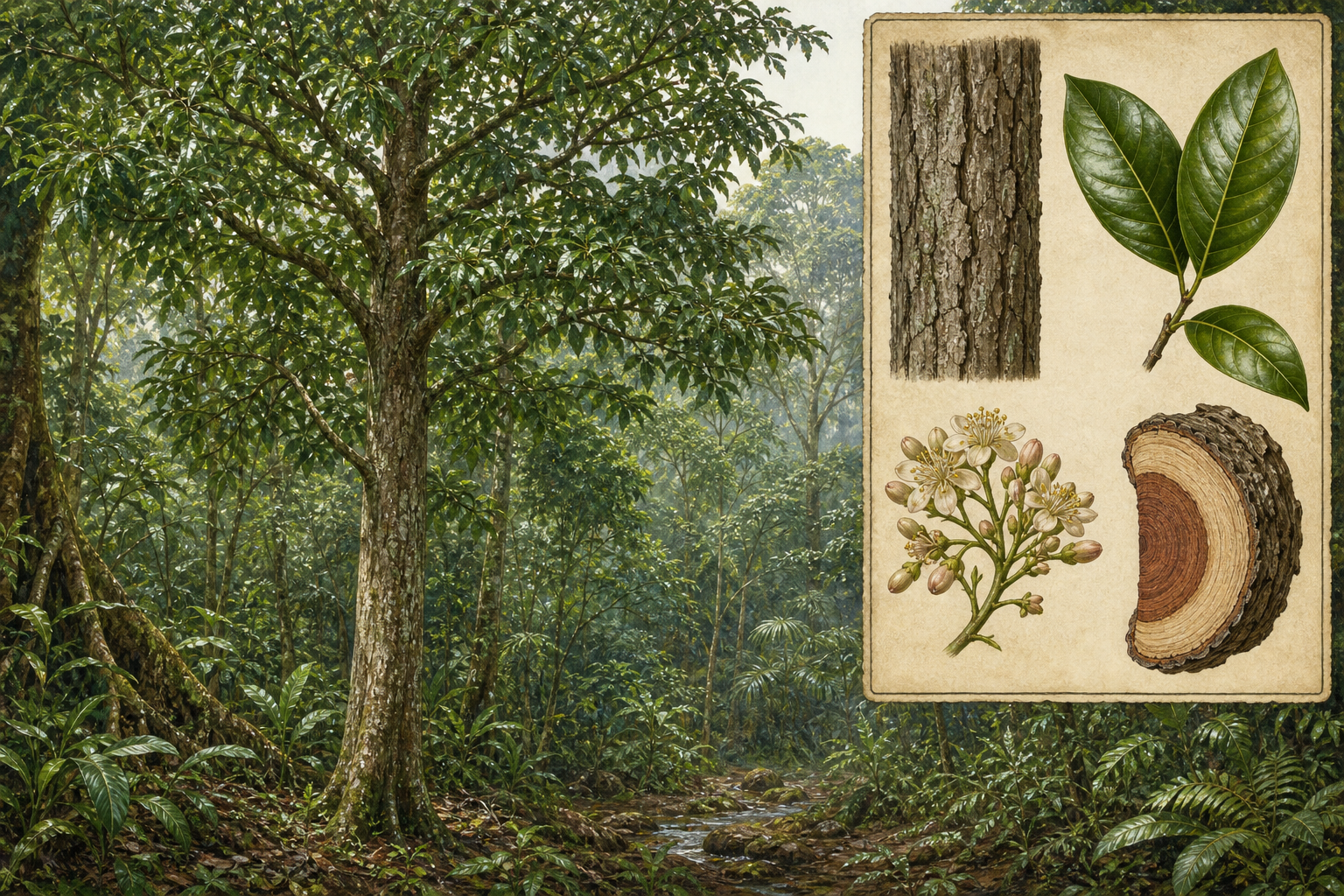
Yohimbe is an evergreen rainforest tree of West and Central Africa, known to botanists as Pausinystalia johimbe and, in current Kew-based checklists, as Corynanthe johimbe, the name it was first given in 1901. It grows wild in lowland forest from southern Nigeria through Cameroon, Equatorial Guinea, Gabon, and the Republic of the Congo to Cabinda in Angola. Its bitter bark has long been taken in the region as a stimulant and aphrodisiac; PROTA, the Plant Resources of Tropical Africa reference, notes that in Cameroon it is popularly called “the African viagra.” The bark’s main alkaloid, yohimbine, blocks alpha-2 adrenergic receptors, which normally act as a brake on the release of the stress hormone and nerve signal norepinephrine. Releasing that brake raises arousal, heart rate, and often blood pressure. Yohimbine was isolated in Berlin in the 1890s, became for decades the first oral medicine for impotence, and was used in the United States as a prescription drug before newer erectile dysfunction drugs largely replaced it. Today “yohimbe” mostly means a dietary supplement sold for sex, energy, and fat loss, and that product is not the same thing as the old prescription tablet.
The evidence splits along that line. Prescription yohimbine hydrochloride was tested in placebo-controlled trials, and a 1998 meta-analysis of seven of them by Ernst and Pittler found it worked better than placebo for erectile dysfunction, although a 2001 clinical review judged its benefit modest, one trial of high doses found no advantage at all, and Memorial Sloan Kettering Cancer Center (MSKCC) notes that current guidelines no longer recommend it. Yohimbe supplements have almost no trial evidence of their own. The National Center for Complementary and Integrative Health (NCCIH) says there is not enough research to show that they help any condition, including erectile dysfunction, athletic performance, or obesity. What has been measured is the products. When Cohen and colleagues tested 49 brands sold by major US retailers, yohimbine per serving ranged from none to 12.1 mg, most labels gave no amount, and only 2 brands gave both an accurate dose and information about side effects. About two in five contained yohimbine without the bark’s other alkaloids, suggesting synthetic or highly processed material rather than simple bark.
Safety is why yohimbe attracts more regulatory attention than most herbs. NCCIH links yohimbine to irregular heartbeat, blood pressure problems, heart attacks, and seizures, and a review of California poison center calls found that people exposed to yohimbine products were more likely than average to need treatment at a health care facility. The European Union has prohibited yohimbe bark and its preparations in food, including food supplements, since 2019; Australia lists yohimbe among plants prohibited in food and makes yohimbine a prescription-only medicine; and Health Canada treats yohimbine as a prescription drug. In the United States yohimbe is still sold as a dietary supplement, but it is illegal to market an over-the-counter product containing yohimbine for erectile dysfunction without FDA approval, and in 2026 the FDA was warning about sexual enhancement pills with hidden yohimbine. Nothing here is medical advice. Erectile problems, chest pain, or a racing heart deserve a clinician’s assessment, and anyone with high blood pressure, heart or kidney disease, an anxiety or mood disorder, or who takes antidepressants or stimulants should not experiment with yohimbe.
Featured in
Herbs for Libido and Sexual HealthIn this monograph
01 The plant
Botanical profile
Yohimbe belongs to Rubiaceae, the coffee family, and its naming history explains why searchers meet three versions of its name. Karl Schumann described the tree in 1901, in a Berlin botanical garden bulletin, as Corynanthe johimbe, spelling the epithet with a German j; the International Plant Names Index (IPNI) records that publication. World Flora Online notes a replacement reference specimen (a neotype) collected at Bipinde in southern Cameroon in 1904. The botanist Pierre later concluded that the fruit did not match other Corynanthe species, and in 1906 Beille published the new combination Pausinystalia johimbe, credited to Pierre; IPNI notes that it was first printed as “yohimba.” Pausinystalia became the standard name in pharmacy texts, PROTA, and much of the medical literature. The spelling Pausinystalia yohimbe, used by NCCIH, the European Food Safety Authority (EFSA), and EU law, refers to the same tree with a variant spelling, and EFSA also lists Corynanthe yohimbe among its synonyms. World Flora Online, drawing on data from Kew’s World Checklist, now treats Corynanthe johimbe as the accepted name and Pausinystalia johimbe as a synonym, which is why both names appear on supplement labels and in plant databases.
PROTA describes an evergreen, medium-sized tree up to 30 m tall, occasionally 35 m, with a straight, unbuttressed trunk that rarely exceeds 50–60 cm across and is grooved at the base. The outer bark is grey to reddish brown, split by long furrows and short cross-cracks, and peels off easily; the fibrous inner bark is pinkish and turns reddish brown when exposed to air. The 1918 Dispensatory of the United States compared the fissured bark to old specimens of cinchona. The branches grow in whorls, and the leaves are usually arranged in whorls of three, only rarely in opposite pairs. The leaves are large, obovate or oblanceolate, from about 11 to 47 cm long, with 10 to 20 pairs of side veins and often wavy edges. Fragrant small flowers are borne in branched clusters at the shoot tips; the corolla is usually white or yellowish, sometimes red or purple, and each of its lobes ends in a thread-like appendage 8–20 mm long. The fruit is a small, flattened capsule about 1–1.6 cm long holding many winged seeds, which are dispersed by wind. In PROTA’s account the tree flowers from about August to February.
Yohimbe grows in evergreen lowland forest, both primary and regrowing, and World Flora Online’s Flore d’Afrique Centrale entry gives an elevation range of up to about 800 m. It is a light-demanding species: seedlings survive poorly under a closed canopy, growth is fast in the open, and cut stumps resprout well. Its conservation status is debated. The Flore d’Afrique Centrale entry considers it probably of least concern, known from more than 30 localities including national parks in Gabon and the Republic of the Congo, and often favored by forest clearing. PROTA, however, reports that 1990s inventories in Cameroon and Equatorial Guinea found on average only 4 trees per hectare over 10 cm in diameter, and that demand for the bark has led to over-exploitation. Most traded bark comes from Cameroon, which exported an average of 286 tonnes a year in 1985–1991 and 715 tonnes in the 1997–1998 season. Trees are cut at about 10 cm in trunk diameter and usually felled to strip the bark, which PROTA calls unsustainable; stripping panels from standing trees would let the bark regrow in about two years, though harvesters say stem borers often kill wounded trees anyway.
The medicinal part is the bark of the trunk and branches. PROTA reports up to 6% total alkaloids in the bark, of which yohimbine makes up 10–15%, along with relatives such as corynanthine, alloyohimbine, and ajmalicine; alkaloid levels are highest in the trunk and root bark, lower in branches, very low in leaves, and highest in the rainy season. EFSA’s 2013 review put the yohimbine content of bark at usually around 10 mg per gram, while noting that published figures vary widely with the age of the tree, the height at which bark is taken, and the analytical method. Yohimbine (C21H26N2O3) is not unique to this tree: it is identical to quebrachine, isolated in 1880 from the bark of the South American white quebracho tree. Substitution is a long-standing problem. PROTA warns that yohimbe bark is often adulterated with bark of other Pausinystalia and Corynanthe species with less yohimbine, and suspects that much of Cameroon’s exported bark is really Pausinystalia macroceras. True yohimbe has larger leaves on shorter stalks and bark that is intensely bitter and easy to peel, while P. macroceras bark is less bitter and hard to peel.
02 Lineage
History
Long before it reached a laboratory, yohimbe bark was part of everyday life in the forests of Cameroon and its neighbors. A 1999 history in Germany’s Pharmazeutische Zeitung records local names such as njumbehoa, yumbehoa, and yohimbehe, and early reports that the bark was boiled into a strengthening drink and used by Bantu-speaking peoples as a stimulant and aphrodisiac at wedding celebrations. PROTA lists a wider range of uses: in Gabon small pieces are chewed to stay awake, with larger amounts used as an aphrodisiac; elsewhere the bark has been taken as a local anesthetic, a hallucinogen, for angina, constipation, and intestinal worms, by athletes, and to clear singers’ voices, while in the Republic of the Congo a decoction is drunk for pelvic pain and in Gabon the bark serves as a fish poison. The tree had practical uses too, with young stems used as building poles and inner bark made into straps for hunting baskets. PROTA records the Portuguese name pau de Cabinda and the French name démarreur, meaning “starter.” None of these traditional uses has been tested in modern trials.
European interest began in the German colonial period. Cameroon became a German protectorate in 1884, and according to the Pharmazeutische Zeitung history, the trader Ludwig Scholz, an agent of the Hamburg firm Woermann, probably sent the bark around 1895 to the Chemische Fabrik Güstrow in northern Germany. The firm passed it to the Pharmacological Institute of the University of Berlin, where the chemist Leopold Spiegel isolated the active alkaloid and named it yohimbine after the local names for the tree, publishing his results in 1896. Spiegel asked the botanist Karl Schumann to identify the source; Schumann first placed it in the dogbane family before settling on the coffee family and the name Corynanthe johimbe. Animal experiments published in 1898 produced erections in dogs, but larger doses caused violent convulsions. In 1900 the physician E. Mendel reported treating 40 patients since 1898, with clear benefit in some but no detectable effect in half of those he could follow up. The Güstrow company began selling Yohimbin Spiegel in 1900, and veterinarians soon adopted it for breeding animals.
For much of the twentieth century yohimbine was a mainstream drug. The 1918 Dispensatory of the United States described the hydrochloride salt, given at 5 mg three or four times a day, as widely used by clinicians for impotence of nervous origin, with generally favorable reports, while noting that it was said to be useless when impotence came from organic nerve damage and harmful with chronic inflammation of the sexual organs or prostate. Not everyone was convinced: the same text recorded an experimenter who found no aphrodisiac effect at all, only nausea, salivation, and irritability. Doctors at the time also debated how much of yohimbine’s effect was suggestion. MSKCC notes that yohimbine was widely prescribed for erectile dysfunction until newer drugs, the PDE5 inhibitors, were approved, and the FDA describes it as once used in a prescription erectile dysfunction medication that has since been largely replaced by safer, more effective treatments. In Europe, EFSA found in 2013 that a few countries still had yohimbine tablets authorized for erectile dysfunction, while Germany’s Commission E had issued a negative monograph on the bark itself because of unproven benefit and unpredictable risk.
The supplement era brought a new set of problems. In 1995 Betz and colleagues described yohimbe bark being promoted in the United States as a dietary supplement alternative to anabolic steroids, and found that commercial products contained from less than 0.1 to 489 parts per million of yohimbine, compared with 7,089 in authentic bark, and lacked the bark’s other alkaloids. In California, Kearney and colleagues found that poison center reports of yohimbine-related harm rose from 1.8 to 8.0 per 10,000 adult exposures between 2000 and 2006. Regulators responded at different speeds. A 1989 FDA rule declared that no over-the-counter aphrodisiac ingredient, yohimbine included, was recognized as safe and effective, and from 1990 such products needed drug approval. EFSA concluded in 2013 that it could not identify a safe intake of yohimbe bark in food. The European Commission put yohimbe under scrutiny in 2015 and, after no one submitted safety data, prohibited it in food in 2019. Health Canada treats yohimbine as a prescription drug and has seized unauthorized products labeled to contain it, and Australia classes it as prescription-only.
03 Chemistry
Active compounds and how it works
Yohimbine’s main action is to block alpha-2 adrenergic receptors. Many of these sit on nerve endings and work as a thermostat: when norepinephrine builds up, they switch further release off. Blocking them takes the brake off the sympathetic nervous system, the fight-or-flight system. Shibao and colleagues (Hypertension 2010) describe yohimbine as activating sympathetic outflow from the brain and unrestraining norepinephrine release from nerve endings. Measured in people, the result is a rise in blood pressure; in a study of 172 people given intravenous yohimbine, Le Corre and colleagues (Clinical Pharmacology and Therapeutics 2004) found the rise came mainly from the heart pumping more blood. MSKCC summarizes the proposed sexual effects as increased blood flow into erectile tissue, plus effects on nitric oxide signaling and on spinal reflexes, while PROTA adds dilation of blood vessels in the genital area and easier ejaculation. The same pathway explains the side effects. MSKCC notes that yohimbine provokes anxiety by activating the brain’s noradrenergic stress system. Alpha-2 receptors on fat cells also restrain fat breakdown, which is the basis of the fat-loss claim.
How much yohimbine reaches the blood is unusually unpredictable. Le Corre and colleagues (European Journal of Pharmaceutical Sciences 1999) found that oral yohimbine had an average bioavailability of about 22%, but with a standard deviation almost as large, and EFSA cites reported values from 7% to 87%. After an intravenous dose, yohimbine itself had a half-life of about 1.5 hours, while its active metabolite, 11-hydroxy-yohimbine, lasted almost four times longer; very little leaves unchanged in urine, so the liver does most of the work. In the larger 2004 study, the conversion of yohimbine to 11-hydroxy-yohimbine varied more than 1,000-fold between people, and 17 of 172 showed no conversion at all. The main route appeared to be the liver enzyme CYP2D6, with variants of both CYP2D6 and CYP3A4 needed to predict who metabolized it, and people who did not metabolize yohimbine had greater activation of their sympathetic nervous system. EFSA notes that these differences in liver metabolism may explain why the same dose affects people so differently.
Bark is not a measured dose of yohimbine. Authorized yohimbine hydrochloride tablets in Europe, summarized by EFSA, were taken at 5–10 mg per dose and 10–30 mg a day, and Anderson and colleagues (Journal of Analytical Toxicology 2013) note that typical oral doses of 5–15 mg give blood levels of about 40–400 ng/mL. Bark contains yohimbine alongside related alkaloids such as corynanthine and ajmalicine, which have effects of their own on blood vessels according to PROTA, and the mixture varies from tree to tree. Yohimbine dissolves readily in alcohol but only sparingly in water, according to EFSA, so a homemade tea or decoction extracts an unknown fraction. Yohimbine also works differently from the PDE5 inhibitors, such as sildenafil, that replaced it. Tam and colleagues (Pharmacology and Therapeutics 2001) suggested that yohimbine’s effect might be strengthened by drugs that boost nitric oxide, but that idea was about supervised combination therapy, not about mixing supplements with prescription drugs at home.
04 In practice
Common uses
Erectile dysfunction is the use with the most research, nearly all of it on the prescription salt rather than the bark. Ernst and Pittler (Journal of Urology 1998) found seven randomized, placebo-controlled trials of yohimbine on its own, of satisfactory overall quality. Men taking yohimbine were more likely to improve than those on placebo, with an odds ratio of 3.85, and serious adverse reactions were infrequent and reversible; the authors concluded that yohimbine was a reasonable first drug to try. Not every trial agreed. Kunelius and colleagues (Urology 1997) gave 29 men with impotence of mixed physical and psychological causes 36 mg of yohimbine hydrochloride a day or placebo for 25 days each in a crossover design: 44% responded on yohimbine and 48% on placebo, and the authors concluded it was no better than placebo. Tam and colleagues (Pharmacology and Therapeutics 2001) reviewed the field and concluded that yohimbine alone has only modest efficacy, while noting that relatively few well-designed studies existed and that it had not been studied in women’s sexual problems.
Where that leaves yohimbe today is clearer than the old trials. MSKCC states that several research bodies judged the evidence for yohimbine weak and that current guidelines do not recommend it for erectile dysfunction. The FDA describes yohimbine as largely replaced by safer, more effective treatments. For supplements, NCCIH says there is not enough research to show they help erectile dysfunction, and that a supplement may not work like the prescription medicine. That caution is supported by what the products contain: if a capsule holds no yohimbine, or several times the amount of a prescription dose, the old trial results do not apply to it. Erectile problems can have physical and psychological causes, and both deserve a proper assessment. For people interested in plants, the site’s guide to herbs for libido compares the evidence for other herbs such as ginseng and maca, none of which is a substitute for a medical assessment.
Fat loss and sports performance are the other big markets. The idea is that blocking alpha-2 receptors on fat cells releases the brake on fat breakdown, and PROTA notes that this effect is real in the laboratory, but that double-blind trials of weight loss have given conflicting results. The most cited human study is small. Ostojic (Research in Sports Medicine 2006) gave 20 professional soccer players 20 mg of yohimbine a day or placebo for 21 days: body fat fell from 9.3% to 7.1% in the yohimbine group, but body weight, muscle mass, and performance did not change. Larger reviews are unenthusiastic. Pittler and Ernst (American Journal of Clinical Nutrition 2004), reviewing weight-loss supplements including yohimbe, found no convincing evidence for any of them and recommended none for over-the-counter use, and Cimolai and Cimolai (Journal of Dietary Supplements 2011) found no conclusive evidence that yohimbine helps bodybuilding, exercise tolerance, physical performance, or body composition. MSKCC finds no data supporting yohimbe for weight loss or athletic performance, and NCCIH lists obesity and athletic performance among the uses without enough evidence.
Yohimbine has some genuine research uses, all under medical supervision with measured doses. In orthostatic hypotension, a disabling drop in blood pressure on standing seen in some nervous system disorders, Shibao and colleagues (Hypertension 2010) studied 31 people with severe autonomic failure: a single 5.4 mg dose raised standing diastolic blood pressure by about 11 mmHg compared with placebo and improved symptoms of near-fainting, whereas the comparison drug, pyridostigmine, did not. In a pilot trial in 26 men with combat-related post-traumatic stress disorder, Tuerk and colleagues (Cognitive Behaviour Therapy 2018) gave one dose of yohimbine or placebo before the first session of exposure therapy; the yohimbine group showed lower heart-rate reactivity to trauma cues a week later and faster improvement in depression, though not in PTSD symptoms. MSKCC lists these and dry mouth as areas where data are limited. These studies used the pure drug in carefully selected patients and do not support self-treatment with supplements.
The many traditional uses recorded by PROTA and EFSA, as a tonic, stimulant, local anesthetic, hallucinogen, and treatment for angina and intestinal worms, have not been tested in modern trials, and some are actively unwise; using a drug that raises heart rate and blood pressure for chest pain is a clear example. Yohimbe is also promoted as a mood booster and general energy supplement, and NCCIH finds no evidence to support those uses either. MSKCC notes that although yohimbine stimulates the nervous system, clinical data do not support its use as a stimulant. In short, there is no condition for which a yohimbe supplement has been shown to work, and the one condition where the purified drug was tested, erectile dysfunction, now has better treatments. Anyone considering yohimbe for sexual problems, weight, energy, or mood should first talk to a clinician, who can look for treatable causes and offer options with known doses and safety records.
05 The apothecary
Preparations and traditional use
Yohimbe is sold as dried bark, either as flat or curved strips up to about 1 m long or ground into powder (PROTA), and as capsules, tablets, and liquid extracts labeled as yohimbe bark, yohimbe extract, or yohimbine hydrochloride. MSKCC lists older chemical names for yohimbine, including aphrodine, corynine, and quebrachine. Many products are blends. Betz and colleagues could not identify bark microscopically in many of the products they tested because they were mixtures of botanicals or extracts with little plant material, and the FDA warns that products sold for sexual enhancement, weight loss, and bodybuilding may contain hidden drugs, including yohimbine, that are not listed on the label. Label accuracy is poor. In the Cohen study, only 11 of 49 brands stated an amount of yohimbine, and in those the actual content ranged from 23% to 147% of the label. EFSA cites another analysis in which most products held 6–50% of the claimed amount, two held 140% and 180%, and liquid products held only 3% and 17%.
There is no established safe dose of yohimbe bark or supplements. EFSA concluded in 2013 that it could not advise on any daily intake of yohimbe bark that would not raise health concerns. For comparison, the prescription yohimbine hydrochloride products EFSA reviewed were dosed at 5–10 mg at a time and 10–30 mg a day for at least eight weeks, much like the 5 mg three or four times a day in the 1918 Dispensatory. Supplements can exceed that. EFSA calculated that taking four tablets a day of the strongest product reported, at 18.8 mg each, would supply about 75 mg of yohimbine, well above the highest medicinal dose. The European medicine labels EFSA summarized also warned that 200 mg of yohimbine hydrochloride had caused poisoning, with seizures, chest pain, and palpitations. Bark preparations are even less predictable. Yohimbine content in bark varies widely, it dissolves poorly in water, and PROTA notes that because alkaloid content varies so much, crude products are even more dangerous than products with a known amount of yohimbine.
Practical points: the safest choice for most people is not to use yohimbe at all. If a clinician recommends yohimbine for a specific condition, it should be a pharmaceutical product with a stated dose, not a bark supplement. Read the full ingredient list of any sexual enhancement, energy, pre-workout, or fat-burning product, since yohimbe or yohimbine is often one ingredient among several stimulants, and avoid products that do not state how much yohimbine they contain. Be wary of products sold online with dramatic claims; the FDA notes that it cannot test every product marketed as a supplement for hidden ingredients. Do not make tea from bark bought online, which may be a different species altogether. Competitive athletes should know that the European prescribing information summarized by EFSA warned that yohimbine use may lead to positive doping tests. Stop at once and seek urgent care for chest pain, a pounding or irregular heartbeat, severe headache, confusion, seizures, or an erection lasting several hours.
Safety
Before you use yohimbe
06 Caution
Side effects
Side effects are common and follow from yohimbine’s stimulant action. MSKCC lists high blood pressure, anxiety, nervousness, nausea, dizziness, rapid and irregular heartbeat, sleeplessness, frequent urination, diarrhea, and psychiatric symptoms. The European prescribing information summarized by EFSA lists headache, nausea, and an increased urge to urinate as common; raised blood pressure and pulse, palpitations, dizziness, vomiting, loss of appetite, stomach complaints, diarrhea, flushing, sweating, shivering, and allergic reactions as uncommon; and tremor, bronchospasm, and rash as very rare. In clinical trials of the prescription drug at standard doses, these effects were usually manageable: Ernst and Pittler found serious adverse reactions infrequent and reversible, and Tam and colleagues found yohimbine relatively free of side effects at doses expected to help erectile dysfunction, with raised blood pressure, mild anxiety, and more frequent urination at much higher doses. Supplements are different, because the dose is unknown and products are often combined with other stimulants.
Poison center data show what happens outside trials. Kearney and colleagues (Annals of Pharmacotherapy 2010) reviewed 238 adults who developed symptoms after taking yohimbine products and were reported to the California Poison Control System from 2000 to 2006. Almost all (98.7%) involved herbal rather than prescription products, taken mainly for sexual enhancement, weight loss, or stimulation. The commonest problems were gastrointestinal distress (46%), a rapid heartbeat (43%), anxiety or agitation (33%), and high blood pressure (25%). Compared with the average exposure reported to the poison center, yohimbine cases were nearly six times as likely to have a severe outcome and more than twice as likely to need treatment at a health care facility. In a one-year prospective study of supplement-related calls to the same system in 2006, Haller and colleagues (Journal of Medical Toxicology 2008) found that yohimbe products accounted for 18% of symptomatic cases, second only to caffeine products, and that clinically significant toxicity was most often seen with these two.
Case reports describe the serious end of the spectrum. A 37-year-old bodybuilder who swallowed 5 g of yohimbine during a competition developed vomiting, loss of consciousness, and repeated seizures, needed a breathing tube, and had a blood pressure of 259/107 mmHg and heart rate of 140; he recovered within a day (Giampreti and colleagues, Clinical Toxicology 2009). A 49-year-old man arrived at an emergency department with palpitations and severely raised blood pressure that did not respond to repeated doses of standard blood pressure drugs; he later admitted taking a supplement containing yohimbine (Prescott and Smereck, Journal of Emergency Medicine 2019). Another man developed a painful erection that would not subside after taking yohimbe extract and needed a surgical shunt (Myers and Barrueto, Journal of Medical Toxicology 2009). MSKCC also cites a man who developed a widespread skin eruption, kidney failure, and a lupus-like illness after yohimbine treatment for impotence.
Deaths have been reported. Anderson and colleagues (Journal of Analytical Toxicology 2013) described two deaths that medical examiners in Arizona and Los Angeles attributed to acute yohimbine intoxication, with blood levels of 7,400 and 5,400 ng/mL, more than ten times the usual therapeutic range, and no other significant findings. Zhu and colleagues (Forensic Science International 2021) reported four men poisoned at the same time, one of whom died with a yohimbine level of 5,631 ng/mL. MSKCC counts six deaths attributed to yohimbine in the absence of other explanations. The FDA warns that high levels of yohimbine can cause severe high blood pressure, irregular heartbeat, heart attack, stomach problems, seizures, anxiety, confusion, and tremors, and in people with schizophrenia, mania or psychosis. Severe reactions are rare compared with the number of people who use these products, but they are not unpredictable flukes: they follow directly from the drug’s pharmacology, from large doses, from mislabeled products, and from combinations with other stimulants.
07 Caution
Contraindications
Heart and blood pressure conditions: do not use yohimbe if you have high blood pressure, heart disease, or a heart rhythm problem. MSKCC lists cardiovascular disease and hypertension as contraindications, and the European prescribing information summarized by EFSA excluded heart disorders, especially fast heart rhythms, as well as high and low blood pressure. Health Canada warns that yohimbine and yohimbe may cause serious adverse reactions, particularly in people with high blood pressure or heart, kidney, or liver disease. Because yohimbine raises blood pressure and heart rate, people who have had a heart attack or stroke, or who have been told to avoid decongestants or stimulant products for blood pressure reasons, should treat yohimbe the same way. Yohimbine has been studied for low blood pressure on standing in people with autonomic failure, but only as a specialist treatment with a measured dose, and nobody with that condition should substitute a supplement.
Mental health and the nervous system: MSKCC advises against yohimbine for people with anxiety, post-traumatic stress disorder, depression, bipolar disorder, mania, or schizophrenia, because it may make these conditions worse, and the FDA warns that it can cause mania or psychosis in people with schizophrenia. The European prescribing information excluded psychiatric disorders, particularly mood and anxiety disorders. MSKCC also lists seizure disorders and Parkinson’s disease among conditions where yohimbine should not be used. This is not merely theoretical: in Kearney and colleagues’ California poison center review, anxiety or agitation affected a third of people with symptoms. Panic attacks, a racing heart, or tremor after a dose are signs to stop, not to push through, and anyone with a history of panic disorder should regard yohimbe as off limits.
Other medical conditions: MSKCC lists kidney, liver, and thyroid disease, stomach ulcers, benign prostate enlargement, and inflammatory disorders of the sexual organs as contraindications, echoing the 1918 Dispensatory’s warning that yohimbine was harmful when impotence came from chronic inflammation of the sexual organs or prostate. The European prescribing information summarized by EFSA also excluded severe kidney or liver impairment, stomach or intestinal ulcers, and glaucoma. Because the drug is broken down by the liver and its metabolism varies so much between people, liver disease adds to the uncertainty about dose, and Health Canada names kidney and liver disease alongside high blood pressure and heart disease as raising the risk of serious adverse reactions. Anyone with one of these conditions who is troubled by erectile problems should discuss treatment options with a doctor rather than self-treating with a stimulant supplement.
Pregnancy, breastfeeding, women, and young people: NCCIH says yohimbe may be unsafe taken by mouth during pregnancy or breastfeeding, MSKCC advises against it in both, and Health Canada says it should not be used by children or by pregnant or nursing women. The European prescribing information summarized by EFSA noted that there was no adequate clinical experience in women, that effects on a fetus could not be determined, and that it was not to be used in women or under age 18. Teenagers and young adults may meet yohimbe in pre-workout and fat-burning products, which is a particular reason to read labels. Anyone with a known allergy to yohimbe or yohimbine should avoid it. If you are unsure whether any of these cautions applies to you, ask a pharmacist or doctor before taking a product that lists yohimbe, yohimbine, Pausinystalia, or Corynanthe among its ingredients.
08 Caution
Drug and herb interactions
Antidepressants and other mental health medicines: NCCIH advises against using yohimbe with monoamine oxidase inhibitors (MAOIs) or tricyclic antidepressants, and the FDA notes that the risks of yohimbine are greater for people taking MAOIs or certain other antidepressants. MSKCC warns that yohimbine may increase the side effects of antidepressants and reduce the effect of anti-anxiety medicines, and that it should not be taken with foods high in tyramine, such as aged cheese, red wine, and liver, a warning that matters most for people on MAOIs. In Haller and colleagues’ 2006 poison center study, one suspected interaction involved yohimbe taken with the antidepressant bupropion, and MSKCC lists this combination as one that has caused toxic effects. MSKCC also notes that yohimbine can trigger withdrawal symptoms and anxiety in people dependent on opioids, so anyone taking opioids, including those on treatment for opioid use disorder, should avoid it.
Stimulants and blood pressure medicines: the FDA warns that the risks of yohimbine are greater for people who take stimulants such as caffeine or ephedra, or medicines for attention-deficit/hyperactivity disorder, and the Haller study recorded three cases in which yohimbe was taken with methamphetamine. MSKCC advises against combining yohimbine with decongestants and diet aids. This is why pre-workout and fat-burning blends that stack yohimbine with caffeine and other stimulants are a particular concern; adding coffee, energy drinks, or caffeinated tea adds to the load. Yohimbine may also blunt the effect of blood pressure medicines, according to MSKCC. In the 2019 emergency department case, the patient’s blood pressure failed to come down with repeated oral clonidine and intravenous labetalol, which is one reason emergency staff need to know about any supplement taken.
Drug metabolism, erectile dysfunction drugs, and practical advice: MSKCC notes that yohimbine inhibits CYP2D6, a liver enzyme that processes many common medicines, so it may change their levels. Yohimbine itself is processed mainly by CYP2D6 and CYP3A4 (Le Corre and colleagues 2004), so other medicines that block these enzymes could, in principle, raise yohimbine levels. There is no good evidence on the safety of combining yohimbe supplements with prescription erectile dysfunction drugs, or with nitrates taken for angina, so anyone prescribed either should ask the prescriber before adding any yohimbe product. Tell your doctor, pharmacist, and anesthesiologist about any yohimbe or sexual enhancement product you take, including before surgery. Prescott and Smereck point out that most patients do not mention over-the-counter and herbal products unless specifically asked, and that this can mislead emergency treatment.
09 Questions
Frequently Asked Questions
Yohimbe is an evergreen tree of the coffee family that grows in the lowland rainforests of West and Central Africa, from southern Nigeria and Cameroon to Gabon, the Republic of the Congo, and Cabinda in Angola. Its bitter bark has long been used locally as a stimulant and aphrodisiac, and its main alkaloid, yohimbine, was isolated in Berlin in the 1890s and later used as a prescription drug for erectile dysfunction. Today it is mostly sold as a dietary supplement for sex, energy, and fat loss.
Both, depending on the source. Karl Schumann named the tree Corynanthe johimbe in 1901, and in 1906 it was moved to a new genus as Pausinystalia johimbe, the name most pharmacy and medical texts still use. World Flora Online, drawing on Kew data, now treats Corynanthe johimbe as the accepted name. Pausinystalia yohimbe, used by NCCIH and EU law, is the same tree with a variant spelling. Johimbe, yohimbe, and “African yohimbe” all refer to this species.
Yohimbe is the tree and its bark; yohimbine is the main alkaloid in that bark. Prescription yohimbine hydrochloride is a single chemical with a measured dose, usually 5–10 mg. Yohimbe supplements may contain bark, extracts, or added yohimbine, and in a test of 49 US brands the amount ranged from none to 12.1 mg per serving, with most labels giving no figure. Results from yohimbine drug trials do not automatically apply to bark products.
The prescription drug yohimbine beat placebo in a 1998 meta-analysis of seven trials, but the benefit was modest, at least one trial found no advantage, and current guidelines no longer recommend it because better treatments exist. Yohimbe supplements have not been shown to help, according to NCCIH. If you are exploring plants, our guide to herbs for libido compares the evidence for options such as ginseng and maca, but erectile problems deserve a medical check first.
Not in any proven, meaningful way. Yohimbine can increase fat breakdown in the laboratory, and one 21-day study of 20 soccer players found a small drop in body fat percentage, but no change in weight or performance. Reviews have found no convincing evidence that yohimbe helps weight loss or athletic performance, and weight loss was a common reason for use among people reported to a poison center. Concentrated green tea extracts, another popular fat-burner ingredient, have also shown only very small effects.
It depends on the country. The European Union has prohibited yohimbe bark and its preparations in food and supplements since 2019. Australia prohibits yohimbe in food and makes yohimbine prescription-only, and Canada lists yohimbine as a prescription drug. In the United States yohimbe is sold as a dietary supplement, but products cannot legally be sold over the counter as a treatment for erectile dysfunction without FDA approval, and the FDA warns about pills with hidden yohimbine.
It carries real risks. NCCIH links yohimbine to irregular heartbeat, blood pressure problems, heart attacks, and seizures, and California poison center cases involving yohimbine were more severe than average. Overdoses have caused seizures and deaths, and products are often mislabeled. Avoid yohimbe if you have high blood pressure, heart, kidney, or liver disease, an anxiety, mood, or psychotic disorder, or seizures, and if you are pregnant or breastfeeding. Seek urgent care for chest pain, a racing heart, or an erection lasting hours.
Avoid these combinations. NCCIH warns against yohimbe with MAOI or tricyclic antidepressants, MSKCC cautions about other antidepressants and bupropion, and the FDA says risks are higher with caffeine, ephedra, and ADHD stimulants, which are common in pre-workout blends. Even green tea and coffee add caffeine. Yohimbine may also blunt blood pressure medicines. There is no good safety evidence for combining yohimbe with prescription ED drugs or nitrates, so ask your prescriber first.
10 References
Sources
These references support the history, clinical, and safety claims on this page. They are not an endorsement of any product.
-
Yohimbe: Usefulness and Safety
National Center for Complementary and Integrative Health (NIH), 2025
Consumer summary (updated May 2025): tree native to central and western Africa; not enough evidence for any condition, including erectile dysfunction, athletic performance, or obesity; linked to arrhythmia, blood pressure problems, heart attacks, and seizures; restricted or banned in many countries; avoid with MAOIs or tricyclics; may be unsafe in pregnancy and breastfeeding.
-
Yohimbe
Memorial Sloan Kettering Cancer Center, About Herbs, 2021
Clinical summary (updated December 2021): not recommended by current ED guidelines; mechanism; side effects; case reports of deaths, priapism, hypertensive urgency, seizures, and renal failure; contraindications; interactions with antidepressants, bupropion, antihypertensives, opioids, and CYP2D6 substrates.
-
Scientific Opinion on the evaluation of the safety in use of Yohimbe (Pausinystalia yohimbe (K. Schum.) Pierre ex Beille)
EFSA Journal (European Food Safety Authority ANS Panel), 2013
Synonyms and origin; bark alkaloid content; label inaccuracy; possible supplement intake up to 75 mg yohimbine a day versus 10–30 mg in medicines; variable bioavailability and CYP2D6/CYP3A4 metabolism; national restrictions as of 2013; no safe intake could be set.
-
Commission Regulation (EU) 2019/650 of 24 April 2019 amending Annex III to Regulation (EC) No 1925/2006 as regards Yohimbe (Pausinystalia yohimbe (K. Schum) Pierre ex Beille)
Official Journal of the European Union, via legislation.gov.uk, 2019
Moves yohimbe bark and its preparations from Union scrutiny (2015) to the list of substances prohibited in food, after no safety data were submitted.
-
21 CFR 310.528: Drug products containing active ingredients offered over-the-counter (OTC) for use as an aphrodisiac
Electronic Code of Federal Regulations (U.S. Food and Drug Administration rule), 1989
Names yohimbine and yohimbine hydrochloride among aphrodisiac ingredients not generally recognized as safe and effective; OTC aphrodisiac products need an approved new drug application; enforced from January 8, 1990.
-
Business Pill may be harmful due to hidden drug ingredient
U.S. Food and Drug Administration, Medication Health Fraud, 2026
June 10, 2026 notice: undeclared yohimbine in a male enhancement product; yohimbine once used in a prescription ED medicine and largely replaced; risks of severe hypertension, arrhythmia, heart attack, seizures, and psychiatric effects, greater with stimulants, ADHD drugs, MAOIs, and some antidepressants.
-
Pausinystalia johimbe (K.Schum.) Pierre ex Beille
PROTA4U, Plant Resources of Tropical Africa (Jiofack Tafokou), 2012
Distribution from southern Nigeria to Cabinda; botanical description; traditional uses; alkaloid content; Cameroon bark exports; destructive harvesting and over-exploitation; adulteration with P. macroceras.
-
Corynanthe johimbe K.Schum.
World Flora Online, 2026
Accepted name per Kew’s World Checklist data, with Pausinystalia johimbe as a synonym; Flore d’Afrique Centrale description, habitat to 800 m, distribution, neotype from Bipinde, Cameroon (1904), and probable least-concern status.
-
Pausinystalia johimbe (K.Schum.) Pierre
International Plant Names Index (Royal Botanic Gardens, Kew; Harvard University Herbaria), 2026
Combination published by Beille in Actes de la Société Linnéenne de Bordeaux (1906), ascribed to Pierre and spelled “yohimba”; basionym Corynanthe johimbe K.Schum. (1901).
-
Potenzkraft vom Äquator
Pharmazeutische Zeitung (Heide Kuhlmann), 1999
History in German: local names and uses in Cameroon; bark sent to Güstrow around 1895; Spiegel’s isolation and naming of yohimbine (1896); Schumann’s identification; early animal and clinical reports; Yohimbin Spiegel marketed from 1900.
-
Yohimbine. Corynanthe yohimbi. (The Dispensatory of the United States)
Remington, Wood and others, The Dispensatory of the United States of America, via Henriette’s Herbal Homepage, 1918
Bark from the Southern Cameroons; conflicting early experiments; clinical use in impotence of nervous origin; harmful with chronic inflammation of the sexual organs or prostate; dose 5 mg three or four times a day.
-
Yohimbine for erectile dysfunction: a systematic review and meta-analysis of randomized clinical trials
Journal of Urology (PubMed 9649257), 1998
Ernst and Pittler: seven placebo-controlled trials of yohimbine monotherapy; odds ratio 3.85 in favor of yohimbine; serious adverse reactions infrequent and reversible. Evidence for the prescription salt, not bark supplements.
-
Pharmaceutical quantities of yohimbine found in dietary supplements in the USA
Drug Testing and Analysis (PubMed 26391406), 2016
Cohen et al. (published online 2015): 49 brands from seven US retailers; none to 12.1 mg yohimbine per serving; 19 lacked other bark alkaloids; only 11 stated an amount, at 23–147% accuracy; only 2 gave accurate content and side-effect information.
-
Adverse drug events associated with yohimbine-containing products: a retrospective review of the California Poison Control System reported cases
Annals of Pharmacotherapy (PubMed 20442348), 2010
Kearney et al.: 238 symptomatic adult cases, 2000–2006, 98.7% herbal products; gastrointestinal distress, tachycardia, anxiety, and hypertension common; more severe outcomes and more facility care than average exposures.
-
Human sympathetic activation by alpha2-adrenergic blockade with yohimbine: Bimodal, epistatic influence of cytochrome P450-mediated drug metabolism
Clinical Pharmacology and Therapeutics (PubMed 15289791), 2004
Le Corre et al.: 172 people given intravenous yohimbine; metabolism varied more than 1,000-fold, with 17 non-metabolizers; mainly via CYP2D6, with CYP3A4 also involved; blood pressure rose through increased cardiac output.
-
Yohimbine use for physical enhancement and its potential toxicity
Journal of Dietary Supplements (PubMed 22432773), 2011
Cimolai and Cimolai: excess doses cause agitation, anxiety, hypertension, and tachycardia; no conclusive evidence of benefit for bodybuilding, exercise performance, or body composition.
-
Therapeutic Goods (Poisons Standard—October 2025) Instrument 2025
Therapeutic Goods Administration, Australia, via the Federal Register of Legislation, 2025
Lists yohimbine in Schedule 4, prescription-only medicines. Australia’s Food Standards Code Schedule 23 separately lists yohimbe as a plant prohibited in food.
-
Health Canada seized unauthorized sexual enhancement, weight loss and sleep aid products from Vikings Nutrition in Montreal, QC, because the products may pose serious health risks
Health Canada, Recalls and Safety Alerts, 2019
Advisory RA-71327: yohimbine is a prescription drug in Canada; yohimbine or yohimbe may cause serious reactions in people with high blood pressure or heart, kidney, or liver disease; not for children or pregnant or nursing women.