Monograph
Green Tea
Camellia sinensis
Updated October 8, 2026
Key points
-
01
Tea and extract are different
NCCIH reports no safety concerns with green tea as a drink for adults beyond caffeine. Rare but serious liver injury is linked mainly to concentrated extracts.
-
02
Small effect on cholesterol
In 31 trials, green tea lowered LDL cholesterol by about 4.6 mg/dL, with no change in HDL or triglycerides. It does not replace proven treatments.
-
03
Not a real weight-loss aid
A Cochrane review found green tea preparations cause weight loss too small to be clinically important, and no help in keeping weight off.
-
04
Liver warning for extracts
EFSA found that 800 mg or more of EGCG a day raised liver enzymes. Take extracts with food, and stop for jaundice or dark urine.
-
05
Check your medicines
Green tea cut nadolol levels by about 85%, lowers atorvastatin and raloxifene exposure, and blocked the cancer drug bortezomib in laboratory studies.
Green tea is made from the young leaves and buds of Camellia sinensis, the same evergreen shrub that gives black and oolong tea. NCCIH explains that for green tea the leaves are steamed, pan-fried, and dried without being fermented, while black tea is fermented and oolong partly fermented. That shortcut preserves the leaf’s catechins, a group of polyphenols led by epigallocatechin gallate (EGCG), alongside caffeine and the amino acid L-theanine. The tea plant was first cultivated in China thousands of years ago, and NCCIH notes evidence of tea being used for health for about 3,000 years. Today green tea is both one of the world’s favorite drinks and a common ingredient in supplements sold for weight loss, cholesterol, and disease prevention.
The research is large but the conclusions are modest. NCCIH says definite conclusions cannot yet be reached on whether green tea helps for most of the purposes it is used for. Pooled trials show small falls in total and LDL cholesterol, a Cochrane review found that green tea preparations produce weight loss too small to matter, and a 2020 Cochrane review of 142 studies found inconsistent, limited evidence for cancer prevention. Large Japanese cohort studies link heavy green tea drinking to lower death rates from heart disease, though NCCIH notes that the heart link appears in Asian but not Western populations. One use is well established: a prescription ointment made from green tea catechins, sinecatechins (Veregen), was approved by the FDA in 2006 for external genital and perianal warts.
For adults, NCCIH reports no safety concerns with green tea as a drink beyond its caffeine. Concentrated extracts are a different matter. LiverTox, the NIH liver injury database, links green tea extract, and more rarely large amounts of tea, to acute liver injury, including liver failure needing transplant, and the European Food Safety Authority found that 800 mg or more of EGCG a day from supplements raised liver enzymes in trials. Green tea also cut blood levels of the beta-blocker nadolol by about 85% in one study. Nothing here is medical advice; stop any green tea supplement and see a doctor promptly for yellow skin or eyes, dark urine, or abdominal pain, and check with a pharmacist before combining green tea products with prescription medicines.
In this monograph
01 The plant
Botanical profile
Camellia sinensis (L.) Kuntze belongs to Theaceae, the tea family, in the order Ericales; NCBI Taxonomy files it as taxon 4442 and lists the older name Thea sinensis as a synonym. Britannica describes it as an evergreen flowering plant valued for its young leaves and leaf buds. Two varieties dominate commercial growing: the small-leaved China plant (var. sinensis) and the large-leaved Assam plant (var. assamica), along with hybrids of the two; a third, the Cambodia variety, is not widely cultivated. The plant’s natural home is a fan-shaped area running from Nagaland, Manipur, and the Assam–Myanmar frontier east through China, probably as far as Zhejiang province, and south through the hills of Myanmar and Thailand into Vietnam. Most of the world’s tea is still grown within that native range, with significant production in Kenya and South America (Britannica).
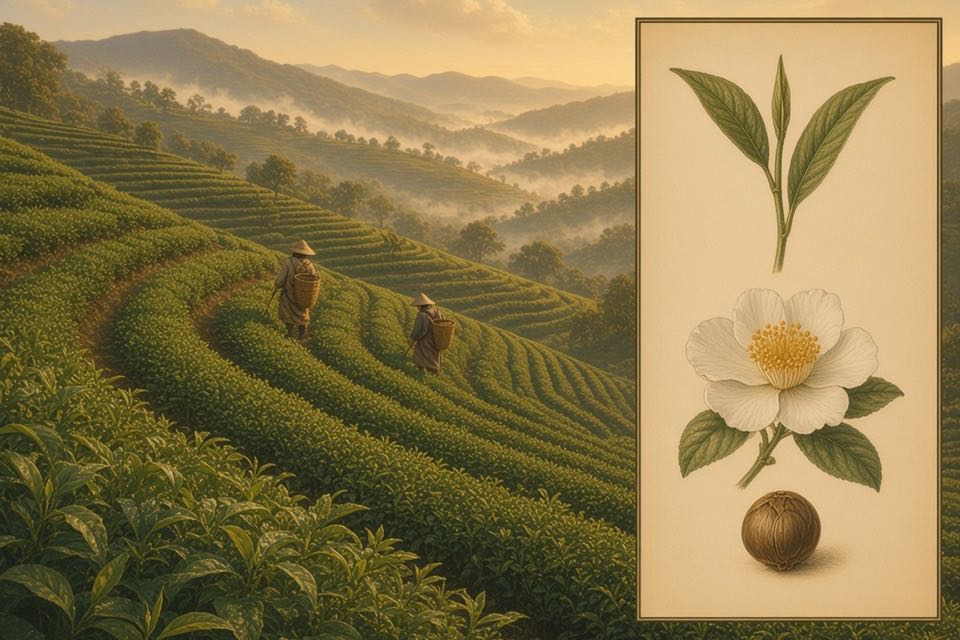
Left alone, the varieties look very different. Britannica describes the China variety as a hardy, multi-stemmed bush up to about 2.75 m tall that withstands cold winters and stays productive for at least 100 years, and the Assam variety as a single-stemmed tree of 6–18 m with an economic life of about 40 years. In cultivation the plant is kept as a low, mounded shrub and pruned often to encourage fresh shoots. Mature leaves range from 3.8 to 25 cm long, smallest in the China variety, and may be serrated, blistered, or smooth, with varying amounts of fine hair. The fragrant white flowers have yellow centers and are about 4 cm across. Pickers usually take the bud and the two youngest leaves. Tea needs at least 1,140–1,270 mm of rain a year and acidic soil, around pH 5.8 to 5.4 or lower; it cannot be grown on alkaline ground.
Processing decides what kind of tea a leaf becomes. Britannica explains that in black tea manufacture the leaf is withered, rolled, ‘fermented’, and dried; the fermentation is really enzymatic oxidation, in which polyphenol oxidase turns colorless, bitter polyphenols reddish and creates the flavor of black tea. Green tea skips this step, and EFSA notes that this prevents oxidation of the polyphenols, most of which in green tea are catechins. Green tea is usually made from the China variety and grown mainly in Japan and China, while black tea is best made from Assam or hybrid plants. The main catechins are EGCG (PubChem CID 65064, C22H18O11), epigallocatechin (EGC), epicatechin gallate (ECG), and epicatechin (EC). Caffeine makes up about 4% of the solids in fresh leaf, and L-theanine (CID 439378, C7H14N2O3) is an amino acid found in tea.
02 Lineage
History
Britannica records the legend that tea has been known in China since about 2700 BCE. For millennia it was a medicinal drink made by boiling fresh leaves, and around the third century CE it became an everyday beverage, with cultivation and processing beginning; the first published account of how to plant, process, and drink tea appeared in 350 CE. The great classic came later. Lu Yu (733–804), whom Ulrich Theobald’s ChinaKnowledge reference says was later called the God of Tea, wrote the Chajing, or Classic of Tea, around 760 under the Tang dynasty. In ten short chapters it describes the origin of the tea plant, the tools and methods for picking and processing leaves, the utensils for brewing, the choice of water, drinking customs, and the tea-growing regions of China and the quality of their leaf.
Britannica dates the arrival of the first tea seeds in Japan to around 800, with cultivation established by the thirteenth century. The decisive figure was the Zen monk Eisai, also called Yōsai (1141–1215). The Omotesenke tea school explains that at the end of the twelfth century he brought back from China both Zen Buddhism and a new way of making and drinking tea, much like the modern custom of whisking powdered green tea. The Ueda Sōko tea school dates his Kissa Yōjōki (Drinking Tea for Health), the first Japanese treatise on tea, to 1211; it opens by calling tea an elixir for health and long life. According to the Azuma kagami chronicle, as Omotesenke recounts, in 1214 Eisai prepared tea for the shogun Minamoto no Sanetomo, who was suffering from a hangover, and presented him with the book. Tea drinking then spread widely through Japan.
Europe came to tea through trade. Britannica records that the Dutch East India Company carried the first consignment of China tea to Europe in 1610, and the English East India Company brought China tea to London in 1669. In 1824 tea plants were found in the hills between Burma and Assam, and the British introduced tea growing into India in 1836 and Ceylon (Sri Lanka) in 1867, at first with seeds from China and later from the Assam plant. Today black tea is by far the most common type produced. Green tea’s catechins later became the basis of a medicine: in 2006 the FDA approved sinecatechins ointment, which Stockfleth and Meyer (Expert Opinion on Biological Therapy 2014) describe as the first botanical drug licensed in the United States. Concentrated extracts also brought reports of liver injury. After a systematic review of them, USP added a cautionary label requirement to its monograph for powdered decaffeinated green tea extract, and in 2018 EFSA published a scientific opinion on the safety of green tea catechins.
03 Chemistry
Active compounds and how it works
Most proposed benefits of green tea are attributed to its catechins, and EFSA calls EGCG the most relevant of them. MSKCC summarizes the proposed mechanisms: green tea may improve blood lipids, EGCG triggers nitric oxide production in blood vessel walls, which relaxes the vessels, and EGCG inhibits enzymes involved in cell replication and DNA synthesis in cancer cell studies. The blood vessel and cancer findings come mainly from laboratory studies and may not reflect what happens in people drinking tea. How much EGCG enters the body depends heavily on how it is taken: the USP review by Oketch-Rabah and colleagues (Toxicology Reports 2020) found that bolus doses of extract taken on an empty stomach markedly increase EGCG absorption, possibly by overwhelming the gut and liver’s first-pass clearance.
Caffeine is green tea’s best-understood active ingredient. It is a stimulant, and the FDA lists the effects of too much: a faster heart rate, palpitations, raised blood pressure, insomnia, anxiety, jitters, upset stomach, nausea, and headache. The Cochrane weight-loss review notes that both catechins and caffeine are believed to increase energy metabolism, which is the rationale for weight-loss products. L-theanine is the reason some people find tea calmer than coffee. Payne and colleagues (Nutrition Reviews 2025) pooled trials in healthy people and found small to moderate improvements in some measures of attention and mood in the first two hours after theanine combined with caffeine, compared with placebo. Their confidence intervals were often wide, and the authors called for more research using tea itself or tea-equivalent doses.
Severe liver injury from green tea appears to be idiosyncratic and immune-mediated, not simply a matter of dose. Hoofnagle and colleagues (Hepatology 2021), studying the US Drug-Induced Liver Injury Network, found that 72% of people with green tea liver injury carried the immune gene variant HLA-B*35:01, compared with about 11% of population controls; NCCIH estimates that 5–15% of Americans carry the variant. Several drug interactions involve transporters, the proteins that carry drugs into cells. Misaka and colleagues (Clinical Pharmacology and Therapeutics 2014) showed in cell studies that green tea blocks OATP1A2, a transporter that carries nadolol, which may partly explain lower nadolol absorption from the gut, and Clarke and colleagues (Clinical and Translational Science 2023) found that green tea extract inhibited 10 of 16 transporters tested. In laboratory and animal studies by Golden and colleagues (Blood 2009), EGCG reacted directly with the cancer drug bortezomib and blocked its effect.
04 In practice
Common uses
Weight loss is the commonest reason people buy green tea extract, and the evidence is disappointing. Jurgens and colleagues (Cochrane 2012) reviewed randomized trials lasting at least 12 weeks in overweight or obese adults. In six trials outside Japan, with 532 participants, green tea preparations made almost no difference to weight: an average of 0.04 kg, with no significant change in body mass index or waist size. Eight Japanese trials with 1,030 participants were too different from each other to pool, showing losses of 0.2 to 3.5 kg. The reviewers concluded that green tea produces a small, statistically non-significant weight loss that is not likely to be clinically important, and that it does not help to maintain weight loss. NCCIH adds that any effect may depend on the product and on physical activity.
Cholesterol and blood pressure show small but fairly consistent effects. Xu and colleagues (Nutrition Journal 2020) pooled 31 randomized trials with 3,321 people and found that green tea lowered total cholesterol by about 4.7 mg/dL and LDL cholesterol by about 4.6 mg/dL, with no change in HDL cholesterol or triglycerides. NCCIH agrees that the effect is small and notes that most trials used extract supplements rather than tea. In 24 trials with 1,697 people, the same group (Medicine 2020) found systolic and diastolic blood pressure about 1.2 mmHg lower, over short-term trials, and called for longer studies. For comparison, the LDL drop is roughly a third of the 0.33 mmol/L (about 13 mg/dL) that Jovanovski and colleagues (American Journal of Clinical Nutrition 2018) pooled for about 10 g of psyllium a day. No trial has shown that green tea prevents heart attacks or strokes.
Population studies are more striking, but cannot prove cause and effect. In the Ohsaki study, Kuriyama and colleagues (JAMA 2006) followed 40,530 Japanese adults aged 40 to 79 for up to 11 years. Compared with less than a cup a day, five or more cups was linked to 12% lower all-cause mortality in men and 23% lower in women, and to fewer deaths from cardiovascular disease, but not from cancer. People who drink a lot of green tea may differ from others in many ways. NCCIH reports that green tea drinking has been linked to a lower risk of coronary heart disease in Asian but not Western populations. For blood sugar, Liu and colleagues (American Journal of Clinical Nutrition 2013) found small falls in fasting glucose and HbA1c across 17 trials, but a larger 2020 analysis of 27 trials by Xu and colleagues (Nutrition and Metabolism) found only a 1.4 mg/dL fall in fasting glucose and no significant change in HbA1c.
Cancer prevention has been studied for decades without a clear answer. Filippini and colleagues (Cochrane 2020) included 142 studies: 11 randomized trials with 1,795 participants and 131 observational studies with more than 1.1 million. Trials of green tea extract for prostate cancer gave a risk ratio of 0.50, with a confidence interval running from 0.18 to 1.36, which is too uncertain to show benefit. Across eight studies with 504,366 people, green tea drinking was not associated with cancer deaths. Results conflicted between study designs, most studies came from Asian populations, and the reviewers found limited evidence of benefit. MSKCC adds that a supplement combining high-dose green tea catechins with selenium and lycopene was associated with more prostate cancer in high-risk men, and that long-term EGCG did not reduce prostate cancer risk.
Two other uses deserve mention. For alertness, the Payne meta-analysis suggests that theanine with caffeine may briefly sharpen attention, but trials using actual cups of tea are few. For genital warts, the evidence is strong because sinecatechins is a licensed drug. Tatti and colleagues (Obstetrics and Gynecology 2008) randomized 502 adults to sinecatechins ointment 15% or 10%, or an inactive ointment, three times a day for up to 16 weeks. All warts cleared in 57.2% and 56.3% of the sinecatechins groups against 33.7% on the inactive ointment, and warts recurred during follow-up in 6.5% and 8.3%, against 8.8% on the inactive ointment. The FDA label limits Veregen to adults with healthy immune systems, and CDC treatment guidelines list it as a patient-applied option. Drinking tea or applying homemade preparations is not the same treatment.
05 The apothecary
Preparations and traditional use
As a drink, green tea is a mild source of caffeine. The FDA lists a typical 12-ounce serving of green tea at about 37 mg of caffeine, against 71 mg for black tea and 113–247 mg for brewed coffee, and cites 400 mg a day as an amount not generally associated with harm in most adults. EFSA estimates that European adults who drink green tea take in 90–300 mg of EGCG a day on average, and up to 866 mg for very heavy drinkers. Matcha is different from brewed leaf, because you drink the whole leaf: the Ueda Sōko tea school describes leaves shaded before harvest, steamed, dried, stripped of stems and veins, ground in a stone mill, and whisked with hot water, about 2–3 g of powder to 80–100 ml for thin tea.
Supplements are far more concentrated and much less predictable. EFSA found that green tea food supplements supply anywhere from 5 to 1,000 mg of EGCG a day, and the USP review notes that catechin profiles vary greatly with manufacturing. NCCIH warns that some weight-loss products combine green tea with other ingredients, and Hoofnagle and colleagues found that multi-ingredient products have become increasingly common causes of liver injury, with green tea a frequent component. MSKCC cites a one-year trial in which 200 mg of EGCG twice a day with food appeared safe, while 800 mg a day was associated with raised liver enzymes. USP now requires its decaffeinated green tea extract monograph to carry the warning: do not take on an empty stomach, take with food, and do not use if you have a liver problem.
Practical points: if you enjoy green tea, drinking it as tea is the form with the longest safety record. If you choose an extract, pick a single-ingredient product that states its EGCG content, keep well below 800 mg of EGCG a day, take it with food, and avoid multi-ingredient fat burners. Add up caffeine from all sources, including coffee, soft drinks, energy drinks, and caffeinated supplements. Stop at once and see a doctor if you develop abdominal pain, dark urine, or yellowing of the skin or eyes. Sinecatechins ointment is a prescription medicine applied to warts three times a day for no more than 16 weeks, and it is not interchangeable with green tea products sold as supplements.
Safety
Before you use green tea
06 Caution
Side effects
Brewed green tea is very well tolerated. NCCIH reports no safety concerns for adults drinking it, apart from its caffeine, and MSKCC notes that excessive amounts can disrupt sleep and cause headaches. Caffeine-related effects listed by the FDA include a racing heart, palpitations, raised blood pressure, anxiety, jitters, upset stomach, and nausea, and people vary widely in how sensitive they are. Green tea extracts cause more trouble: NCCIH lists nausea, constipation, abdominal discomfort, and increased blood pressure, and the Cochrane cancer review found gastrointestinal upsets and liver enzyme rises in extract trials, with insomnia, raised blood pressure, and skin reactions reported more rarely.
Liver injury is the serious concern. LiverTox states that green tea extract, and more rarely large amounts of the tea itself, have been implicated in clinically apparent acute liver injury, including acute liver failure needing urgent transplantation or causing death. In the US Drug-Induced Liver Injury Network, Hoofnagle and colleagues attributed 40 of 1,414 cases (3%) to green tea. Patients were aged 17 to 69 and fell ill between 15 and 448 days after starting the product, typically around 10 weeks. Most were jaundiced, 35% had severe injury, three needed a liver transplant, and in three people the injury came back faster when they took green tea again. The USP review found case reports at EGCG intakes from 140 mg to about 1,000 mg a day, with large differences in individual susceptibility.
Controlled trials confirm the signal. In the Minnesota Green Tea Trial, Dostal and colleagues (Food and Chemical Toxicology 2015) gave 1,075 postmenopausal women capsules containing 843 mg of EGCG or placebo daily for a year. Liver enzyme (ALT) rises occurred in 6.7% on green tea extract against 0.7% on placebo, and 1.3% had serious liver-related adverse events. Yu and colleagues (Cancer Prevention Research 2017) found that 5.1% of women on the extract developed moderate or worse liver test abnormalities, with seven-fold higher odds than on placebo, and that ALT returned to normal after stopping and rose again on rechallenge. EFSA concluded that 800 mg or more of EGCG a day as a supplement significantly raises liver enzymes; it considers green tea infusions generally safe, while noting rare idiosyncratic liver reactions even to tea.
Other effects are rare. MSKCC lists case reports of thrombotic thrombocytopenic purpura, a serious blood disorder, in a woman taking a green tea weight-loss supplement; autoimmune hepatitis after a green tea weight-loss product; and darkening and swelling of the lower lip after heavy long-term tea drinking. Sinecatechins ointment commonly causes local reactions: in the Tatti trial about 88% of patients had application site reactions, against 72% with the inactive ointment, and CDC lists redness, itching or burning, pain, ulceration, swelling, hardening, and blistering rash among its common side effects.
07 Caution
Contraindications
Liver disease: people with any liver condition should not take green tea extract supplements, which is the USP’s own labeling advice, and anyone who has had liver injury after a green tea product should never take one again, because Hoofnagle and colleagues found that re-exposure brought the injury back sooner. People who carry HLA-B*35:01 appear especially susceptible, though few people know their type. Supplements should not be taken on an empty stomach or during fasting, when EGCG absorption rises sharply. Drinking green tea is a different exposure, and EFSA considers traditional infusions generally safe, but anyone with liver disease who drinks large amounts should mention it to their specialist.
Pregnancy and breastfeeding: the main issue with tea is caffeine. ACOG’s committee opinion concludes that moderate caffeine intake, under 200 mg a day, does not appear to be a major contributor to miscarriage or preterm birth, and NCCIH advises that caffeine intake should not exceed moderate levels in pregnancy. At about 37 mg per 12-ounce serving, several cups of green tea can fit within that limit, but coffee, soft drinks, and chocolate count too. MSKCC is more cautious and advises against green tea in pregnancy and breastfeeding. NCCIH notes that high caffeine intake while breastfeeding can make babies fussy and sleep poorly, while low to moderate amounts usually cause no problems. Green tea extract supplements have not been shown to be safe in pregnancy and are best avoided, and CDC advises that sinecatechins ointment should not be used during pregnancy.
Children: the Dietary Guidelines for Americans, cited by the FDA, say caffeinated drinks should be avoided under age 2, and the FDA warns that too much caffeine in children and teens can cause a fast heart rate, palpitations, high blood pressure, anxiety, and sleep problems. For older children and teenagers, tea counts toward their total caffeine; green tea extracts and weight-loss products are not appropriate for children or teenagers. Sinecatechins ointment is approved only for adults aged 18 and over, and CDC does not recommend it for people with HIV, other immune problems, or genital herpes.
Other cautions: MSKCC advises people with a stomach ulcer to avoid green tea, which may make it worse, and anyone taking iron supplements to talk to their doctor, because green tea can affect iron absorption. People who are sensitive to caffeine, including those with anxiety, insomnia, palpitations, or high blood pressure, may do better with less tea, taken earlier in the day, or decaffeinated versions, remembering that decaffeinated tea still contains a little caffeine. Anyone hoping green tea will treat high cholesterol, diabetes, excess weight, or cancer should discuss proven treatments with a doctor first.
08 Caution
Drug and herb interactions
Heart medicines: the best-documented interaction is with nadolol, a beta-blocker used for high blood pressure and heart rhythm problems. In Misaka’s study, 10 healthy volunteers drank 700 ml of green tea a day for two weeks; peak nadolol levels and total exposure fell by about 85%, and the drug’s blood pressure-lowering effect was reduced. MSKCC cites a case in which a woman taking high-dose nadolol for a heart rhythm disorder had a relapse of her arrhythmia, with a dramatic fall in nadolol levels, after drinking green tea; her symptoms resolved when she stopped. NCCIH notes that green tea extract can reduce blood levels of atorvastatin, and MSKCC reports lower rosuvastatin exposure with green tea extract in healthy volunteers. Warfarin users should keep tea intake steady: Taylor and Wilt (Annals of Pharmacotherapy 1999) described a man whose INR fell after he began drinking half a gallon to a gallon of green tea a day, attributed to its vitamin K.
Cancer and other medicines: Golden and colleagues found that EGCG blocked the anticancer effect of bortezomib, a proteasome inhibitor used for multiple myeloma, and related boronic acid drugs in cell and mouse studies, and suggested green tea products may be contraindicated during bortezomib treatment; MSKCC lists this interaction. Clarke and colleagues found that drinking green tea reduced exposure to raloxifene, an osteoporosis drug, by about 40% in 16 healthy adults. MSKCC also reports 21% lower nintedanib levels in patients with pulmonary fibrosis, a case of psychosis when a man stable on ziprasidone started a green tea weight-loss extract, and laboratory or animal findings involving CYP3A4, UGT enzymes, irinotecan, and verapamil whose importance in people is uncertain. A clinical study in women with breast cancer found no interaction with tamoxifen.
Practical points: if you take nadolol, a statin, raloxifene, nintedanib, an antipsychotic, or any cancer treatment, check with your pharmacist or specialist before using green tea supplements or drinking large amounts of tea, and avoid green tea products entirely during bortezomib treatment unless your oncologist agrees. The FDA notes that some medicines make people more sensitive to caffeine, so stimulant medicines, other caffeinated products, and stimulant herbs can add to jitteriness and a racing heart. If you take iron supplements, tell your doctor that you drink green tea, since MSKCC notes it can affect iron absorption. Because green tea is a common hidden ingredient in weight-loss and energy blends, read labels carefully and tell your care team about every supplement you use.
09 Questions
Frequently Asked Questions
For most adults, yes. NCCIH reports no safety concerns with green tea as a drink, apart from its caffeine, and EFSA considers traditionally prepared green tea generally safe. A 12-ounce serving has about 37 mg of caffeine, so several cups a day stay well within the 400 mg the FDA cites for most adults. Very rare liver reactions have been reported even with tea, and large amounts can affect some medicines.
Not in any meaningful way. A Cochrane review of trials lasting at least 12 weeks found that green tea preparations produced a small, statistically non-significant weight loss in overweight or obese adults, unlikely to be clinically important, and no help in maintaining weight loss. Many weight-loss products that contain green tea extract also carry the highest risk of liver injury.
Rarely, yes. LiverTox links green tea extract to acute liver injury, including cases of liver failure needing transplant, and the US liver injury network attributed 3% of its supplement and drug cases to green tea. EFSA found that 800 mg or more of EGCG a day raised liver enzymes. Take extracts with food, never on an empty stomach, and stop for jaundice, dark urine, or abdominal pain. Kava and ashwagandha also carry liver warnings.
The FDA lists about 37 mg of caffeine in 12 ounces of green tea, roughly half the amount in black tea and much less than in brewed coffee. ACOG says caffeine under 200 mg a day does not appear to be a major factor in miscarriage or preterm birth, so a few cups can fit, counting all other caffeine sources. MSKCC is more cautious, and green tea extract supplements are best avoided in pregnancy and breastfeeding.
Slightly. A meta-analysis of 31 trials found LDL cholesterol about 4.6 mg/dL lower with green tea, and another of 24 trials found blood pressure about 1 mmHg lower, effects NCCIH describes as small. Psyllium lowers LDL cholesterol more, and garlic may modestly help some people. None of these replaces a statin or blood pressure medicine when one is needed.
It has not been shown to. A 2020 Cochrane review of 142 studies found inconsistent results and limited evidence of benefit for any cancer, and green tea drinking was not linked to fewer cancer deaths in eight studies of more than 500,000 people. EGCG can even block the myeloma drug bortezomib in laboratory studies. If you are having cancer treatment, ask your oncology team before using green tea supplements.
The clearest is the beta-blocker nadolol, whose blood levels fell by about 85% when volunteers drank green tea daily. NCCIH also lists atorvastatin and raloxifene, and MSKCC adds bortezomib, nintedanib, rosuvastatin, and a case involving ziprasidone. Very large amounts of tea can counter warfarin because of their vitamin K. Ask a pharmacist before combining green tea supplements with prescription drugs, and mention green tea to your doctor if you take iron supplements.
Part of the answer is less caffeine per cup, and part may be L-theanine, an amino acid found in tea. A 2025 meta-analysis found that theanine taken with caffeine slightly improved some attention and mood measures in the first two hours compared with placebo, but the results were uncertain and few studies used tea itself. Its caffeine still counts toward your daily total, so take care combining it with coffee, energy drinks, or stimulating herbs such as ginseng.
10 References
Sources
These references support the history, clinical, and safety claims on this page. They are not an endorsement of any product.
-
Green Tea
National Center for Complementary and Integrative Health (NIH), 2025
Consumer evidence summary (updated February 2025): processing of green, black, and oolong tea; inconclusive evidence for most uses; small cholesterol effect; no beverage safety concerns; extract side effects; liver injury and gene variant; nadolol, atorvastatin, and raloxifene interactions; caffeine in pregnancy.
-
Green Tea
Memorial Sloan Kettering Cancer Center, About Herbs, 2026
Clinical summary (updated August 2026): EGCG, caffeine, and theanine; mixed cancer data; liver enzyme rises at 800 mg EGCG; USP label warning; case reports; interactions including bortezomib, nadolol, statins, raloxifene, nintedanib, ziprasidone, and warfarin; ulcer, iron, and pregnancy cautions.
-
Green Tea
LiverTox, National Institute of Diabetes and Digestive and Kidney Diseases (NIH), 2020
Green tea extract and, more rarely, large amounts of green tea implicated in acute liver injury, including acute liver failure, urgent liver transplantation, and death.
-
Scientific opinion on the safety of green tea catechins
EFSA Journal, European Food Safety Authority (PubMed 32625874), 2018
Green tea infusions generally safe; EGCG intake 90–300 mg a day from tea, up to 866 mg in heavy drinkers, 5–1,000 mg from supplements; 800 mg EGCG a day or more as a supplement raised liver enzymes.
-
United States Pharmacopeia (USP) comprehensive review of the hepatotoxicity of green tea extracts
Toxicology Reports (PubMed 32140423), 2020
Oketch-Rabah et al.: fasting bolus doses raise EGCG absorption; hepatocellular injury pattern; case reports at 140 mg to about 1,000 mg EGCG a day; USP label warning to take with food and avoid with liver problems.
-
Effect of Green Tea Supplements on Liver Enzyme Elevation: Results from a Randomized Intervention Study in the United States
Cancer Prevention Research (PubMed 28765194), 2017
Yu et al., Minnesota Green Tea Trial: 1,021 women analyzed; ALT rose 5.4 U/L on extract; 5.1% had moderate or worse abnormalities (odds ratio 7.0); ALT fell after stopping and rose on rechallenge.
-
HLA-B*35:01 and Green Tea-Induced Liver Injury
Hepatology (PubMed 32892374), 2021
Hoofnagle et al.: 40 of 1,414 DILIN cases (3%) attributed to green tea; hepatocellular, mostly jaundiced, 35% severe, three transplants, recurrence on re-exposure; HLA-B*35:01 in 72% of cases versus 11% of controls.
-
Green tea for weight loss and weight maintenance in overweight or obese adults
Cochrane Database of Systematic Reviews (PubMed 23235664), 2012
Jurgens et al.: six trials outside Japan showed 0.04 kg difference; eight Japanese trials 0.2–3.5 kg; small, non-significant loss unlikely to be clinically important; no effect on weight maintenance.
-
Effect of green tea consumption on blood lipids: a systematic review and meta-analysis of randomized controlled trials
Nutrition Journal (PubMed 32434539), 2020
Xu et al.: 31 trials, 3,321 participants; total cholesterol 4.66 mg/dL and LDL 4.55 mg/dL lower; no significant effect on HDL or triglycerides.
-
Green tea (Camellia sinensis) for the prevention of cancer
Cochrane Database of Systematic Reviews (PubMed 32118296), 2020
Filippini et al.: 142 studies; inconsistent results and limited evidence of benefit; no association with cancer mortality; extract trials reported gastrointestinal effects and liver enzyme rises.
-
Green tea consumption and mortality due to cardiovascular disease, cancer, and all causes in Japan: the Ohsaki study
JAMA (PubMed 16968850), 2006
Kuriyama et al.: 40,530 Japanese adults; five or more cups a day linked to lower all-cause and cardiovascular mortality, especially in women, but not lower cancer mortality.
-
Green tea ingestion greatly reduces plasma concentrations of nadolol in healthy subjects
Clinical Pharmacology and Therapeutics (PubMed 24419562), 2014
Misaka et al.: 10 volunteers drinking 700 ml green tea daily for 14 days; nadolol peak level and exposure fell about 85%; blood pressure effect reduced; OATP1A2 inhibition.
-
Effects of Tea (Camellia sinensis) or its Bioactive Compounds l-Theanine or l-Theanine plus Caffeine on Cognition, Sleep, and Mood in Healthy Participants: A Systematic Review and Meta-Analysis of Randomized Controlled Trials
Nutrition Reviews (PubMed 40314930), 2025
Payne et al.: 50 trials; theanine with caffeine gave small to moderate, uncertain improvements in some attention and mood measures within two hours; more research with tea beverages needed.
-
VEREGEN- sinecatechins ointment
DailyMed, National Library of Medicine (NIH), 2022
Initial US approval 2006; partially purified green tea leaf extract, 85–95% catechins with more than 55% EGCG; external genital and perianal warts in immunocompetent adults; three times daily for up to 16 weeks.
-
Spilling the Beans: How Much Caffeine is Too Much?
US Food and Drug Administration, 2024
About 37 mg caffeine in 12 ounces of green tea versus 71 mg in black tea; 400 mg a day for most adults; signs of too much caffeine; caffeinated drinks avoided under age 2.
-
Tea plant
Encyclopaedia Britannica, 2026
China, Assam, and Cambodia varieties; native range; bush and tree forms; leaves, flowers, plucking of the bud and two leaves; rainfall and acidic soil requirements.