
Essential Oils In The Home
By Admin User 5 min read
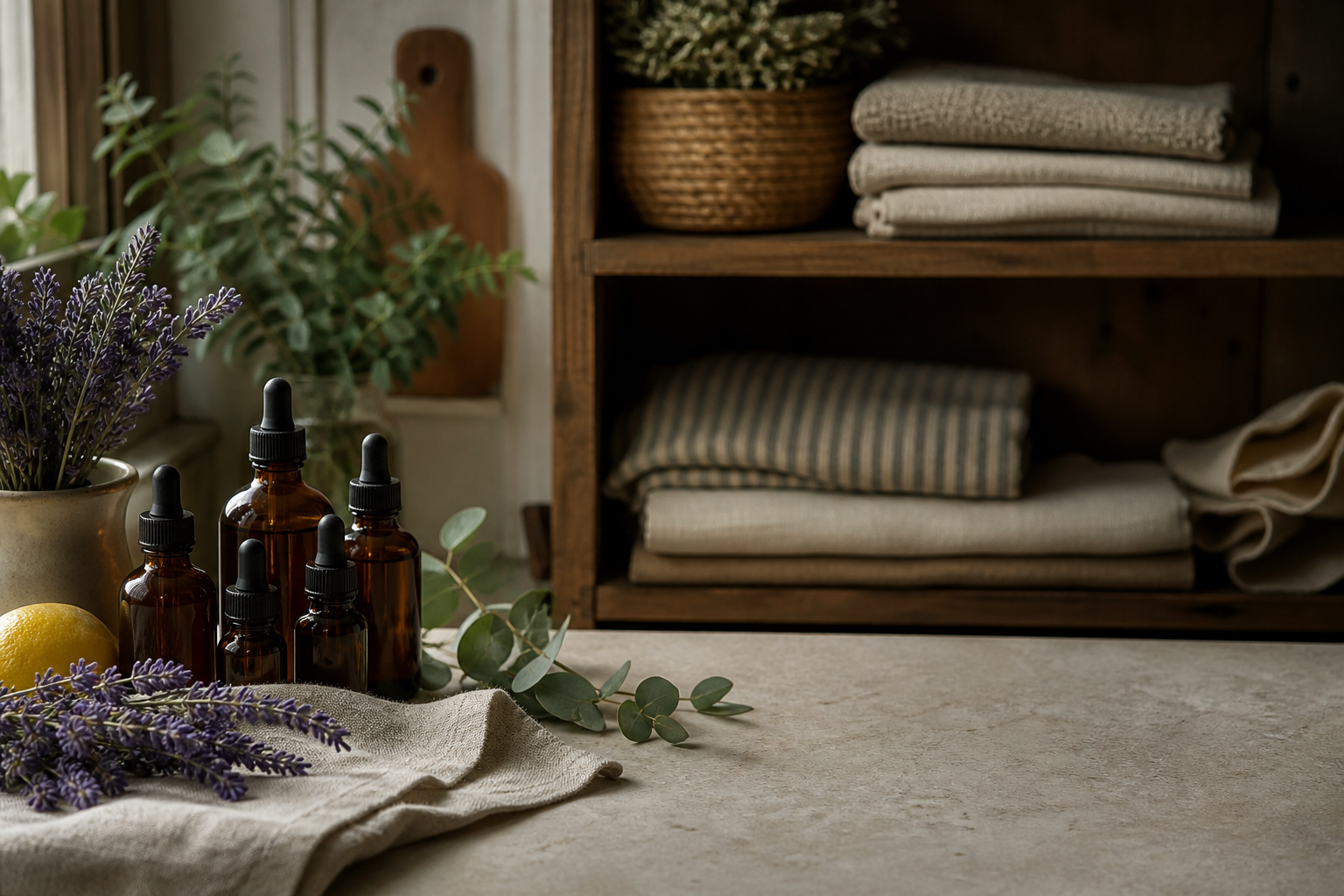
Essential oils can be useful around the house. This is a rewritten and expanded version of our September 2022 note on day-to-day uses: freshening a room, a simple cleaner, a bath scent, a peppermint smear at an ant trail. It is not a protocol for killing airborne viruses, and it is not a substitute for soap, ventilation, or an EPA-registered disinfectant when you actually need one.
An essential oil is a concentrated aromatic fraction of a plant, usually steam-distilled or cold-pressed. It is not the same object as a perfume, a “fragrance oil,” or a potpourri scent. Those are often synthetic mixes. The bottle that says lavender may be Lavandula angustifolia, a spike lavender, a blend, or a fragrance with no lavender in it. Read the Latin name. A few drops is a high dose of volatile terpenes, not a sprig in a drawer.
Lab dishes can show lavender or tea tree slowing some bacteria. That is not the same as sterilizing a kitchen, clearing a cold from the air, or building “an extra barrier against viruses.” Keep the household tips. Drop the immune-system slogan.
Essential oils as a home freshener
The useful job is odor and atmosphere. Volatile plant smells compete with garbage and bathroom air. They do not erase the source. Empty the bin; then scent if you still want to.
- Garbage smell: two or three drops of sweet orange (Citrus sinensis) oil on a cotton ball or the inside of a clean bin lid. Citrus oils are phototoxic on skin in some expressed forms; in a bin they are an odor mask, not a sanitizer.
- Bathroom odors: three or four drops of lemongrass (Cymbopogon) in the toilet bowl is an old housekeeping trick. It covers smell. It does not disinfect porcelain.
- Linens in storage: three or four drops of lavender on a paper towel, tucked into folded sheets, is a drawer sachet. Keep oils off silk and untested dyes. Keep the towel away from pets who chew laundry.
Essential oils in simple housecleaning
A scented wipe is still a wipe. Vinegar and water clean mineral film; soap lifts grease; bleach and registered disinfectants have labeled jobs. Essential oils add smell and, in some in-vitro papers, modest antimicrobial activity that does not make a DIY spray a hospital product.
- Light dusting: a spray bottle of water and a few drops of lemon oil. Shake. Do not spray into eyes. Wipe wood that you have tested in a corner first; citrus and water can mark finishes.
- Floor cleaner: equal parts water and white vinegar, about 15 drops of peppermint oil, in a squirt bottle. Apply, then mop with clean water. Skip this on stone that vinegar etches (marble, some travertine). Peppermint is a scent and a folk ant deterrent, not a polish.
Eucalyptus, rosemary, and sage show up in the same “fresh house” aisle. They are different chemistries. A monograph is not a mop recipe.
Aromatherapy around the house
Aromatherapy here means smelling a plant fraction on purpose. Inhaled odor can change mood for some people. That is not the same as treating anxiety, insomnia, or infection. A diffuser puts droplets into the air; birds, cats, and people with asthma may not want that experiment.
- A bath: essential oils do not mix with water. They float in a slick. The original recipe—five drops each of sandalwood, chamomile, and lemon plus a carrier such as almond oil—is the right shape (dilute in a fixed oil first). Undiluted drops on wet skin are a dermatitis risk, especially citrus. Chamomile in a cup of tea is a different, much smaller exposure than chamomile essential oil in a tub.
- A diffuser: follow the device, ventilate, and do not run it all night in a closed bedroom with a cat. “Pleasant scent in another room” is a reasonable use. “Purifying the house” is marketing.
Essential oils as folk insect deterrents
People have used strong-smelling plants against insects for a long time. Evidence for peppermint versus ants, or lavender versus flies, is mixed and usually about deterrence, not extermination. If you have an infestation, find the food source and the entry. Oil on a windowsill is a nudge.
- Ants: peppermint oil near an entryway is a common folk barrier. Wipe the trail with soapy water first so you are not scenting on top of pheromone.
- Flies: a cloth with about 10 drops of lavender or lemongrass wiped on a window is a scent, not a screen.
- Fleas: a water spray with peppermint, spearmint, lavender, or lemongrass is sometimes used on floors and pet bedding. Do not put essential oils on a cat. Do not treat a flea infestation with a spritz and skip the veterinarian.
Safety that belongs in the same article
Never put undiluted essential oil on skin as a default. Photosensitizing citrus (especially cold-pressed bergamot and some lemon/lime) plus sun can burn. Tea tree, eucalyptus, wintergreen, and pennyroyal have ugly case reports in children and pets. Pregnancy, epilepsy, and significant asthma are reasons to skip casual diffusing until a clinician who knows the person says otherwise.
Keep bottles capped, away from kids, and away from pets who lick. “Natural” is not a dose. A plant that is gentle as a leaf tea can be harsh as a distilled oil.
Frequently asked questions
Do essential oils disinfect a house?
Not in the sense that a labeled disinfectant does. Some oils show antibacterial activity in laboratory assays. Household use is mostly scent plus ordinary cleaning. For raw meat boards, sick-room surfaces, or mold, use the product whose label matches the job.
Are essential oils the same as herbs?
They come from herbs and trees, but they are not interchangeable with a tea or a tincture. Distillation concentrates volatiles and leaves most of the water-soluble plant behind. Our eucalyptus and chamomile monographs are about those drugs as used in herbal practice, not about a diffuser blend.
Can I use these tips around cats and dogs?
Dogs tolerate some diluted household smells better than cats. Cats lack certain liver pathways and do poorly with phenolic oils (tea tree is the famous example). When in doubt, scent a room you can leave, not the animal.