
Monograph
Damiana
Turnera diffusa
Updated October 12, 2026
Key points
-
01
No trial of damiana alone
Every randomized human trial tested damiana inside a blend such as ArginMax or YGD, so the results cannot be credited to damiana. A single-herb German study had no control group.
-
02
Mixed results in women
ArginMax improved satisfaction and desire in two small four-week trials, one co-authored by maker staff, but a 12-week trial in 186 cancer survivors found no effect on sexual function.
-
03
Aphrodisiac evidence is in rats
Damiana extracts revived mating in sluggish or exhausted male rats, apparently through nitric oxide signaling. No study has shown that this happens in people.
-
04
Avoid in pregnancy
Turnera species were used traditionally to end pregnancy, and the German damiana medicine is not recommended in pregnancy, while breastfeeding, or under 18.
-
05
Thin safety data, real cautions
Damiana contains arbutin and a cyanogenic glycoside, blocked CYP3A4 in the lab, and may affect blood sugar. Avoid smoking blends, and beware spiked sexual enhancement products.
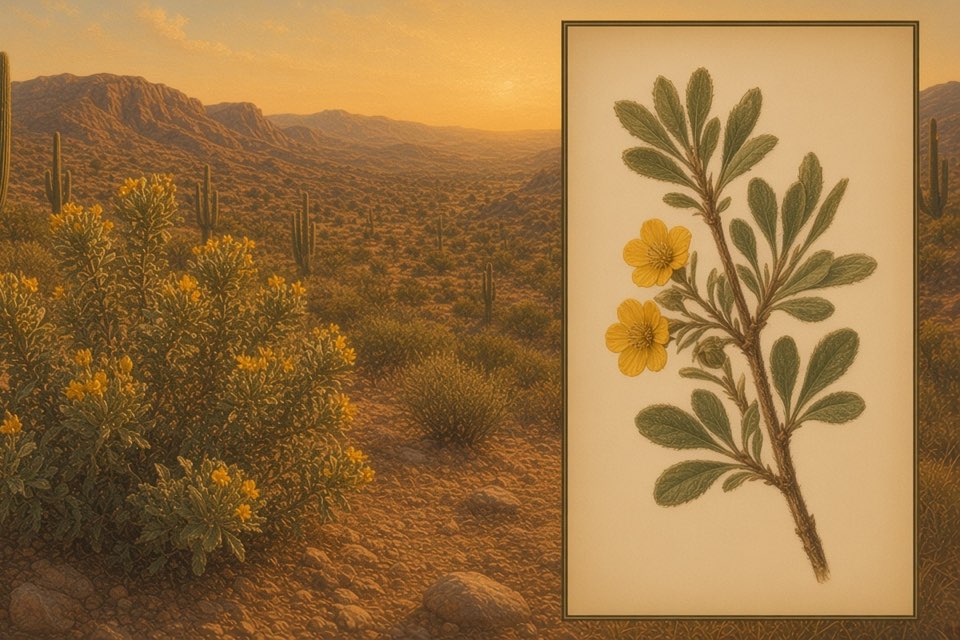
Damiana is Turnera diffusa, a small, many-branched, strongly aromatic shrub of dry, rocky scrub from Texas and Mexico through Central America and the Caribbean to northeastern Brazil, with tiny leaves and bright yellow flowers. It belongs to the passionflower family, Passifloraceae. In Mexico the leaves are made into tea, and in the mountains of Baja California Sur it is the most valued of the wild plants ranchers brew as an everyday drink; it also flavors a Mexican liqueur. Above all, damiana is famous as an aphrodisiac. In the 1870s it was sold in the United States as a sexual tonic, a medical journal published the name Turnera aphrodisiaca, and it entered the first National Formulary in 1888. In 1983 Varro Tyler titled his history of the plant “Damiana: history of a herbal hoax.” Even the caffeine that some reviews attribute to the leaf turns out not to be there when authenticated samples are tested.
The honest headline is that damiana alone has never been tested in a randomized controlled trial. Its human evidence comes from blends. ArginMax, which combines L-arginine, ginseng, ginkgo, damiana, vitamins, and minerals, improved sexual satisfaction in two small four-week trials in women (77 and 108 participants), one co-authored by an employee of the maker, but a larger 12-week trial in 186 cancer survivors found no effect on any measure of sexual function. A capsule of yerba mate, guarana, and damiana (YGD) produced weight loss over 45 days in one Danish trial. The only study of a damiana-only product was an uncontrolled German study reporting results for 35 women, co-authored by staff of a herbal medicine maker. Rat studies show more sexual activity in sluggish or exhausted males, apparently through nitric oxide signaling, and mouse studies show less anxiety-like behavior; none of this has been tested in people.
Regulators have not judged damiana effective. Germany’s Commission E did not approve it in 1989, and we found no European Medicines Agency (EMA) herbal monograph, although Germany registers one damiana leaf extract as a traditional herbal medicine for declining sexual desire, based on long use rather than proof. In the United States it is a permitted food flavoring and is sold as a supplement; damiana liqueur is a flavored spirit, not a medicine. Safety data are thin: short trials of blends found few side effects, but the leaf contains arbutin (which the body converts to hydroquinone) and a cyanogenic glycoside, it affected blood sugar in some animal studies, and it blocked a key drug-processing enzyme in the laboratory. It is best avoided in pregnancy, and Louisiana bans damiana products meant for smoking. Nothing here is medical advice. Low desire and erectile problems deserve a medical check, and sexual enhancement products can contain hidden prescription drugs.
Featured in
Herbs for Libido and Sexual HealthIn this monograph
01 The plant
Botanical profile
Turnera diffusa Willd. ex Schult. was published in 1820 by Josef August Schultes, who credited the name and description to the German botanist Carl Ludwig Willdenow, according to Kew’s International Plant Names Index (IPNI). Kew’s World Checklist of Vascular Plants, the dataset behind Plants of the World Online, accepts the name and treats several others as synonyms, including Turnera aphrodisiaca Ward, published in the Virginia Medical Monthly in 1876, Turnera diffusa var. aphrodisiaca (Ward) Urb., published by Urban in 1883, Turnera microphylla Desv., and Turnera pringlei Rose. In other words, the “aphrodisiac” variety that supplement labels and some studies still name is not recognized as a separate plant in that checklist, although Mexican researchers sometimes compare samples labeled var. diffusa and var. aphrodisiaca. Older literature places the genus in its own family, Turneraceae; current classifications put it in Passifloraceae, the passionflower family. Szewczyk and Zidorn (Journal of Ethnopharmacology 2014) count about 135 accepted Turnera species, of which roughly half a dozen are used in traditional medicine.
The checklist gives a native range from Texas across Mexico, including the northwest that holds Baja California, through Central America from Belize to Panama, across the Caribbean from the Bahamas, Cuba, Hispaniola, Jamaica, and Puerto Rico to the Leeward Islands, and to northeastern and southeastern Brazil. The Flora of St. John (Memoirs of the New York Botanical Garden) describes an erect or spreading shrub 15 to 70 cm tall, many-branched from a woody base. Its leaves are alternate but look whorled because short side shoots crowd them together; each blade is only 4 to 10 mm long, obovate or lance-shaped, leathery, densely hairy especially beneath, with a toothed margin. The nearly stalkless flowers have spoon-shaped yellow petals 4 to 6 mm long, and the fruit is a small, nearly round capsule that splits to the base. Flora de Nicaragua records plants up to 2 m tall on beaches, in dry tropical forest, and in savannas on rocky soils, notes that the flowers are heterostylous (individual plants carry styles and stamens at different heights, which favors cross-pollination), and calls the plant medicinal and very aromatic.
The leaves, often with the flowering tops, are the part used: the first National Formulary of 1888 made its fluid extract from the leaves, US food rules list damiana leaves as a flavoring, and the German medicine is a leaf extract. Szewczyk and Zidorn list flavonoids (22 compounds across the genus), cyanogenic glycosides (seven), maltol glucoside, phenolics, mono-, sesqui-, and triterpenes, and fatty acids in Turnera. Spencer and Seigler (Planta Medica 1981) isolated the cyanogenic glycoside tetraphyllin B from damiana, Piacente and colleagues (Zeitschrift für Naturforschung C 2002) isolated flavonoids and arbutin from an infusion of the aerial parts, and Zhao and colleagues (Journal of Natural Products 2007) characterized 35 compounds, including glycosides of apigenin and luteolin. Kumar and colleagues (Indian Journal of Pharmaceutical Sciences 2008) found most apigenin bound as glycosides, with the most in the flowers, then the leaves. Some reviews also list caffeine, but Pauli and colleagues (Planta Medica 2026) traced that claim to erroneous or circular citations and detected no caffeine in authenticated damiana, at a limit equivalent to less than 4 micrograms per daily serving.
02 Lineage
History
Damiana is a plant of Mexico’s dry lands. Dávila-Rangel and colleagues (Plants 2024) describe it as one of the most important medicinal plants of the Maya and note its use in Mexico’s arid and semi-arid zones against cerebral weakness, impotence, inflamed testicles, and respiratory complaints such as coughs and colds. Szewczyk and Zidorn call it one of the most highly appreciated plant aphrodisiacs, and record other uses of Turnera species for anemia, bronchitis, diabetes, fever, digestive complaints, pain, skin disorders, and women’s health problems, and as abortives (to end pregnancy), expectorants, and laxatives. The natural products monograph on Drugs.com credits the Spanish missionary Juan María de Salvatierra with the first report that Indigenous people in Mexico made a sweetened drink from the leaves for its love-enhancing properties. In the Los Cabos mountains of Baja California Sur, Pío-León and colleagues (Acta Botanica Mexicana 2018) found that ranchers drink teas of 12 wild plants, mainly as cold and cough remedies and general relaxants, and that damiana had the highest cultural value of all (71.2%). Juárez-Aragón and colleagues (Frontiers in Nutrition 2024) describe damiana liqueur as drunk for toning, relaxing, and supposedly aphrodisiac effects, and note that in Mexico the plant is mixed with tequila or mezcal to make relaxing and sexually stimulating drinks.
The American career of damiana was a product of the patent medicine era. The same monograph records that it was imported in the 1870s as a tincture advertised as a powerful aphrodisiac for “the enfeebled and the aged.” Medical journals joined in: PubMed indexes an 1875 item by J. J. Caldwell in the Atlanta Medical and Surgical Journal announcing damiana as a new aphrodisiac, and an 1879 item in the same journal promoting it as a nerve tonic, while the botanical name Turnera aphrodisiaca was coined in the Virginia Medical Monthly in 1876. The first National Formulary of the American Pharmaceutical Association (1888) included a fluid extract made from the leaves of Turnera species “(Damiana)” and an Elixir of Damiana. According to that monograph, damiana never entered the United States Pharmacopeia; the elixir was dropped from the National Formulary in 1916, and the fluid extract and leaf remained until 1947. The same source suggests that irritation of the urinary passages by the volatile oil may explain the aphrodisiac reputation, the view associated with Tyler’s 1983 “herbal hoax” article in Pharmacy in History.
Damiana’s later history runs in three directions. Germany’s Commission E reviewed “damiana leaf and herb” in 1989 and placed it among the herbs it did not approve. From the late twentieth century damiana reappeared as a “legal high”: Dennehy and colleagues (Annals of Pharmacotherapy 2005) found it in 10% of 119 herbal products sold online for recreational use, and Ogata and colleagues (Forensic Science International 2013) frequently found damiana DNA in 62 “Spice”-type herbal smoking mixtures from Japan’s illegal drug market, where plant material mainly served as a carrier for synthetic cannabinoids. Louisiana now lists damiana among the “prohibited plants” in a law first enacted in 2010. Meanwhile it became a standard ingredient of sexual enhancement supplements, from ArginMax to VigRX Plus, and in Germany a damiana leaf extract is now registered as a traditional herbal medicine for waning sexual desire.
03 Chemistry
Active compounds and how it works
The aphrodisiac evidence comes from rats. Arletti and colleagues (Psychopharmacology 1999) gave male rats a damiana fluid extract by mouth at 0.25 to 1 ml per kg: it had no effect on sexually potent rats, but at the highest dose it increased the share of sexually sluggish or impotent rats that ejaculated and shortened the time to mounting and ejaculation, without changing general activity. Estrada-Reyes and colleagues (Journal of Ethnopharmacology 2009) found that 80 mg per kg of a water extract helped sexually exhausted rats resume mating, an effect comparable to the drug yohimbine. In a follow-up study (Journal of Ethnopharmacology 2013), 10 mg per kg shortened ejaculation latency much as 10 mg per kg of sildenafil did, and both effects were blocked by L-NAME, a drug that stops the body making nitric oxide, suggesting that damiana acts mainly through nitric oxide signaling in the brain and spinal cord. The same dose reduced anxiety-like behavior. No study has measured these mechanisms in people, and Tyler’s older suggestion, that irritation of the urinary passages was mistaken for arousal, has never been tested either.
In the laboratory, damiana compounds touch hormones and brain chemistry. Zhao and colleagues (Journal of Ethnopharmacology 2008) found that a leaf extract blocked aromatase, the enzyme that turns testosterone into estrogen, with an IC50 (the concentration that blocks half the enzyme’s activity) of 63.1 micrograms per ml; its flavonoids pinocembrin and acacetin were the most potent of 24 compounds tested, while apigenin 7-glucoside and two others showed weak estrogen-like activity in a yeast test. Zava and colleagues (Proceedings of the Society for Experimental Biology and Medicine 1998) ranked damiana among the six commonly consumed herbs that bound most strongly to progesterone receptors in breast cancer cells, and found such extracts generally neutral or blocking rather than progesterone-like. Memorial Sloan Kettering Cancer Center (MSKCC) concludes that whether damiana is estrogenic is unclear. Chaurasiya and colleagues (Molecules 2019) found that acacetin 7-methyl ether from damiana selectively inhibited monoamine oxidase B, an enzyme that breaks down dopamine. In mice, water and methanol extracts reduced anxiety-like behavior (Kumar and Sharma, Journal of Herbal Pharmacotherapy 2005) and also depression-like behavior (Ana María and colleagues, Journal of Ethnopharmacology 2019), and Szewczyk and Zidorn identify apigenin as the pain-relieving principle in animal experiments.
Blood sugar and drug-handling results are mixed or preliminary. Alarcon-Aguilar and colleagues (Journal of Ethnopharmacology 1998) found that damiana, prepared the traditional way, was one of eight out of 28 Mexican diabetes remedies that blunted blood sugar spikes in rabbits, but in mice the same group’s water-ethanol extract had no blood sugar-lowering effect (Phytotherapy Research 2002). Parra-Naranjo and colleagues (Molecules 2017) isolated a terpenoid, teuhetenone A, that gradually lowered glucose in normal and diabetic mice, while a 2023 review by the same group cites rat studies with no effect. On drug metabolism, Husain and colleagues (Journal of Ethnopharmacology 2023) screened 123 medicinal plant extracts and placed damiana leaf among the potent activators of the pregnane X receptor (PXR), a switch that can induce drug-metabolizing enzymes, and among the strong inhibitors of CYP3A4, a major drug-processing enzyme. Taha and colleagues (Journal of Ethnopharmacology 2012) attributed damiana’s stomach-protecting effect in rats to arbutin, which they call a major constituent. All of this is cell or animal work; none has been confirmed in people.
04 In practice
Common uses
Low sexual desire in women is where the human evidence is most often cited, and it belongs to a blend. Ito and colleagues (Journal of Sex and Marital Therapy 2001) gave 77 women ArginMax for Women or placebo for four weeks, and 73.5% on the supplement versus 37.2% on placebo reported more satisfaction with their overall sex life; one co-author worked for the Daily Wellness Company, which makes ArginMax. In a second four-week trial in 108 women with low desire (Ito and colleagues, 2006), desire improved in premenopausal and postmenopausal women (51% versus 8% after menopause). But Greven and colleagues (Journal of Community and Supportive Oncology 2015), funded by the US National Cancer Institute and the Daily Wellness Company, found no difference in desire, arousal, lubrication, orgasm, satisfaction, or pain after 12 weeks in 186 cancer survivors, although quality-of-life scores were better. A systematic review by Cieri-Hutcherson and colleagues (Pharmacy 2021) notes that ArginMax is 77% L-arginine and that damiana could make up at most 612 mg of the daily dose. The only damiana-only study, by Rotmann and colleagues (Zeitschrift für Phytotherapie 2021), gave 675 mg of leaf extract daily for eight weeks; scores on the Female Sexual Function Index rose and distress fell in 35 women, but there was no control group, and two co-authors worked for Dr. Loges, a German herbal medicine maker. Verdict: plausible enough to study, unproven for damiana itself.
Erectile dysfunction and male sexual function rest on rat studies and one product trial. Shah and colleagues (BMC Complementary and Alternative Medicine 2012) randomized 78 men aged 25 to 50 with mild to moderate erectile dysfunction (ED) to VigRX Plus or placebo for 12 weeks; erectile function scores rose from 16.1 to 25.1 on the product and from 15.9 to 16.5 on placebo. Each capsule contained 100 mg of damiana leaf among about a dozen ingredients, including Asian ginseng, saw palmetto, ginkgo, hawthorn, and tribulus; the manufacturer, Leading Edge Herbals, funded the trial, and the investigators were paid for their work. We found no randomized trial of damiana alone in men. Verdict: unproven, and a doctor can offer ED treatments with known effects and check for the heart disease and diabetes that ED can signal.
Weight loss and appetite were studied with YGD, a capsule of yerba mate, guarana, and damiana. Andersen and Fogh (Journal of Human Nutrition and Dietetics 2001) found that YGD slowed stomach emptying in seven volunteers (58 versus 38 minutes) and that, in a 45-day double-blind trial in 47 overweight patients taking three capsules before each main meal, weight fell by 5.1 kg on YGD versus 0.3 kg on placebo; 22 patients who stayed on it for a year kept their weight steady. Harrold and colleagues (Appetite 2013) found that three YGD tablets taken before meals cut energy intake at lunch by 112 kcal (17.3%) in 58 women. Yerba mate and guarana are both caffeine-containing plants, and these studies cannot show what, if anything, damiana adds. Verdict: one positive trial of a blend, too old and small to rely on.
Menopause symptoms, mood, and anxiety have only blend or animal data. Yakoot and colleagues (Forschende Komplementärmedizin 2011) randomized 120 women with menopausal symptoms to Lady 4, a capsule of evening primrose oil, damiana, ginseng, and royal jelly, or placebo; 86.7% versus 56.7% rated themselves much or very much improved. Palacios and colleagues (BMC Women’s Health 2019) reported better sexual function scores in 29 postmenopausal women taking Libicare, a tablet of fenugreek, damiana, tribulus, and ginkgo, but the study had no control group and one author was employed by the maker. For anxiety and depression, MSKCC notes that the calming effects seen in mice have not been studied in people. Verdict: traditional use, not established.
Blood sugar, digestion, and other traditional uses lack human studies. MSKCC lists diabetes, anxiety, constipation, kidney disorders, and menstrual disorders among the purported uses of damiana and reports no data to support constipation, kidney, or menstrual claims; blood sugar effects come from animal studies with conflicting results. Szewczyk and Zidorn observe that most of the genus’s reported bioactivities have been tested only in chemical, cell, or animal assays. The 2023 review by Parra-Naranjo and colleagues (Pharmaceuticals) describes hepatoprotective, antioxidant, and anti-inflammatory activity in laboratory and animal models, none of it in patients. Verdict: none of these uses is established, and diabetes in particular needs proven treatment. For desire problems, our libido guide compares herbs with more human evidence, such as ginseng and maca.
05 The apothecary
Preparations and traditional use
Traditional preparations are simple. In Mexico, dried leaves and flowering tops are steeped as a tea, often sweetened, and the Baja California Sur ranchers studied by Pío-León and colleagues drink damiana tea as an everyday social beverage as well as a remedy. Piacente and colleagues analyzed exactly this kind of infusion and found flavonoids and arbutin in it. Damiana also flavors liqueurs and is steeped in tequila or mezcal (Juárez-Aragón and colleagues), and homeopathic preparations exist. We found no agreed dose for damiana tea: the traditional use has not been measured, and the strength of a cup depends on how much leaf is used and how long it steeps. The liqueur adds alcohol, which carries its own effects on sleep, mood, and sexual function.
The doses used in research are product-specific. The German traditional herbal medicine Remisens contains 225 mg per tablet of a dry leaf extract (5 to 7 parts leaf to 1 part extract, made with 90% ethanol); its leaflet recommends one tablet three times a day after meals for adults, 675 mg in total, the same daily amount studied for eight weeks by Rotmann and colleagues, and does not recommend it under 18. ArginMax was taken as three caplets twice a day, and Cieri-Hutcherson and colleagues calculate that its 2,700 mg proprietary blend of L-arginine, ginseng, ginkgo, and damiana could contain at most 612 mg of any one herb. VigRX Plus provided 100 mg of damiana per capsule, two capsules twice a day. YGD was taken as three capsules before each main meal, and the trial abstract does not state the damiana content. Rodent studies used 10 to 80 mg of extract per kg of body weight, which cannot be translated directly into a human dose.
Quality and labeling vary. In the United States, damiana is sold as a dietary supplement, which does not need FDA approval before sale, and federal food rules (21 CFR 172.510) list “damiana leaves, Turnera diffusa” among natural flavoring substances that may be used in food, with no restriction to alcoholic drinks. Damiana itself is caffeine-free, according to Pauli and colleagues, but many “energy” and weight-loss blends add guarana or yerba mate. Products sold for sexual enhancement are a particular risk: FDA warns that many such products, including some sold as dietary supplements or all-natural treatments, are likely to be contaminated with dangerous hidden ingredients, and that its public list covers only a small fraction of them. Reassuringly, Jiménez-Amezcua and colleagues (Journal of Chromatography A 2026), employees of a Spanish botanical extract company, found no sildenafil, tadalafil, vardenafil, or avanafil in 20 damiana supplements. In the “Spice” smoking mixtures analyzed by Ogata and colleagues, most plants identified by DNA did not match the labels, a reminder that recreational products are not what they claim.
Safety
Before you use damiana
06 Caution
Side effects
In short trials of blends, side effects were few. Ito and colleagues found no significant side effects in their 2001 trial, and in 2006 four women reported minor stomach upsets, two heavier menstrual bleeding, and one more frequent headaches, as summarized by Cieri-Hutcherson and colleagues. In the 12-week trial in 186 cancer survivors, side effects were similar on ArginMax and placebo, and only one serious event, stomach pain followed by diarrhea, was judged possibly related to the supplement. In the VigRX Plus trial, side effects and tolerability were similar to placebo. The German product leaflet lists allergic reactions, of unknown frequency, as the possible side effect. These studies were small, lasted at most three months, and tested mixtures, so they cannot rule out uncommon harms from damiana or show which ingredient caused a given effect.
Popular sources describe damiana as mildly psychoactive, and claims of hallucinations or convulsions at high doses circulate online, but the published record is thin. Brunetti and colleagues (Pharmaceuticals 2020), reviewing psychiatric and neurological adverse effects of herbal sexual enhancers, found no such effects reported for damiana. Peace and colleagues (Rapid Communications in Mass Spectrometry 2020) analyzed damiana e-liquids, resins, and powders sold online for vaping and detected none of the psychoactive compounds they looked for. The real danger in “Spice” products comes from the synthetic cannabinoids sprayed onto plant carriers such as damiana, potent designer drugs whose strength buyers cannot know; anyone who becomes agitated, confused, or unwell after smoking a herbal blend needs emergency care. Smoking any dried plant also exposes the lungs to smoke, and a 2022 review of herbal cigarettes in ACS Omega advises against smoking or inhaling damiana.
Some concerns rest on chemistry rather than reports of harm. Damiana contains arbutin, a glucose-bound form of hydroquinone, and Nahar and colleagues (Molecules 2022) note that hydroquinone at high doses can damage the liver and kidneys and cause genetic mutations; uva-ursi, the classic arbutin herb, is limited by regulators to short courses for this reason. We found no reliable figure for how much arbutin a cup of damiana tea delivers, and the German product information reports no mutagenic effect of its extract in two standard tests. Damiana also contains tetraphyllin B, a cyanogenic glycoside (a compound that can release cyanide when broken down), but we found no reports of cyanide poisoning from damiana. LiverTox, the US government’s database of drug-induced liver injury, has no entry for damiana, and in toxicity studies cited by Parra-Naranjo and colleagues, mice given up to 1,000 mg per kg of leaf extract for 28 days showed only slight liver congestion at the top dose. Absence of reports is not proof of safety for long-term or high-dose use.
07 Caution
Contraindications
Pregnancy, breastfeeding, and children: avoid damiana. Szewczyk and Zidorn record traditional use of Turnera species as abortives, the German product leaflet states that safety in pregnancy and breastfeeding has not been adequately studied and does not recommend use, and there are no human pregnancy data. The same leaflet does not recommend the product under 18 because of insufficient data, and there is no reason to give damiana, its liqueur, or sexual enhancement blends to children or teenagers. People trying to conceive should also be cautious, because effects on fertility and early pregnancy are unknown.
Diabetes, hormone-sensitive conditions, allergy, and organ disease: because some animal studies found blood sugar lowering, people with diabetes should talk with their care team before using damiana and monitor their glucose if they do. Damiana extracts inhibited aromatase and bound progesterone receptors in laboratory work, and MSKCC considers its estrogenic effects unclear, so anyone with a current or past hormone-sensitive cancer, endometriosis, or similar condition should check with their specialist first. The German medicine is contraindicated in people allergic to damiana or other Turnera species. Given the arbutin content and the absence of safety data, people with liver or kidney disease should avoid concentrated extracts.
When not to self-treat: low sexual desire is often linked to depression, anxiety, relationship strain, hormonal changes, or medicines such as SSRI antidepressants, and each has its own treatments; never stop or change an antidepressant on your own. ED that persists can be an early warning of narrowed arteries, heart disease, or diabetes and deserves a medical assessment. Chest pain, shortness of breath, or a racing heart during or after sex needs emergency care, as does an erection lasting more than four hours. Avoid damiana products sold for smoking or vaping, especially unlabeled blends, which may contain synthetic cannabinoids. Weight-loss blends of damiana with guarana or yerba mate are stimulants and are unsuitable for people with heart rhythm problems, high blood pressure, anxiety disorders, or sensitivity to caffeine.
08 Caution
Drug and herb interactions
Diabetes medicines: in theory, damiana could add to the effect of insulin, sulfonylureas, or other glucose-lowering drugs, because some animal studies found that it lowered blood sugar, although others found no effect and no human data exist. Anyone taking diabetes medicines who wants to try damiana should check with their prescriber and watch for signs of low blood sugar, such as shakiness, sweating, hunger, or confusion. Combination products add their own effects: ginseng, an ingredient of ArginMax and Lady 4, may also lower blood sugar.
Drug-metabolizing enzymes: Husain and colleagues found that damiana leaf extract strongly inhibited CYP3A4 and potently activated PXR in laboratory tests. Inhibiting CYP3A4 could raise blood levels of medicines this enzyme clears, while PXR activation can induce such enzymes and lower drug levels over time. Which effect would win in people is unknown, and the German product leaflet states that no interaction studies have been done and no interactions are known. People taking medicines with a narrow safety margin should ask a pharmacist before using damiana, particularly concentrated extracts.
Blends, hidden drugs, and alcohol: most damiana products are mixtures, so their interactions are those of every ingredient. Ginkgo and ginseng, in ArginMax, may affect bleeding risk with anticoagulants such as warfarin; guarana and yerba mate, in YGD, add caffeine to other stimulants; and many sexual enhancement blends contain tribulus, horny goat weed, or yohimbe. FDA warns that sexual enhancement products may contain hidden drug ingredients, and undeclared sildenafil-type drugs can drop blood pressure dangerously in people taking nitrates such as nitroglycerin. Damiana liqueur adds alcohol, which can interact with sedatives, some antidepressants, and diabetes medicines. Give your doctor or pharmacist the full label of any product, not just the word “damiana.”
09 Questions
Frequently Asked Questions
Mostly traditional ones. Damiana is a Mexican aphrodisiac and relaxing tea, and a German damiana extract is registered as a traditional medicine for declining sexual desire, based on long use. Human trials have only tested blends: ArginMax helped desire and satisfaction in two small trials in women but not in a larger one, and a yerba mate, guarana, and damiana capsule aided weight loss in one trial. Rat and mouse studies suggest pro-sexual and anti-anxiety effects. Our guide to herbs for libido and sexual health compares options with more human evidence.
It is unproven. The best-known trials used ArginMax, which combines damiana with L-arginine, ginseng, and ginkgo: two four-week trials in 77 and 108 women found more desire and satisfaction than with placebo, but a 12-week trial in 186 cancer survivors found no effect, and damiana is a small part of the blend. A German study of damiana alone had no placebo group. Maca has been tested on its own in women. Low desire often has treatable causes worth discussing with a clinician.
There is no good evidence that it is. Damiana revived mating behavior in sluggish male rats, but no trial has tested it alone in men. VigRX Plus, a maker-funded blend with 100 mg of damiana per capsule plus ginseng, saw palmetto, tribulus, and more, improved erection scores in 78 men, but the result belongs to the mixture. Ginseng has the most trial evidence for ED, while horny goat weed has similar marketing and little proof. ED can signal heart disease or diabetes, so see a doctor.
In Mexico, dried damiana leaves and flowering tops are simply steeped in hot water, often sweetened, and ranchers in Baja California Sur drink it as an everyday tea. No study has established a safe or effective amount of tea, and strength varies with how much leaf you use. The German damiana medicine uses 675 mg of a concentrated extract a day, which is not the same as a cup of tea. Damiana is caffeine-free. Avoid it in pregnancy and while breastfeeding, and check with a pharmacist if you take regular medicines.
Damiana liqueur is a sweet Mexican spirit flavored with the herb, and in Mexico damiana is also steeped in tequila or mezcal to make drinks considered relaxing and sexually stimulating. US food rules allow damiana leaves as a natural flavoring. Any aphrodisiac effect of the liqueur is unproven, and the alcohol itself can dull sexual performance, interact with sedatives, antidepressants, and diabetes medicines, and is unsuitable in pregnancy. Treat it as a drink, not a remedy.
Only one small trial suggests a blend might. In 2001, 47 overweight patients taking YGD, capsules of yerba mate, guarana, and damiana, lost 5.1 kg over 45 days versus 0.3 kg on placebo, and the blend slowed stomach emptying; a 2013 study found it cut calories at one lunch. Yerba mate and guarana both contain caffeine, so the effect cannot be credited to damiana. These products act as stimulants and are unsuitable for people with heart rhythm problems, high blood pressure, or anxiety. Lasting weight loss needs diet, activity, and medical support.
Short trials of damiana blends found few side effects, mainly minor stomach upset, and the German damiana medicine lists allergic reactions. Damiana contains arbutin, which the body turns into hydroquinone, the compound behind the dose limits on uva-ursi, plus a cyanogenic glycoside, though no poisonings have been reported. Avoid damiana in pregnancy, while breastfeeding, and in children. People with diabetes, hormone-sensitive cancers, or liver or kidney disease, and anyone on medicines cleared by CYP3A4, should check with a doctor or pharmacist first.
Damiana is sold as a supplement and allowed as a food flavoring in the United States, but Louisiana lists it as a prohibited plant: products containing it may not be made, sold, or possessed for smoking, inhaling, or putting in the mouth, with exceptions for ornamental growing, homeopathic drugs, and properly made dietary supplements. Damiana was a common carrier plant in “Spice” mixtures sprayed with synthetic cannabinoids, potent designer drugs. Damiana itself has no proven psychoactive effect, and smoking any plant harms the lungs, so smoking it is not advisable.
10 References
Sources
These references support the history, clinical, and safety claims on this page. They are not an endorsement of any product.
-
Turnera diffusa Willd. ex Schult.
World Flora Online (World Checklist of Vascular Plants, Royal Botanic Gardens, Kew; Flora of St. John and Flora de Nicaragua descriptions), 2026
Accepted name, published 1820; synonyms include Turnera aphrodisiaca Ward, T. diffusa var. aphrodisiaca (Ward) Urb., T. microphylla, and T. pringlei; native from Texas and Mexico to Central America, the Caribbean, and northeastern and southeastern Brazil; shrub 15–70 cm (to 2 m), leaves 4–10 mm, toothed and hairy beneath, yellow petals 4–6 mm, heterostylous flowers, rocky dry habitats, very aromatic.
-
Damiana
Memorial Sloan Kettering Cancer Center, About Herbs, 2023
Traditional uses as diuretic, laxative, stimulant, aphrodisiac, and for diabetes; anxiolytic, hypoglycemic, and pro-sexual effects only in preclinical models; estrogenic effects unclear; no human data for anxiety; no data for constipation, kidney, or menstrual claims; human studies only of formulations such as ArginMax.
-
Ethnobotany, phytochemistry, and bioactivity of the genus Turnera (Passifloraceae) with a focus on damiana—Turnera diffusa
Journal of Ethnopharmacology (PubMed 24468305), 2014
Szewczyk and Zidorn: about 135 Turnera species, half a dozen used medicinally; traditional uses including as aphrodisiac and abortive; 22 flavonoids and seven cyanogenic glycosides in the genus; most bioactivities tested only in chemical, cell, or animal assays; human studies only of multi-ingredient products; apigenin the antinociceptive principle in animals.
-
Bioactivity of the Genus Turnera: A Review of the Last 10 Years
Pharmaceuticals (PubMed 38004438), 2023
Parra-Naranjo et al.: conflicting rodent blood sugar results; YGD anti-obesity studies; VigRX Plus, Libicare, and the German damiana study; damiana leaf extract a potent PXR activator and CYP3A4 inhibitor in screening; oral extracts of low acute toxicity in rodents, slight liver congestion at 1,000 mg/kg for 28 days.
-
A double-blind placebo-controlled study of ArginMax, a nutritional supplement for enhancement of female sexual function
Journal of Sex and Marital Therapy (PubMed 11554217), 2001
Ito, Trant, and Polan: 77 women (34 ArginMax, 43 placebo), four weeks; 73.5% versus 37.2% improved satisfaction with overall sex life; no significant side effects; co-author Trant affiliated with the Daily Wellness Company (Crossref record).
-
The enhancement of female sexual function with ArginMax, a nutritional supplement, among women differing in menopausal status
Journal of Sex and Marital Therapy (PubMed 16959660), 2006
Ito et al.: 108 women aged 22–73 with low desire (55 ArginMax, 53 placebo), four weeks; desire improved in premenopausal women and in 51% versus 8% of postmenopausal women; ArginMax contains L-arginine, ginseng, ginkgo, damiana, vitamins, and minerals.
-
Effect of ArginMax on sexual functioning and quality of life among female cancer survivors: results of the WFU CCOP Research Base Protocol 97106
Journal of Community and Supportive Oncology (PubMed 26287032), 2015
Greven et al.: 186 female cancer survivors, 12 weeks, three caplets twice daily; no difference from placebo in desire, arousal, lubrication, orgasm, satisfaction, or pain; better quality-of-life scores; similar toxicities; funded by the National Cancer Institute and the Daily Wellness Company, which supplied caplets free.
-
Systematic Review of l-Arginine for the Treatment of Hypoactive Sexual Desire Disorder and Related Conditions in Women
Pharmacy (PubMed 33801678), 2021
Cieri-Hutcherson et al.: ArginMax is 77% L-arginine with a 23% blend of ginseng, ginkgo, and damiana (2,700 mg for six capsules), so damiana is at most 612 mg a day; minor side effects in the 2006 trial; small samples and poorly defined exclusion criteria in both Ito trials.
-
Weight loss and delayed gastric emptying following a South American herbal preparation in overweight patients
Journal of Human Nutrition and Dietetics (PubMed 11424516), 2001
Andersen and Fogh: YGD (yerba mate, guarana, damiana) slowed gastric emptying (58 versus 38 minutes) in seven volunteers; 5.1 versus 0.3 kg weight loss over 45 days in 47 overweight patients; weight maintained over 12 months in 22 uncontrolled patients.
-
Nicht-Interventionelle Studie zum Einfluss eines Damiana-Präparates auf die Verbesserung der Symptomatik des Mangels oder Verlusts von sexuellem Verlangen bei Frauen
Zeitschrift für Phytotherapie (Thieme), 2021
Rotmann et al.: multicenter non-interventional study in women (n=70); after eight weeks of 675 mg daily damiana leaf extract, 35 women (mean age 46.1) showed higher Female Sexual Function Index scores and lower distress; no control group; two co-authors employed by Dr. Loges + Co.
-
Pro-sexual effects of Turnera diffusa Wild (Turneraceae) in male rats involves the nitric oxide pathway
Journal of Ethnopharmacology (PubMed 23298455), 2013
Estrada-Reyes et al.: in sexually sluggish rats, 10 mg/kg aqueous extract and 10 mg/kg sildenafil shortened ejaculation latency; effects blocked by L-NAME; anxiolytic-like effect without change in activity.
-
There is No Caffeine in Damiana: Dismantling Filter Bubbles and Echo Chambers in Scientific Referencing
Planta Medica (PubMed 42049173), 2026
Pauli et al.: claims of caffeine in damiana stem largely from erroneous or circular referencing; NMR found no caffeine in authenticated T. diffusa, detection limit equivalent to less than 4 micrograms per daily serving.
-
Screening of medicinal plants for possible herb-drug interactions through modulating nuclear receptors, drug-metabolizing enzymes and transporters
Journal of Ethnopharmacology (PubMed 36223846), 2023
Husain et al.: of 123 plant extracts, damiana leaf was a potent activator of PXR and AhR, a strong inhibitor of CYP3A4, and a moderate inhibitor of CYP1A2 in laboratory assays.
-
21 CFR 172.510: Natural flavoring substances and natural substances used in conjunction with flavors
US Food and Drug Administration (Electronic Code of Federal Regulations), 2026
Lists “Damiana leaves, Turnera diffusa Willd” as a natural flavoring substance that may be used in food, with no limitation entered.
-
RS 40:989.2. Unlawful production, manufacturing, distribution, or possession of prohibited plant products; exceptions
Louisiana State Legislature, 2025
Lists Turnera diffusa (damiana) among 13 prohibited plants; bans products meant for the mouth or nose or for smoking or inhaling; exempts ornamental growing, FDA-recognized homeopathic drugs, and compliant dietary supplements; enacted by Acts 2010, No. 565, amended through 2025.
-
DNA sequence analyses of blended herbal products including synthetic cannabinoids as designer drugs
Forensic Science International (PubMed 23092848), 2013
Ogata et al.: damiana DNA frequently detected in 62 Spice-like products from Japan’s illegal drug market; most plants identified differed from labels; plant material mainly a diluent for synthetic cannabinoids.
-
The National Formulary of Unofficial Preparations, first issue
American Pharmaceutical Association, 1888
Includes Fluid Extract of Turnera, made from the leaves of Turnera microphylla and other species of Turnera (damiana), and an Elixir of Damiana.
-
Plantas silvestres consumidas como tés recreativos por grupos de rancheros en Baja California Sur, México
Acta Botanica Mexicana, 2018
Pío-León et al.: 12 wild plants used as recreational teas by ranchers in the Los Cabos mountains; damiana had the highest cultural value (71.2%); teas used mainly for colds and coughs and as general relaxants.