Monograph
Red Clover
Trifolium pratense
Updated October 12, 2026
Key points
-
01
Mixed evidence for hot flashes
Cochrane found Promensil no better than placebo, and two US trials were negative. A 2021 meta-analysis found a small effect, under two fewer hot flashes a day.
-
02
Isoflavones are the active idea
Red clover is rich in biochanin A and formononetin, plant estrogens that bind estrogen receptors weakly. Concentrated tablets differ greatly from flower tea.
-
03
Reassuring safety trials
A three-year trial in 401 women with a family history of breast cancer found no change in breast density or endometrial thickness versus placebo.
-
04
Avoid with hormone-sensitive cancer
MSKCC advises people with hormone-sensitive cancers to avoid red clover, and it is not advised in pregnancy or breastfeeding.
-
05
Bleeding case reports
Brain hemorrhages have been reported in women taking red clover products. Take care with blood thinners and antiplatelet drugs, and stop before surgery.
Red clover is a farm plant first and a medicine second. It is a legume, related to peas and beans, grown for centuries as hay and pasture because its roots host bacteria that fix nitrogen from the air and enrich the soil. Its pink-purple flower heads were a nineteenth-century American ‘blood purifier’ and an ingredient in patent cancer remedies, including the Hoxsey tonic, none of which had any proven effect on cancer. Today red clover is sold mainly as tablets of concentrated isoflavones, plant compounds that resemble estrogen, marketed to women for menopausal hot flashes.
That modern use has been tested in reasonably large trials, and the results so far are mixed and mostly modest. Cochrane’s 2013 review pooled five trials of the best-known extract, Promensil, and found no significant reduction in hot flashes compared with placebo. In the US Isoflavone Clover Extract (ICE) trial of 252 women, neither of two red clover products had a clinically important effect, and a year-long NIH-funded trial found red clover no better than placebo while hormone therapy worked. A 2021 meta-analysis did find a modest reduction of under two hot flashes a day, with very inconsistent results between studies. NCCIH says the research has not shown conclusive benefit for any condition; evidence on cholesterol and bone is preliminary and mixed.
Safety studies are more reassuring than the efficacy studies. Standardized extracts have been used for up to two or three years in trials, including one in women with a family history of breast cancer, without effects on breast density or the lining of the womb. Cautions remain: red clover is not advised in pregnancy or breastfeeding, MSKCC advises people with hormone-sensitive cancers to avoid it, and case reports link it to bleeding. Nothing here is medical advice; troublesome menopausal symptoms are worth discussing with a doctor, because effective treatments exist, and any bleeding after the menopause needs prompt investigation.
Featured in
Herbs for Menopause and Hot FlashesIn this monograph
01 The plant
Botanical profile
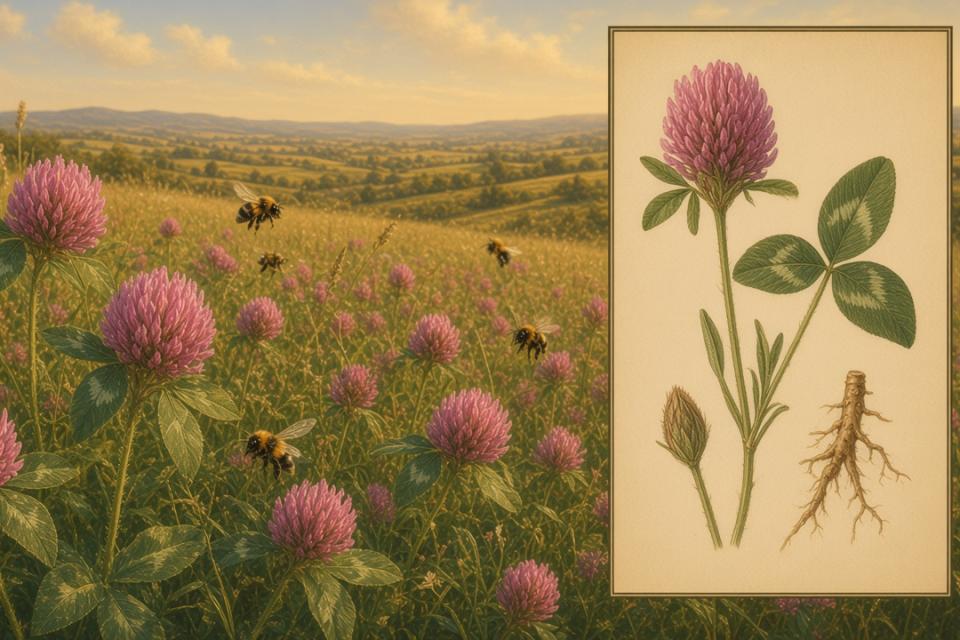
Trifolium pratense L. belongs to Fabaceae (Leguminosae), the legume or pea family, and NCBI Taxonomy files it as taxon 57577. The genus name means three leaves, and pratense means of meadows. NCCIH describes it as native to Europe, central Asia, and northern Africa; the USDA plant guide places its origin in Asia Minor and south-eastern Europe, says it reached the British Isles from Germany in the 1600s, and notes that English colonists brought it to North America, where it is now grown and naturalized throughout the United States. It is a biennial or short-lived perennial with hollow, hairy stems, usually 45–75 cm long, growing from a crown. Each leaf has three oval leaflets, often marked with a pale chevron or V. The first-year taproot usually disintegrates in the second year and is replaced by branched secondary roots (USDA).
The flowers are borne in dense, rounded heads at the tips of the stems, usually rose-pink to purplish, each head made of up to 125 small pea-like florets (USDA). The long floral tubes suit long-tongued bees: the USDA notes that bumblebees are especially important pollinators, while honey bees tend to prefer white, alsike, and sweet clover when they are nearby. Seed pods are small, with kidney-shaped seeds ranging from yellow to violet. King’s American Dispensatory describes the leaflets as lighter colored in the center and the flowers as fragrant. Traditional medicine used the dried flower heads, while some modern isoflavone extracts are made from the flowering tops or wider aerial parts, so products are not interchangeable.
Red clover is the most widely grown of the true clovers and, according to the USDA, the most important legume hay crop in the north-eastern United States, with as much as 10 million acres grown in northern states in the 1940s. With the right Rhizobium bacteria in root nodules it fixes atmospheric nitrogen and needs little or no nitrogen fertilizer. The same chemistry that interests supplement makers matters on the farm: red clover contains isoflavones, chiefly biochanin A (PubChem CID 5280373, C16H12O5) and formononetin (CID 5280378, C16H12O4), with much smaller amounts of genistein and daidzein. The extract used by Atkinson and colleagues supplied 26 mg of biochanin A, 16 mg of formononetin, 1 mg of genistein, and 0.5 mg of daidzein a day. The USDA notes infrequent reproductive problems in sheep grazing pure stands of red clover, attributed to its estrogenic compounds, and a risk of bloat in grazing livestock.
02 Lineage
History
Red clover’s medical reputation is largely American and nineteenth-century. King’s American Dispensatory (1898), the standard text of the Eclectic physicians, calls the blossoms an excellent alterative, a term for remedies believed to purify the blood and gradually restore health, and one of the few remedies that favorably influence whooping cough. It recommends red clover for other spasmodic coughs, for leg ulcers, burns, and ill-conditioned sores, and claims that it unquestionably retards the growth of cancers when taken over long periods. MSKCC adds traditional uses for psoriasis, eczema, and mastitis. These were the claims of an era before controlled trials, and none has been confirmed.
The cancer claims carried into commercial products. King’s describes a Compound Extract of Trifolium sold by the Wm. S. Merrell Chemical Company of Cincinnati, combining red clover with stillingia, burdock, poke root, cascara amarga, Oregon grape, mayapple, prickly ash, and potassium iodide. The principal ‘brown’ tonic later promoted by Harry Hoxsey as a cancer cure has a strikingly similar recipe: MSKCC lists potassium iodide, licorice, red clover, burdock root, stillingia root, barberry, cascara, pokeweed, prickly ash bark, and buckthorn bark. MSKCC records that Hoxsey was convicted many times of practicing medicine without a license, that the US government found the 400 patients he claimed to have cured had never had cancer, were cured beforehand, still had cancer, or had died of it, and that the National Cancer Institute found no evidence of efficacy in 77 case reports he submitted. The treatment is illegal in the United States but has been offered at clinics in Tijuana, Mexico. No clinical data support it.
The modern phytoestrogen story began on Australian sheep farms. Bennetts and colleagues (Australian Veterinary Journal 1946) described a breeding problem in sheep on subterranean clover pastures in Western Australia, and Pool and colleagues (Frontiers in Endocrinology 2022) explain that this ovine clover disease was later traced to the high formononetin content of several cultivars of subterranean clover (Trifolium subterraneum), a different species from red clover. In the rumen, formononetin is converted to the estrogenic compound equol, which damages the ewe’s reproductive tract and can cause lasting infertility. Pool and colleagues describe clover disease as the first evidence that plant estrogens could act as endocrine disruptors. Isoflavone extracts of red clover such as Promensil were later marketed as a natural alternative to hormone therapy, and Tice and colleagues (JAMA 2003) noted that trials linking hormone therapy to heart disease and breast cancer had increased interest in such products. Red clover is also Vermont’s state flower, designated by an act of 1894 and still named in Vermont law; the state’s legislative manual calls it a symbol of the countryside and dairy farms, while noting that the plant is not native to Vermont.
03 Chemistry
Active compounds and how it works
Isoflavones are phytoestrogens: plant compounds similar enough in shape to estradiol to bind estrogen receptors, though far more weakly than the body’s own hormones. In the body, biochanin A and formononetin, the dominant isoflavones in red clover, are partly converted to genistein and daidzein, the main isoflavones of soy. In ruminants, formononetin is also converted to equol, a more strongly estrogenic metabolite (Pool). The hope was that a mild plant estrogen could ease estrogen-withdrawal symptoms such as hot flashes and protect bone without the risks of hormone therapy; the fear is that the same activity could stimulate estrogen-sensitive tissues such as breast and endometrium. That is why the safety of red clover in breast and womb tissue has been studied as closely as its benefits.
MSKCC summarizes the laboratory evidence as mixed in direction. Red clover extract acted as an estrogen agonist and stimulated the growth of estrogen-receptor-positive breast cancer cells in preclinical studies, while biochanin A inhibited aromatase, the enzyme that makes estrogen, which might be protective. Formononetin induced cell death in breast cancer cells in other laboratory work. In vitro, red clover also inhibited the growth of normal prostate cells and made prostate cancer cells more resistant to high-dose radiation, a finding MSKCC calls a concern. None of this establishes what happens in people. Laboratory studies cited by MSKCC also show inhibition of several drug-metabolizing CYP enzymes, of unknown clinical relevance.
Bleeding has usually been explained by coumarins, compounds found in red clover and many other plants. Hall and colleagues (Surgical Neurology International 2018) point out that the coumarin-based bleeding risk is theoretical with very little supporting evidence, and in their case report the patient’s INR was normal and her clotting abnormality looked more like an antiplatelet effect, consistent with laboratory findings that red clover can reduce platelet adhesion. Plant coumarins are not the same as the drug warfarin.
04 In practice
Common uses
Menopausal hot flashes are the main modern use, and the best evidence so far shows little or no benefit over placebo. Lethaby and colleagues (Cochrane 2013) reviewed 43 randomized trials of phytoestrogens with 4,364 women. Five trials of Promensil could be pooled: hot flash frequency did not differ significantly from placebo (a mean difference of 0.93 fewer flashes a day, with a confidence interval running from 1.95 fewer to 0.10 more). Placebo effects were strong across the trials, reducing hot flash frequency by between 1% and 59%. The reviewers concluded that there is no conclusive evidence that phytoestrogen supplements reduce the frequency or severity of hot flashes and night sweats, although high-genistein extracts, typically from soy, deserved further study.
Two independent US trials anchor that conclusion. In the ICE study, Tice and colleagues (JAMA 2003) randomized 252 women with at least 35 hot flashes a week to Promensil (82 mg isoflavones a day), Rimostil (57 mg), or placebo for 12 weeks. Daily hot flashes fell by 5.1, 5.4, and 5.0 respectively; Promensil reduced flashes slightly faster, but neither product had a clinically important effect. Geller and colleagues (Menopause 2009), in an NIH-funded, four-arm, double-blind trial lasting 12 months, found that vasomotor symptoms fell by 57% with standardized red clover, 34% with black cohosh, 63% with placebo, and 94% with combined estrogen and progestogen hormone therapy; only hormone therapy beat placebo, and there were generally no improvements in other menopausal symptoms.
Newer meta-analyses are somewhat more favorable. Kanadys and colleagues (Nutrients 2021) pooled eight trials and found that red clover reduced hot flashes by 1.73 a day more than placebo, with a wide confidence interval (0.18 to 3.28) and very high heterogeneity; effects looked larger in postmenopausal women with five or more flashes a day, at doses of at least 80 mg of isoflavones, and in 12-week studies. The authors called the relationship moderate and asked for well-designed trials to confirm it. NCCIH, citing this review, describes the results as inconsistent and notes that some studies had a high risk of bias. A small reduction is plausible; a large one is not supported.
Cholesterol: Kanadys and colleagues (Maturitas 2020) pooled 10 studies with 910 peri- and postmenopausal women taking a standardized red clover extract. Total cholesterol fell by an average of 0.29 mmol/L (about 11 mg/dL) compared with placebo, but changes in LDL cholesterol, HDL cholesterol, and triglycerides were not statistically significant, and heterogeneity between studies was extreme (I² of 88–98%). NCCIH says red clover may have a beneficial effect on cholesterol in postmenopausal women but that more research is needed. It is not a substitute for statins or other proven treatments in people at cardiovascular risk.
Bone: in a one-year trial in 205 women aged 49 to 65, Atkinson and colleagues (American Journal of Clinical Nutrition 2004) found less loss of lumbar spine bone mineral density with a red clover isoflavone supplement than with placebo, but no effect at the hip, the site most relevant to serious fractures. In the three-year Powles trial, bone mineral density did not differ from placebo. NCCIH notes that only a few bone studies exist and that their results are inconsistent; there is no evidence that red clover prevents fractures. Traditional uses for coughs, skin conditions, and cancer have not been tested in modern trials. MSKCC finds no clinical data supporting the Hoxsey formula, of which red clover is an ingredient, and notes that the American Cancer Society strongly urges cancer patients not to use it.
05 The apothecary
Preparations and traditional use
Most clinical research used standardized isoflavone extracts rather than the whole herb. Promensil, the product in most trials, was supplied as 40 mg isoflavone tablets in the Powles safety trial, and the ICE trial used 82 mg a day; Rimostil supplied 57 mg a day. The extract in the Atkinson bone trial provided about 43.5 mg of isoflavones daily, mostly biochanin A and formononetin. The Kanadys meta-analysis found larger hot flash effects at 80 mg a day or more and after about 12 weeks. Trials have lasted from three months to three years. Products differ in their isoflavone mix, and results from one extract may not apply to another.
Traditional preparations are teas, tinctures, and fluid extracts of the dried flower heads, and ointments for the skin. King’s American Dispensatory (1898) gives an infusion of about one ounce of flowers to a pint of water, taken freely, and a tincture in 50% alcohol. There is no modern standardized dose for these, and their isoflavone content is variable and generally far lower than that of concentrated tablets, so trial results do not apply to them. MSKCC notes that red clover is sold as tablets, capsules, tinctures, creams, and ointments.
Practical points: give any red clover product two to three months before judging it, and stop if there is no clear benefit; placebo responses in menopause trials are large, so a short-lived improvement may not be due to the supplement. Do not combine several phytoestrogen products, such as red clover, soy isoflavones, and combination menopause formulas, without advice. Stop red clover before surgery and tell the surgical team, given the bleeding case reports. Women with a uterus who have any vaginal bleeding after the menopause should see a doctor rather than assume a supplement is responsible.
Safety
Before you use red clover
06 Caution
Side effects
In clinical trials red clover extracts have been well tolerated. NCCIH says they have been used for as long as two years with apparent safety. In the ICE trial, adverse events were comparable in the red clover and placebo groups, and Geller and colleagues found that safety monitoring showed chemically and biologically standardized red clover to be safe during daily use for 12 months. MSKCC’s patient summary notes that side effects have not been reported, although the long-term safety of red clover is unknown.
Breast and womb safety have been examined directly. Powles and colleagues (Menopause International 2008) randomized 401 healthy women aged 35 to 70, each with at least one first-degree relative with breast cancer, to 40 mg of red clover isoflavones (Promensil, made by Novogen) or placebo for three years. There were no significant differences in mammographic breast density, endometrial thickness in postmenopausal women, cholesterol, follicle-stimulating hormone, or bone density, and adverse events were similar. The Cochrane review found no evidence that phytoestrogen treatments stimulated the endometrium or vagina, or caused other adverse effects, over up to two years. These are reassuring but limited data: they come from healthy women, not women who have had breast cancer, who were excluded from the Cochrane trials.
Bleeding is the main reported harm. Hall and colleagues described a 65-year-old woman with no other bleeding risk factors who had a spontaneous subdural hemorrhage, and bleeding again after surgery, while taking red clover for postmenopausal symptoms; her clotting picture suggested an antiplatelet effect, and she recovered after tranexamic acid and platelet transfusion. MSKCC also cites a subarachnoid hemorrhage in a 53-year-old woman taking a combination of red clover, dong quai, and Siberian ginseng, which resolved after stopping the supplement. Case reports cannot prove cause, but they justify caution.
MSKCC reports a case of severe vomiting and upper abdominal pain, suggestive of methotrexate toxicity, in a patient taking red clover alongside high-dose methotrexate injections for severe psoriasis (see interactions). MSKCC also notes that the long-term safety of red clover is not known. Because supplements are not tested for interactions or long-term effects before sale, report any new symptom, especially unusual bleeding, bruising, or severe headache, to a doctor.
07 Caution
Contraindications
Pregnancy and breastfeeding: NCCIH says red clover supplements may be unsafe in pregnancy or while breastfeeding, and MSKCC advises avoiding red clover during both. Given its estrogen-like compounds and the lack of safety data, there is no good reason to take concentrated red clover products at these times, and no symptom it is used for in pregnancy has trial support. The estrogenic effects seen in grazing animals arose at exposures far beyond anything a supplement provides, but they are a reminder that these compounds are biologically active. The cautions concern medicinal products such as concentrated isoflavone tablets, tinctures, and strong teas. Women trying to conceive should also avoid concentrated isoflavone products, since their effects on fertility in people have not been studied.
Hormone-sensitive cancers: MSKCC advises patients with hormone-sensitive cancers, such as some breast cancers, to avoid red clover because of its estrogenic activity and its stimulation of estrogen-receptor-positive breast cancer cells in the laboratory. The reassuring Powles trial involved women at increased family risk, not women with cancer, and the Cochrane review excluded women with a history of breast cancer. It is prudent to apply the same caution to other estrogen-sensitive conditions, such as endometrial cancer, endometriosis, and uterine fibroids, and to men having radiotherapy for prostate cancer, given the in vitro radiation findings MSKCC flags.
Bleeding risk: people with bleeding disorders or low platelet counts, those taking anticoagulant or antiplatelet drugs, and anyone scheduled for surgery should avoid red clover or use it only with medical advice, given the case reports of intracranial bleeding. In the case Hall and colleagues described, standard clotting tests such as the INR were normal, so routine blood tests may not reveal a problem; what matters is telling the team what you take. Stop red clover well before planned surgery, tell your surgeon and anesthesiologist, and seek urgent care for a sudden severe headache, confusion, or weakness while taking it.
Children: there is no established use or safety data in children, and phytoestrogen supplements are not appropriate for them. Liver and kidney disease: there are no specific studies, so people with significant organ disease should check with their specialist before adding any concentrated supplement. Anyone with unexplained vaginal bleeding, a breast lump, or menopausal symptoms severe enough to disrupt sleep and work should be assessed by a doctor first; hormone therapy and several non-hormonal medicines have far better evidence than red clover.
08 Caution
Drug and herb interactions
Anticoagulants and antiplatelet drugs: MSKCC notes preclinical evidence that red clover may increase the effects of drugs such as warfarin, with clinical relevance not yet determined, and the Hall case suggests an antiplatelet effect in a person taking no such drugs. If you take warfarin, a direct oral anticoagulant, aspirin, clopidogrel, or regular anti-inflammatory painkillers, ask your prescriber before using red clover and report any unusual bruising, nosebleeds, or headaches.
Hormonal medicines: because red clover isoflavones act on estrogen receptors and biochanin A affects aromatase in the laboratory, they could in theory add to or interfere with hormone therapy, hormonal contraceptives, tamoxifen, and aromatase inhibitors. These interactions have not been well studied in people, which is a reason for caution rather than reassurance; anyone on hormone-based cancer treatment should not take red clover without their oncologist’s agreement.
Other drugs: MSKCC lists laboratory inhibition of CYP1A2, 2C8, 2C9, 2C19, 2D6, and 3A4, enzymes that metabolize many medicines, with unknown clinical relevance, and a case of suspected methotrexate toxicity, with severe vomiting and upper abdominal pain, in a patient taking red clover alongside high-dose methotrexate injections. Methotrexate has a narrow safety margin, and anyone taking it for psoriasis, arthritis, or cancer should avoid red clover unless their specialist agrees. If you take other medicines with a narrow safety margin, such as some anti-epileptics, immunosuppressants, or heart drugs, tell your pharmacist about any red clover supplement.
09 Questions
Frequently Asked Questions
Possibly a little, but probably not much. Cochrane found no significant difference between the red clover extract Promensil and placebo, and two independent US trials found no clinically important benefit. A 2021 meta-analysis reported about 1.7 fewer hot flashes a day than placebo, with very inconsistent results. Placebo responses in menopause trials are large, which makes small effects hard to see.
In a 12-month NIH-funded trial, neither red clover nor black cohosh reduced hot flashes more than placebo, while combined hormone therapy cut them by 94%. Hormone therapy and several non-hormonal prescription medicines have much stronger evidence. Other supplements promoted for menopause, such as evening primrose oil, also have little support.
The best study is reassuring: in a three-year trial of 401 women with a close relative with breast cancer, 40 mg of red clover isoflavones daily did not change breast density, endometrial thickness, or hormone levels compared with placebo. That does not apply to women who have had breast cancer. Discuss it with your doctor, especially if you are having breast screening or taking preventive medicines.
MSKCC advises people with hormone-sensitive cancers to avoid red clover because it has estrogen-like activity and stimulated estrogen-receptor-positive breast cancer cells in laboratory studies. The safety trials excluded women with a history of breast cancer. Do not take it with tamoxifen or aromatase inhibitors unless your oncologist agrees.
The evidence is preliminary. A meta-analysis found a small drop in total cholesterol but no significant change in LDL, HDL, or triglycerides, with very inconsistent results. One trial found less bone loss at the spine but not the hip, and another found no difference in bone density. NCCIH says more research is needed on both.
It might. Laboratory studies suggest red clover can add to anticoagulant and antiplatelet effects, and case reports describe brain bleeds in women taking red clover products. The bleeding in one well-documented case looked like an antiplatelet effect rather than a warfarin-like one. Check with your prescriber before combining them, and stop red clover before surgery.
No. Red clover was a nineteenth-century ‘blood purifier’ and is an ingredient of the Hoxsey tonic, alongside burdock and licorice, but no clinical evidence shows that red clover or the Hoxsey formula treats cancer. The National Cancer Institute found no evidence of efficacy in the case reports Hoxsey submitted, and the American Cancer Society urges patients not to use the treatment. The same is true of pau d’arco, a South American bark tea promoted for cancer since the 1960s.
In the 1940s sheep grazing subterranean clover pastures in Western Australia developed a breeding problem later called clover disease. It was traced to subterranean clover cultivars rich in formononetin, which the sheep’s rumen converts to the estrogen-like compound equol. Subterranean clover is a different species from red clover, and the doses a grazing ewe receives are vastly higher than those in a supplement.
10 References
Sources
These references support the history, clinical, and safety claims on this page. They are not an endorsement of any product.
-
Red clover
National Center for Complementary and Integrative Health (NIH), 2025
Consumer evidence summary (updated April 2025): no conclusive benefit for any condition; inconsistent hot flash results; possible cholesterol effect; few bone studies; used up to two years with apparent safety; may be unsafe in pregnancy and breastfeeding.
-
Red clover
Memorial Sloan Kettering Cancer Center, About Herbs, 2022
Clinical summary (updated February 2022): isoflavones and preclinical estrogenic and aromatase effects; avoid with hormone-sensitive cancers; bleeding case reports; anticoagulant, CYP, and methotrexate interactions.
-
Hoxsey herbal therapy
Memorial Sloan Kettering Cancer Center, About Herbs, 2021
Brown tonic includes red clover, licorice, burdock, and potassium iodide; illegal in the US; NCI found no efficacy in 77 case reports; no clinical data support it.
-
Trifolium.—Red Clover (King’s American Dispensatory)
Felter and Lloyd, King’s American Dispensatory, via Henriette’s Herbal Homepage, 1898
Eclectic uses as an alterative and for whooping cough, ulcers, and cancer; Merrell’s Compound Extract of Trifolium with stillingia, burdock, poke, and potassium iodide.
-
Plant guide: red clover, Trifolium pratense L.
USDA Natural Resources Conservation Service, 2009
Botany, origin, and introduction; most important legume hay crop in the north-eastern US; nitrogen fixation; bumblebee pollination; occasional estrogenic reproductive problems in sheep.
-
Phytoestrogens for menopausal vasomotor symptoms
Cochrane Database of Systematic Reviews (PubMed 24323914), 2013
Lethaby et al.: 43 trials, 4,364 women; five pooled Promensil trials showed no significant reduction in hot flashes; strong placebo effect; no endometrial stimulation up to two years.
-
Phytoestrogen supplements for the treatment of hot flashes: the Isoflavone Clover Extract (ICE) Study: a randomized controlled trial
JAMA (PubMed 12851275), 2003
Tice et al.: 252 women; Promensil 82 mg or Rimostil 57 mg isoflavones daily vs placebo for 12 weeks; no clinically important effect on hot flashes.
-
Safety and efficacy of black cohosh and red clover for the management of vasomotor symptoms: a randomized controlled trial
Menopause (PubMed 19609225), 2009
Geller et al.: four-arm, 12-month double-blind trial; vasomotor symptoms fell 57% with red clover, 34% with black cohosh, 63% with placebo, and 94% with hormone therapy; only hormone therapy beat placebo; botanicals safe.
-
Evaluation of Clinical Meaningfulness of Red Clover (Trifolium pratense L.) Extract to Relieve Hot Flushes and Menopausal Symptoms in Peri- and Post-Menopausal Women: A Systematic Review and Meta-Analysis of Randomized Controlled Trials
Nutrients (PubMed 33920485), 2021
Kanadys et al.: eight trials; 1.73 fewer hot flashes a day than placebo; high heterogeneity; larger effects at 80 mg or more and with frequent flashes.
-
Effects of red clover (Trifolium pratense) isoflavones on the lipid profile of perimenopausal and postmenopausal women-A systematic review and meta-analysis
Maturitas (PubMed 31883666), 2020
Kanadys et al.: 10 studies, 910 women; total cholesterol fell 0.29 mmol/L; LDL, HDL, and triglyceride changes not significant; extreme heterogeneity.
-
The effects of phytoestrogen isoflavones on bone density in women: a double-blind, randomized, placebo-controlled trial
American Journal of Clinical Nutrition (PubMed 14749241), 2004
Atkinson et al.: 205 women aged 49–65, red clover isoflavones for one year; less lumbar spine bone loss than placebo; no hip effect.
-
Red clover isoflavones are safe and well tolerated in women with a family history of breast cancer
Menopause International (PubMed 18380954), 2008
Powles et al.: 401 women, 40 mg Promensil or placebo for three years; no differences in breast density, endometrial thickness, cholesterol, FSH, or bone density.
-
Acute-on-chronic subdural hematoma in a patient taking Red Clover herbal supplement: A case report
Surgical Neurology International (PubMed 29541484), 2018
Hall et al.: spontaneous subdural hemorrhage in a 65-year-old woman taking red clover; normal INR; coagulopathy consistent with an antiplatelet effect.
-
Estrogenic Pastures: A Source of Endocrine Disruption in Sheep Reproduction
Frontiers in Endocrinology (PubMed 35574027), 2022
Pool et al.: clover disease first described in Western Australia in the 1940s; attributed to high-formononetin subterranean clover cultivars; formononetin converted to equol in the rumen.
-
Biochanin A
PubChem, National Library of Medicine (NIH), 2026
Principal isoflavone of red clover; CID 5280373, C16H12O5; partly converted to genistein in the body.