Monograph
Saffron
Crocus sativus
Updated October 8, 2026
Key points
-
01
Promising for mild to moderate depression
Small trials found 30 mg a day beat placebo and matched some antidepressants over six to eight weeks, and several meta-analyses agree.
-
02
Evidence honestly sized
Most trials were small, short, and from one research group in Iran, with signs of publication bias. Newer, larger trials show more modest benefits.
-
03
Early support for PMS
A handful of small trials, mostly from Iran, found 30 mg a day eased premenstrual symptoms more than placebo. Larger independent trials are needed.
-
04
Food amounts are safe; grams are not
Trial doses were well tolerated, but 5 g has caused serious bleeding, and high doses stimulate the womb. Avoid medicinal doses in pregnancy.
-
05
Fakes and a deadly lookalike
Saffron is often adulterated with safflower, turmeric, or dyes. Never forage it: meadow saffron, a poisonous lookalike, has killed people.
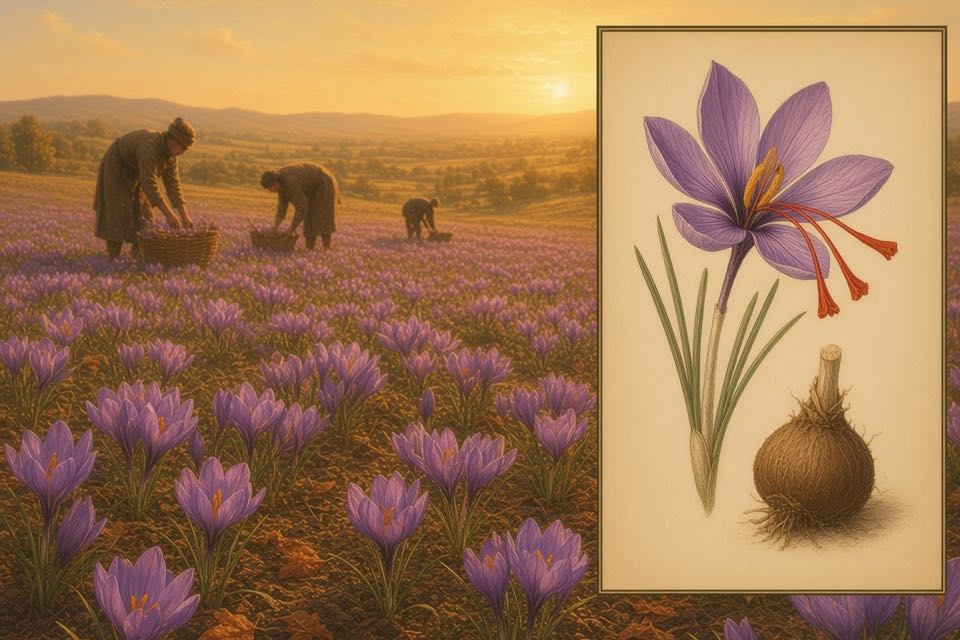
Saffron is the dried, thread-like red stigmas of a purple autumn crocus, picked by hand, three to a flower. Britannica notes that a single pound represents some 75,000 blossoms, which is why saffron has long been the most expensive spice in the world. It colors and flavors paella, risotto, biryani, and saffron buns, and it has been used as a dye, cosmetic, and medicine for more than three thousand years; frescoes on the Greek island of Santorini show it being gathered around 1600 BCE. Its color comes from crocin, its bitter taste from picrocrocin, and its aroma from safranal.
Modern interest centers on mood. Since 2004, small trials, mostly from one research group in Tehran, have found that 30 mg a day of saffron eased mild to moderate depression more than placebo and about as well as fluoxetine or imipramine over six to eight weeks. Several meta-analyses agree, and a 2022 international psychiatry taskforce gave saffron a provisional recommendation for depression. The same reviews warn of small samples, short follow-up, likely publication bias, and too few studies outside Iran; newer, larger trials show smaller effects. There is also early evidence for premenstrual syndrome and for sexual side effects of antidepressants.
In culinary amounts saffron is safe. Trial doses of 20–30 mg a day have been well tolerated, but grams of saffron are toxic, and high doses can stimulate the womb, so medicinal doses are not for pregnancy. Saffron is also one of the most common targets of food fraud, and a poisonous lookalike, the meadow saffron Colchicum autumnale, has killed people who foraged it. Nothing here is medical advice; low mood that lasts more than two weeks deserves a conversation with a doctor, and thoughts of suicide or self-harm need help right away.
Featured in
Herbs for Period Pain and PMS Herbs for Low Mood and Depression Herbs for Libido and Sexual HealthIn this monograph
01 The plant
Botanical profile
Crocus sativus L. belongs to Iridaceae, the iris family, and is one of about 85 species in the genus Crocus (Aissa and colleagues, Journal of Medicine and Life 2023). Drugs.com’s professional monograph describes it as a bulbous perennial 15–20 cm tall with blue-violet, lily-shaped flowers, each holding orange-red stigmas, the pollen-receiving tips of the female part of the flower, which are collected by hand during a short autumn flowering season. The word saffron is thought to come from the Arabic za’faran, meaning yellow. Saffron crocus is a triploid with three sets of eight chromosomes (3n = 24), and it is male-sterile: it sets no seed and is propagated only by its corms, the swollen underground stems that store the plant’s food reserves (Schmidt and colleagues, New Phytologist 2019). Confusingly, the common name autumn crocus is used both for saffron and for the unrelated, highly poisonous meadow saffron, Colchicum autumnale.
Because it cannot reproduce sexually, all the saffron crocus grown today belongs to a single clone. Its origin was debated for nearly a century. Nemati and colleagues (Molecular Phylogenetics and Evolution 2019) compared genome-wide DNA markers and placed 99.3% of saffron’s gene variants in Crocus cartwrightianus, a wild crocus of south-eastern mainland Greece and the Aegean islands. The wild population closest to saffron grew near Athens, and they concluded that saffron arose in Attica when two different genotypes of C. cartwrightianus combined into a triploid. Multicolor chromosome labeling by Schmidt and colleagues independently showed saffron to be an autotriploid hybrid of C. cartwrightianus types. Kazemi-Shahandashti and colleagues (Frontiers in Plant Science 2022) argue that ancient art and modern genetics both point to domestication in early Greece. As Nemati notes, sterility and propagation by corms then fixed saffron’s favorable traits, long red stigmas included, in one clonal lineage cultivated worldwide.
Corms are usually planted between late May and early October and the flowers are harvested in October and November, mostly by hand and mostly by women, before the stigmas are separated and dried (Aissa). Britannica notes that the three stigmas are handpicked from each flower and dried over charcoal fires. World production is roughly 408 tons a year, and Iran grows about 90% of it, mainly in Khorasan; other producers include India (Kashmir), Spain (Castilla-La Mancha), Italy, Morocco, Greece, and Afghanistan (Aissa). The stigmas contain more than 150 identified compounds. The color comes mainly from crocin (PubChem CID 5281233, C44H64O24), a water-soluble ester of the carotenoid crocetin; the bitter taste from the glycoside picrocrocin; and the aroma from safranal (CID 61041, C10H14O), which forms when picrocrocin breaks down (Drugs.com). The international standard ISO 3632 grades saffron partly by measuring these three compounds.
02 Lineage
History
Saffron’s oldest portraits are Bronze Age frescoes. Kazemi-Shahandashti and colleagues describe a fresco from Knossos on Crete, dated to about 1700 BCE, and the famous ‘Saffron Gatherers’ and ‘Adorants’ frescoes from the building known as Xeste 3 at Akrotiri on Thera (Santorini), from around 1600 BCE. They show crocuses with long, intensely red stigmas overtopping dark violet petals, the hallmark of cultivated saffron, growing in clumps that may represent planting. Linear B tablets include a saffron ideogram and record large amounts traded, and another Akrotiri fresco may show saffron used to color the lips and ears. The Minoan eruption destroyed much of Thera, and no corms or plant remains have been found, so the species in the paintings cannot be confirmed; it was either saffron or its wild parent.
The first written account of cultivated saffron comes from Theophrastus, whose Historia Plantarum of around 350–300 BCE describes its propagation by corms (Kazemi-Shahandashti). Saffron-type crocuses were also cultivated early in Persia, where the spice dyed royal carpets and funeral shrouds. Britannica records that saffron was cultivated by the Arabs in Spain around 961 and appears in an English leechbook, or healing manual, of the 10th century, though it may have vanished from western Europe until the Crusaders reintroduced it. It reached China, Britannica says, with the Mongol invasion, and appears in the Chinese materia medica Bencao gangmu (1552–78). In England the crop gave its name to a town: in the mid-14th century the saffron crocus was introduced around Walden in Essex to provide a yellow dye, and the place became Saffron Walden.
Saffron has been a medicine for as long as it has been a spice. Drugs.com summarizes traditional uses as a sedative, appetite stimulant, aphrodisiac, emmenagogue (a remedy to bring on menstruation), and antidepressant, and for cramps, asthma, menstrual disorders, liver disease, and pain; from the 17th to the 19th centuries it was an ingredient of opium preparations such as laudanum and ‘black drop’. Schmidt and colleagues (Wiener Medizinische Wochenschrift 2007) note that uses against cancer and depressive mood recur throughout its history. Germany’s Commission E gave saffron a negative evaluation for cramps and asthma. Persian traditional medicine used saffron for low mood, and that tradition prompted Akhondzadeh and colleagues in Tehran to run what they described as the first clinical trial of saffron for depression, published in 2004.
03 Chemistry
Active compounds and how it works
Nobody knows exactly how saffron might lift mood. Lopresti and Drummond (Human Psychopharmacology 2014), reviewing the clinical and laboratory work, suggest its antidepressant effects may come from a mix of serotonergic, antioxidant, anti-inflammatory, neuro-endocrine (stress hormone), and neuroprotective actions. Most of that evidence comes from animal and cell studies of saffron extracts and of crocin, crocetin, and safranal, and it shows what is plausible rather than what happens in people. The serotonin link matters in practice, because it is a reason to be careful about combining saffron with antidepressants that also act on serotonin, even though no harmful interaction has been documented (see interactions).
Saffron’s carotenoids are also studied for the eye and the brain. Falsini and colleagues (Investigative Ophthalmology and Visual Science 2010) tested saffron in macular degeneration because crocin and crocetin are antioxidant carotenoids, but suggested its effect on the retina might go beyond simple antioxidant activity. Akhondzadeh and colleagues (Journal of Clinical Pharmacy and Therapeutics 2010) cite laboratory evidence that saffron may inhibit the clumping and deposition of amyloid-beta, the protein that builds up in Alzheimer’s disease. These are hypotheses that motivated small trials; they are not established mechanisms of benefit.
Other effects bear on safety. In a one-week study by Modaghegh and colleagues (Phytomedicine 2008) in 30 healthy volunteers, 400 mg a day of saffron lowered standing systolic and mean arterial blood pressure, while 200 mg did not. An aqueous saffron extract inhibited human platelet aggregation in the test tube, although a study of 200 and 400 mg a day for a week in volunteers found no effect on clotting tests (Drugs.com). Older animal studies found that saffron stimulates the uterus, and Bostan and colleagues (Iranian Journal of Basic Medical Sciences 2017) suggest uterine contraction or bleeding may explain the higher miscarriage rate seen among pregnant women heavily exposed to saffron at harvest.
04 In practice
Common uses
Depression is where saffron has the most research. The early trials came from Akhondzadeh’s group at Tehran University of Medical Sciences and used 30 mg of saffron stigma a day for six weeks in outpatients with mild to moderate major depression. Saffron matched imipramine 100 mg a day in 30 patients, with fewer anticholinergic side effects such as dry mouth (BMC Complementary and Alternative Medicine 2004); beat placebo in 40 patients (Phytotherapy Research 2005); and matched fluoxetine 20 mg a day in 40 patients (Noorbala and colleagues, Journal of Ethnopharmacology 2005). Ghajar and colleagues (Pharmacopsychiatry 2017) found 30 mg of saffron similar to citalopram 40 mg in 66 people with depression and marked anxiety. Hausenblas and colleagues (Journal of Integrative Medicine 2013) pooled five trials and found a large effect against placebo and no difference from antidepressants; Tóth and colleagues (Planta Medica 2019) pooled nine trials, finding saffron clearly better than placebo and not inferior to the drugs tested; Dai and colleagues (Journal of Nervous and Mental Disease 2020) reached the same conclusion from 12 studies.
Those results deserve honest sizing. Marx and colleagues (Nutrition Reviews 2019) analyzed 23 trials and found large effects on depression and anxiety, but also statistical evidence of publication bias, meaning negative trials may be missing, and a lack of regional diversity. Hausenblas called for larger trials by research teams outside Iran, and Dai asked for larger, longer, multicenter trials in different ethnic groups. Most trials enrolled a few dozen people for six to eight weeks, and very large early effect sizes in small trials often shrink later. Guideline bodies are cautious but positive: the WFSBP and CANMAT taskforce (World Journal of Biological Psychiatry 2022) provisionally recommended saffron for depression, one step below its full recommendation for St. John’s wort, and the 2016 CANMAT guidelines listed saffron as a third-line option for mild to moderate depression.
Newer trials, many from an Australian group testing a standardized extract called affron, are larger and show more modest effects. Lopresti and colleagues (Journal of Psychopharmacology 2019) added 28 mg a day to antidepressants in adults with persistent depression: of 160 enrolled, 139 gave usable data, and clinician-rated symptoms fell 41% versus 21% with placebo, but self-rated symptoms fell equally (27% versus 26%). In 80 teenagers aged 12 to 16 with mild to moderate anxiety or depression, teens reported improvement over eight weeks, but parents’ reports were inconsistent (Journal of Affective Disorders 2018). The largest trial so far, in 202 adults with mild, subclinical depressive symptoms, found a modest benefit over 12 weeks, with 72% versus 54% achieving a meaningful improvement, a large placebo response, and no difference on most secondary measures (Journal of Nutrition 2025). Two of its authors are affiliated with Pharmactive, the Spanish company that makes affron.
Premenstrual syndrome (PMS): Agha-Hosseini and colleagues (BJOG 2008) gave 30 mg of saffron a day or placebo to 50 women aged 20 to 45 for two menstrual cycles and found greater improvement in daily premenstrual symptoms and depression scores. In 120 women with premenstrual dysphoric disorder (PMDD), the severe form, Rajabi and colleagues (Advanced Biomedical Research 2020) found saffron better than placebo on a daily symptom record, with fewer side effects than fluoxetine, although neither drug separated from placebo on depression ratings. Mohammadi and Karimi (Korean Journal of Family Medicine 2026) pooled seven studies with 612 participants, six of them in Iran and one without a placebo group, and found a moderate reduction in PMS symptoms; a smaller effect on period pain disappeared after adjusting for possibly missing studies. The evidence is encouraging but rests on small trials.
Other uses have only a handful of small trials, each needing independent confirmation. In men and women whose depression was stable on fluoxetine but who had sexual side effects, four weeks of 30 mg a day of saffron improved erectile function in a trial of 36 men (Modabbernia and colleagues, Psychopharmacology 2012) and arousal, lubrication, and pain in a trial of 38 women (Kashani and colleagues, Human Psychopharmacology 2013), though not desire or orgasm. In mild to moderate Alzheimer’s disease, saffron matched donepezil in 54 patients over 22 weeks (Psychopharmacology 2010) and beat placebo in a 16-week trial of 46 patients. In age-related macular degeneration, 20 mg a day improved a measure of retinal sensitivity in 25 patients (Falsini 2010), and in 100 patients improved vision by 0.69 letters, less than one letter on an eye chart (Broadhead and colleagues, Graefe’s Archive 2019). The extract Satiereal reduced snacking in 60 mildly overweight women (Gout and colleagues, Nutrition Research 2010), but saffron did not reduce food cravings in 73 overweight women with depression (Akhondzadeh 2020).
05 The apothecary
Preparations and traditional use
Almost all mood and PMS trials used 30 mg of dried stigma, or an extract of it, a day, usually as 15 mg twice daily, for six to 12 weeks. The affron trials used 28 mg a day (14 mg twice daily), the macular degeneration trials 20 mg a day, and the Satiereal snacking trial 176.5 mg of extract a day. Drugs.com notes that clinical studies have used 20–400 mg a day of pure saffron and that a dose-response effect has been suggested. Two Iranian depression trials tested extracts of the purple petals, a cheap by-product, with reportedly satisfactory results, so not every product labeled saffron extract is made from stigmas. Extracts are standardized in different ways, and results from one product cannot be assumed for another.
As a spice, saffron threads are crumbled or steeped into rice, fish stews such as bouillabaisse, paella, risotto alla Milanese, biryani, and festive breads and buns such as Swedish St. Lucia buns and Cornish saffron buns (Britannica; Aissa). Saffron is not generally associated with toxicity in culinary amounts (Drugs.com). Thirty milligrams is a tiny weight, but the trials used measured capsules taken every day, which is not the same as occasional cooking with a pinch of threads of unknown quality, and there is no evidence that saffron in food treats low mood.
Practical points: if you want to try a saffron supplement, choose a single-ingredient product that states the amount of saffron or extract and the plant part, and stay with the trial dose of about 30 mg a day; more is not better. Give it six to eight weeks, the length of most trials, and review with your clinician. Do not stop or reduce an antidepressant to start saffron. For cooking, buy whole threads from a reputable seller, since Aissa and colleagues note that powdered saffron is the form most often adulterated with synthetic dyes, and be suspicious of saffron that is very cheap.
Safety
Before you use saffron
06 Caution
Side effects
At trial doses saffron has been well tolerated. Hausenblas and colleagues (Journal of Integrative Medicine 2015) reviewed 12 controlled trials and found no significant differences in adverse events between saffron and placebo; the most common complaints across trials were anxiety, increased or decreased appetite, sedation, nausea, headache, and hypomania, a period of abnormally elevated mood and energy. Drugs.com lists nausea, vomiting, and headache. In comparison trials saffron caused fewer anticholinergic effects than imipramine, less vomiting than donepezil, and fewer side effects than fluoxetine. In the PMDD trial by Rajabi and colleagues, five of the 40 women taking saffron reported heavier periods. Most trials lasted only six to 12 weeks, so long-term safety is not established.
Laboratory effects at higher doses are small. Modaghegh and colleagues gave healthy volunteers 200 or 400 mg a day of saffron for a week: the higher dose lowered standing blood pressure, and the doses caused small shifts in red cells, platelets, sodium, urea, and creatinine that stayed within normal ranges and were judged clinically unimportant. Drugs.com notes that in that study two women taking 400 mg a day had abnormal uterine bleeding. A separate study of 200 and 400 mg a day for one week found no effect on clotting tests. Bostan and colleagues (Iranian Journal of Basic Medical Sciences 2017) concluded that therapeutic doses of saffron show no significant toxicity in clinical or experimental studies.
Large amounts are a different matter. Drugs.com states that up to 1.5 g a day is thought to be safe, but that 5 g has caused serious toxicity, including purpura (bleeding under the skin), a dangerously low platelet count, and severe bleeding; doses above 10 g have been used to try to induce abortion, deaths have been reported from that use, and about 20 g is considered a lethal dose. These amounts are roughly 170 to 700 times the usual trial dose, and given the price of saffron they are unlikely by accident, but they show that saffron is pharmacologically active and that more is not safer.
Allergy is uncommon but real. Drugs.com notes occupational allergies among saffron workers, including allergic rhinitis and conjunctivitis, asthma, and skin itching, as well as case reports of anaphylaxis, and cross-sensitivity between saffron and the pollens of ryegrass (Lolium), Russian thistle (Salsola), and olive (Olea). Anyone who develops hives, swelling of the lips or throat, or difficulty breathing after saffron needs emergency care. Because saffron is so often adulterated, an unexpected reaction may also come from a dye or filler rather than saffron itself.
07 Caution
Contraindications
Pregnancy and breastfeeding: Drugs.com advises avoiding medicinal saffron in pregnancy, noting that amounts higher than those used in food, such as 5 g or more, have uterine-stimulant and abortifacient effects. Bostan and colleagues describe a case-control study in which women heavily exposed to saffron while harvesting it had more miscarriages, and animal studies in which very high doses of saffron constituents affected fetal development; they advise pregnant women to avoid high doses. Saffron as a seasoning in ordinary meals is a different matter from daily supplements, but there is no reason to take saffron capsules for mood or PMS while pregnant. Information on breastfeeding is lacking. Depression during and after pregnancy is common and treatable, and an obstetrician or psychiatrist can suggest options with good safety data.
Bipolar disorder and severe depression: hypomania has been recorded among the side effects in saffron trials, so anyone with bipolar disorder or a past episode of unusually high mood should not take saffron for mood without their psychiatrist’s agreement, and racing thoughts, little need for sleep, or reckless behavior mean stopping it and getting help. The trials enrolled people with mild to moderate depression; severe depression, depression with psychosis, and any thoughts of suicide or self-harm need professional care, not self-treatment. In the US, call or text 988, the Suicide & Crisis Lifeline, or call 911 in an emergency.
Bleeding and surgery: Drugs.com lists bleeding disorders as a contraindication, because saffron inhibits platelet aggregation in the laboratory and high doses cause bleeding. People with bleeding disorders or low platelet counts should avoid medicinal saffron, and anyone scheduled for surgery should tell the surgical team and stop supplements on their advice. Low blood pressure, kidney disease, and children: given the blood pressure and creatinine changes at higher doses, people with low blood pressure or significant kidney disease should check with their doctor first. Only one trial has tested saffron in teenagers, and depression in children and teenagers needs a specialist’s care.
Never forage for saffron. Meadow saffron or autumn crocus (Colchicum autumnale), a different plant, contains colchicine, a poison that stops cell division (Brvar and colleagues, Wiener Klinische Wochenschrift 2004). Giorgetti and colleagues (Legal Medicine 2019) describe an Italian couple who collected what they thought was wild saffron, ate it in a risotto, and both died of colchicine poisoning, one of sudden cardiovascular collapse and the other days later of septic shock and multi-organ failure. Colchicine poisoning begins with vomiting and diarrhea hours after eating and can progress to heart, liver, and bone marrow failure. Buy saffron from food sellers, and seek emergency care for severe vomiting and diarrhea after eating any wild plant.
08 Caution
Drug and herb interactions
Antidepressants and other serotonergic drugs: Drugs.com finds no well-documented drug interactions with saffron. Saffron has been added to fluoxetine in the sexual-dysfunction trials and to a range of antidepressants in the Lopresti add-on trial without serious problems being reported, but these were small, short studies, and saffron is thought to act partly through serotonin. If you take an SSRI, SNRI, tricyclic, MAOI, triptan, or tramadol, add saffron only with your prescriber’s knowledge, and watch for agitation, sweating, tremor, or a racing heart. Never stop or swap a prescribed antidepressant for saffron without a plan from your prescriber.
Anticoagulants and antiplatelet drugs: because an aqueous saffron extract inhibited human platelet aggregation in the laboratory and results in volunteers conflict, Drugs.com considers interactions with antiplatelet drugs theoretically possible, and advises monitoring when saffron is combined with the anticoagulant rivaroxaban. If you take warfarin, a direct oral anticoagulant, aspirin, clopidogrel, or regular anti-inflammatory painkillers, ask your prescriber before taking saffron supplements, and report unusual bruising, nosebleeds, or bleeding gums.
Blood pressure medicines, sedatives, and others: 400 mg a day of saffron lowered standing blood pressure in healthy volunteers (Modaghegh), so it could in theory add to the effect of blood pressure medicines; stand up slowly and report dizziness. Sedation was among the side effects in mood trials, so take care when combining saffron with alcohol, sleeping pills, or other sedating drugs, at least until you know how it affects you. Drugs.com notes that crocetin binds strongly to the blood protein albumin, but whether this displaces other drugs has not been studied. Tell your pharmacist about any saffron supplement, especially if you take several medicines.
09 Questions
Frequently Asked Questions
It may help mild to moderate depression. In small trials, 30 mg a day beat placebo and worked about as well as fluoxetine or imipramine over six to eight weeks, and several meta-analyses agree. Most trials came from one research group in Iran, involved a few dozen people, and showed signs of publication bias, and the largest recent trial found a more modest benefit. Severe depression or thoughts of self-harm need professional care right away.
St. John’s wort has far more trials, and a 2022 psychiatry taskforce gave it a full recommendation for depression while giving saffron a provisional one. Saffron’s practical advantage is that it has no well-documented drug interactions, whereas St. John’s wort weakens many medicines, including birth control. Neither should be combined with an antidepressant without your prescriber’s agreement.
Only with your prescriber’s knowledge. No harmful interaction has been documented, and small trials have added saffron to fluoxetine and other antidepressants without serious problems, but saffron may act partly through serotonin and long-term data are lacking. Never stop or cut down an antidepressant to try saffron instead; changes need a planned taper.
Possibly. A 2008 trial in 50 women found 30 mg a day eased premenstrual symptoms more than placebo over two cycles, a trial in women with severe PMS (PMDD) had partly positive results, and a 2026 meta-analysis of seven studies found a moderate benefit. Nearly all the studies were small and from Iran. Chasteberry has stronger support for PMS.
Probably not in any reliable way. The trials used measured capsules of about 30 mg a day taken daily for weeks, while cooking saffron is used occasionally and varies widely in quality. Saffron in food is safe and delicious, but there is no evidence that saffron rice or tea treats low mood or PMS.
A little saffron in food is not a concern, but medicinal doses should be avoided. Large amounts stimulate the womb and have been used to try to induce abortion, and a study of women exposed to saffron at harvest found more miscarriages. There is no safety data on daily saffron capsules in pregnancy or breastfeeding, so ask your obstetrician about better-studied options for mood.
Saffron is one of the most common targets of food fraud. Reviews list safflower, marigold (calendula) petals, turmeric, gardenia, saffron petals and stamens, other crocus species, synthetic dyes, and threads soaked in syrup, honey, or oil to add weight. Powdered saffron is the easiest to fake. Buy whole threads from a reputable seller, look for ISO 3632 grading, and be wary of bargains.
Not exactly, and the difference can be deadly. Saffron crocus is sometimes called autumn crocus, but the same name is used for meadow saffron (Colchicum autumnale), a different plant that contains the poison colchicine. In 2019, Italian doctors described a couple who died after eating a risotto made with what they thought was wild saffron. Never forage for saffron; buy it as a spice.
10 References
Sources
These references support the history, clinical, and safety claims on this page. They are not an endorsement of any product.
-
Saffron
Drugs.com, Professional Natural Products Monograph, 2026
Updated January 2026: botany, traditional uses, constituents, 20–30 mg depression doses; up to 1.5 g a day thought safe, toxicity at 5 g, about 20 g lethal; avoid in pregnancy; allergy; antiplatelet and rivaroxaban cautions.
-
Saffron (Crocus sativus L.) and major depressive disorder: a meta-analysis of randomized clinical trials
Journal of Integrative Medicine (PubMed 24299602), 2013
Hausenblas et al.: five trials; large effect versus placebo (effect size 1.62) and no difference from antidepressants; calls for larger trials by teams outside Iran.
-
The Efficacy of Saffron in the Treatment of Mild to Moderate Depression: A Meta-analysis
Planta Medica (PubMed 30036891), 2019
Tóth et al.: 11 trials reviewed and nine pooled; saffron more effective than placebo (g = 0.89) and non-inferior to the antidepressants tested.
-
Effect of saffron supplementation on symptoms of depression and anxiety: a systematic review and meta-analysis
Nutrition Reviews (PubMed 31135916), 2019
Marx et al.: 23 trials; large effects on depression and anxiety versus placebo and as an add-on to antidepressants; evidence of publication bias and lack of regional diversity.
-
Clinician guidelines for the treatment of psychiatric disorders with nutraceuticals and phytoceuticals: The World Federation of Societies of Biological Psychiatry (WFSBP) and Canadian Network for Mood and Anxiety Treatments (CANMAT) Taskforce
World Journal of Biological Psychiatry (PubMed 35311615), 2022
International taskforce provisionally recommending saffron (++) for unipolar depression, alongside a full recommendation for St. John’s wort (+++).
-
An Examination into the Effects of a Saffron Extract (Affron) on Mood and General Wellbeing in Adults Experiencing Low Mood: A Randomized, Double-Blind, Placebo-Controlled Trial
Journal of Nutrition (PubMed 40414301), 2025
Lopresti et al.: 202 adults, 28 mg a day for 12 weeks; modest benefit on depression scores, large placebo response, no difference on most secondary outcomes; two authors from the maker, Pharmactive.
-
Crocus sativus L. (saffron) in the treatment of premenstrual syndrome: a double-blind, randomised and placebo-controlled trial
BJOG (PubMed 18271889), 2008
Agha-Hosseini et al.: women aged 20–45 given 30 mg of saffron a day or placebo for two cycles; greater improvement in daily PMS symptoms and depression scores.
-
Effect of saffron on premenstrual syndrome and dysmenorrhea: a systematic review and meta-analysis
Korean Journal of Family Medicine (PubMed 41151539), 2026
Mohammadi and Karimi: seven studies, 612 participants, six from Iran; moderate reduction in PMS symptoms; period-pain effect not robust to adjustment for missing studies.
-
Effect of saffron on fluoxetine-induced sexual impairment in men: randomized double-blind placebo-controlled trial
Psychopharmacology (PubMed 22552758), 2012
Modabbernia et al.: 36 men stable on fluoxetine; 15 mg twice daily for four weeks improved erectile function and intercourse satisfaction but not desire or orgasm.
-
A 22-week, multicenter, randomized, double-blind controlled trial of Crocus sativus in the treatment of mild-to-moderate Alzheimer’s disease
Psychopharmacology (PubMed 19838862), 2010
Akhondzadeh et al.: 54 patients; saffron 30 mg a day similar to donepezil 10 mg over 22 weeks, with less vomiting; a preliminary phase II study.
-
Toxicology effects of saffron and its constituents: a review
Iranian Journal of Basic Medical Sciences (PubMed 28293386), 2017
Bostan et al.: no significant toxicity at therapeutic doses; volunteer safety studies; more miscarriages among women heavily exposed at harvest; advises avoiding high doses in pregnancy.
-
Phytochemistry, quality control and medicinal uses of Saffron (Crocus sativus L.): an updated review
Journal of Medicine and Life (PubMed 37675158), 2023
Aissa et al.: triploid botany, cultivation and hand harvest, about 408 tons a year with Iran near 90%, ISO 3632, and the plant, chemical, and dye adulterants of saffron.
-
Ancient Artworks and Crocus Genetics Both Support Saffron’s Origin in Early Greece
Frontiers in Plant Science (PubMed 35283878), 2022
Kazemi-Shahandashti et al.: Saffron Gatherers and Adorants frescoes at Akrotiri (about 1600 BCE), Knossos fresco (about 1700 BCE), Linear B records, and Theophrastus on corm propagation.
-
Saffron (Crocus sativus) is an autotriploid that evolved in Attica (Greece) from wild Crocus cartwrightianus
Molecular Phylogenetics and Evolution (PubMed 30946897), 2019
Nemati et al.: 99.3% of saffron gene variants found in C. cartwrightianus; origin near Athens; one sterile clonal lineage cultivated worldwide.
-
Two fatal intoxications by colchicine taken for saffron. Clinical, medico-legal and forensic toxicological implications
Legal Medicine (PubMed 30991227), 2019
Giorgetti et al.: an Italian couple died after eating a risotto made with wild-collected plants mistaken for saffron; colchicine confirmed by toxicology.
-
Saffron
Encyclopaedia Britannica, 2026
Hand-picked stigmas, about 75,000 blossoms per pound, main producing countries, Arab cultivation in Spain around 961, and introduction to China.