
Monograph
Aloe Vera
Aloe vera
Updated October 4, 2026
Key points
-
01
Gel, latex, and whole leaf differ
Clear inner gel is a skin and drink product. Yellow latex under the rind holds aloin, a stimulant laxative. Whole-leaf juice contains both unless decolorized.
-
02
Modest evidence for burns
Reviews suggest gel may speed healing of minor burns by days, but trials are small, and Cochrane found no high-quality evidence for wounds.
-
03
Latex is a short-term laxative
EMA allows a standardized aloe extract for up to a week of occasional constipation. FDA removed aloe from US over-the-counter laxatives in 2002.
-
04
Whole-leaf cancer signal
Non-decolorized whole-leaf extract caused intestinal tumors in rats, and IARC rates it possibly carcinogenic. Choose decolorized or inner-leaf drinks under 10 ppm aloin.
-
05
Oral aloe has real risks
Oral aloe is a rare cause of acute hepatitis, and latex can drain potassium. Avoid it in pregnancy, breastfeeding, and childhood, and before surgery.
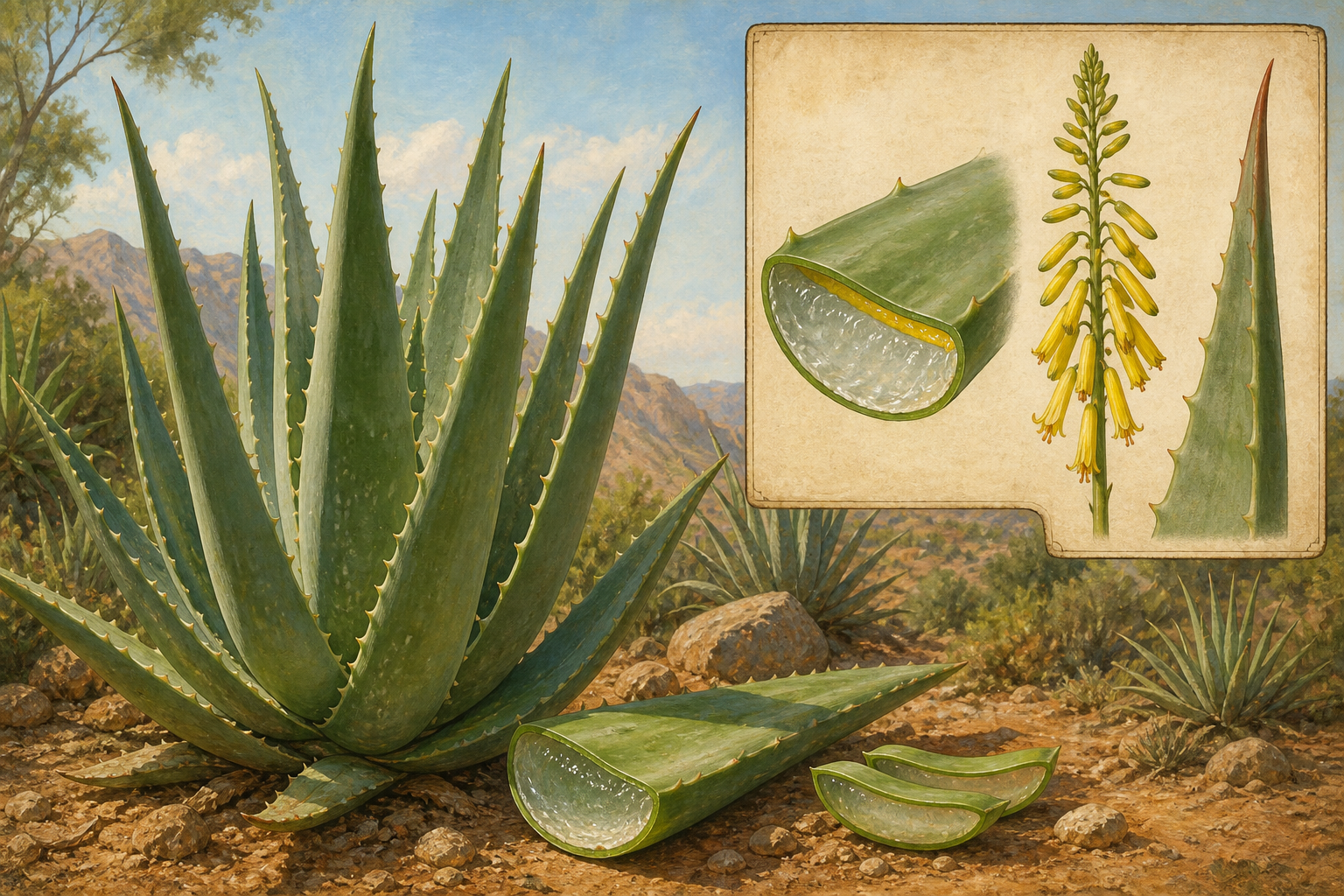
Aloe vera, sold on many labels under its synonym Aloe barbadensis, is a spiny-edged succulent whose leaves hold three quite different products, and most confusion about aloe comes from mixing them up. The clear, jelly-like inner fillet is aloe gel, used on skin and in drinks. Just under the green rind lies a thin layer of cells that bleed a bitter yellow sap when the leaf is cut. That sap is aloe latex, and in its dried form, called aloes in pharmacy, it is a stimulant laxative whose main active compounds are aloin A and B. Whole-leaf products grind up gel and latex together unless they are filtered through activated charcoal to strip out the latex compounds, a step called decolorizing. Kew’s Plants of the World Online gives the plant’s native range as the Hajar Mountains of northern Oman, but it has been grown so widely and for so long that it has become naturalized in the Mediterranean, North Africa, the Indian subcontinent, South America, and the Caribbean.
The evidence differs by part. For gel on the skin, the National Center for Complementary and Integrative Health (NCCIH) says clinical research suggests it may speed burn healing and reduce burn pain. A 2007 systematic review pooled four studies with 371 patients and found healing almost nine days faster, but the products varied, and a 2012 Cochrane review found no high-quality evidence for aloe on wounds generally. Small trials point to possible benefit for oral lichen planus, irritable bowel syndrome, reflux symptoms, and blood sugar, but none is large or conclusive. For latex, the European Medicines Agency (EMA) accepts a standardized dried aloe juice for short-term use in occasional constipation, based on pharmacology and long experience rather than trials. The US Food and Drug Administration (FDA) removed aloe from over-the-counter laxatives in 2002 after no manufacturer supplied the safety data it had requested.
Most safety worries concern what is swallowed. In a two-year study by the US National Toxicology Program (NTP), drinking water containing a non-decolorized whole-leaf extract caused tumors of the large intestine in rats, and the International Agency for Research on Cancer (IARC) classifies whole-leaf extract of aloe vera as possibly carcinogenic to humans. LiverTox, the NIH database of drug-induced liver injury, rates oral aloe a likely but rare cause of acute hepatitis, and overuse of latex can drain potassium, which is dangerous alongside digoxin and some diuretics. Gel on the skin is generally well tolerated. Nothing here is medical advice; large, deep, blistered, chemical, or electrical burns need medical care, and constipation with bleeding, weight loss, or persistent pain needs a doctor rather than a stronger laxative.
In this monograph
01 The plant
Botanical profile
Aloe vera (L.) Burm.f. belongs to Asphodelaceae, in the order Asparagales, according to Kew’s Plants of the World Online (POWO). Some sources, including LiverTox, still place aloes in the lily family, and some papers and the industry’s own council use Xanthorrhoeaceae, so labels and studies disagree. Linnaeus first described the plant in 1753 as a variety, Aloe perfoliata var. vera, and it was raised to a species in Flora Indica in 1768. In the same year Philip Miller published the name Aloe barbadensis. POWO treats that name as one of 17 synonyms of Aloe vera, but it lives on in commerce, in the European pharmacy name Barbados aloes, and in the German name Curaçao-Aloe. The International Aloe Science Council (IASC), the industry’s trade body, notes that aloe vera is one of roughly 400 or more Aloe species and the one most used in consumer products, and that CITES, the treaty on trade in endangered species, lists every other aloe species but not aloe vera. NCCIH also lists Aloe arborescens and Aloe africana among the plants sold as aloe, so a product’s species matters.
POWO describes a short-stemmed, shrubby aloe that suckers freely and forms dense clumps. The leaves are succulent and erect in a dense rosette, grayish green, up to about 50 cm long, sometimes flecked with white, with pinkish margins carrying many small spines. Yellow, tubular flowers up to 3 cm long, with the anthers and stigma protruding, are borne in cylindrical racemes on a branched stalk up to 90 cm tall. The Missouri Botanical Garden notes that only mature plants flower, typically in summer, and that potted plants bloom only in sunny, near-ideal conditions, which is why many windowsill aloes never do. The wild plant grows in desert and dry shrubland, and NCCIH notes that aloe is grown in subtropical regions worldwide, including the southern border areas of Texas, New Mexico, Arizona, and California. The IASC lists commercial plantations in the United States, Central and South America, China, India, Africa, the Caribbean, Australia, and the Asian tropics.
The leaf is where gel and latex part company. EMA’s assessment report explains that pharmaceutical aloes is made by cutting the leaf across near its base and tilting it so that the juice held in specialized pericyclic cells, and sometimes the neighboring tissue, drains out over about six hours; the juice is then dried, with or without heat. The gel is a colorless mucilage from the large parenchyma cells in the center of the leaf, harvested by filleting away the green outer layers, and EMA notes that whether the gel is free of anthranoids depends on whether the cells beneath the rind are also removed. The IASC describes the latex as a bitter, yellow-brown to reddish substance found between the rind and the inner leaf. So a kitchen leaf, sliced and squeezed, delivers some of each.
Chemically, the two layers have little in common. EMA lists the active constituents of Barbados aloes as anthrone C-glycosides: aloin A and aloin B, together called barbaloin, plus hydroxyaloins and their esters, small amounts of the free compounds aloe-emodin and chrysophanol, and chromones called aloeresins. The European Pharmacopoeia requires Barbados aloes, the dried juice of Aloe barbadensis, to contain at least 28% hydroxyanthracene derivatives calculated as barbaloin, and Cape aloes, made mainly from Aloe ferox, at least 18%. The gel is mostly water with polysaccharides. The IASC uses acemannan, an acetylated glucomannan, as the chemical marker of genuine aloe vera and says products without it should not be called aloe vera. LiverTox counts more than 75 identified substances in aloe products, from vitamins, enzymes, and minerals to sugars, amino acids, and salicylic acid.
02 Lineage
History
Aloe is among the oldest documented medicinal plants, though old sources rarely say which part of the leaf they meant. NCCIH notes that aloe was used in ancient Greece, Rome, Babylonia, and China, mainly for skin conditions, and was thought to promote wound healing and even prevent premature graying. EMA’s assessment report, drawing on a 1938 German text by Madaus, says the ancient Egyptians used aloe for battle wounds and infections and the early Greeks for blisters, burns, leg ulcers, and bowel and stomach complaints. It also repeats a legend that Aristotle persuaded Alexander the Great to conquer the island of Socotra to secure enough aloe to heal his soldiers’ wounds; EMA presents this as legend, not history. The Greek physician Dioscorides, writing between about 50 and 70 AD, described aloe as a purgative for the stomach and bowels and a remedy for jaundice, and said that applied outwardly it healed wounds, ulcers, and eye complaints, eased headache when rubbed on the forehead with vinegar and rose oil, and slowed hair loss when mixed with wine. EMA, citing Madaus, records aloe in use in England by the tenth century.
By the early twentieth century, Western pharmacy knew aloe mainly as a purgative. EMA quotes the British Pharmaceutical Codex of 1911, which gave a dose of 1 to 3 decigrams (2 to 5 grains) and noted that, because aloe congests the pelvis, it was also given with iron to bring on absent periods. The Dispensatory of the United States of 1918 called it a cathartic and recorded that it had once been almost universally believed to act on the womb, but judged it extremely doubtful that aloe did anything to the pelvic organs beyond its laxative effect. EMA’s assessors agreed, finding no plausible pharmacological basis for traditional uses in coughing up blood, jaundice, or gout. The dried latex also had a place in folk medicine for diabetes: EMA notes it is one of several traditional diabetes remedies in the Arabian Peninsula. Meanwhile the gel found a modern career in cosmetics, skin products, and drinks, and the IASC has run a certification seal since the 1980s, partly because adulteration and misbranding were common enough to need one.
Regulators began to restrict aloe laxatives in the 1990s. EMA reports that, prompted by laboratory signs of genotoxicity and a 1993 German endoscopy study linking pigmented colons with adenomas, Germany in 1996 limited the dose and duration of anthranoid laxatives and excluded children, pregnant women, and nursing mothers from aloe products. In June 1998 the FDA reclassified aloe, cascara sagrada, senna, and bisacodyl as needing more data and asked for studies of genotoxicity and cancer. It received data on senna and bisacodyl, but none on aloe or cascara. Its final rule, published on 9 May 2002 and effective 5 November 2002, declared aloe, aloe extract, and aloe flower extract not generally recognized as safe and effective for over-the-counter laxative use. FDA counted about 15 laxative products containing aloe at the time, which had to be reformulated or withdrawn. In Europe, EMA’s herbal committee adopted its first aloe monograph in 2006 and a revised one on 22 November 2016, keeping well-established use for short-term occasional constipation.
Attention then turned to whole-leaf products. The NTP published its two-year rat and mouse study in 2013, and IARC evaluated aloe the same year, classifying whole-leaf extract of aloe vera in Group 2B in Volume 108 of its monographs. In the European Union, the European Food Safety Authority (EFSA) concluded in 2017 that hydroxyanthracene derivatives should be regarded as genotoxic and carcinogenic unless shown otherwise, and Commission Regulation (EU) 2021/468 then banned aloe-emodin, emodin, and preparations from the leaf of Aloe species containing hydroxyanthracene derivatives from foods. An aloe drinks company challenged the ban, and on 13 November 2024 the EU General Court annulled the aloe-leaf entry, finding that the Commission could not prohibit these preparations regardless of how much of the compounds they contained. The Commission has appealed to the Court of Justice, so the legal position in the EU may still change. A darker chapter: MSKCC records that aloe injected as an alternative cancer treatment has caused several deaths.
03 Chemistry
Active compounds and how it works
Aloe latex works like senna, as a prodrug switched on by gut bacteria. EMA explains that aloins and related glycosides pass unabsorbed through the stomach and small intestine into the large intestine, where bacterial enzymes (EMA names a strain of Eubacterium) convert them into the active compound aloe-emodin-9-anthrone. That metabolite acts in two ways. It stimulates the muscle of the colon, speeding transit, and it changes fluid handling, blocking the absorption of water, sodium, and chloride, loosening the tight junctions between lining cells, and drawing water and salts into the bowel. The result, after the time needed to reach and activate in the colon, is a bowel movement six to twelve hours after a dose, which is why EMA advises taking aloes at night. Some aloe-emodin is absorbed: EMA cites animal studies in which at least 20–25% of an oral dose entered the body, though it is quickly converted to rhein and other metabolites. Metabolites can turn urine yellow or red-brown, which is harmless. EMA’s assessors acknowledge that adequate clinical trials of aloe are not available; its laxative effect is inferred from pharmacology, clinical experience, and data on related laxatives such as senna.
The same chemistry raises the long-term questions. EMA reports that four to thirteen months of anthranoid laxative use leads to pseudomelanosis coli, in which immune cells in the colon lining store a brown pigment and the bowel wall looks brown to black at colonoscopy; it is found in 62% of chronic users of these laxatives against 12–31% of people with chronic constipation, and fades six to twelve months after stopping. EMA’s monograph says several hydroxyanthracene derivatives were mutagenic and genotoxic in test-tube systems but that this was not proven in living animals. EFSA took a stricter view. As summarized in the 2024 General Court judgment, it concluded that emodin and aloe-emodin are genotoxic in vitro, that aloe-emodin was genotoxic in mice, and that aloe extracts depleted of hydroxyanthracenes still contained some other genotoxic component. NCCIH likewise notes laboratory hints that even decolorized extract might damage DNA, while a 2023 review of food-grade drinks with no more than 10 parts per million of aloin concluded that they were not genotoxic.
The gel works differently, and far less is proven. It is largely water held in a matrix of polysaccharides, of which acemannan is the main carbohydrate fraction, and on skin it feels cool and moist. Laboratory studies summarized by Memorial Sloan Kettering Cancer Center (MSKCC) suggest more specific effects: aloe oligosaccharides reduced the immune-suppressing signals that skin cells release after ultraviolet exposure, an aloe polysaccharide curbed the overgrowth of skin cells driven by the inflammatory messenger TNF-alpha in a psoriasis model, a polymer fraction protected the stomach lining from alcohol damage in animals, and acemannan stimulated immune cells in culture. These findings may help explain some clinical signals for burns, mouth sores, and gut symptoms, but they come from cells and animals. MSKCC also notes that aloe juice inhibited the drug-metabolizing enzymes CYP3A4 and CYP2D6 in the laboratory, with unknown clinical relevance.
04 In practice
Common uses
Burns are the best-studied use of the gel, and the results are encouraging but soft. Maenthaisong and colleagues (Burns 2007) found four controlled studies with 371 patients; pooled, burns treated with aloe healed 8.79 days sooner than controls, but the products and outcome measures differed so much that the authors would only say aloe might be effective for first- and second-degree burns and called for better trials. Dat and colleagues’ Cochrane review (2012) of seven trials with 347 participants found that aloe mucilage did not heal burns significantly better than silver sulfadiazine cream, a standard burn treatment, and judged all the trials at high risk of bias. MSKCC summarizes a randomized study in which topical aloe outperformed silver sulfadiazine for second-degree burns, and NCCIH concludes that topical gel may speed burn healing and reduce burn pain. Applying cool gel to sunburn is a widespread home use, but the trials concern minor to partial-thickness burns in general. A sensible reading: for a small, superficial burn that has first been cooled under running water, gel is a reasonable soothing option; for anything larger or deeper, it is not a treatment.
Other skin and mouth uses rest on small trials. The Cochrane review found faster healing with aloe after hemorrhoid surgery but no difference after skin biopsies or in pressure ulcers, and in one trial of surgical wounds left to heal open, aloe delayed healing by about 30 days. NCCIH notes that two small studies suggest aloe gel, combined with other treatment, may improve acne, and that a small amount of research suggests help for genital herpes, psoriasis, oral submucous fibrosis, radiation skin damage, and mouth sores from dental appliances. MSKCC finds the radiation dermatitis trials mixed, but reports preliminary benefit against mouth sores caused by chemotherapy and radiotherapy and an aloe mouthwash that reduced plaque and gum inflammation about as well as chlorhexidine. For oral lichen planus, an immune condition of the mouth lining, Ali and Wahbi (Oral Diseases 2017) reviewed five trials and found weak evidence that aloe beats placebo and performs comparably to the steroid triamcinolone, though their pooled analyses were heterogeneous and, taken together, favored the comparison treatments; corticosteroids remain the standard.
Occasional constipation is the use regulators accept, and only for latex-derived aloes. EMA’s monograph allows a standardized dried aloe juice extract for short-term use in adults and adolescents over 12, at a dose supplying 10–30 mg of hydroxyanthracene derivatives, calculated as aloin, once at night, using the smallest dose that produces a comfortable soft-formed motion. It is not to be used for more than a week, two or three doses are usually enough, and EMA says it should be used only if a change of diet or a bulk-forming fiber has not worked. That acceptance rests on long marketing history and class effects shared with senna rather than on aloe trials, which EMA says are not available. In the United States, aloe can no longer be sold as an over-the-counter laxative ingredient, although LiverTox notes that extracts of the leaf-rind latex are still used in dietary supplements and, in small amounts, as a food flavoring. Better-studied options for constipation include fiber, senna, and prescription laxatives.
For the gut more broadly, oral gel products have a few promising small trials. Hong and colleagues (Journal of Neurogastroenterology and Motility 2018) pooled three placebo-controlled trials with 151 people with irritable bowel syndrome (IBS) and found modestly greater symptom improvement with aloe, a standardized mean difference of 0.41, with responders 1.69 times as likely as on placebo and no aloe-related adverse events; three small trials are a thin base, and NCCIH still says there is not enough reliable information on aloe for IBS or ulcerative colitis. For gastroesophageal reflux disease (GERD), Panahi and colleagues (Journal of Traditional Chinese Medicine 2015) randomized 79 people to an aloe syrup standardized to 5 mg of polysaccharide per milliliter (10 mL a day), omeprazole, or ranitidine for four weeks. Aloe reduced the frequency of all eight reflux symptoms measured, with no adverse events forcing withdrawal, but this was a pilot study with no placebo group. Neither IBS nor reflux has standardized aloe dosing, and persistent symptoms deserve a medical assessment.
Blood sugar is the most-studied oral use. NCCIH says a small amount of research suggests oral aloe may reduce blood sugar and HbA1c, a measure of average glucose, in people with diabetes, and that a specific gel product taken for eight weeks modestly reduced weight and fat mass in adults with overweight or obesity who had diabetes or prediabetes. Suksomboon and colleagues (Journal of Clinical Pharmacy and Therapeutics 2016) pooled eight trials with 470 patients. In prediabetes, aloe lowered fasting glucose slightly (by 0.22 mmol/L, about 4 mg/dL) without changing HbA1c; in type 2 diabetes, fasting glucose fell marginally and HbA1c fell by 11 mmol/mol, roughly one percentage point. The authors stressed high heterogeneity and limited evidence, and asked for well-powered trials of standardized products. Aloe is not a substitute for diabetes medicines, and anyone on them should check with a clinician first because glucose could fall further. Claims that aloe treats cancer are unsupported: MSKCC states that aloe is not an effective cancer treatment and that injected aloe has killed patients.
05 The apothecary
Preparations and traditional use
For skin use, a fresh leaf or a commercial gel are the usual choices. EMA describes how the bitter latex drains from a cut leaf held at a slant, and filleting off the green rind leaves the clear inner gel; the IASC notes that inner-leaf juice is made the same way, with the latex rinsed away. At home, that means cutting a mature outer leaf, letting the yellow sap run off, rinsing, and scooping or slicing out the clear gel for minor burns, sunburn, or dry skin. Test it on a small patch first, because burning, itching, and rashes occasionally occur. Commercial skin products vary in how much aloe they contain; for cosmetics, the IASC cites an industry limit of 50 parts per million of aloin set by the Cosmetic Ingredient Review. Cool a burn under running water first, keep gel off deep, blistered, or infected wounds, and stop if the skin becomes more red or painful. Clinical trials used a range of creams, gels, and dressings, so no single concentration is established.
Oral products are where labels matter most. The IASC describes two ways of making aloe juice. Inner-leaf juice comes from the gel after the rind is removed and the latex rinsed away. Whole-leaf juice comes from grinding entire leaves, treating the slurry with enzymes, and filtering it, usually through charcoal, to remove the latex; this decolorized or purified whole-leaf juice is a different material from the non-decolorized extract that caused tumors in rats. The IASC limit for aloin in products intended to be swallowed is under 10 parts per million, and its certification program tests products for aloin and for acemannan, the marker of real aloe. NCCIH notes that studies suggest oral aloe gel is safe in the short term, up to 42 days. Trial products varied widely, from a standardized syrup taken at 10 mL a day in the reflux study to specific gel products in diabetes research, and there is no standard oral dose. A label that says only “aloe,” or gives no aloin content, does not tell you which product you are buying.
Laxative preparations are a separate category. EMA’s monograph covers a dry extract standardized to 28.6–36.6% hydroxyanthracene derivatives, given to supply 10–30 mg a night for no more than a week, at the smallest effective dose. Because these products are not available as over-the-counter laxatives in the United States, people there are more likely to meet aloe latex in dietary supplements, which LiverTox notes can contain extracts of the leaf-rind latex, and where the anthranoid content may not be stated. Do not combine aloe latex with senna, cascara, frangula, rhubarb root, or bisacodyl; stacking stimulant laxatives multiplies cramping, diarrhea, and potassium loss. Do not raise the dose because one did not work by evening, since the effect takes six to twelve hours. If you need a laxative every day, EMA advises looking for the cause of the constipation. If one is needed at all, a bulk-forming fiber such as psyllium, or a well-characterized laxative chosen with a pharmacist, is usually a better first step than raw aloe.
Safety
Before you use aloe vera
06 Caution
Side effects
On the skin, aloe gel is generally well tolerated, but NCCIH notes occasional reports of burning, itching, rash, and eczema, and LiverTox mentions rare hypersensitivity reactions and allergic dermatitis. The Cochrane review adds a caution about wounds: in one trial of surgical wounds healing by secondary intention, wounds dressed with aloe took about 30 days longer to heal than those treated conventionally. That single result does not mean aloe harms every wound, but it is a reason not to use it on deep, open, or surgical wounds without medical advice. Stop and seek care if a treated area becomes hot, swollen, or more painful, or produces pus, which may signal infection. Many products combine aloe with other ingredients, so a reaction to a product is not always a reaction to aloe itself.
Swallowed latex causes the familiar stimulant-laxative effects. NCCIH lists abdominal pain, cramps, and diarrhea, and EMA notes that these are more likely in people with an irritable colon or after too high a dose, in which case the dose should be reduced. EMA warns that long-term use can upset water and electrolyte balance and may cause protein and blood in the urine, and that overdose causes griping pain and severe diarrhea with loss of fluid and potassium, which should be monitored, especially in older people. MSKCC lists stomach pain, nausea, vomiting, seizures, low potassium, and abnormal liver function among the effects reported with oral aloe supplements, along with a case of low potassium in a woman taking aloe during chemotherapy and a report of thyroid dysfunction. EMA’s assessment also describes a man in South Africa who developed acute kidney failure and liver dysfunction after taking a herbal remedy found to contain Cape aloes. Long-term use darkens the colon lining (pseudomelanosis coli), which fades after stopping.
Liver injury is rare but well documented. LiverTox says the first case linked to oral aloe vera was reported in 2005 and that at least a dozen cases have since been published or mentioned. Injury typically appears 3 to 24 weeks after starting oral aloe, usually taken in high doses for constipation, indigestion, aging, weight loss, or general wellness; NCCIH puts the range of exposure in reported cases at three weeks to five years. The pattern resembles acute viral hepatitis, with jaundice and very high liver enzymes. In the first case, a 57-year-old German woman developed jaundice three to four weeks after starting 500 mg aloe tablets a day; in another, a 62-year-old Korean woman became jaundiced after three months of aloe powder, recovered when she stopped, and relapsed when she restarted. LiverTox rates aloe a likely but rare cause of clinically apparent liver injury (likelihood score B), notes that no deaths, transplants, or chronic liver disease have been reported, and advises against rechallenge. Unexplained fatigue, dark urine, or yellowing skin or eyes after starting an aloe product is a reason to stop and see a doctor.
The cancer question centers on whole-leaf extract. In the NTP study (Technical Report 577, 2013), groups of 48 male and 48 female rats drank water containing 0.5%, 1%, or 1.5% non-decolorized whole-leaf extract for two years, and mice 1%, 2%, or 3%. Rats in the two higher dose groups developed adenomas and carcinomas of the large intestine, tumors not seen in control rats in this or other studies at the laboratory; mice showed overgrowth (hyperplasia) of the intestinal lining but no intestinal tumors. IARC judged the human evidence inadequate and the animal evidence sufficient, giving its Group 2B rating, “possibly carcinogenic to humans.” NCCIH stresses that most animal studies used non-decolorized extract, which is not commonly used by consumers. Human data on aloe laxatives are inconsistent: EMA cites a German study of 3,049 endoscopy patients in which colon pigmentation was more common in people with adenomas (8.64% versus 3.13%), but a later case-control study of 202 cancers, 114 adenomas, and 238 controls found no increased risk with anthranoid laxatives. EMA calls the question open.
07 Caution
Contraindications
Bowel conditions rule out aloe laxatives. EMA says they must not be used with intestinal obstruction or narrowing, atony (a bowel that has lost its muscle tone), appendicitis, inflammatory bowel disease such as Crohn’s disease or ulcerative colitis, abdominal pain of unknown cause, or severe dehydration with loss of water and salts. Like other laxatives, they should not be taken for fecal impaction or for undiagnosed, acute, or persistent abdominal pain, nausea, or vomiting unless a doctor advises it, because these can be signs of a blocked bowel. EMA asks people with kidney disorders to be aware of possible electrolyte imbalance. People with heart rhythm problems, or anyone taking the medicines listed under interactions, should not use aloe laxatives without medical advice. If constipation lasts, changes suddenly, or comes with blood, weight loss, or anemia, the cause needs investigating; a stronger laxative can hide a problem that needs treating.
Pregnancy and breastfeeding: EMA contraindicates aloe laxatives in pregnancy because of laboratory evidence of genotoxicity for related anthranoids such as emodin and aloe-emodin, and in breastfeeding because active metabolites of other anthranoids, such as rhein, pass into breast milk in small amounts. NCCIH goes further, saying that aloe in any oral form, whether gel, latex, or whole-leaf extract, may be unsafe during pregnancy and while breastfeeding, and MSKCC advises pregnant women not to take aloe because its safety is not known. Kew’s profile similarly says the latex should not be given to pregnant or breastfeeding women. These cautions concern products that are swallowed. Using a little gel on a minor burn or sunburn is a different exposure, but anyone who is pregnant or breastfeeding and wants to use an aloe drink, capsule, or laxative should first talk to a clinician, who can suggest better-studied options for constipation or heartburn.
Children: EMA contraindicates aloe laxatives under 12, Germany excluded children from aloe laxatives in 1996, and Kew’s profile says the latex should not be given to children. A constipated child needs a pediatric assessment rather than an adult stimulant laxative, and aloe drinks or capsules are not appropriate for children without medical advice. Store supplements and laxative blends out of reach. Pure gel on a small, minor burn is a common home use, but deep, large, blistered, or facial burns in a child need prompt medical care. MSKCC notes small studies of aloe mouthwash for chemotherapy-related mouth sores in children, but those were supervised by cancer teams and are not a reason for home use of oral products. Older adults are another group to take care with: EMA stresses that potassium should be monitored after overdose, especially in the elderly, and the same care applies to anyone of any age taking digoxin, diuretics, or other medicines affected by potassium loss.
Other situations: avoid aloe products if you have had a reaction to aloe before, and do not restart an oral aloe product after liver injury, since LiverTox describes recurrence on rechallenge. People with existing liver disease have no specific safety data and should check with their specialist before taking any concentrated aloe supplement. Tell your surgical team about oral aloe and stop it before planned surgery, given the bleeding case described under interactions. People with diabetes should involve their clinician before adding oral aloe, because it may lower blood sugar. For wounds, avoid gel on deep, infected, or surgical wounds unless a clinician recommends it, given the delayed healing seen in one trial. And because the NTP and IARC findings concern non-decolorized whole-leaf extract, avoid drinks that do not state that they are decolorized or inner-leaf and low in aloin.
08 Caution
Drug and herb interactions
Potassium-related interactions are the best established. EMA explains that low potassium from long-term use or abuse of aloe laxatives strengthens the effect of cardiac glycosides such as digoxin and interferes with antiarrhythmic drugs, such as quinidine, and with medicines that prolong the QT interval, a measure of the heart’s electrical recovery. Diuretics, corticosteroids such as prednisone, and licorice root can add to potassium loss. EMA’s monograph says people taking any of these must consult a doctor before taking aloes, and NCCIH warns that overuse of aloe latex may increase the risk of adverse effects from digoxin. Combining aloe latex with other stimulant laxatives, such as senna, cascara, frangula, rhubarb root, or bisacodyl, multiplies cramping, diarrhea, and potassium loss, so check the ingredient lists of herbal cleanse and detox blends, which may combine several.
Diabetes medicines and surgery: because NCCIH reports that oral aloe may lower blood sugar and HbA1c, combining it with insulin, sulfonylureas, or other glucose-lowering drugs could push glucose too low, so check with a clinician and monitor more closely if you start or stop it. The best-known surgical case, described by Lee and colleagues (Annals of Pharmacotherapy 2004) and summarized by EMA and MSKCC, involved a 35-year-old woman who lost 5 liters of blood during surgery for a hemangioma, a blood-vessel tumor, after taking aloe vera tablets. The authors thought aloe might reduce prostaglandin production and impair platelet clumping, adding to similar effects of the anesthetic sevoflurane, but they judged the tumor’s size and blood supply the most important factors and rated the interaction only possible. EMA’s assessors found the published details insufficient. It remains sensible to stop oral aloe before surgery and to tell the anesthesiologist.
Other medicines: MSKCC reports that aloe juice inhibited the liver enzymes CYP3A4 and CYP2D6 in laboratory tests. These enzymes process many common medicines, but whether aloe juice affects drug levels in people is not known. LiverTox notes that aloe is a component of many herbal mixtures taken by mouth, so an interaction can come from a product whose label does not lead with aloe. Anyone having chemotherapy should involve their oncology team before using oral aloe, given the reported case of low potassium during chemotherapy and the laboratory enzyme findings. If you take several prescription medicines, especially heart, water, steroid, or diabetes medicines, tell your pharmacist about any aloe drink, capsule, or laxative, including teas and blends where aloe is one ingredient among many.
09 Questions
Frequently Asked Questions
Aloe latex is the bitter yellow sap that seeps from a cut aloe leaf. It comes from specialized cells just under the green rind, not from the clear gel in the middle. It contains anthraquinone compounds, mainly aloin A and B, which make it a strong stimulant laxative. Dried latex is sold in pharmacy as aloes. Gel is used on skin and in drinks; whole-leaf products contain both unless filtered to remove the latex.
It is a short-term medicine at best. In 1998 the FDA asked for data on its genotoxicity and cancer risk, but no manufacturer supplied any, so in 2002 it ruled aloe not generally recognized as safe and effective for over-the-counter laxatives. EMA still allows a standardized extract for up to a week of occasional constipation, but not in pregnancy, breastfeeding, or under 12. Overuse causes cramps, diarrhea, and potassium loss. Senna and fiber are better-studied choices; see our constipation guide.
Some aloe drinks are low-risk in the short term; others are not. Inner-leaf juice and decolorized (charcoal-filtered) whole-leaf juice have most of the aloin removed. Non-decolorized whole-leaf extract caused large-intestine tumors in rats in a two-year government study, and IARC classifies whole-leaf extract as possibly carcinogenic to humans. NCCIH says oral gel appears safe for up to 42 days, but oral aloe has also been linked to rare hepatitis. Avoid it in pregnancy and breastfeeding.
It may help minor burns. A 2007 review of four studies found healing almost nine days faster with aloe, but a 2012 Cochrane review found aloe no better than silver sulfadiazine cream and the trials poor. Cool the burn under running water first, then apply clean gel. Large, deep, blistered, chemical, or electrical burns need medical care. For other gentle options, see our skin and wound care guide and calendula.
Possibly a little, but the evidence is thin. A meta-analysis of three small placebo-controlled trials in 151 people with IBS found modestly better symptom relief with aloe. In a 79-person pilot trial, an aloe syrup reduced reflux symptoms, but there was no placebo group. Persistent heartburn or bowel changes need a medical assessment. Our heartburn guide covers other options.
Read the label for “inner leaf” or “decolorized” or “purified” whole leaf, and for a stated aloin content. The International Aloe Science Council limits aloin to under 10 parts per million in products meant to be swallowed, and tests certified products for it. Because its seal is sometimes misused, check that the product appears on the council’s certified products list. A label that says only “aloe” does not tell you how much aloin is present.
Not by mouth without medical advice. EMA contraindicates aloe laxatives in pregnancy, breastfeeding, and children under 12, and NCCIH says oral aloe in any form may be unsafe in pregnancy and breastfeeding. A little gel on minor sunburn is a different exposure. For constipation in pregnancy, diet, fluids, and fiber such as psyllium come first; ask a clinician before any laxative.
Yes, mainly when taken by mouth. Potassium loss from aloe latex strengthens digoxin and is risky with heart rhythm drugs, diuretics, corticosteroids, and licorice root. Oral aloe may lower blood sugar, so diabetes medicines may need monitoring. A woman who took aloe tablets lost 5 liters of blood during surgery, possibly through an interaction with the anesthetic sevoflurane, so stop aloe before surgery and tell your surgical team.
10 References
Sources
These references support the history, clinical, and safety claims on this page. They are not an endorsement of any product.
-
Aloe Vera
National Center for Complementary and Integrative Health (NIH), 2025
Consumer evidence summary (updated February 2025): gel, latex, and whole-leaf forms; possible burn, acne, lichen planus, and blood sugar benefits; 2002 FDA ruling; IARC whole-leaf classification; acute hepatitis; digoxin; oral gel safe up to 42 days; oral aloe may be unsafe in pregnancy and breastfeeding.
-
Aloe Vera
Memorial Sloan Kettering Cancer Center, About Herbs, 2025
Clinical summary: burn, mouth, and radiation-skin studies; laboratory mechanisms; hypokalemia, liver injury, and thyroid case reports; sevoflurane bleeding case; CYP3A4 and CYP2D6 inhibition in vitro; deaths from aloe injections; avoid in pregnancy.
-
European Union herbal monograph on Aloe barbadensis Mill. and on Aloe (various species, mainly Aloe ferox Mill. and its hybrids), folii succus siccatus
European Medicines Agency (EMA/HMPC/625788/2015), 2016
Adopted 22 November 2016: well-established use for short-term occasional constipation; 10–30 mg hydroxyanthracene derivatives (as aloin) at night; over 12 only; maximum one week; contraindications including pregnancy and lactation; potassium interactions; 6–12 hour onset.
-
Assessment report on Aloe barbadensis Mill. and on Aloe (various species, mainly Aloe ferox Mill. and its hybrids), folii succus siccatus
European Medicines Agency (EMA/HMPC/759585/2015), 2016
Preparation of dried juice and gel; Ph. Eur. standards; history from Dioscorides to the 1918 US Dispensatory; no clinical trials of aloe alone; pseudomelanosis coli; inconsistent colorectal cancer studies; 1996 German restrictions; sevoflurane and Cape aloes case reports.
-
Status of Certain Additional Over-the-Counter Drug Category II and III Active Ingredients (final rule)
U.S. Food and Drug Administration, Federal Register 67 FR 31125, 2002
Published 9 May 2002, effective 5 November 2002: aloe and cascara sagrada not generally recognized as safe and effective as OTC stimulant laxatives because the genotoxicity and carcinogenicity data requested in 1998 were never submitted; about 15 aloe laxative products affected.
-
Toxicology and carcinogenesis studies of a nondecolorized [corrected] whole leaf extract of Aloe barbadensis Miller (Aloe vera) in F344/N rats and B6C3F1 mice (drinking water study)
National Toxicology Program Technical Report Series (PubMed 24042237), 2013
NTP TR-577 (Boudreau et al.): two-year drinking water study; cancers of the large intestine in male and female rats; intestinal, stomach, and lymph node hyperplasia in rats and mice.
-
Some Drugs and Herbal Products (IARC Monographs Volume 108)
International Agency for Research on Cancer (WHO), 2016
Evaluated in 2013: inadequate evidence in humans, sufficient evidence in experimental animals; whole leaf extract of Aloe vera possibly carcinogenic to humans (Group 2B).
-
Commission Regulation (EU) 2021/468 of 18 March 2021 amending Annex III to Regulation (EC) No 1925/2006 as regards botanical species containing hydroxyanthracene derivatives
Official Journal of the European Union (EUR-Lex), 2021
Prohibited aloe-emodin, emodin, danthron, and preparations from the leaf of Aloe species containing hydroxyanthracene derivatives in foods; placed senna, rhubarb, and cascara and frangula preparations under Union scrutiny.
-
Judgment of the General Court of 13 November 2024, Aloe Vera of Europe v Commission, Case T-189/21
General Court of the European Union (EUR-Lex), 2024
Annulled the regulation’s ban on preparations from the leaf of Aloe species containing hydroxyanthracene derivatives, because it applied regardless of amount; summarizes EFSA’s 2017 genotoxicity opinion and the three layers of the leaf.
-
Aloe Vera
LiverTox, National Institute of Diabetes and Digestive and Kidney Diseases (NIH), 2022
Likelihood score B (likely but rare cause of liver injury); first case 2005; onset 3–24 weeks; hepatocellular pattern; no fatalities; recurrence on rechallenge; latex extracts in supplements and flavorings.
-
Aloe vera (L.) Burm.f.
Plants of the World Online, Royal Botanic Gardens, Kew, 2026
Accepted name in Asphodelaceae, first published in Flora Indica (1768); native to the Hajar Mountains of northern Oman and widely introduced; 17 synonyms including Aloe barbadensis Mill.; description of leaves and flowers.
-
Aloe FAQs
International Aloe Science Council (IASC), 2026
Industry definitions of latex, inner-leaf juice, and decolorized whole-leaf juice; aloin limit under 10 ppm for oral products and 50 ppm for topical products; acemannan as identity marker; certification seal and certified products list.
-
The efficacy of aloe vera used for burn wound healing: a systematic review
Burns (PubMed 17499928), 2007
Maenthaisong et al.: four studies, 371 patients; healing 8.79 days shorter with aloe; product and outcome differences prevent firm conclusions.
-
Aloe vera for treating acute and chronic wounds
Cochrane Database of Systematic Reviews (PubMed 22336851), 2012
Dat et al.: seven trials, 347 participants; no significant difference from silver sulfadiazine for burns; faster healing after hemorrhoidectomy; delayed healing of open surgical wounds; high risk of bias throughout.
-
Aloe vera Is Effective and Safe in Short-term Treatment of Irritable Bowel Syndrome: A Systematic Review and Meta-analysis
Journal of Neurogastroenterology and Motility (PubMed 30153721), 2018
Hong et al.: three RCTs, 151 patients; standardized mean difference 0.41 in symptom improvement; response risk ratio 1.69; no aloe-related adverse events.
-
Efficacy and safety of Aloe vera syrup for the treatment of gastroesophageal reflux disease: a pilot randomized positive-controlled trial
Journal of Traditional Chinese Medicine (PubMed 26742306), 2015
Panahi et al.: 79 subjects; aloe syrup (5.0 mg polysaccharide per mL, 10 mL a day) vs omeprazole or ranitidine for four weeks; reduced all eight GERD symptoms; no placebo arm.
-
Effect of Aloe vera on glycaemic control in prediabetes and type 2 diabetes: a systematic review and meta-analysis
Journal of Clinical Pharmacy and Therapeutics (PubMed 27009750), 2016
Suksomboon et al.: eight trials, 470 patients; small fasting glucose drop in prediabetes; HbA1c down 11 mmol/mol in type 2 diabetes; high heterogeneity.
-
The efficacy of aloe vera in management of oral lichen planus: a systematic review and meta-analysis
Oral Diseases (PubMed 28029732), 2017
Ali and Wahbi: five trials and two case reports; weak evidence aloe beats placebo and is comparable to triamcinolone; heterogeneous meta-analyses; corticosteroids remain the standard.