Monograph
Boswellia
Boswellia serrata
Updated October 4, 2026
Key points
-
01
Some evidence for knee osteoarthritis
A Cochrane review found that an enriched extract, 100 mg a day for 90 days, eased knee pain and stiffness in two small trials. Larger, independent trials are still lacking.
-
02
Industry-heavy evidence
Key osteoarthritis trials of 5-Loxin and Aflapin were company-funded, and most early trials did not disclose funding. Read the positive results with that in mind.
-
03
Not church frankincense
Indian frankincense, Boswellia serrata, is the species in most trials. Classic incense frankincense comes from B. sacra and its relatives, and essential oils are no substitute.
-
04
Products vary; take with food
Boswellic acid content differs widely between products. A fatty meal raised absorption several-fold, so choose a standardized extract and take it with food.
-
05
Usually mild side effects
Nausea, diarrhea, reflux, or constipation are the usual complaints, and LiverTox finds no link to liver injury. Check first if you take blood thinners.
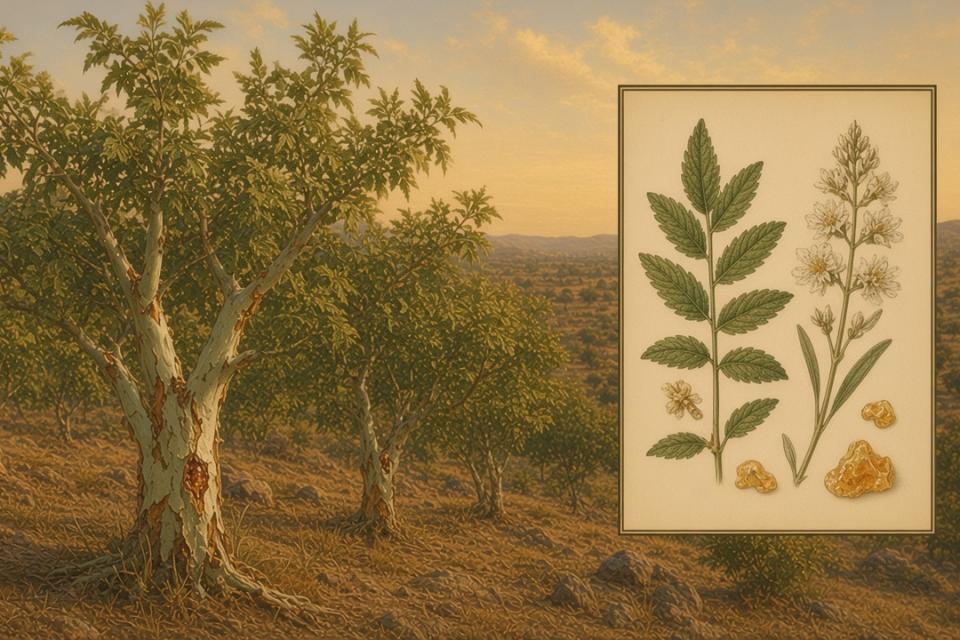
Boswellia is the gum resin of Boswellia serrata, a tree of dry hills in India known as Indian frankincense or salai guggul. Resin that seeps from cuts in the bark has long been used in Ayurvedic medicine for arthritis, inflammation, and respiratory complaints (NCCIH), and today boswellia extracts are sold as supplements for joint health and digestion. Its interest to pharmacologists lies in the boswellic acids, especially acetyl-11-keto-beta-boswellic acid (AKBA), which in laboratory studies block 5-lipoxygenase, the enzyme that makes inflammatory leukotrienes. That is a different target from conventional anti-inflammatory painkillers such as ibuprofen.
The best evidence is for knee osteoarthritis, and it is encouraging but not conclusive. A Cochrane review of oral herbal therapies for osteoarthritis (2014) found high-quality evidence from two small studies that an enriched boswellia extract, 100 mg a day for 90 days, reduced pain and improved function compared with placebo, and later meta-analyses also favor boswellia. But the trials are small, use different proprietary extracts, and many were run by the companies that make those extracts. Edzard Ernst’s systematic review in the BMJ (2008) found that sources of funding were undisclosed in all but one of seven trials and called the evidence encouraging but not compelling. NCCIH says there is not enough high-quality evidence to show that boswellia is useful for any condition.
Several practical limits follow. Boswellia serrata is not the classic frankincense of incense, which comes from Arabian and African species such as Boswellia sacra, and an aromatherapy oil is not the extract used in trials. Supplements differ widely in their boswellic acid content, so results from one product may not apply to another. Small trials in asthma and inflammatory bowel disease were promising, but a year-long German trial in Crohn’s disease found no benefit over placebo. Side effects are usually mild digestive complaints. Nothing here is medical advice; a hot, swollen joint, unexplained joint pain with fever, bloody diarrhea, or worsening asthma needs medical care, and boswellia should never replace prescribed treatment for these conditions.
In this monograph
01 The plant
Botanical profile
Boswellia serrata belongs to Burseraceae, the incense-tree family, and NCBI Taxonomy files it as taxon 613112. Siddiqui (Indian Journal of Pharmaceutical Sciences 2011) describes a moderate to large branching tree of dry mountainous regions; NCCIH gives its native range as the mountainous regions of northern Africa, India, and the Middle East. In India, Siddiqui names Andhra Pradesh, Gujarat, Madhya Pradesh, Jharkhand, and Chhattisgarh as the main sources. LiverTox describes it as a deciduous tree whose papery bark peels away to reveal a gummy oleoresin. Resin is collected by cutting into the trunk; Siddiqui reports that the exudate is stored in bamboo baskets so that the oil drains off and the resin solidifies, after which it is graded by flavor, color, shape, and size.
Frankincense, or olibanum, is a name shared by several Boswellia species, and the difference matters. Siddiqui notes that the genus has about 25 species, most of them in Arabia, the north-eastern coast of Africa, and India, and that three have traditionally been regarded as true frankincense: Boswellia sacra of southern Arabia, and Boswellia carterii and Boswellia frereana of Somalia. NCBI Taxonomy now treats B. carterii (spelled carteri) as a synonym of B. sacra (taxon 173701). These Arabian and African resins are the classic frankincense of incense, and frankincense essential oils may be sold as B. carterii; the allergy case reports cited by MSKCC, for example, involve B. carterii oil. NCCIH notes that frankincense for aromatherapy may come from B. serrata or other Boswellia species. The oral extracts in most clinical trials are from B. serrata, and Börner and colleagues (Pharmaceuticals 2021) found that frankincense supplements differ strikingly in boswellic acid content, partly because they use material from different species. MSKCC also cautions that boswellia should not be confused with guggul or myrrh, other resins with different chemistry.
Siddiqui reports that the oleo-gum-resin contains 30–60% resin, 5–10% essential oil, and polysaccharides. The resin fraction holds the boswellic acids, pentacyclic triterpenic acids of which four are usually emphasized: beta-boswellic acid (PubChem CID 168928), acetyl-beta-boswellic acid, 11-keto-beta-boswellic acid (KBA, CID 9847548), and acetyl-11-keto-beta-boswellic acid (AKBA, CID 11168203, C32H48O5). Siddiqui and Safayhi’s group both identify AKBA as the strongest inhibitor of 5-lipoxygenase. Commercial extracts are often enriched in particular acids: 5-Loxin, for example, is standardized to 30% AKBA (Sengupta, Arthritis Research and Therapy 2008). An essential oil distilled from the resin captures the volatile fraction and is a different product from the boswellic acid extracts used in the arthritis trials.
02 Lineage
History
Frankincense is one of the oldest traded aromatics. Ernst opens his BMJ review with the gifts of the Magi in Matthew’s gospel, gold, frankincense, and myrrh, and notes that the resin of Boswellia, native to Arabia and India, has a long history in religious ceremonies and perfumery, with medicinal uses appreciated for millennia. Siddiqui writes that Boswellia resin has been used as incense in religious and cultural ceremonies since time immemorial and was prized by the ancient Egyptians, Greeks, and Romans as incense, fumigant, and aromatic. These accounts concern frankincense in general; which species supplied any particular ancient incense is often unclear, so they are not a history of B. serrata specifically.
In India, B. serrata resin, salai or salai guggul, became part of Ayurvedic medicine. Siddiqui notes the Sanskrit name gajabhakshya, suggesting that elephants eat the plant, and reports that the classical Ayurvedic texts describe the antirheumatic action of gugguls, the gum resins of trees. Ayurvedic and Unani texts recommended the resin for a long list of complaints, including diarrhea, dysentery, skin diseases, fevers, asthma, cough, and jaundice (Siddiqui). MSKCC lists traditional Ayurvedic uses for arthritis, ulcerative colitis, coughs, sores, wound healing, and asthma, and LiverTox notes its use for anti-inflammatory, antiseptic, astringent, and stimulant effects.
Modern pharmacology took off in the late twentieth century. MSKCC cites a 1986 study describing salai guggal extract as a new non-steroidal anti-inflammatory agent that, unlike conventional drugs, showed no pain-relieving or fever-reducing effect. In 1992 Safayhi, Ammon, and colleagues in the pharmacology department of the University of Tübingen reported that boswellic acids are specific inhibitors of 5-lipoxygenase, and Indian and German collaborators went on to publish small trials in ulcerative colitis, asthma, and chronic colitis. Siddiqui notes that the branded extract Boswellin was introduced to US and European markets in 1991. From 2008 onwards, researchers at the Laila Impex R&D Center in Vijayawada, India, published company-funded trials of the enriched extracts 5-Loxin and Aflapin, which feature prominently in the osteoarthritis literature. Boswellia is sold as a dietary supplement; Börner and colleagues note that frankincense preparations have not been approved as a drug.
03 Chemistry
Active compounds and how it works
The main proposed mechanism is inhibition of 5-lipoxygenase. Safayhi and colleagues (Journal of Pharmacology and Experimental Therapeutics 1992) isolated boswellic acids from B. serrata gum resin and found that they reduced the formation of leukotriene B4, an inflammatory signal, in rat white blood cells, with AKBA the most active. At concentrations up to 400 micromolar they did not impair cyclooxygenase, the target of aspirin and ibuprofen, or 12-lipoxygenase in human platelets, and they did not block the non-enzymatic oxidation of arachidonic acid. The authors concluded that boswellic acids are specific, non-redox inhibitors of 5-lipoxygenase. Leukotrienes drive inflammation in asthma and are thought to sustain inflammation in ulcerative colitis, which is why those diseases were tested early. MSKCC adds preclinical evidence for inhibition of cyclooxygenase-1, the inflammatory regulator NF-kappaB, and production of the cytokine TNF-alpha.
Getting boswellic acids into the blood is the main challenge. Sterk and colleagues (Planta Medica 2004) gave healthy men a single dose of a B. serrata extract either fasting or with a high-fat meal, and found that the meal increased blood exposure to beta-boswellic acid, KBA, and AKBA several-fold; some boswellic acids were detectable only after the meal. Products also differ: Börner and colleagues analyzed three frequently used frankincense preparations and found striking differences in their anti-inflammatory activity in laboratory assays, which tracked how much boswellic acid each contained. Laboratory activity, absorption, and product quality all have to line up before an effect in patients is plausible.
MSKCC notes that boswellia extracts inhibited platelet aggregation in laboratory studies, attributed to effects on the clotting factors Xa and XIa, and that boswellic acids affected the drug transporters P-glycoprotein, OATP1B3, and MRP2 in vitro. None of these effects has been shown to matter clinically, but they are the basis for the interaction cautions below. Ernst noted no evidence of serious drug interactions in the trials he reviewed, though small, short trials are not designed to detect them.
04 In practice
Common uses
Knee osteoarthritis is the most studied use. Cameron and Chrubasik’s Cochrane review of oral herbal therapies for osteoarthritis (2014) included 49 trials of many herbs but could pool data only for B. serrata products, from five studies of three different extracts. High-quality evidence from two studies with 85 participants showed that 100 mg a day of an enriched B. serrata extract for 90 days reduced pain by an average of 17 points on a 0–100 scale compared with placebo (from 40 points on placebo), with two people needing treatment for one to benefit, and improved physical function by 8 points. One study with 96 participants suggested fewer adverse events with the extract. Evidence for other boswellia doses and extracts was low or very low quality, and no serious adverse events were reported.
Later reviews point the same way, with the same caveats. Yu and colleagues (BMC Complementary Medicine and Therapies 2020) pooled seven trials with 545 patients and found that boswellia and its extracts reduced pain and stiffness and improved joint function, suggesting treatment for at least four weeks. Bannuru and colleagues (Seminars in Arthritis and Rheumatism 2018) analyzed 11 trials of curcumin or boswellia with 1,009 participants: both beat placebo for pain and function, but study quality was low overall, most trials had fewer than 100 participants, no trial compared boswellia with an approved anti-inflammatory drug, and the authors judged the evidence inadequate for clinical recommendations. NCCIH, citing Bannuru’s review among others, says oral boswellia may help osteoarthritis pain and inflammation but that larger, higher-quality studies are needed.
Who ran the trials matters. In the 5-Loxin trial, Sengupta and colleagues (Arthritis Research and Therapy 2008) randomized 75 people with knee osteoarthritis to 100 mg or 250 mg a day of the extract, standardized to 30% AKBA, or placebo for 90 days; both doses improved pain and function, with the higher dose showing benefits as early as day 7. In a follow-up, Sengupta and colleagues (International Journal of Medical Sciences 2010) compared 100 mg a day of 5-Loxin, 100 mg of Aflapin, and placebo in 60 people, of whom 57 finished, and reported that both extracts worked and Aflapin worked better. Both trials were company research: the 2008 paper states that it was funded by the Laila Impex R&D Center, whose employees and consultants wrote it, and the 2010 paper, from the same center, acknowledges support from Laila Nutraceuticals while declaring no conflict of interest. Ernst’s 2008 review found that funding was undisclosed in all but one trial and that positive publication bias could not be excluded. Kimmatkar’s small crossover trial in 30 patients, included in Ernst’s review and summarized by LiverTox, also reported less knee pain and better walking distance with boswellia.
Inflammatory bowel disease: early studies were small. LiverTox summarizes an Indian–German trial in which 42 patients with ulcerative colitis received boswellia gum resin or sulfasalazine for six weeks, with improvement in both groups, and a trial in 30 patients with chronic colitis in which 90% improved on boswellia versus 60% on sulfasalazine. In Crohn’s disease, the German extract H15 was not inferior to mesalazine in a trial of 102 patients, and in a trial of 31 patients with collagenous colitis, 64% went into remission on boswellia versus 27% on placebo, or 44% versus 27% by intention-to-treat analysis (Ernst). The largest and longest trial was negative: Holtmeier and colleagues (Inflammatory Bowel Diseases 2011) randomized 82 people with Crohn’s disease in remission to 2,400 mg a day of the extract Boswelan or placebo for 52 weeks. The trial was stopped early because the drug could not be distinguished from placebo; 59.9% and 55.3% stayed in remission. MSKCC describes the evidence for collagenous colitis as unclear or negative and finds no benefit for maintaining Crohn’s remission.
Asthma and other uses: in an Indian–German trial summarized by Ernst and LiverTox, 80 adults with asthma took boswellia gum resin or placebo for six weeks; 70% improved on boswellia versus 27% on placebo, although Ernst notes that the boswellia group had more severe asthma at the start. NCCIH says a few small studies suggest benefit but the evidence is not rigorous enough to judge. NCCIH also notes a small study in malignant glioma, an aggressive brain tumor, in which oral boswellia appeared to reduce swelling of the brain during treatment but not the tumor itself, and finds too little evidence for topical frankincense in arthritis. NCCIH states there is no evidence that boswellia prevents or treats COVID-19, and MSKCC lists many other small studies, from irritable bowel syndrome to low back pain, that need confirmation.
05 The apothecary
Preparations and traditional use
No regulatory monograph sets a dose. The European Medicines Agency has no herbal monograph for boswellia, and LiverTox notes that it has not been approved for medical uses in the United States. LiverTox gives the usual recommended dose of over-the-counter extracts as 250–500 mg two or three times daily. NCCIH notes that B. serrata extract at up to 1,000 mg daily has been used safely in trials lasting up to six months, and at 2,400 mg daily for up to a month. Ernst reports that 600–3,000 mg of gum resin a day, or equivalent, is usually recommended for oral use. Enriched extracts are dosed much lower: the Cochrane review’s best evidence was for 100 mg a day of an enriched extract for 90 days, and the 5-Loxin trial used 100 or 250 mg a day.
Because products differ so much, the dose on the label means little without knowing what extract it refers to. Siddiqui notes that manufacturing varies from one producer to another, making standardization difficult, and that the trials used different products from different manufacturers, so their effects may not be comparable. Börner and colleagues found that the anti-inflammatory activity of commercial frankincense preparations tracked their boswellic acid content. Look for a product that names Boswellia serrata, states its content of total boswellic acids or AKBA, and ideally matches an extract tested in a trial. Frankincense essential oil, incense, and resin sold for burning are not substitutes for an oral extract.
Sterk and colleagues found that taking boswellia with a high-fat meal raised blood levels of boswellic acids several-fold, so taking capsules with food is sensible and consistency matters. Yu and colleagues suggested treatment for at least four weeks before judging an effect. Boswellia is often combined with curcumin from turmeric in joint supplements, and Bannuru’s review found both better than placebo, but combination products add each ingredient’s side effects and interactions. Topical frankincense creams and oils have little evidence and can cause allergic skin reactions (NCCIH, MSKCC).
Safety
Before you use boswellia
06 Caution
Side effects
Digestive complaints are the most common side effects. LiverTox describes them as few and largely mild and transient: nausea, diarrhea, or constipation, and notes that in most controlled trials adverse events were no more frequent with boswellia than with placebo. Ernst’s review found diarrhea, abdominal pain, and nausea reported in more than one trial, with nausea, acid reflux, and stomach upset occurring occasionally. In the ulcerative colitis trial summarized by LiverTox, 18% of patients on boswellia had digestive side effects such as heartburn, loss of appetite, nausea, or abdominal pain. MSKCC reports mild constipation in people with irritable bowel syndrome taking a lecithin-based boswellia product.
Allergic reactions are uncommon but documented. MSKCC lists case reports of allergic contact dermatitis after using frankincense oil and a cream containing boswellia extract, and LiverTox notes that the frequency of hypersensitivity reactions is not known. MSKCC also describes a 17-year-old girl with celiac disease who developed a gastric bezoar, a mass in the stomach, after eating excessive amounts of frankincense; her pain and vomiting resolved after surgical removal.
The liver appears safe. LiverTox gives boswellia a likelihood score of E, meaning it is an unlikely cause of clinically apparent liver injury: it has not been linked to raised liver enzymes or to published cases of liver injury, although it is often included in multi-ingredient supplements, some of which have been implicated in liver injury without a specific contribution from boswellia being established. NCCIH considers oral boswellia likely safe. The Cochrane review found no serious adverse events, and the year-long Crohn’s disease trial found no safety disadvantage compared with placebo. NCCIH’s safety statement rests on trials lasting up to six months at doses up to 1,000 mg a day, so long-term use at higher doses is less well documented.
07 Caution
Contraindications
Do not use boswellia if you have had an allergic reaction to it or to frankincense products, including skin reactions to frankincense oils or creams; MSKCC lists case reports of allergic contact dermatitis from both. Stop and seek advice if a rash, swelling, or breathing difficulty develops. Because boswellia extracts inhibited platelet aggregation in laboratory studies (MSKCC), people with bleeding disorders, those taking blood thinners, and anyone due for surgery should tell their doctor or surgeon that they take it. The clinical significance is not established, but the precaution is simple.
Pregnancy and breastfeeding: NCCIH says boswellia in amounts found in food is likely safe during pregnancy and breastfeeding, but little is known about medicinal oral doses or about frankincense products such as oils at these times. Avoid supplements unless a doctor advises otherwise. Children have been studied very little and should not be given boswellia supplements without medical advice. The bezoar case described by MSKCC, in a teenager who had eaten excessive amounts of frankincense, is a reminder that raw resin is not something to eat in quantity, particularly for anyone with a digestive disorder.
Do not use boswellia in place of treatment for serious inflammatory disease. NCCIH advises people with asthma to follow their prescribed management and not to substitute complementary approaches; the negative Crohn’s disease trial shows why that applies to inflammatory bowel disease as well. Rheumatoid arthritis and other inflammatory arthritis need specialist care to prevent joint damage. A single hot, red, swollen joint, joint pain with fever, bloody diarrhea, or asthma that is not responding to inhalers needs prompt medical attention.
08 Caution
Drug and herb interactions
Blood thinners are the main practical concern. MSKCC advises talking to a doctor before using boswellia with warfarin or other anticoagulants, because laboratory studies found that boswellia extracts inhibit platelet aggregation, which could add to bleeding risk with anticoagulant or antiplatelet drugs. The clinical significance has not been determined. The same caution applies to combining boswellia with other supplements that may affect bleeding, and to regular use of anti-inflammatory painkillers, which carry their own bleeding risk.
Drug transport: MSKCC reports that boswellia extract and keto-boswellic acids inhibited P-glycoprotein, and that KBA and AKBA modulated the transporters OATP1B3 and MRP2, all in laboratory studies with unknown clinical relevance. These transporters move many drugs, including some cancer treatments, into and out of cells. Ernst found no evidence of serious drug interactions but cautioned that absence of evidence is not evidence of absence in herbal medicine, where safety monitoring is limited. People taking medicines with a narrow safety margin, or receiving cancer treatment, should ask their care team before starting boswellia.
Combination products are a hidden source of interactions. Boswellia is frequently sold with turmeric or curcumin, and sometimes with other herbs, and each ingredient brings its own cautions. Food also changes how much boswellic acid is absorbed (Sterk and colleagues), so switching between taking capsules fasting and with meals may change the effective dose. If you use a combination product, give your pharmacist the full ingredient list rather than just the brand name.
09 Questions
Frequently Asked Questions
It may help some people. A Cochrane review found that 100 mg a day of an enriched extract for 90 days reduced pain and improved function in two small, high-quality trials, and later meta-analyses also favor boswellia. But trials are small, use different extracts, and many were funded by manufacturers. NCCIH says larger, higher-quality studies are needed.
Partly. Boswellia serrata is Indian frankincense, but the classic frankincense of incense comes from Boswellia sacra (including the tree once called B. carterii) and related Arabian and African species. The clinical trials used oral extracts of B. serrata resin. An aromatherapy oil is not the same product.
AKBA (acetyl-11-keto-beta-boswellic acid) is the boswellic acid that most strongly inhibits 5-lipoxygenase in laboratory tests. 5-Loxin and Aflapin are proprietary extracts; 5-Loxin is standardized to 30% AKBA. Their main trials were funded by the Indian Laila group and carried out by its own research center, so independent replication is still needed.
Follow the label of a product that names Boswellia serrata and states its boswellic acid content. LiverTox gives 250–500 mg two or three times daily as a usual dose for standard extracts; enriched extracts are dosed lower, around 100–250 mg a day in trials. Take it with food, which increases absorption, and allow at least four weeks to judge an effect.
The two are often combined in joint supplements. A 2018 meta-analysis found both curcumin and boswellia better than placebo for knee osteoarthritis, though the trials were small and of low quality, and combinations have been studied less. See our turmeric page for its own evidence and cautions before taking a combination.
Early small trials were promising, but a year-long German trial found boswellia no better than placebo at keeping Crohn’s disease in remission. Boswellia should not replace prescribed treatment for inflammatory bowel disease; discuss any supplement with your gastroenterologist.
For most adults it appears to be. Side effects are usually mild digestive complaints such as nausea, diarrhea, reflux, or constipation, allergic skin reactions are occasionally reported, and LiverTox finds no link to liver injury. Little is known about use in pregnancy or breastfeeding, and people taking blood thinners should check with their doctor first.
Other herbs used for joint and back pain include devil’s claw, white willow bark, and ginger. Each has its own evidence and cautions, covered on its page, and combining several adds side effects and interactions. Exercise and weight management remain the foundations of osteoarthritis care.
10 References
Sources
These references support the history, clinical, and safety claims on this page. They are not an endorsement of any product.
-
Boswellia
National Center for Complementary and Integrative Health (NIH), 2025
Consumer summary (updated April 2025): mostly small, low-quality studies; may help osteoarthritis pain; asthma evidence insufficient; doses used safely in trials; pregnancy unknown.
-
Boswellia
Memorial Sloan Kettering Cancer Center, About Herbs, 2026
Clinical summary (updated September 2026): 5-lipoxygenase mechanism; conflicting osteoarthritis data; negative Crohn’s maintenance; contact dermatitis; antiplatelet and transporter interactions.
-
Boswellia Serrata
LiverTox, National Institute of Diabetes and Digestive and Kidney Diseases (NIH), 2020
Last updated November 2020: likelihood score E (unlikely cause of liver injury); usual dose 250–500 mg two or three times daily; mild GI side effects; annotated trial summaries.
-
Oral herbal therapies for treating osteoarthritis
Cochrane Database of Systematic Reviews (PubMed 24848732), 2014
Cameron and Chrubasik: 49 trials; meta-analysis only for B. serrata; enriched extract 100 mg/day for 90 days cut pain by 17 points on a 0–100 scale (two studies, 85 participants).
-
Effectiveness of Boswellia and Boswellia extract for osteoarthritis patients: a systematic review and meta-analysis
BMC Complementary Medicine and Therapies (PubMed 32680575), 2020
Yu et al.: seven trials, 545 patients; reduced pain and stiffness and improved function; suggests at least four weeks of treatment.
-
Efficacy of curcumin and Boswellia for knee osteoarthritis: Systematic review and meta-analysis
Seminars in Arthritis and Rheumatism (PubMed 29622343), 2018
Bannuru et al.: 11 trials, 1,009 participants; curcumin and boswellia beat placebo; low quality, mostly small trials; no boswellia vs NSAID trials.
-
Frankincense: systematic review
BMJ (PubMed 19091760), 2008
Ernst: seven RCTs in asthma, rheumatoid arthritis, Crohn’s disease, osteoarthritis, and collagenous colitis; encouraging but not compelling; funding undisclosed in all but one.
-
A double blind, randomized, placebo controlled study of the efficacy and safety of 5-Loxin for treatment of osteoarthritis of the knee
Arthritis Research and Therapy (PubMed 18667054), 2008
Sengupta et al.: funded by Laila Impex R&D Center; 75 patients; 5-Loxin (30% AKBA) 100 or 250 mg/day vs placebo for 90 days; improved pain and function.
-
Comparative efficacy and tolerability of 5-Loxin and Aflapin against osteoarthritis of the knee: a double blind, randomized, placebo controlled clinical study
International Journal of Medical Sciences (PubMed 21060724), 2010
Sengupta et al.: supported by Laila Nutraceuticals; 60 subjects, 100 mg/day 5-Loxin or Aflapin vs placebo for 90 days; both improved symptoms, Aflapin more.
-
Randomized, placebo-controlled, double-blind trial of Boswellia serrata in maintaining remission of Crohn’s disease: good safety profile but lack of efficacy
Inflammatory Bowel Diseases (PubMed 20848527), 2011
Holtmeier et al.: 82 patients, Boswelan 2,400 mg/day vs placebo for 52 weeks; stopped early; remission 59.9% vs 55.3%; well tolerated.
-
Boswellic acids: novel, specific, nonredox inhibitors of 5-lipoxygenase
Journal of Pharmacology and Experimental Therapeutics (PubMed 1602379), 1992
Safayhi et al.: boswellic acids reduced leukotriene B4 formation, AKBA most strongly, without affecting cyclooxygenase or 12-lipoxygenase.
-
Effect of food intake on the bioavailability of boswellic acids from a herbal preparation in healthy volunteers
Planta Medica (PubMed 15643550), 2004
Sterk et al.: a high-fat meal increased blood exposure to beta-boswellic acid, KBA, and AKBA several-fold compared with fasting.
-
Analysis of Boswellic Acid Contents and Related Pharmacological Activities of Frankincense-Based Remedies That Modulate Inflammation
Pharmaceuticals (PubMed 34358086), 2021
Börner et al.: commercial frankincense products differ strikingly in boswellic acid content and anti-inflammatory activity; not approved as drugs.
-
Boswellia serrata, a potential antiinflammatory agent: an overview
Indian Journal of Pharmaceutical Sciences (PubMed 22457547), 2011
Siddiqui: botany, resin tapping, true frankincense species, Ayurvedic history, boswellic acid chemistry, and product standardization problems.
-
Acetyl-11-Keto-Beta-Boswellic Acid
PubChem, National Library of Medicine (NIH), 2026
AKBA, the strongest 5-lipoxygenase-inhibiting boswellic acid; CID 11168203, C32H48O5.