
Monograph
Tongkat Ali
Eurycoma longifolia
Updated October 12, 2026
Key points
-
01
Modest testosterone rise, mainly low-T men
A 2022 meta-analysis of five trials found higher total testosterone, mostly in men with low levels. Results varied widely, and free testosterone often did not change.
-
02
Most trials tested one funded extract
Seven of nine testosterone studies used Physta, a water extract by Biotropics Malaysia, which funded or co-authored many trials. Other products are untested.
-
03
Thin evidence for sex and sport
A meta-analysis of two trials found no clear overall erectile benefit, sports trials were mostly negative, and stress claims rest on one company-funded study.
-
04
EFSA could not confirm safety
In 2021 EFSA said a root extract’s safety was not established under any use because of DNA damage in tests. Rare liver injury and a heart rhythm case exist.
-
05
Contamination is a real risk
Surveys found mercury and lead in Malaysian tongkat ali products, many are not authentic, and one tongkat ali product hid tadalafil in its capsule shells.
Tongkat ali is the root of Eurycoma longifolia, a slender, slow-growing tree of Southeast Asian forests and a member of the quassia family, Simaroubaceae. The Malay name literally means “Ali’s walking stick,” and the plant is also sold as Long Jack or “Malaysian ginseng,” although it is not related to true ginseng; in Indonesia it is called pasak bumi. In Malaysia and Indonesia a bitter decoction of the root has long been taken as an aphrodisiac, a tonic after childbirth, and a remedy for intermittent fevers such as malaria. Today it is sold worldwide in capsules and instant coffees, mostly as a natural testosterone booster. Its bitter compounds, called quassinoids, include eurycomanone, the marker used to standardize the main research extract. Much of the research uses one branded freeze-dried water extract of the root, Physta, made by Biotropics Malaysia, and many of those trials were funded by the company or included its employees as authors.
The honest headline is a modest hormonal effect resting on thin evidence. A 2022 meta-analysis by Leisegang and colleagues (Medicina) pooled five randomized trials in 232 men and found higher total testosterone with tongkat ali, mainly in men whose levels were low at the start, but the trials disagreed widely and showed signs of publication bias. In the largest, men aged 50 to 70 taking 200 mg a day for 12 weeks saw average total testosterone rise from about 201 to 225 ng/dL, still below the trial’s 300 ng/dL entry threshold, while free testosterone did not differ from placebo. A 2015 meta-analysis of two trials found no clear overall benefit for erections, sports trials have been largely negative, and claims about stress rest on one four-week, company-funded trial. For Fadogia agrestis, a shrub often compared with it, we found only rat studies.
Short trials have reported few side effects, mostly mild stomach upset, but bigger questions remain. In 2021 the European Food Safety Authority (EFSA) concluded that the safety of a standardized root extract “has not been established under any condition of use,” after laboratory and animal tests suggested it could damage DNA. The US liver injury database LiverTox rates it a possible rare cause of liver injury, and a 2025 case report linked it to an abnormal heart rhythm. Malaysian surveys in the early 2000s found mercury above the legal limit in 36 of 100 tongkat ali products, and Singapore’s regulator found the erectile dysfunction drug tadalafil hidden in the capsule shells of one. There are no safety data in pregnancy, breastfeeding, or children. Nothing here is medical advice. Erection problems, low desire, and tiredness can signal diabetes, heart disease, medication effects, or truly low testosterone, which deserve a proper diagnosis, and jaundice, palpitations, or chest pain after starting any supplement need prompt medical care.
In this monograph
01 The plant
Botanical profile
Eurycoma longifolia Jack was described by the botanist William Jack (1795–1822) in Malayan Miscellanies, printed at Bencoolen (now Bengkulu) on Sumatra in 1822, according to the International Plant Names Index. Kew’s Plants of the World Online (POWO) accepts the name, places it in Simaroubaceae within the order Sapindales, and recognizes two subspecies, subsp. longifolia and subsp. eglandulosa. POWO gives the native range as Borneo, Cambodia, Laos, Peninsular Malaysia, Myanmar, the Philippines, Sumatra, Thailand, and Vietnam. Local names reviewed by Rehman and colleagues (Molecules 2016) include tongkat ali and Malaysian ginseng in Malaysia, pasak bumi or bedara pahit in Indonesia, ian-don in Thailand, and cay ba benh in Vietnam, and LiverTox adds Long Jack and “natural Viagra.” The name tongkat ali is not unique: Rehman and colleagues note that at least three other plants, including Polyalthia bullata and a Goniothalamus species, share it locally, one reason that DNA testing of commercial products matters.
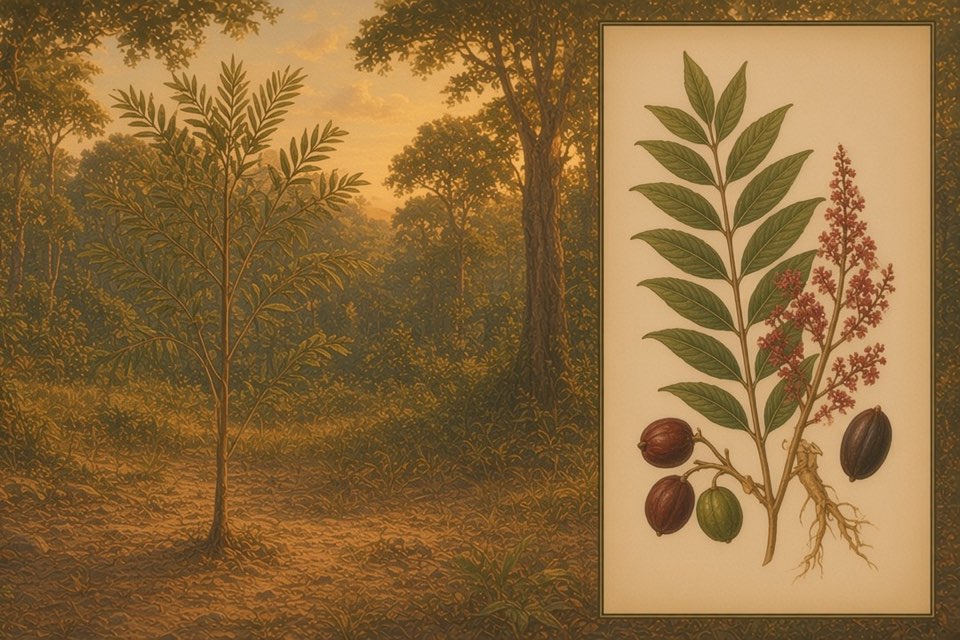
Rehman and colleagues describe a tall, slender, shrubby tree that grows in sandy soil. Its pinnately compound leaves can reach 1 m long, with numerous opposite or nearly opposite leaflets, lance-shaped to broadly lance-shaped, 5 to 20 cm long and 1.5 to 6 cm wide, with smooth edges. The flowers are tiny, reddish, and either male or female, packed densely together, and the fruits are ovoid drupes (stone fruits) 1 to 2 cm long with a distinct ridge, turning dark reddish brown when ripe. The medicinal part is the long, twisted root. The same review estimates that collectors harvest about 21,000 kg a year against a demand of more than 54,000 kg, notes that the species’ genetic diversity is falling because of widespread harvesting, and reports that it is now planted in Malaysia partly to conserve wild stands. EFSA’s 2021 assessment describes one commercial extract as made from dried root chips of wild plants identified by DNA fingerprinting.
LiverTox counts more than 65 compounds in Eurycoma longifolia extracts, including glycosaponins, quassinoids (eurycomanone, eurycomanols, and eurycomalactones), canthin-6-one alkaloids, phenolic compounds, a coumarin, tannins, and triterpenes. Quassinoids are bitter, degraded triterpenes found only in part of the quassia family, and Rehman and colleagues describe them as the major share of the root’s chemistry; eurycomanone, also called pasakbumin-A, is the one most often used to standardize extracts. Hot-water extracts, by contrast, consist mostly of proteins, polysaccharides, and glycosaponins. Chinnappan and colleagues (Food and Nutrition Research 2021) give the specification for Physta as 0.8 to 1.5% eurycomanone, at least 22% protein, 30% polysaccharide, and 40% glycosaponin, and EFSA notes that this matches a Malaysian national standard for the extract published in 2011. Marketers call the protein and peptide fraction “eurypeptides”; Talbott and colleagues (Journal of the International Society of Sports Nutrition 2013) cite extracts standardized to 22% eurypeptides. Products vary enormously: the extract in one Malaysian drug interaction study contained only 0.027% eurycomanone, while a capsule in a 2025 case report was labeled at 2%.
02 Lineage
History
Tongkat ali’s reputation comes from the forest medicine of the Malay Peninsula, Sumatra, and Borneo. Rehman and colleagues summarize its traditional uses: the root is boiled into a water decoction and taken as an aphrodisiac and for intermittent fever (malaria), lumbago, indigestion, fever, and jaundice, and as a strengthening tonic after childbirth; decoctions of the leaves are used to wash itchy skin, the fruits for dysentery, the bark against intestinal worms, the taproot for high blood pressure, and the root bark for diarrhea and fever. LiverTox adds diabetes, rheumatism, asthma, and depression to the list. The name, “Ali’s walking stick,” is said to refer to its aphrodisiac reputation, although some authors trace it to the long, twisted roots. Bhat and Karim (Fitoterapia 2010) describe the plant as used traditionally for malaria, as an aphrodisiac, and for diabetes, infections, and fever, and laboratory work in the 1990s found that its quassinoids were active against chloroquine-resistant Malaysian malaria parasites in the test tube.
Western botany named the tree in 1822, when William Jack published Eurycoma longifolia. Its commercial history is far more recent. In 1992 Malaysia brought traditional medicines into the third phase of its drug registration system, with an emphasis on quality and safety that included heavy metals, and pharmacy researchers at Universiti Sains Malaysia used that framework in the early 2000s to survey tongkat ali products for mercury and lead. A Malaysian national standard for the standardized water extract followed in 2011, and the government helped fund research, including a 2018 trial supported by a grant scheme under the Ministry of Agriculture and Agro-Based Industry. Low and colleagues (Journal of Ethnopharmacology 2013) noted teas, coffees, and carbonated drinks premixed with the root extract, and by 2016 Rehman and colleagues counted more than 200 Eurycoma longifolia products registered with Malaysia’s National Pharmaceutical Control Bureau, where it is sold as a traditional herbal medicine.
Exports turned tongkat ali into a global “testosterone booster.” EFSA records that the standardized water extract has been on international markets since 2009, and Physta also appears under the name LJ100: the typeset journal version of the 2012 Ismail trial calls the extract “LJ100/Physta.” LiverTox describes recent popularity in the United States, where root extracts are promoted to raise testosterone and improve athletic performance, and Balasubramanian and colleagues (Journal of Sexual Medicine 2019) found tongkat ali among the most popular ingredients in the six top-ranked erectile dysfunction supplements on Amazon. Wahab and colleagues (International Journal of Environmental Research and Public Health 2022) rated 321 websites about tongkat ali as generally low in quality; the most common claims were raising testosterone (37.7%), treating malaria (34.9%), and improving libido (33.6%). When an applicant sought authorization to sell the extract as a food supplement in the European Union, EFSA concluded in 2021 that its safety had not been established. Fadogia agrestis, a West African shrub also sold in supplements and sometimes weighed against tongkat ali, has as far as we could find been studied only in rats.
03 Chemistry
Active compounds and how it works
The leading theory is that tongkat ali nudges the body’s own testosterone production, but the human evidence for how is limited. In laboratory work, Low and colleagues (Journal of Ethnopharmacology 2013) found that eurycomanone increased testosterone output from isolated rat testis cells (Leydig cells), apparently by blocking aromatase, the enzyme that converts testosterone to estrogen, and at high concentrations by inhibiting phosphodiesterase enzymes. People do not respond so neatly. In a placebo-controlled study by Chan and colleagues (Andrologia 2021), 32 young men took 600 mg a day for two weeks: total and free testosterone rose, but so did estradiol, an estrogen, while the pituitary hormones that drive the testes, luteinizing hormone and follicle-stimulating hormone, did not change. LiverTox summarizes the human studies as showing mild rises in total testosterone without increases in free testosterone or sex hormone-binding globulin (the protein that carries testosterone in the blood), and in the largest trial free testosterone did not differ from placebo.
Other proposed mechanisms rest on laboratory and animal work. Rehman and colleagues describe the “eurypeptides” of water extracts as complex polypeptides said to boost androgen production through dehydroepiandrosterone (DHEA) and to lower sex hormone-binding globulin, but we found no human study that tested this fraction on its own, and in the largest Physta trial DHEA rose within the treated groups without differing from placebo. Tee and colleagues (BioMed Research International 2016) found that a solvent fraction of the root relaxed rat aortas and inhibited angiotensin-converting enzyme, the target of a common class of blood pressure drugs, in the test tube. Tsai and colleagues (Nutrients 2020) reported that powdered root, given by mouth for eight weeks, lowered blood sugar in diabetic mice. A standardized quassinoid mixture slowed the growth of human prostate cancer cells in culture and, by injection, in mice (Tong and colleagues, PLoS One 2015). None of these effects has been shown in people, and the blood pressure and blood sugar findings matter mainly as possible interaction risks.
Little is known about how the body handles tongkat ali. In rats, Rehman and colleagues report that eurycomanone given by mouth reached much lower blood levels than an injected dose, even at five times the amount, peaking about 4.4 hours after dosing. Animal studies show low acute toxicity: the dose that kills half the animals was 1,500 to 2,000 mg/kg for an alcohol extract and more than 3,000 mg/kg for a water extract in mice. Low and colleagues (Phytotherapy Research 2014) saw no toxic signs in pregnant rats given a quassinoid-rich extract, whose offspring were normal, and set a no-observed-adverse-effect level of 100 mg/kg a day. EFSA, however, highlighted genetic toxicity. The extract caused chromosome damage in human cells in the test tube, and in a follow-up animal test it damaged DNA in the stomach and duodenum, the tissues it touches first, at 2,000 mg/kg, an effect EFSA judged was due to genotoxicity rather than general cell damage. For athletes, Chen and colleagues (International Journal of Preventive Medicine 2014 and 2019) found that 200 to 400 mg a day did not change the urinary testosterone-to-epitestosterone ratio used in doping tests.
04 In practice
Common uses
Testosterone is the main reason people buy tongkat ali, and the evidence shows a modest rise, mainly in men with low levels. Leisegang and colleagues (Medicina 2022) found nine studies, seven of which used Physta, and pooled five randomized trials in 232 men: total testosterone rose with a large standardized mean difference of 1.35, but heterogeneity was high (87%), tests suggested publication bias, and in men with normal levels the pooled rise was not statistically significant. The review itself received no external funding. Its largest trial, by Chinnappan and colleagues (Food and Nutrition Research 2021), randomized 105 men aged 50 to 70 with total testosterone under 300 ng/dL to Physta 100 mg, 200 mg, or placebo for 12 weeks. On 200 mg, average testosterone went from 200.5 to 225.0 ng/dL against 183.0 to 177.9 on placebo, and fatigue and aging-symptom scores improved; free testosterone did not differ between groups. Biotropics Malaysia funded the trial and two authors were its employees. An earlier uncontrolled study by Tambi and colleagues (Andrologia 2012) gave 200 mg a day for a month to 76 of 320 men with late-onset hypogonadism and reported better symptom and testosterone scores. A urology review of testosterone boosters by Morgado and colleagues (International Journal of Impotence Research 2024) judged tongkat ali “possibly effective” for men with late-onset hypogonadism and healthy men, based on three studies. Verdict: a small, real-looking effect on total testosterone in men with low levels, from mostly sponsor-funded trials of one extract, and no substitute for a medical diagnosis.
Libido and erectile function results are mixed. Kotirum and colleagues (Complementary Therapies in Medicine 2015) found only two eligible placebo-controlled trials, with 139 men; overall, scores on the five-item International Index of Erectile Function did not improve significantly (a difference of 0.91 points, with a confidence interval running from −1.50 to 3.33), although men who started with worse function improved by about 2 points. In the main Physta trial, Ismail and colleagues (Evidence-Based Complementary and Alternative Medicine 2012) gave 300 mg a day or placebo to 109 men aged 30 to 55 for 12 weeks and reported better erectile function and physical functioning scores and 14% higher libido scores by week 12, although testosterone did not change compared with placebo; Biotropics funded the trial and two authors were employees. A trial of Physta combined with Polygonum minus, another Malaysian herb, reported better erection hardness, but only 26 men completed it and three of the five authors worked for Biotropics (Udani and colleagues 2014). In a six-month Brazilian trial of 45 men with symptoms of androgen deficiency, Leitão and colleagues (Maturitas 2021) found the best erectile scores with 200 mg of tongkat ali plus exercise training. Verdict: possible small benefits in men with existing problems, not reliable enough to rely on.
Fertility claims rest largely on uncontrolled studies. Tambi and Imran (Asian Journal of Andrology 2010) gave 200 mg a day of a standardized extract to 350 men with unexplained infertility, but only 75 completed three months; in those men, semen volume, sperm concentration, normal shapes, and motility improved, and 11 partners (14.7%) became pregnant. There was no control group, and losing nearly four in five participants makes the results hard to interpret. In the Ismail trial, semen was analyzed in only 36 men; in a subgroup of 11 with low starting values on tongkat ali, motility rose from 33.8% to 48.8%, while in the placebo group it rose from 36.3% to 44.6%, a change that was not statistically significant. Erasmus and colleagues (Andrologia 2012) found no harm to human sperm exposed to the extract in the test tube at concentrations like those reached in use, though very high concentrations may be harmful. Verdict: interesting but very weak. A couple having difficulty conceiving needs a medical evaluation of both partners, and a supplement should not delay it.
Stress and mood rest on one small, company-funded trial. Talbott and colleagues (Journal of the International Society of Sports Nutrition 2013) gave Physta 200 mg a day or placebo for four weeks to moderately stressed adults. Among the 63 analyzed, 32 men and 31 women, tension fell by 11%, anger by 12%, and confusion by 15% compared with placebo, salivary cortisol was 16% lower, and salivary testosterone 37% higher. Biotropics Malaysia funded the study, which was run by SupplementWatch; one author worked for Biotropics and another for a company selling a tongkat ali stress product. A longer trial by George and colleagues (Food and Nutrition Research 2018), funded by a Malaysian government grant with a Biotropics employee as lead author, gave tongkat ali with multivitamins or placebo to 93 people for 24 weeks and found no significant overall differences between groups in quality of life, mood, or stress, only improvements within the treated group and in a few age subgroups. Verdict: not established, and resting almost entirely on research connected to one manufacturer.
Sports performance trials have been mostly disappointing. LiverTox concludes that rises in testosterone have been linked to mild gains in strength alongside resistance training but not to better athletic performance. Chen and colleagues (International Journal of Preventive Medicine 2019) assigned 40 young men to placebo, 200 mg a day of tongkat ali, resistance training, or both for eight weeks; training improved leg power with or without the herb, and the herb alone did not. Zakaria and colleagues (Biology of Sport 2023) gave 400 mg a day or placebo to 18 rugby sevens players for a week before a damaging leg-press session and found no difference in force, jump performance, soreness, muscle-damage markers, or salivary testosterone or cortisol. A small study by Henkel and colleagues (Phytotherapy Research 2014) reported stronger handgrips and higher testosterone in 25 active older men and women after five weeks of 400 mg a day, but it had no placebo group. Verdict: no convincing benefit for strength, endurance, or recovery in trained people, and products sold for bodybuilding carry extra contamination risks.
05 The apothecary
Preparations and traditional use
Traditionally the root is boiled into a bitter water decoction. Modern products include raw root powder, root chips, capsules of crude powder or extract, and instant coffees and teas premixed with the extract; Rehman and colleagues counted more than 200 Eurycoma longifolia products registered in Malaysia. LiverTox gives the typical dose in traditional medicine as 100 to 400 mg a day and notes that capsules sold online for testosterone and bodybuilding offer 1,000 to 1,600 mg. Those figures are not comparable, because a milligram of raw root powder is not a milligram of concentrated extract. A drug-to-extract ratio, such as the 20:1 stated for Physta in one trial, describes how much dried root went into the extract but not which compounds it contains, and we found no published trials of most retail products.
Almost all clinical data come from standardized hot-water extracts, most often Physta, a freeze-dried extract standardized to 0.8 to 1.5% eurycomanone with set levels of protein, polysaccharide, and glycosaponin. Trials we reviewed used 100 to 600 mg a day for one week to six months: 200 mg in the largest testosterone trial and the stress trial, 300 mg taken as four 75 mg capsules in the main sexual-function trial, 400 mg in most sports studies, and 600 mg for two weeks in young men. The applicant to EFSA proposed up to 200 mg a day for adults, excluding pregnant and breastfeeding women, but EFSA did not accept that the extract was safe at any intake. We found no regulator that has set a recommended medicinal dose, and results from Physta cannot be assumed to apply to other extracts, root powders, or coffee blends.
Quality is the biggest practical problem. Abubakar and colleagues (Pharmaceutical Biology 2018) used DNA barcoding on tongkat ali herbal products and found only 37% authentic and 27% adulterated, and one product that passed the DNA test lacked the expected marker compound, eurycomanone. Surveys by Ang and colleagues in Malaysia found mercury above the national 0.5 ppm limit in 36 of 100 tongkat ali products in 2004 and in 26 of 100 “tongkat ali hitam” products in 2006, and lead above the limit in eight of 100 herbal products in 2003, all eight sold under tongkat ali or Eurycoma names. Singapore’s Health Sciences Authority recalled “XP Tongkat Ali Supreme” in 2009 after finding tadalafil in its capsule shells, and Said and colleagues (Food Chemistry 2014) found that two of ten Eurycoma products, both bought online, had infrared spectra closely matching a sildenafil medicine, suggesting a hidden sildenafil-like drug. The US Food and Drug Administration (FDA) warns that many “male enhancement” and stamina products contain dangerous hidden ingredients and that its list of tainted products covers only a fraction of them. Anyone who still chooses tongkat ali should prefer a single-ingredient product with independent testing for identity, heavy metals, and drug adulterants.
Safety
Before you use tongkat ali
06 Caution
Side effects
In trials, side effects were uncommon and mild. In the 12-week trial by Chinnappan and colleagues, eight adverse events occurred; stomach and bowel complaints such as constipation, indigestion, abdominal pain, and gas affected three people in each Physta group, one person on 200 mg reported itching, and none of the events was judged related to the extract. In the Ismail trial, 11 people on tongkat ali and 15 on placebo had adverse events, all mild to moderate. LiverTox lists nausea, abdominal discomfort, diarrhea, headache, and rash as uncommon side effects at usual doses and notes that long-term safety in humans has not been well documented. Trials that monitored blood counts and liver and kidney tests reported no clinically important changes. We found no clinical trial that recorded insomnia or restlessness as a side effect, but most trials lasted 12 weeks or less and enrolled healthy volunteers, so rarer or longer-term effects could easily be missed.
Liver injury has been reported, but rarely. LiverTox rates tongkat ali “D,” a possible rare cause of clinically apparent liver injury. Its case report, from Kaliounji and colleagues (Cureus 2024), describes a 47-year-old man who developed nausea, abdominal pain, dark urine, and jaundice about a week after starting a bodybuilding supplement containing tongkat ali; his bilirubin peaked at 14.3 mg/dL, and he improved after stopping it. LiverTox cautions that most such reports involve young male bodybuilders and that undisclosed anabolic steroid use, which can cause the same picture, weakens the link. People with existing liver disease may be at greater risk, and most trials excluded them. Anyone who develops yellow skin or eyes, dark urine, pale stools, itching, or unexplained nausea while taking tongkat ali should stop it and have liver tests.
Heart and blood pressure effects need watching. Ali (Cureus 2025) described a 71-year-old man who developed palpitations, dizziness, and a fast abnormal rhythm, atrial flutter, two days after starting a tongkat ali capsule labeled at 668 mg with 2% eurycomanone; the rhythm resolved within 24 hours of stopping, and a standard causality scale rated the link as probable. A single case cannot show how often this happens. A larger concern is adulteration. When Singapore’s regulator found tadalafil, the active drug in Cialis, hidden in a tongkat ali product, it warned that the drug can cause heart attack, stroke, and severe drops in blood pressure, especially in people with heart conditions or taking nitrate medicines, and the FDA warns that many “male enhancement” supplements contain hidden drugs. Palpitations, fainting, chest pain, or sudden visual changes after taking any “male enhancement” product need urgent care.
Some risks would not cause symptoms at all. EFSA’s finding that the extract can damage DNA at the first tissues it contacts in animals is a concern for long-term use that short trials could never detect. Heavy metals such as mercury and lead accumulate silently, and the Malaysian surveys found both in tongkat ali products. Hormonal effects are also uncertain: in the two-week trial in young men, estradiol rose along with testosterone. Because the whole point of the product is to shift hormones, anyone using it long term should tell their doctor, so that relevant blood tests can be interpreted correctly.
07 Caution
Contraindications
Pregnancy, breastfeeding, and children: there are no human safety data. The applicant to EFSA excluded pregnant and breastfeeding women from the intended users, and EFSA did not accept that the extract was safe for anyone. Its traditional use as a tonic after childbirth is not evidence of safety for a nursing infant. Low and colleagues found no harm in pregnant rats given a quassinoid-rich extract, but animal studies cannot establish safety in human pregnancy, and the DNA damage signal adds to the case for caution. Tongkat ali has not been studied in children or teenagers, and a product intended to raise sex hormones has no place in a developing body.
Hormone-sensitive conditions: because tongkat ali is taken to raise testosterone, and estradiol also rose in one trial, people with prostate cancer, breast cancer, or other hormone-sensitive cancers, and people being treated with hormone therapy, should not take it unless their oncology team agrees. Laboratory studies in which quassinoids slowed prostate cancer cells are not evidence that it is safe or useful in prostate cancer. Men already taking prescribed testosterone, and anyone under investigation for a hormone disorder, should also avoid it, since it can complicate dosing and test results.
Liver and heart disease: LiverTox notes that liver injury may be more frequent and severe in people with existing liver disease, who were excluded from most trials, so they should avoid tongkat ali. People with heart rhythm problems, heart disease, or unstable blood pressure should be cautious given the atrial flutter case and laboratory signs of blood pressure effects, and anyone who takes nitrates for angina should avoid “male enhancement” products altogether because of the risk of hidden erectile dysfunction drugs. Before surgery, tell the surgical team about any tongkat ali product you take.
When not to self-treat: erection problems can be an early sign of heart disease, diabetes, or medication side effects and deserve a medical assessment. Persistent low desire, tiredness, or loss of muscle in men can reflect genuinely low testosterone or another hormone problem, which needs blood tests and a proper diagnosis rather than a supplement. Couples having trouble conceiving should both be evaluated, since the human evidence on sperm comes from one small trial subgroup and an uncontrolled study. Jaundice, dark urine, palpitations, fainting, or chest pain after starting a supplement need prompt care, not another capsule.
08 Caution
Drug and herb interactions
Propranolol and other blood pressure medicines: the only human drug interaction study is by Salman and colleagues (Journal of Clinical Pharmacy and Therapeutics 2010). In a randomized crossover study, 14 healthy young men took 80 mg of the beta-blocker propranolol with either placebo or 200 mg of a tongkat ali water extract. With tongkat ali, total exposure to propranolol fell by 29%, peak blood levels by 42%, and the time to reach the peak lengthened by about 86%, effects the authors attributed to reduced absorption. The drug’s effects on the body were not measurably changed in these healthy volunteers, but the authors advised caution, noting that men with high blood pressure may take tongkat ali hoping to offset the sexual side effects of their medicine. Whether other drugs are absorbed less in the same way is unknown, so anyone on regular prescription medicines should check with a pharmacist.
Theoretical interactions: a root fraction relaxed blood vessels and inhibited angiotensin-converting enzyme in laboratory tests, the root is used traditionally for high blood pressure, and powdered root lowered blood sugar in diabetic mice. None of this has been tested in people, but it is reasonable for people taking blood pressure or diabetes medicines to monitor their readings if they use tongkat ali. Hormonal medicines are a clearer concern: combining a product meant to raise testosterone with testosterone therapy, anti-androgen drugs for prostate cancer, aromatase inhibitors, or tamoxifen could undermine treatment or confuse monitoring, so avoid it unless the prescribing doctor agrees. We found no human studies of effects on drug-metabolizing enzymes.
Hidden drugs and stacked supplements: the most dangerous interactions may come from what is not on the label. Undeclared sildenafil, tadalafil, or related compounds in “male enhancement” products can dangerously lower blood pressure when combined with nitrates such as nitroglycerin, and Singapore’s regulator specifically warned about this in a tongkat ali product. Many sexual enhancement supplements combine tongkat ali with other herbs such as yohimbe, horny goat weed, or tribulus, and we found no safety studies of these combinations. Yohimbine, the main compound in yohimbe, has been linked to irregular heartbeat and blood pressure problems, according to the NIH’s complementary health center. If a doctor or pharmacist asks what you are taking, show them the full label rather than just saying “tongkat ali.”
09 Questions
Frequently Asked Questions
The best-supported effect is a modest rise in total testosterone, mainly in men whose levels are low to begin with. Trials also report better scores for erectile function, libido, fatigue, and stress, but they are small, mostly use one branded extract, and were often funded by its maker. Sports trials have been largely negative. For libido, maca is another small-trial option; see our libido guide for how the options compare.
Modestly, in some men. A 2022 meta-analysis of five trials in 232 men found higher total testosterone, especially in men with low starting levels, but results varied widely and showed signs of publication bias. In the largest trial, average levels in older men rose from about 201 to 225 ng/dL on 200 mg a day, still in the low range, and free testosterone did not differ from placebo. Men with symptoms of low testosterone should get morning blood tests and a proper diagnosis.
In short trials, side effects were uncommon: mainly mild stomach upset, plus occasional itching, headache, or rash. Rarer reports include liver injury with jaundice and a case of atrial flutter, an abnormal heart rhythm. In 2021 EFSA said safety was not established because the extract damaged DNA in laboratory and animal tests. Contamination with mercury, lead, or hidden erectile dysfunction drugs is a further risk. Stop it and seek care if you notice yellowing skin, dark urine, or palpitations.
Neither is well proven, but tongkat ali has human trials and fadogia does not. Fadogia agrestis, a West African shrub, raised testosterone in rats given 18 to 100 mg/kg for five days, and the same research group found changes indicating adverse effects on rat testicular function after 28 days. We found no published human trials. Taking both combines one weakly supported herb with an untested one. A 2024 review of testosterone boosters also did not count tribulus, another popular choice, among the ingredients that raise testosterone.
The evidence is weak. A 2015 meta-analysis of two placebo-controlled trials in 139 men found no significant overall improvement in erectile function scores, though men with worse function at the start improved slightly. Popular alternatives such as horny goat weed and yohimbe also have limited evidence, and yohimbine, yohimbe’s main compound, has been linked to irregular heartbeat, blood pressure problems, heart attacks, and seizures. Erection problems can be an early sign of heart disease or diabetes, and proven prescription treatments exist, so see a doctor first.
No regulator has set a dose. Trials used standardized water extracts, mostly Physta, at 100 to 600 mg a day for up to six months, with 200 to 400 mg most common. LiverTox notes that capsules sold online for bodybuilding offer 1,000 to 1,600 mg, far above most trial doses. Raw root powder, high-ratio extracts, and coffee blends are not equivalent to the tested extract. EFSA did not accept even 200 mg a day as established safe, so the honest answer is that no dose has proven long-term safety.
All three are sold for male vitality, but they differ. According to the NIH, ashwagandha may help with stress and insomnia, has limited evidence that two to four months of use may raise testosterone and sperm quality, and carries a rare risk of liver injury. In a small trial, maca improved sexual desire without changing testosterone. Tongkat ali has the most data on total testosterone, mostly from one company’s extract, and an unresolved EFSA safety concern. Despite the nickname “Malaysian ginseng,” it is unrelated to ginseng.
Check with a pharmacist first. In a study of 14 healthy men, a tongkat ali extract reduced absorption of the blood pressure drug propranolol, cutting total exposure by 29% and peak levels by 42%. Laboratory and animal studies suggest possible effects on blood pressure and blood sugar, so people on those medicines should monitor their readings. Avoid it with testosterone therapy or hormone treatments for cancer. Never combine “male enhancement” products with nitrates, because hidden erectile dysfunction drugs can drop blood pressure dangerously.
10 References
Sources
These references support the history, clinical, and safety claims on this page. They are not an endorsement of any product.
-
Eurycoma longifolia Jack
Plants of the World Online, Royal Botanic Gardens, Kew, 2026
Accepted name published by William Jack in Malayan Miscellanies (1822); Simaroubaceae, order Sapindales; subspecies longifolia and eglandulosa; native to Borneo, Cambodia, Laos, Malaya, Myanmar, the Philippines, Sumatra, Thailand, and Vietnam.
-
Tongkat Ali (LiverTox: Clinical and Research Information on Drug-Induced Liver Injury)
National Institute of Diabetes and Digestive and Kidney Diseases (PubMed 39527684), 2024
Traditional uses; more than 65 compounds; mild total testosterone rises without free testosterone change; no proven athletic benefit; traditional dose 100–400 mg versus 1,000–1,600 mg online capsules; uncommon side effects; likelihood score D; case of jaundice in a bodybuilder.
-
Safety of Eurycoma longifolia (Tongkat Ali) root extract as a novel food pursuant to Regulation (EU) 2015/2283
EFSA Journal (PubMed 34987621), 2021
EFSA NDA Panel: standardized water extract (glycosaponins 40–65%, eurycomanone 0.8–1.5%) proposed at 200 mg/day for adults excluding pregnancy and lactation; on markets since 2009; clastogenic in vitro and positive comet assay in stomach and duodenum; safety not established under any condition of use.
-
Eurycoma longifolia (Jack) Improves Serum Total Testosterone in Men: A Systematic Review and Meta-Analysis of Clinical Trials
Medicina (PubMed 36013514), 2022
Leisegang et al.: nine studies, seven using Physta; five RCTs in 232 men; SMD 1.35 for total testosterone with 87% heterogeneity and signs of publication bias; non-significant in men with normal levels; no external funding.
-
Efficacy of Tongkat Ali (Eurycoma longifolia) on erectile function improvement: systematic review and meta-analysis of randomized controlled trials
Complementary Therapies in Medicine (PubMed 26365449), 2015
Kotirum et al.: two RCTs, 139 men; no significant overall change in IIEF-5 at 12 weeks (0.91; 95% CI −1.50 to 3.33); improvement of 2.15 points in men with lower baseline scores.
-
Do “testosterone boosters” really increase serum total testosterone? A systematic review
International Journal of Impotence Research (PubMed 37697053), 2024
Morgado et al.: 52 studies of 27 proposed boosters, most of which failed to raise testosterone; Eurycoma longifolia, from three studies, rated possibly effective for late-onset hypogonadism and healthy men.
-
Effect of Eurycoma longifolia standardised aqueous root extract-Physta® on testosterone levels and quality of life in ageing male subjects: a randomised, double-blind, placebo-controlled multicentre study
Food and Nutrition Research (PubMed 34262417), 2021
Chinnappan et al.: 105 men aged 50–70 with testosterone under 300 ng/dL; Physta 100 or 200 mg for 12 weeks raised total but not free testosterone versus placebo; mild gastrointestinal events; Physta specification; funded by Biotropics Malaysia with employee authors.
-
Randomized Clinical Trial on the Use of PHYSTA Freeze-Dried Water Extract of Eurycoma longifolia for the Improvement of Quality of Life and Sexual Well-Being in Men
Evidence-Based Complementary and Alternative Medicine (PubMed 23243445), 2012
Ismail et al.: 109 men aged 30–55; 300 mg/day for 12 weeks; better erectile function, physical functioning, and libido scores; semen subgroup results; testosterone unchanged versus placebo; adverse events; financial support from Biotropics with two employee authors.
-
Effect of Tongkat Ali on stress hormones and psychological mood state in moderately stressed subjects
Journal of the International Society of Sports Nutrition (PubMed 23705671), 2013
Talbott et al.: 64 randomized, 63 analyzed; Physta 200 mg/day for four weeks; lower tension, anger, and confusion, salivary cortisol −16% and testosterone +37% versus placebo; funded by Biotropics Malaysia; mentions 22% eurypeptide standardization.
-
Eurycoma longifolia Jack in managing idiopathic male infertility
Asian Journal of Andrology (PubMed 20348942), 2010
Tambi and Imran: uncontrolled study; 350 men given 200 mg/day, 75 completed three months; improved semen parameters and 11 (14.7%) spontaneous pregnancies.
-
Effects of Eurycoma longifolia Jack supplementation on eccentric leg press exercise-induced muscle damage in rugby players
Biology of Sport (PubMed 37398958), 2023
Zakaria et al.: 18 rugby sevens players; 400 mg/day or placebo for seven days; no differences in performance, soreness, creatine kinase, or salivary testosterone and cortisol.
-
Modification of propranolol’s bioavailability by Eurycoma longifolia water-based extract
Journal of Clinical Pharmacy and Therapeutics (PubMed 21054461), 2010
Salman et al.: crossover study in 14 healthy men; 200 mg extract (0.027% eurycomanone) with 80 mg propranolol cut AUC by 29% and Cmax by 42% and delayed Tmax by about 86%, through reduced absorption.
-
Determination of mercury by cold vapor atomic absorption spectrophotometer in Tongkat Ali preparations obtained in Malaysia
International Journal of Toxicology (PubMed 15162849), 2004
Ang et al.: 36 of 100 tongkat ali products contained 0.52–5.30 ppm mercury, above Malaysia’s 0.5 ppm limit, including five registered products; batch-to-batch inconsistency.
-
Analysis of lead content in herbal preparations in Malaysia
Human and Experimental Toxicology (PubMed 12948085), 2003
Ang et al.: eight of 100 products contained 10.64–20.72 ppm lead, above Malaysian limits; all eight were sold under tongkat ali or Eurycoma names; Malaysian registration of traditional medicines since 1992.
-
HSA Warns Against Consuming “XP Tongkat Ali Supreme” Capsules Found to Contain Undeclared Potent Substance
Health Sciences Authority, Singapore, 2009
Tadalafil found in the capsule shells of a product labeled as natural tongkat ali; recall ordered; warning of heart attack, stroke, and severe low blood pressure, especially with nitrates.
-
Sexual Enhancement and Energy Product Notifications
U.S. Food and Drug Administration, 2026
FDA warns that many male enhancement, energy, and stamina products are likely contaminated with dangerous hidden ingredients and that its notification list covers only a small fraction of them.
-
Tongkat Ali-Induced Atrial Flutter: A Probable Case
Cureus (PubMed 41080360), 2025
Ali: 71-year-old man developed atrial flutter two days after starting a 668 mg tongkat ali capsule labeled at 2% eurycomanone; resolved within 24 hours of stopping; Naranjo score 6 (probable).
-
Review on a Traditional Herbal Medicine, Eurycoma longifolia Jack (Tongkat Ali): Its Traditional Uses, Chemistry, Evidence-Based Pharmacology and Toxicology
Molecules (PubMed 26978330), 2016
Rehman et al.: local names, botanical description, traditional uses by plant part, harvest of about 21,000 kg against demand above 54,000 kg, more than 200 registered Malaysian products, quassinoid chemistry, eurypeptide claims, rat pharmacokinetics, and LD50 values.