Herbal Tea Remedies For Mental Stress
By Admin User 5 min read
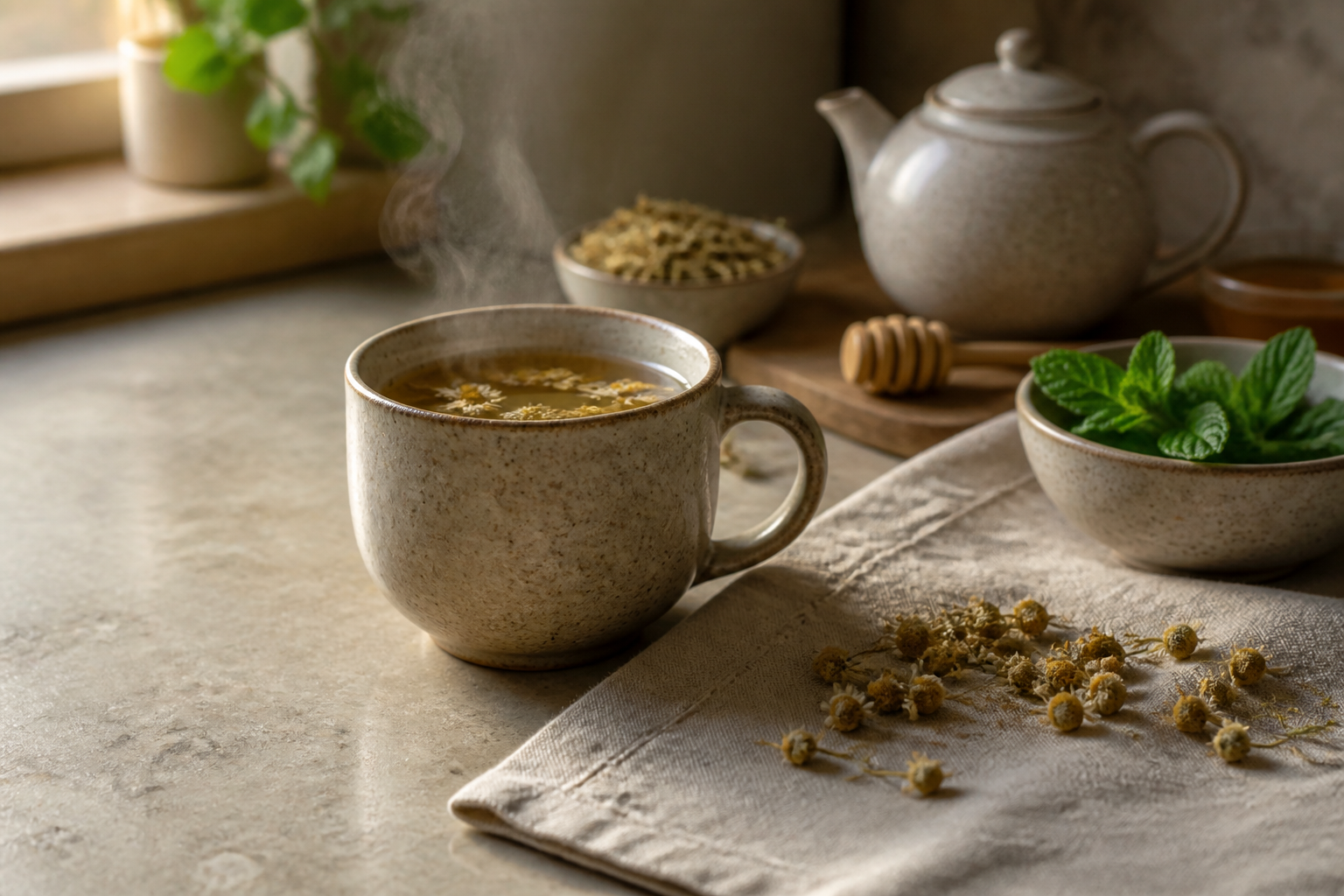
Life is stressful. Work, family, and the rest of the pile can raise blood pressure, wreck sleep, and make a person feel worn down. A cup of herbal tea is one of the older, cheaper pauses people reach for. This expands our September 2022 post without turning a teabag into a psychiatric treatment or an immune tonic.
Warm liquid, a few minutes of sitting still, and a familiar smell do real work for some people. That is mostly ritual and sensory calming. It is not the same as an SSRI, sleep apnea care, or a diagnosis. If stress is wrecking function, talk to a clinician. The kettle can still go on afterward.
Tisane is not “tea” unless it is
Herbal “tea” is usually a tisane: an infusion of leaves, flowers, seeds, fruit, roots, or bark from plants that are not the tea plant (Camellia sinensis). Chamomile, peppermint, rooibos, lemongrass, and raspberry leaf sit in that group. Green tea, jasmine green tea, and Earl Grey are Camellia, with caffeine unless decaf. Fruit blends (hibiscus, “mango passion,” berry mixes) may be hibiscus plus flavor, plus sugar in bottled versions. Read the ingredient list. A calming cup and a caffeinated cup are different tools.
Steep time changes the cup. A bag in barely warm water is flavored water. A covered five-to-ten-minute steep of flowers or leaves is the usual home infusion. Roots and barks often want a longer simmer. More bitter is not always more “medicinal”; it is often just more plant.
What a cup can reasonably do for stress
For mental stress, the honest split is:
- The pause: heat, smell, sitting down. This is available from almost any unsweetened cup, including plain hot water with lemon.
- Mild herbal nervines: chamomile has the best-known bedtime file among common tisanes—small trials for sleep and a long European traditional use for restlessness. It is not a treatment for major depression. People with ragweed-family allergy should be careful.
- Mint and lemon balm: peppermint is better documented for dyspepsia than for mood. Lemon balm has a modest calming folklore and some small study signals. Neither is a panic-attack drug.
- Camellia teas: L-theanine-plus-caffeine in green tea can feel “calm alert” to some people and jittery to others. Earl Grey is black tea plus bergamot scent, not a lavender sedative.
Hibiscus and bright fruit tisanes are tart and refreshing, including iced in summer. They are not “energizing extracts.” Hibiscus can lower blood pressure in some trials; if you already take antihypertensives, that is a clinician conversation, not a reason to chug gallons.
Ashwagandha is a root extract story for stress scores, not a supermarket teabag. Do not confuse a latte powder with chamomile. Kava has a stronger anxiolytic file and a liver-warning file; it does not belong in a casual “herbal tea for stress” list.
Popular herbal teas, without the miracle labels
The original post listed a stack of benefits for each plant. Some of those lines were folk pharmacy, some were overstated, and a few (fertility, miscarriage, “eternal youth”) do not belong on a tea aisle card. A tighter read:
- Chamomile: traditional mild sedative and bitter. Evidence is modest for sleep. Safety is mainly allergy (Asteraceae) and rare interactions chatter. See the chamomile monograph.
- Peppermint: digestion and IBS-type discomfort in enteric-coated oil trials; a leaf tea is a gentler, different product. Can worsen reflux in some people.
- Rooibos: a caffeine-free South African infusion with a pleasant taste and antioxidant chemistry in the cup. “Natural antihistamine” is a stretch as a medical claim.
- Lemongrass: aromatic culinary tisane; digestion folklore is common. It is not a fever or arthritis medicine in a mug.
- Raspberry leaf: a traditional late-pregnancy uterine tonic in midwifery culture. It is not a proven way to prevent miscarriage, and pregnancy is not a DIY herb project. Talk to the obstetric clinician before using it. “Detox” is a marketing word.
- Echinacea: cold-season folklore. Species, plant part, and extract are not interchangeable, and tea is not the European expressed-juice product. See the echinacea monograph before treating a winter mug as prevention.
- Damiana: a Mexican folk aromatic with aphrodisiac lore. Skip “eternal youth,” sperm-count protocols, and egg-strengthening claims. The evidence is thin; the slogan is not.
How to brew without turning it into a protocol
Use a labeled teabag or a teaspoon of dried herb in a cup of just-off-boil water, covered, for several minutes. Taste. If you add honey, you have added sugar. If the bag is a “stress complex” with seven plants plus caffeine, you no longer know which thing you drank.
Daily cups of culinary herbs (mint, lemongrass, rooibos, chamomile in people who tolerate it) are food-like exposures. Medicinal doses, pregnancy, warfarin, lithium, and sedative stacking are clinic questions. For specific health problems and amounts, consult a professional—the original post had that right.
Frequently asked questions
Will herbal tea lower my stress hormones?
A calmer hour can lower how stressed you feel. That is not the same as a cortisol-detox. Treat the cup as a habit, not a lab result.
Is green tea an herbal tea for stress?
Green tea is Camellia, with caffeine. It can be part of a routine. It is a different plant from chamomile. If caffeine wrecks your sleep, it is a poor evening “stress remedy.”
Can children drink these?
A weak culinary mint or rooibos is a different decision from a medicinal chamomile-kava-ashwagandha blend. Keep the strong stuff off the kids’ menu unless a pediatric clinician agrees.