
Monograph
Olive Leaf
Olea europaea
Updated October 12, 2026
Key points
-
01
Leaf is not olive oil
The leaf is far richer in oleuropein than olive oil. The EU’s olive polyphenol health claim applies only to olive oil, not to leaf extracts or capsules.
-
02
EMA: traditional water-retention use
EMA accepts olive leaf only to promote water elimination in mild water retention, after a doctor excludes serious causes. It declined a blood pressure use.
-
03
Blood pressure: small, sponsored trials
Trials and meta-analyses suggest systolic pressure may fall by a few mmHg, but studies are short, mostly industry-linked, and use different extracts.
-
04
Blood sugar and colds unproven
EFSA rejected a glucose claim, meta-analyses show no blood sugar effect, and the only cold trial found no fewer illnesses in 32 athletes.
-
05
Check with your prescriber
It may add to blood pressure and diabetes medicines. Avoid it in pregnancy, breastfeeding, and under 18, and take care with olive pollen allergy.
Olive leaf is the leathery, silver-backed leaf of Olea europaea, the evergreen tree that gives us olives and olive oil. The leaves are not a food: they are bitter, and they are sold dried for tea, powdered in capsules, or concentrated into olive leaf extract, a popular supplement. Their signature compound is oleuropein, a bitter polyphenol that makes up roughly 5 to 9% of the dried leaf and is broken down in the body to hydroxytyrosol. Olive oil contains the same family of compounds in much smaller amounts, and the difference matters. The European Union’s authorized health claim for “olive oil polyphenols,” about protecting blood fats from oxidation, applies only to olive oil that supplies at least 5 mg of hydroxytyrosol and related compounds in a daily 20 g, not to leaf extracts. The European Medicines Agency (EMA) accepts olive leaf only as a traditional remedy “to promote the renal elimination of water, in mild cases of water retention,” after a doctor has excluded serious causes, and it deliberately declined a heart or blood pressure use.
Blood pressure is the main reason people take it, and the evidence is real but modest. In the best-known trial, Susalit and colleagues (Phytomedicine 2011) gave people with stage 1 hypertension 500 mg of a branded extract twice daily or the drug captopril; after eight weeks, systolic pressure had fallen by 11.5 mmHg on the extract and 13.7 mmHg on captopril, but there was no placebo group and the companies behind both products supported the study. A crossover trial in 60 men with borderline readings, half-funded by the extract’s maker, found 24-hour systolic pressure about 3 mmHg lower than on a control, while a Dutch trial in 77 adults found no change. A 2022 meta-analysis of 12 trials estimated a fall in systolic pressure of about 4 mmHg. For blood sugar, a manufacturer-supported trial in 46 overweight men found better insulin sensitivity, but the European Food Safety Authority (EFSA) rejected a glucose claim because the result had not been replicated, and pooled analyses show no effect on blood sugar markers. For colds, a trial in 32 school athletes found no fewer illnesses, though sick days were fewer.
In trials lasting up to about three months, olive leaf extract was generally well tolerated; reported complaints include stomach ache, headache, and dizziness. EMA lists no known side effects but does not recommend use under 18, in pregnancy, or while breastfeeding, and rules out the tea for people told to limit fluids because of severe heart or kidney disease. Memorial Sloan Kettering Cancer Center (MSKCC) advises against combining it with blood pressure or diabetes medicines because it may add to their effects. Olive tree pollen is a major cause of hay fever and asthma around the Mediterranean. Claims that olive leaf triggers a cleansing “die-off” reaction have no clinical support. Nothing here is medical advice. High blood pressure, diabetes, and new swelling of the legs or ankles need a medical diagnosis, and anyone taking prescription medicines should talk to their prescriber before adding olive leaf, never instead of their treatment.
In this monograph
01 The plant
Botanical profile
Olea europaea L. was named by Linnaeus in Species Plantarum in 1753 and is the accepted name in Kew’s Plants of the World Online (POWO), which places it in the olive family, Oleaceae. Liccardi and colleagues (International Archives of Allergy and Immunology 1996) list its relatives as ash (Fraxinus), privet (Ligustrum), and Phillyrea, along with forsythia, jasmine, and lilac (Syringa). POWO gives a native range from Africa and the Mediterranean to south-central China and describes a shrub or tree of the subtropical biome used for food, fuel, animal fodder, and medicine. It accepts seven subspecies: europaea, africana, cerasiformis, cuspidata, guanchica, laperrinei, and maroccana. A note in POWO drawn from the Flora of Somalia explains that subsp. europaea, with larger edible fruits and a thick fleshy pulp, is the cultivated olive, while laperrinei is the wild olive of the Saharan mountains and cerasiformis that of the Macaronesian islands; subsp. cuspidata ranges from the Arabian Peninsula to Yunnan in China. EMA’s assessment report adds that the cultivated tree is grown in similar climates far beyond the Mediterranean, including the Americas.
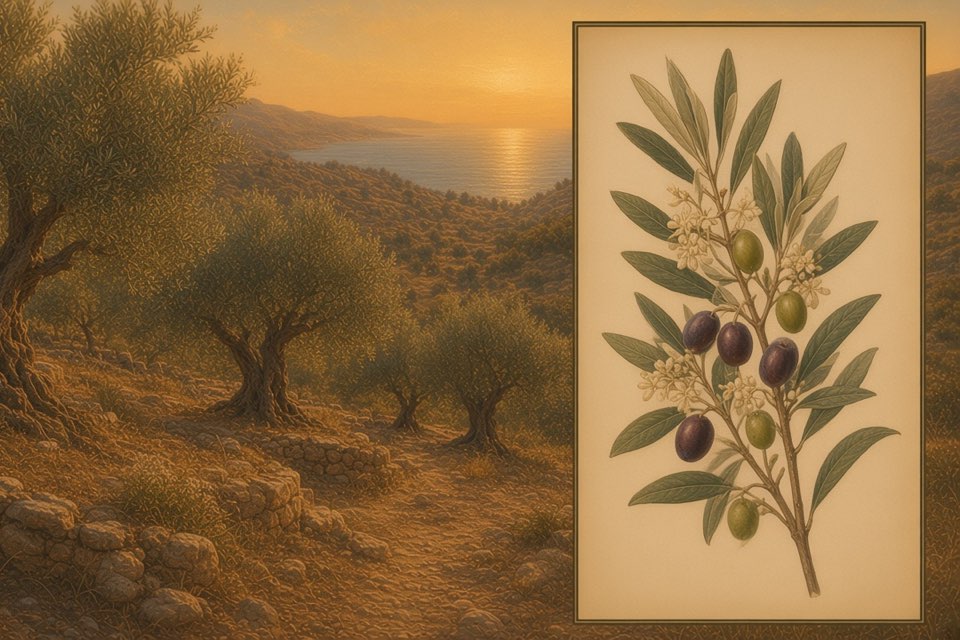
EMA’s assessment report describes an evergreen tree about 6 to 9 m tall with narrow, opposite, lance-shaped leaves that have smooth edges and pointed tips, gray-green above and paler beneath, where fine white scale-like hairs give the leaf its silvery sheen. The European Pharmacopoeia defines the medicinal leaf as simple, thick, and leathery, 30 to 50 mm long and 10 to 15 mm wide, with a small sharp point at the tip, smooth and shiny above and paler and hairy below. Under the microscope, the powder shows many shield-shaped hairs and long, thick-walled stone cells, which help analysts confirm its identity. The small white flowers grow in branched clusters, and the fruit is a drupe, a single-stoned fruit like a cherry. Olive pollen travels on the wind; Liccardi and colleagues note that the olive pollen season in the Mediterranean runs from May to the end of June. Leaves for medicine are harvested year-round from cultivated trees and dried in the shade, and they taste bitter.
The leaf’s chemistry centers on secoiridoids, bitter compounds typical of the olive family. The main one is oleuropein (C25H32O13), discovered in 1908 by Bourquelot and Vintilesco and shown by Panizzi and colleagues in 1960 to be a sugar-bound ester of elenolic acid and hydroxytyrosol. EMA’s assessment report cites 60 to 90 mg of oleuropein per gram of dried leaf, and the European Pharmacopoeia requires at least 5%. Relatives include ligstroside, which carries tyrosol in place of hydroxytyrosol, oleuroside, and oleoside derivatives. The leaf also contains flavonoids (luteolin, apigenin, kaempferol, and chrysoeriol), triterpenes such as oleanolic and maslinic acid, phenolic acids including caffeic and ferulic acid, and coumarins. EMA notes that oleuropein is plentiful in the leaves but present only in low amounts in olive oil, where it contributes bitterness and pungency, and that it is the bitter material removed when table olives are cured. As olives ripen, enzymes break oleuropein down, so its level in the fruit falls.
02 Lineage
History
The olive is one of the oldest crops of the Mediterranean. Besnard and colleagues (Proceedings of the Royal Society B 2013) profiled the plastid DNA of 1,263 wild olives and 534 cultivated ones and found three long-term refuges for wild trees, in the Near East including Cyprus, the Aegean, and around the Strait of Gibraltar. Their data place the first domestication in the northern Levant, followed by spread across the Mediterranean basin alongside the expansion of its civilizations. The leaves entered folk medicine across the region. EMA’s assessment report, drawing largely on a 2007 compilation by Khan and colleagues, records leaf infusions taken for high blood pressure in Spain, Greece, Italy, Bulgaria, Madeira, and Tunisia; for diabetes in the Canary Islands, Spain, Mexico, and the former Yugoslavia; for stomach and intestinal complaints in Morocco; and for diarrhea and respiratory and urinary infections in Argentina. Italians applied the fresh leaf to wounds, and in Kenya the twigs of the African subspecies serve as chewing sticks.
The leaf’s first formal medical role was as a fever remedy. EMA’s assessment report recounts that Spanish physicians in the early nineteenth century sometimes prescribed olive leaves as a febrifuge, that French medical officers (officiers de santé) used them for intermittent fevers during the war in Spain of 1808 to 1813, and that the practice became known in England for Britons returning sick from the tropical colonies. In 1854 the Pharmaceutical Journal published a report by Daniel Hanbury describing an olive leaf tincture for fever and malaria, and the bitter principle he suspected was later isolated and named oleuropein. Laboratory interest grew in the twentieth century: EMA records Italian work in the 1960s reporting that oleuropein lowered blood pressure in animals, and Bulgarian studies by Petkov and Manolov (1972) describing effects on blood pressure, coronary blood flow, and heart rhythm in animals. These animal findings, not human trials, shaped the leaf’s modern reputation as a heart herb.
Olive leaf became a licensed medicine in parts of Europe. EMA lists powdered leaf capsules sold in France since 1980 “to promote urinary and digestive elimination functions,” leaf products in Spain since 1986 for water excretion and cardiovascular support, and German ethanol extracts marketed from 1976 until 2011 “to support the cardiovascular system,” sometimes combined with rauwolfia, veratrum, or mistletoe. Germany’s Commission E nonetheless issued a negative monograph. When EMA’s herbal committee wrote its monograph, adopted in 2017, it accepted only the water-retention use, excluding the German extracts because a heart indication is unsuitable for self-medication. A 2025 periodic review screened 238 new references and found none that justified a change. Meanwhile, olive leaf extract became a mass-market supplement. In the New Zealand Medical Journal in 2016, the toxicologist Ian Shaw listed claims made for it, including anti-aging, immune stimulation, blood pressure and blood sugar control, and use as an antibiotic, and judged the supporting evidence scant and sometimes contradictory.
03 Chemistry
Active compounds and how it works
EMA concludes that olive leaf’s mechanism of action “cannot be considered clarified” and that the body probably absorbs its phenolic compounds poorly and variably. Oleuropein can be split into hydroxytyrosol, elenolic acid, and glucose, and hydroxytyrosol is the form that mostly reaches the blood. De Bock and colleagues (Molecular Nutrition and Food Research 2013) gave single doses of a commercial extract to nine volunteers and found that the main compounds in blood and urine were hydroxytyrosol bound to sulfate or glucuronic acid, the body’s usual way of preparing compounds for excretion. Liquid extract produced higher oleuropein peaks than capsules, men absorbed more hydroxytyrosol than women, all the conjugated hydroxytyrosol was cleared in urine within eight hours, and individuals varied widely. That variation is one possible reason trial results differ.
Most of the blood pressure mechanism comes from animals and isolated tissues. In rats given the drug L-NAME, which raises blood pressure by blocking nitric oxide, Khayyal and colleagues (2002, cited by EMA) found that the extract later tested by Susalit prevented the rise in a dose-dependent way, with the best effect at 100 mg per kg. Leaf extracts relaxed isolated rat arteries whether or not their inner lining was intact (Zarzuelo and colleagues 1991), an extract blocked L-type calcium channels in rat heart cells, as some blood pressure drugs do (Scheffler and colleagues 2008), and a related secoiridoid, oleacein, inhibited angiotensin-converting enzyme (ACE), the target of drugs such as captopril, in laboratory tests (Hansen and colleagues 1996). In people, Lockyer and colleagues (British Journal of Nutrition 2015) gave 18 healthy volunteers a single dose providing 51 mg of oleuropein and 10 mg of hydroxytyrosol; over the next hours, a measure of arterial stiffness fell compared with a control, and their blood produced less of the inflammatory messenger interleukin-8 when stimulated in the laboratory. That is a short-term signal, not proof of lasting benefit.
For blood sugar, Wainstein and colleagues (Journal of Medical Food 2012) found that an olive leaf extract reduced starch digestion and absorption in segments of rat intestine, and MSKCC summarizes older animal work suggesting that leaf extracts boost glucose-triggered insulin release and glucose uptake into tissues, with stronger effects from leaves picked in winter. EMA notes that such effects appeared only at high doses in animals. Laboratory studies cited by MSKCC show that olive leaf extracts inhibit bacteria such as Escherichia coli, Staphylococcus aureus, Pseudomonas aeruginosa, and Klebsiella pneumoniae, along with Candida yeasts and skin fungi, in the test tube. Concentrations in a dish say little about what a capsule does inside the body, where oleuropein is quickly broken down and cleared. Diuretic effects have been seen in rats given leaf extracts, but there is no modern human study explaining how, or whether, olive leaf increases urine flow.
04 In practice
Common uses
High blood pressure is the use with the most human research, and nearly all of it tests branded extracts. Susalit and colleagues (Phytomedicine 2011) enrolled 232 Indonesian adults with stage 1 hypertension, put them on diet alone for four weeks, then randomized those still hypertensive to 500 mg of the extract EFLA 943 twice daily or captopril 12.5 to 25 mg twice daily for eight weeks. Among the 148 analyzed, systolic pressure fell by 11.5 mmHg with the extract and 13.7 mmHg with captopril, a difference that was not statistically significant, and triglycerides fell only with the extract. Without a placebo group, the trial cannot show how much of the fall was due to the extract; it was supported by Frutarom, which made the extract, and Dexa Medica, which supplied both study products. In an earlier open study led by a Frutarom scientist, Perrinjaquet-Moccetti and colleagues (Phytotherapy Research 2008) gave the same extract to 20 pairs of identical twins with borderline readings; average pressure fell from 137/80 to 126/76 mmHg on 1,000 mg a day but not on 500 mg. Lockyer and colleagues (European Journal of Nutrition 2017) ran a double-blind crossover trial in 60 men with prehypertension: six weeks of an extract providing 136 mg of oleuropein a day lowered 24-hour systolic pressure by 3.3 mmHg and diastolic by 2.4 mmHg compared with a control, with small falls in LDL cholesterol and triglycerides. Half the funding came from Comvita, the extract’s maker.
Not every trial agrees, and the overall picture is a modest effect. Stevens and colleagues (European Journal of Nutrition 2021) gave 500 mg of a water-based extract or placebo for eight weeks to 77 overweight adults with mildly raised cholesterol and found no difference in blood pressure, cholesterol, blood sugar, or liver tests; the lead author worked for BioActor, a Dutch company. Wong and colleagues (Nutrients 2014), funded by HealthWorld Ltd., which supplied the products, found no effect on 24-hour pressure in 37 adults from a combination of olive leaf, green coffee bean, and beetroot extracts. The largest trial, by Lamti and colleagues (Journal of Hypertension 2025), gave an extract or placebo for 12 weeks to 621 Tunisians being treated for hypertension; 24-hour systolic pressure fell by about 6.4 mmHg with the extract and 1.5 mmHg with placebo, and one author was affiliated with a Tunisian company, Belpharma Laboratories. Razmpoosh and colleagues (Diabetology and Metabolic Syndrome 2022) pooled 12 trials with 819 participants and found systolic pressure about 3.9 mmHg lower, and Mansouri and colleagues (Nutrition, Metabolism and Cardiovascular Diseases 2026) found lower systolic and diastolic pressure and better blood lipids across olive leaf trials, with certainty ranging from very low to high. Verdict: a small blood pressure–lowering effect is plausible, but trials are short, mostly sponsored, and use different extracts, none has measured heart attacks or strokes, and EMA judged the data insufficient for a well-established use.
Blood sugar results are inconsistent. De Bock and colleagues (PLoS One 2013) gave 46 overweight middle-aged men in New Zealand capsules supplying 51.1 mg of oleuropein and 9.7 mg of hydroxytyrosol a day, or placebo, for 12 weeks each in a crossover design; insulin sensitivity improved by 15% and the insulin-secreting capacity of the pancreas by 28%, though blood pressure, cholesterol, and body composition did not change. Comvita supplied the extract and placebo and half-funded the grant. When Comvita asked EFSA to approve a claim that its extract increases glucose tolerance, EFSA (2014) concluded that the result had not been replicated and the evidence was insufficient. Wainstein and colleagues reported lower HbA1c (a three-month average of blood sugar) and fasting insulin after 14 weeks of 500 mg a day in 79 adults with type 2 diabetes, but a 24-week Australian pilot trial in 31 adults with type 2 diabetes found no difference in HbA1c (Leach and Breakspear, Complementary Therapies in Clinical Practice 2025), and a product combining fenugreek, olive leaf, and bergamot did not improve HbA1c over six months in 100 Greek adults with prediabetes (Florentin and colleagues 2019). Meta-analyses by Razmpoosh and colleagues and by Mansouri and colleagues found no meaningful effect on blood sugar markers. Verdict: not a diabetes treatment.
Colds, flu, and “immune support” are popular marketing claims with little human evidence. EMA’s assessment report quotes a 2005 reference noting that olive leaf is commonly used for colds and flu, yeast infections, and viral infections such as shingles and herpes, and laboratory studies summarized by MSKCC show leaf extracts inhibiting bacteria, yeasts, and fungi in a dish. The one trial on everyday respiratory illness is small: Somerville and colleagues (Nutrients 2019), funded by a University of Auckland seed grant, randomized 32 high school athletes to a daily tablet equivalent to 20 g of leaf (100 mg of oleuropein) or placebo for nine weeks. The number who fell ill did not differ, but the extract group had 28% fewer sick days. In 150 hospitalized COVID-19 patients in Iran, Ahmadpour and colleagues (Explore 2023) reported better vital signs and inflammatory markers after five days of extract than placebo, a single trial that has not been repeated. EFSA rejected olive polyphenol claims about upper respiratory tract health and body defenses as too vague to assess. On the skin, an Iranian trial in 66 people found that a 2% olive leaf cream eased cold sores faster than 5% acyclovir cream (Toulabi and colleagues, Explore 2022), a result that also needs confirming. Verdict: there is no reliable evidence that olive leaf prevents or treats colds or flu.
Water retention is the only use EMA accepts, and it rests on tradition. EMA cites an old controlled study by Capretti and Bonaconza (1949) in which an olive leaf infusion or decoction raised daily urine output by 100 to 145 ml without changing blood sodium, potassium, or chloride, but notes that its details are insufficient. Health Canada likewise allows olive leaf to be labeled as used in herbal medicine as a diuretic, for occasional use only, and as a source of antioxidants; neither regulator permits a blood pressure claim. Swelling of the ankles, legs, or face can be a sign of heart, kidney, or liver disease, which is why EMA requires a doctor to rule out serious causes first. Olive leaf is also sold for cholesterol, where small falls appeared in some trials and not in others, and for cancer, which MSKCC says olive leaf extract has not been shown to prevent or treat in humans. Anyone interested in herbs with blood pressure research may also want to compare the evidence for hibiscus, garlic, and hawthorn.
05 The apothecary
Preparations and traditional use
EMA’s monograph covers whole, cut, and powdered dried leaves for adults, used for two to four weeks. For a decoction, 10 g of fresh or 5 g of dried leaves are simmered in 150 ml of water until 100 ml remains, taken morning and evening. As an infusion, the single dose is 6 to 10 g of dried leaf up to three times a day, a daily total of 6 to 30 g. Powdered leaf is taken as 275 mg three to five times a day or 210 to 400 mg three times a day, a daily total of 630 to 1,375 mg. EMA advises seeing a doctor if symptoms last more than a week or get worse. Health Canada’s monograph allows similar teas, limits extracts to the equivalent of 3.5 g of dried leaf a day, caps standardized extracts at 20.8% oleuropein, and restricts diuretic use to occasional use. The leaf is strongly bitter, so teas are an acquired taste.
The extracts used in trials are not interchangeable. EFLA 943, tested by Susalit and colleagues at 500 mg twice daily, is made with 80% ethanol from 3 to 7 parts of leaf per part of extract, and the batch in that trial contained 19.9% oleuropein. Comvita’s extract in the Lockyer trial supplied 136 mg of oleuropein and 6 mg of hydroxytyrosol a day, while the same company’s capsules in the de Bock trial supplied 51.1 mg and 9.7 mg. The water-based extract in the Stevens trial, given at 500 mg a day, provided 83.5 mg of oleuropein, according to EMA’s 2025 review, and the tablet in the Somerville trial was equivalent to 20 g of leaf. Daily oleuropein doses in trials therefore range several-fold, and benefits seen with one product cannot be assumed for another. De Bock and colleagues also found that a liquid extract produced higher blood levels of oleuropein than capsules. Labels that state the plant part, extraction solvent, drug-to-extract ratio, and oleuropein content per dose make comparison possible; a label saying only “olive leaf extract” does not.
Quality standards exist for the raw material: the European Pharmacopoeia requires dried olive leaf to contain at least 5% oleuropein, and there is a separate pharmacopoeia standard for olive leaf dry extract. Beware of doubling up. In the case reported by Shaw, a woman already taking one olive leaf supplement added a combination hay fever product that also contained olive leaf, reaching the equivalent of 5.5 g of dried leaf a day. Olive oil is a different product with a different claim. Under EU Regulation 432/2012, olive oil may carry the claim that “olive oil polyphenols contribute to the protection of blood lipids from oxidative stress” only if it contains at least 5 mg of hydroxytyrosol and its derivatives per 20 g, the daily amount needed for the effect. EFSA noted that some olive oils are too low in polyphenols to reach that, and its approval concerned oil, not leaf extracts or capsules.
Safety
Before you use olive leaf
06 Caution
Side effects
Trials report few and mostly mild side effects. In the Susalit trial, 99.8% of adverse events were mild and they were similar in the olive leaf and captopril groups. Vertigo (a spinning or dizzy feeling) and cough were the most common complaints in both groups, and the authors judged the cough probably related to captopril; headache, muscle discomfort, and fatigue were less frequent. Laboratory tests showed no harmful effect on liver or kidney function, blood counts, or electrolytes. In the Somerville trial, three athletes taking the extract reported stomach aches and headaches and one reported acne, while one on placebo reported vomiting, stomach ache, rash, and cramps. The Stevens and de Bock trials found no change in liver function, and the ESOLED pilot trial in type 2 diabetes reported no severe or serious adverse events. EMA concludes that the safety profile is acceptable and lists no known side effects, though most trials lasted 12 weeks or less.
Reports from wider use are few. EMA’s 2025 review searched the EU’s EudraVigilance database and found three case reports: two of headache in people taking several other medicines or supplements, and one of hepatitis in a person taking 80 different bodybuilding supplements, one of them olive leaf. EMA concluded that no side effect could be directly linked to olive leaf. Shaw described a 67-year-old woman who became irritable, tearful, and angry after adding a hay fever product containing olive leaf, horseradish, and eyebright to an olive leaf supplement she had taken for two years; the symptoms went away days after she stopped. He suggested hydroxytyrosol, whose structure resembles the brain chemical dopamine, as a possible cause, but a single case with three herbs cannot establish one. EMA’s assessment report also mentions a suggestion in the literature that olive leaf could promote bile flow and so trigger pain in people with gallstones.
Allergy is the other concern. Olive pollen is, in Liccardi and colleagues’ words, one of the most important causes of seasonal respiratory allergy in the Mediterranean, causing eye and nose symptoms and sometimes asthma, and Rodríguez and colleagues (Allergy 2002) found that its main allergen, Ole e 1, affects more than 70% of people sensitized to olive pollen. EMA’s assessment report notes that pollinosis, in the form of rhinitis or bronchial asthma, has been reported, and MSKCC lists olive pollen allergy under adverse reactions. We found no studies testing whether swallowed leaf extracts cause reactions in people with pollen allergy, so caution is sensible. Hives, swelling of the lips or throat, wheezing, or difficulty breathing after any olive leaf product need emergency care.
Some promotional writing warns that olive leaf extract can cause a “die-off” or detox reaction, likened to the Herxheimer reaction seen when antibiotics kill large numbers of bacteria, with headache, fatigue, aches, and diarrhea said to show it is working. We found no clinical study documenting such a reaction with olive leaf. The symptoms described overlap with ordinary side effects such as headache and stomach upset, and olive leaf’s antimicrobial activity has been shown only in the test tube. Advice to push through these symptoms, or to raise the dose, is not supported by evidence. If an olive leaf product makes you feel unwell, the sensible step is to stop it, and to seek medical advice if symptoms are severe or persist.
07 Caution
Contraindications
Pregnancy, breastfeeding, and children: EMA states that safety in pregnancy and breastfeeding has not been established and, in the absence of sufficient data, does not recommend use, and Health Canada advises asking a health care practitioner first. EMA’s monograph notes that genetic toxicity data are inadequate and that reproductive toxicity and cancer-causing potential have not been tested. Olive leaf medicines are not recommended for children and adolescents under 18 because there are no adequate data. Using olive oil in cooking, or eating table olives, is a separate matter and not affected by these cautions.
Heart and kidney disease: EMA contraindicates olive leaf tea in conditions where reduced fluid intake is recommended, such as severe heart or kidney disease, and advises anyone with heart disease or kidney impairment to seek medical advice before use. Health Canada adds caution for people with a kidney disorder or taking other diuretics. People with diagnosed high blood pressure should not replace prescribed treatment with olive leaf; EMA specifically declined a cardiovascular indication because people cannot easily tell mild complaints from serious disease. People who already have low blood pressure, or who feel faint or dizzy on standing, have extra reason for caution because the trials suggest olive leaf can lower pressure.
Other situations: people with diabetes who take insulin or other glucose-lowering drugs should check with their prescriber first, because MSKCC warns of possible added effects, even though trials have not shown a consistent effect on blood sugar. People with known gallstones may wish to avoid it, given the theoretical risk of biliary colic. Anyone allergic to olive leaf, or with significant olive pollen allergy, should avoid concentrated leaf products. There are no specific data on olive leaf and surgery, but because it may affect blood pressure and blood sugar, it is sensible to tell the surgical team and to follow their advice about stopping supplements beforehand.
When not to self-treat: EMA allows olive leaf for water retention only after a doctor has excluded serious conditions, because swollen ankles, legs, or face, unexplained weight gain, or breathlessness can signal heart failure, kidney disease, liver disease, or a blood clot. High blood pressure usually causes no symptoms and needs proper measurement and medical management. Very high readings with chest pain, a severe headache, confusion, weakness, or changes in vision need emergency care. Excessive thirst, frequent urination, or unexplained weight loss can point to diabetes, which needs testing rather than a supplement. Fever with breathlessness, or a cold that keeps getting worse, needs a medical assessment.
08 Caution
Drug and herb interactions
Blood pressure medicines and diuretics: EMA lists no reported interactions, but MSKCC advises against combining olive leaf with blood pressure medicines because it may add to their effect, noting that the clinical relevance is unknown. In the Lamti trial, the extract was taken alongside existing treatment by 621 people with hypertension, and the authors reported no significant adverse events, but those patients were monitored in a study. Health Canada advises asking a practitioner before combining olive leaf with other diuretics. Anyone on blood pressure tablets who wants to try olive leaf should tell their prescriber and check their blood pressure at home, watching for dizziness or light-headedness, particularly on standing.
Diabetes medicines: MSKCC also advises against combining olive leaf with insulin or other blood sugar medicines, based on laboratory and animal findings of glucose-lowering effects whose importance in people is not known. Human trials have not shown a consistent effect, but anyone on insulin or a sulfonylurea (tablets that push the pancreas to release insulin) who starts olive leaf should monitor their glucose more often for a while and know the signs of low blood sugar, such as shakiness, sweating, and confusion. We found no human studies of olive leaf’s effects on the liver enzymes that break down many drugs, so other interactions cannot be ruled out, though none has been reported.
Doubling up: olive leaf is often combined with other ingredients, so read labels. Elkafrawy and colleagues (Phytotherapy Research 2020) tested a hibiscus and olive leaf product against captopril 25 mg twice daily in 134 Egyptians with grade 1 hypertension and found similar falls in blood pressure, which shows such combinations can act on blood pressure in their own right. In a trial of 70 adults funded by its maker, a product combining 1,000 mg of olive leaf extract with 300 mg of potassium a day lowered morning home systolic pressure by 5.4 mmHg, a significantly greater response than placebo (Fladerer-Grollitsch and colleagues, Phytomedicine 2026); added potassium matters for people with kidney disease or taking medicines that raise potassium, so ask a pharmacist. Stacking olive leaf with other herbs taken for blood pressure, such as hibiscus, garlic, or hawthorn, may add up, and taking two olive leaf products at once raises the dose, as in the case reported by Shaw.
09 Questions
Frequently Asked Questions
The best-studied possible benefit is a small fall in blood pressure: pooled trials suggest systolic pressure a few mmHg lower, though most studies were short and industry-supported. Some trials also found small falls in cholesterol and triglycerides. Evidence for blood sugar, colds, immunity, and cancer is weak or absent. The only use accepted by the European Medicines Agency is traditional: helping the kidneys clear water in mild water retention once a doctor has excluded serious causes. Our heart health guide compares olive leaf with other herbs.
Possibly, by a modest amount. An extract matched the drug captopril over eight weeks in an Indonesian trial with no placebo group, and a placebo-controlled trial in 60 men found 24-hour systolic pressure about 3 mmHg lower; other trials found no change. A 2022 meta-analysis of 12 trials estimated about 4 mmHg. Hibiscus and garlic have similar or larger bodies of blood pressure research, and hawthorn is the classic European heart herb. None replaces diagnosed treatment.
Only with your prescriber’s agreement. Memorial Sloan Kettering advises against combining olive leaf with blood pressure medicines because it may add to their effect, and Health Canada advises asking a practitioner before combining it with diuretics. A large Tunisian trial gave the extract alongside existing treatment without significant adverse events, but those patients were monitored. If you try it, check your blood pressure at home and watch for dizziness or light-headedness, especially when standing up. Never stop or reduce prescribed medicine on your own.
In trials of up to about three months, side effects were usually mild: stomach ache, headache, dizziness, and muscle discomfort. Blood tests showed no harm to the liver or kidneys. One case report describes irritability and mood changes in an older woman taking high doses from two products. Olive pollen is a major allergen, so people with olive pollen allergy should be cautious. The European Medicines Agency does not recommend olive leaf in pregnancy, while breastfeeding, or under 18, or as a tea for people on fluid restriction.
There is little human evidence. Olive leaf extracts kill or inhibit microbes in the test tube, but in the only trial on everyday respiratory illness, 32 high school athletes taking olive leaf got sick as often as those on placebo, though they had fewer sick days. EFSA rejected olive polyphenol claims about body defenses as too vague. For colds, elderberry and echinacea have more trials, and our immunity guide compares the options.
No. Both come from Olea europaea, but the leaf is far richer in the bitter polyphenol oleuropein, while olive oil contains smaller amounts of related compounds. The EU allows olive oil with at least 5 mg of hydroxytyrosol and its derivatives per 20 g to claim that its polyphenols help protect blood lipids from oxidative stress. That claim applies only to olive oil. Evidence about extra virgin olive oil and a Mediterranean diet cannot be transferred to leaf extracts, which have their own, smaller body of trials.
Not reliably. A manufacturer-supported trial in 46 overweight men found 15% better insulin sensitivity, and an Israeli trial in 79 people with type 2 diabetes reported lower HbA1c, but a 24-week Australian pilot trial found no difference, and meta-analyses found no meaningful effect on blood sugar markers. EFSA rejected a claim that olive leaf extract improves glucose tolerance. If you take insulin or other diabetes medicines, check with your prescriber first. Our blood sugar guide covers better-studied options.
We found no clinical evidence for it. Some promotional writing claims olive leaf kills so many microbes that headache, fatigue, aches, or diarrhea follow, as a sign it is working. Olive leaf’s antimicrobial effects have been shown only in laboratory dishes, and the symptoms described match ordinary side effects. If an olive leaf product makes you unwell, stop taking it rather than raising the dose, and seek medical advice if symptoms are severe or persist.
10 References
Sources
These references support the history, clinical, and safety claims on this page. They are not an endorsement of any product.
-
Olea europaea L.
Plants of the World Online, Royal Botanic Gardens, Kew, 2026
Accepted name, first published in Species Plantarum (1753); Oleaceae; native range Africa and the Mediterranean to south-central China; shrub or tree of the subtropical biome; seven accepted subspecies.
-
European Union herbal monograph on Olea europaea L., folium
European Medicines Agency (EMA/HMPC/359238/2016), 2017
Traditional use only, to promote renal elimination of water in mild water retention after serious conditions are excluded; decoction, infusion, and powder posology; 2–4 weeks; not under 18 or in pregnancy and lactation; contraindicated with fluid restriction; no interactions reported.
-
Assessment report on Olea europaea L., folium
European Medicines Agency (EMA/HMPC/359236/2016), 2017
Constituents and Ph. Eur. standard (at least 5% oleuropein); folk uses; fever history; French, Spanish, and German products; negative Commission E monograph; animal and human data; reasons for rejecting a cardiovascular indication; safety, pollinosis, and bile-flow caution.
-
Addendum to Assessment report on Olea europaea L., folium
European Medicines Agency (EMA/HMPC/432213/2024), 2025
Periodic review: 238 new references, none triggering revision; Stevens trial details (83.5 mg oleuropein a day); three EudraVigilance reports, none directly linked to olive leaf.
-
Olive Leaf - Olea europaea (natural health product monograph)
Health Canada, Natural and Non-prescription Health Products Directorate, 2025
Permitted claims limited to source of antioxidants and use in herbal medicine as a diuretic; adults only; extract limits of 3.5 g leaf a day and 20.8% oleuropein; cautions for pregnancy, breastfeeding, kidney disorders, and other diuretics.
-
Scientific Opinion on the substantiation of health claims related to polyphenols in olive and protection of LDL particles from oxidative damage, maintenance of normal blood pressure and other claims
EFSA Journal (EFSA Panel on Dietetic Products, Nutrition and Allergies), 2011
Cause and effect established for olive oil polyphenols and LDL protection at 5 mg hydroxytyrosol and derivatives a day; not established for blood pressure (including leaf extract); upper respiratory tract and body defense claims too general.
-
Commission Regulation (EU) No 432/2012 establishing a list of permitted health claims
Official Journal of the European Union (EUR-Lex), 2012
Authorized claim “Olive oil polyphenols contribute to the protection of blood lipids from oxidative stress,” only for olive oil with at least 5 mg hydroxytyrosol and derivatives per 20 g, with a daily intake of 20 g.
-
Scientific Opinion on the substantiation of a health claim related to olive (Olea europaea L.) leaf water extract and increase in glucose tolerance
EFSA Journal (PubMed 42125394), 2014
Application from Comvita; one 12-week study showed improved glucose tolerance but was not replicated and no mechanism was shown; evidence insufficient for the claim.
-
Olive (Olea europaea) leaf extract effective in patients with stage-1 hypertension: comparison with Captopril
Phytomedicine (PubMed 21036583), 2011
Susalit et al.: 232 enrolled, 148 analyzed; EFLA 943 500 mg twice daily versus captopril 12.5–25 mg twice daily for 8 weeks; systolic falls of 11.5 and 13.7 mmHg; no placebo; supported by Dexa Medica and Frutarom.
-
Impact of phenolic-rich olive leaf extract on blood pressure, plasma lipids and inflammatory markers: a randomised controlled trial
European Journal of Nutrition (PubMed 26951205), 2017
Lockyer et al.: 60 prehypertensive men, 6-week crossover; 136 mg oleuropein a day; 24-hour systolic −3.33 and diastolic −2.42 mmHg versus control; lower LDL and triglycerides; 50% funded by Comvita.
-
Olive (Olea europaea L.) leaf polyphenols improve insulin sensitivity in middle-aged overweight men: a randomized, placebo-controlled, crossover trial
PLoS One (PubMed 23516412), 2013
De Bock et al.: 46 men, 12 weeks; 51.1 mg oleuropein and 9.7 mg hydroxytyrosol a day; insulin sensitivity +15%, beta-cell responsiveness +28%; no change in lipids or ambulatory blood pressure; Comvita supplied products and co-funded.
-
The effect of olive leaf extract on cardiovascular health markers: a randomized placebo-controlled clinical trial
European Journal of Nutrition (PubMed 33034707), 2021
Stevens et al.: 77 overweight adults with mildly raised cholesterol, 500 mg a day for 8 weeks; no effect on lipids, oxidized LDL, blood pressure, glucose, insulin, or liver tests; lead author employed by BioActor.
-
Efficacy of olive leaf extracts in controlling blood pressure in hypertensive patients: a double-blind randomized clinical trial
Journal of Hypertension (PubMed 40990594), 2025
Lamti et al.: 621 treated hypertensive patients, 12 weeks; 24-hour systolic change −6.4 mmHg with extract versus −1.5 mmHg with placebo; no significant adverse events; one author affiliated with Belpharma Laboratories.
-
The effects of olive leaf extract on cardiovascular risk factors in the general adult population: a systematic review and meta-analysis of randomized controlled trials
Diabetology and Metabolic Syndrome (PubMed 36271405), 2022
Razmpoosh et al.: 12 studies, 819 participants; systolic −3.86 mmHg and triglycerides −9.51 mg/dl; larger effects in hypertension; no meaningful change in glucose, liver, kidney, or inflammatory markers.
-
A GRADE-assessed systematic review and meta-analysis of randomized controlled trials evaluating the effects of olive leaf or olive pomace supplementation on cardiometabolic and anthropometric health markers
Nutrition, Metabolism and Cardiovascular Diseases (PubMed 42303499), 2026
Mansouri et al.: 30 trials, 1,726 participants; olive leaf improved lipids and lowered systolic and diastolic pressure, TNF-α, and weight; no effect on glycemic markers; certainty very low to high.
-
The Effect of Olive Leaf Extract on Upper Respiratory Illness in High School Athletes: A Randomised Control Trial
Nutrients (PubMed 30744092), 2019
Somerville et al.: 32 athletes, 9 weeks; extract equivalent to 20 g leaf (100 mg oleuropein); no difference in illness incidence, 28% fewer sick days; stomach aches and headaches on extract; university-funded.
-
Olive Leaf
Memorial Sloan Kettering Cancer Center, About Herbs, 2026
Not shown to prevent or treat cancer in humans; laboratory antimicrobial activity; olive pollen allergy; advises against use with blood pressure and diabetes medicines because of possible additive effects.
-
Possible toxicity of olive leaf extract in a dietary supplement
New Zealand Medical Journal (PubMed 27356258), 2016
Shaw: case of a 67-year-old woman with mood changes on two products totaling 5.5 g leaf equivalent a day; lists marketing claims and judges evidence scant; hydroxytyrosol–dopamine hypothesis.