
Monograph
Amla
Phyllanthus emblica
Updated October 10, 2026
Key points
-
01
Sour fruit, tannin chemistry
Amla is the astringent fruit of a South Asian tree. Its tannins and vitamin C drive its antioxidant reputation, though how much vitamin C it holds is disputed.
-
02
Cholesterol signal, low certainty
Meta-analyses of small trials found LDL cholesterol about 15 mg/dL lower than with placebo, but results varied widely and no trial has measured heart attacks.
-
03
One third of triphala
Amla joins haritaki and bibhitaki in triphala, Ayurveda’s classic three-fruit formula, and is the main ingredient of chyawanprash. Formula results are not amla results.
-
04
May slow blood clotting
Small studies found extracts reduced platelet clumping and prolonged bleeding time. Check with a prescriber if you take blood thinners or diabetes drugs, or before surgery.
-
05
Check Ayurvedic product quality
About one in five Ayurvedic medicines bought online contained lead, mercury, or arsenic in a JAMA study. Choose tested products that name Phyllanthus emblica.
Amla is the sour, pale green fruit of Phyllanthus emblica, a deciduous tree of South and Southeast Asia known in English as Indian gooseberry and in Sanskrit as amalaki. The Flora of China calls the ripe fruit very sour, and it is astringent too, which is why it is so often juiced, dried to a powder, pickled, candied, or cooked in sugar syrup as murabba rather than eaten straight from the tree. In Ayurveda, India’s traditional medicine, amla is a rasayana, a rejuvenating tonic, and it anchors two of the system’s best-known preparations. It is one of the three fruits of triphala, alongside haritaki (Terminalia chebula) and bibhitaki (Terminalia bellirica), and it is the main ingredient of chyawanprash, a sweet, sour, and spicy herbal jam made with around 50 herbs. Amla is also famous as a source of vitamin C, although chemists have argued for decades over how much vitamin C the fruit really contains and how much of its antioxidant power comes from its abundant tannins instead.
Modern research has concentrated on heart and metabolic risk markers, mostly using standardized capsule extracts in small trials from India. The broadest pooled analysis, by Brown and colleagues (BMC Complementary Medicine and Therapies 2023), combined nine randomized controlled trials with 535 participants taking 500–1,500 mg a day for two to twelve weeks. Compared with placebo, amla lowered LDL cholesterol by about 15 mg/dL, triglycerides by about 22 mg/dL, and the inflammation marker high-sensitivity C-reactive protein (hsCRP), but it did not change HDL cholesterol or blood pressure. The authors judged every trial to carry some risk of bias, found that results varied widely, and urged caution. Small trials also report better blood vessel function and lower fasting glucose, while a 150-person trial in high blood pressure found no added benefit at all. No trial has measured heart attacks, strokes, or deaths, and several of the extracts tested were supplied by their manufacturers. Triphala has its own small body of research, and those results belong to the three-fruit formula rather than to amla alone.
As a food, amla is eaten widely, and in trials its capsules were generally well tolerated, with occasional indigestion or mild gastritis. Two cautions are pharmacological. In small studies, amla extract reduced platelet clumping and, in ten people with type 2 diabetes, prolonged bleeding and clotting times much as aspirin and clopidogrel did, so people taking blood thinners or facing surgery should speak to their prescriber before using concentrated extracts. And because trials report lower fasting glucose, extracts could add to the effect of diabetes medicines. Product quality is the third concern: Saper and colleagues (JAMA 2008) found lead, mercury, or arsenic in about one in five Ayurvedic medicines bought online, whether they were made in the United States or in India. Nothing here is medical advice; high cholesterol, high blood pressure, and diabetes need proper diagnosis and treatment, and amla should never replace a statin, a blood pressure medicine, or a diabetes medicine that has been prescribed for you.
Featured in
Herbs for Heartburn and Acid RefluxIngredient in
TriphalaIn this monograph
01 The plant
Botanical profile
Phyllanthus emblica L. was named by Linnaeus in Species Plantarum in 1753. Kew’s Plants of the World Online (POWO) accepts it in the family Phyllanthaceae, order Malpighiales, although the Flora of China and many research papers still place it in the spurge family, Euphorbiaceae. POWO lists 13 synonyms. The most important is Emblica officinalis Gaertn., published in 1790 and still used in many clinical trials and Ayurvedic texts; others include Cicca emblica (L.) Kurz and Diasperus emblica (L.) Kuntze. POWO gives the native range as Pakistan, India, the western and eastern Himalaya, Assam, Bangladesh, and Sri Lanka, east through Myanmar, Thailand, Laos, Cambodia, and Vietnam to south-central and southeastern China, Hainan, and Taiwan, and south to the Malay Peninsula, Sumatra, Java, Borneo, and the Lesser Sunda Islands. It has been introduced to the Andaman Islands, Mauritius, Cuba, Puerto Rico, Trinidad and Tobago, and the Windward Islands. Brown and colleagues give its common names as Indian gooseberry in English, amla in Hindi, and amalaki in Sanskrit, and the Flora of China records the Chinese name yu gan zi.
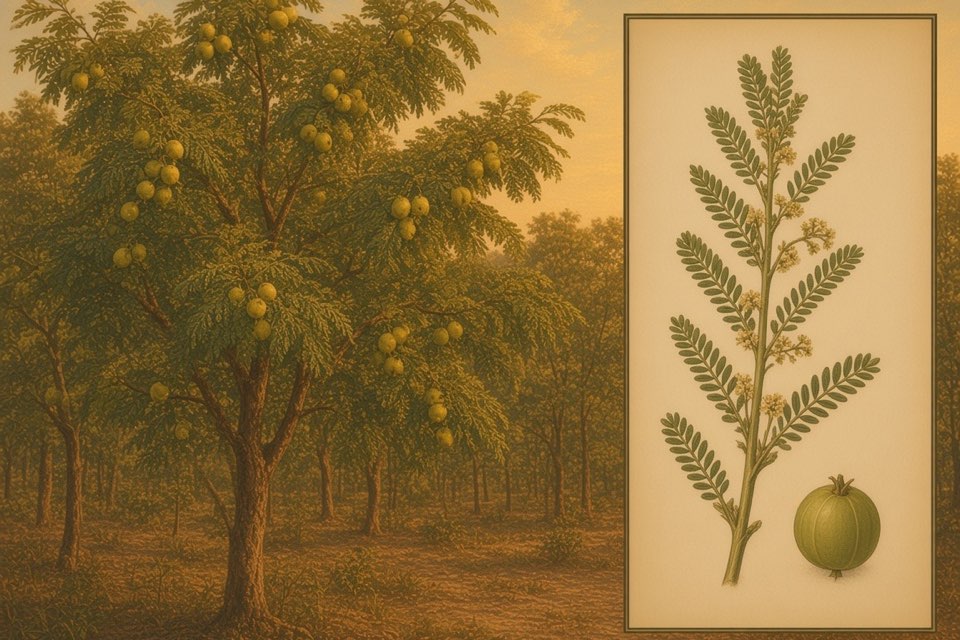
The Flora of China describes a monoecious, deciduous tree usually 3–8 m tall but occasionally 23 m, with a trunk up to 50 cm across and brownish bark; Brown’s review gives a height of 5–25 m. The leaves are small and narrow, 8–23 mm long and 1.5–6 mm wide, set in two flat rows along slender leafy shoots, and at the start of the growing season these shoots often flower heavily while their leaves are still poorly developed. The tiny flowers sit in clusters of many male flowers, each with six yellow sepals and three stamens fused into a column, sometimes joined by one or two larger female flowers. The fruit is a round drupe with fleshy pale green or yellowish-white flesh around a hard stone holding reddish seeds. The Flora of China gives wild fruits as 1–1.3 cm across, while Brown describes fruits 2–5 cm across that turn from pale green to yellow as they ripen. Cultivated trees bear much bigger fruit: Sharma and colleagues (Biomolecules 2019) note that 500 fresh fruits can weigh anything from 2.5 kg to more than 25 kg. In China the tree grows in dry, open forests, scrub, and village groves from 200 to 2,300 m, flowering from April to June and fruiting from July to September.
The fruit is mostly water, about 81–88 g per 100 g in the analyses compiled by Gul and colleagues (Antioxidants 2022), and its dry matter is mainly carbohydrate and fiber. What sets it apart is its polyphenols. Gul’s review lists a long series of ellagitannins, a class of hydrolysable tannins, including chebulinic acid, chebulagic acid, corilagin, geraniin, pedunculagin, punigluconin, emblicanin A and B, and phyllanemblinins A–F, together with gallic acid and ellagic acid, and Variya and colleagues (Pharmacological Research 2016) add flavonoids such as rutin and quercetin. Vitamin C is the other headline constituent, but published amounts vary several-fold. Gul’s review cites 193 to 720 mg per 100 g across varieties, the Flora of China says the mature fruit contains 1–1.8% vitamin C, and Scartezzini and colleagues (Journal of Ethnopharmacology 2006) measured about 0.4% by weight. Some of that spread reflects variety and processing, and some reflects the analytical method, as the next section explains. Amla shares gallic, ellagic, and chebulinic acids with the two Terminalia fruits of triphala; Peterson and colleagues name tannins and these three acids as the formula’s major constituents.
02 Lineage
History
Amla runs deep in Indian medicine. Guruprasad and colleagues (Journal of Ayurveda and Integrative Medicine 2017) describe it as the herb most often mentioned in the Charaka Samhita, a foundational Ayurvedic text, where it is recommended as a rejuvenating herb. They explain that rasayana preparations were said to increase longevity, memory, comprehension, health, youthfulness, and complexion, and that Amalaki Rasayana, a preparation of the fruit, was credited with promoting longevity, preventing ill health, holding back the signs of age, and increasing fertility. Peterson and colleagues (Journal of Alternative and Complementary Medicine 2017) explain that triphala means three fruits in Sanskrit and that it has been used in India for over 1,000 years according to the Charaka Samhita and the Sushruta Samhita. Charak wrote that a daily Triphala Rasayana taken with honey and ghee could let a person live a hundred years free of old age and disease, and Sushrut recommended the formula for ulcers and wounds. The fruit’s reputation reached beyond Ayurveda: Akhbari and colleagues (Journal of Ethnopharmacology 2024) note that Traditional Persian Medicine emphasized amla as a hair tonic, taken by mouth and applied to the scalp, and Prananda and colleagues (Frontiers in Pharmacology 2023) record that its fixed oil was used in traditional formulations to encourage hair growth and pigmentation.
Chyawanprash carries amla’s best-known legend. Sharma and colleagues (Biomolecules 2019) explain that the name comes from the sage Chyawan and that the Mahabharata and the Puranas tell how the twin Ashwini Kumar brothers, physicians to the gods, created the preparation to rejuvenate him. The earliest recorded recipe is in the Charaka Samhita. In the classical method, whole amla fruits are boiled in a cloth bundle suspended in a decoction of dozens of herbs, the pulp is separated and fried in ghee and sesame oil until it turns brownish-red, and it is then cooked in the sugared decoction until thick, before honey and spice powders such as clove, cardamom, and cinnamon are stirred in. Amla makes up about 35% of the product, and the Ayurvedic Formulary of India specifies 500 fresh fruits, weighing 2.5 kg, with 2.4 kg of sugar. Eight classical ingredients, a group of Himalayan herbs known as the Ashtavarga, are not commercially available, so manufacturers substitute other herbs, and a 2021 commentary in the Journal of Ayurveda and Integrative Medicine criticized sugar-free versions, cookies, and fruit flavors as departures from the classical recipe.
Outside the pharmacy, amla is everyday food. The Flora of China notes that the fruits are eaten raw, sweetened, or preserved, that the seeds, roots, and leaves are also used as medicine, and that dried leaves sometimes fill pillows. A survey of Indian amla products by Choudhary (Ancient Science of Life 2011) lists dried fruit, murabba, pickle, candy, confectionery, sauce, powder, chutney, tablets, juice, syrup, and hair oil. Scientists took an early interest in its vitamin C: in 1936, Damodaran and Nair described in the Biochemical Journal a tannin from the fruit with a protective action on ascorbic acid. In recent decades, ingredient companies have developed standardized extracts for the global supplement market, among them Capros from Natreon, an extract sold as TRI-LOW by Arjuna Natural, and an extract standardized to β-glucogallin from Sabinsa, each tested in trials that the company supplied, sponsored, or ran. Chyawanprash, meanwhile, has become one of the best-selling health supplements of Ayurveda, according to a 2022 review by Sharma and colleagues that nonetheless titled its verdict “Golden Ager Chyawanprash with Meager Evidential Base from Human Clinical Trials.”
03 Chemistry
Active compounds and how it works
Amla’s antioxidant chemistry is real, but the details are contested. Extracts of the fruit are strongly antioxidant in laboratory tests, more so than ascorbic acid itself according to Majeed and colleagues, and the argument is over which molecules deserve the credit. One view attributes much of the effect to small hydrolysable tannins, especially emblicanin A and B, punigluconin, and pedunculagin; Natreon’s Capros extract, used in several trials, is standardized by HPLC to at least 60% of these low-molecular-weight tannins and no more than 4% gallic acid (Usharani and colleagues 2013). Majeed and colleagues at Sami Labs (Journal of Agricultural and Food Chemistry 2009) challenged both halves of the story. They found no evidence of emblicanins A and B in the extract they analyzed, and they questioned the high vitamin C figures reported earlier, because mucic acid gallates elute alongside ascorbic acid in older HPLC methods and may have been counted as vitamin C. Scartezzini and colleagues (2006) did find ascorbic acid, about 0.4% by weight in the fruit and 1.28% after svaras bhavana, an Ayurvedic process in which the fruit is treated with its own juice, and estimated that vitamin C accounted for roughly 45–70% of the antioxidant activity. The emblicanin standard and the critique of it both come from companies that sell competing amla extracts, and the question is not settled.
For cholesterol and blood vessels, proposed mechanisms come mainly from animal and laboratory work. Acampado and colleagues (Acta Medica Philippina 2023) summarize evidence that flavonoids from the fruit lower blood and tissue lipids by inhibiting HMG-CoA reductase in the liver, the same enzyme that statins block. Upadya and colleagues reported that their extract lowered cholesterol without lowering coenzyme Q10, which statins can deplete, but they did not test a statin, so the comparison is indirect. In human trials of Capros, Usharani and colleagues measured endothelial function, the ability of the artery lining to relax, through the change in a pulse-wave reflection index after a salbutamol challenge, and reported improvement together with higher nitric oxide and glutathione and lower malondialdehyde, a marker of oxidative damage, and lower hsCRP. In a 12-person crossover study, the same group found that two weeks of extract blunted the stiffening of the arteries normally seen when a hand is plunged into ice water (Fatima and colleagues, Pharmacognosy Research 2014). These are surrogate markers: plausible signs that amla affects processes linked to atherosclerosis, not evidence that it prevents heart disease.
Amla also acts on platelets, the cell fragments that start blood clots. In an open-label crossover study of ten people with type 2 diabetes, Fatima and colleagues (Phytomedicine 2014) found that 500 mg of extract, taken as a single dose or twice daily for ten days, reduced platelet aggregation from baseline, as did 75 mg of clopidogrel or aspirin, and that bleeding and clotting times lengthened with every treatment and combination. Khanna and colleagues (Journal of Medicinal Food 2015) saw less platelet aggregation in response to ADP and collagen after 12 weeks of Capros in overweight American adults. How amla might lower blood glucose in people has not been established, although Setayesh and colleagues note its purported hypoglycemic properties alongside anti-inflammatory and lipid-lowering ones. Triphala adds another layer. Peterson’s review describes how its polyphenols are transformed by gut bacteria, promote Bifidobacteria and Lactobacillus while inhibiting less desirable microbes, and give rise to anti-inflammatory compounds, findings that apply to the three-fruit formula. Memorial Sloan Kettering Cancer Center (MSKCC) adds that triphala inhibits CYP3A4 and CYP2D6, two liver enzymes that break down many medicines.
04 In practice
Common uses
Cholesterol and triglycerides are amla’s best-studied modern use, and three meta-analyses published in 2023 point in the same direction. Brown and colleagues pooled nine randomized trials (535 participants) of fruit powder or extract at 500–1,500 mg a day for 14 to 84 days. Compared with placebo, LDL cholesterol fell by an average of 15.1 mg/dL (95% confidence interval 4.7 to 25.4 mg/dL), VLDL cholesterol by 5.4 mg/dL, triglycerides by 22.4 mg/dL, and hsCRP by 1.7 mg/L, with no significant change in HDL cholesterol or blood pressure. Heterogeneity was high, and the prediction interval for LDL ran from a 48 mg/dL fall to an 18 mg/dL rise, meaning a future trial could plausibly find no benefit. Acampado and colleagues, pooling four trials of aqueous extract in 227 adults with dyslipidemia, found total cholesterol about 21 mg/dL and LDL about 25 mg/dL lower and HDL about 5 mg/dL higher after 12 weeks, with no significant effect on triglycerides, and rated the certainty of the evidence as low. Setayesh and colleagues (Diabetes and Metabolic Syndrome 2023), with five trials, reported significant falls in LDL, total cholesterol, triglycerides, fasting glucose, and CRP and a rise in HDL.
The largest single placebo-controlled lipid trial is by Upadya and colleagues (BMC Complementary and Alternative Medicine 2019). Ninety-eight adults with dyslipidemia at several Indian centers took 500 mg of an extract of whole fresh fruit, seeds included (TRI-LOW), or placebo twice daily for 12 weeks. Total cholesterol fell from about 232 to 177 mg/dL on amla and from 226 to 213 mg/dL on placebo; LDL from 140 to 112 mg/dL versus 132 to 126 mg/dL; and triglycerides from 261 to 172 mg/dL versus 248 to 210 mg/dL, all significant differences between the groups, while HDL did not differ. The extract’s maker sponsored the study, which was registered retrospectively. Gopa and colleagues (Indian Journal of Pharmacology 2012) gave 40 people with high cholesterol 500 mg of amla daily and 20 others 20 mg of simvastatin for 42 days and reported significant improvements in both groups, but with no placebo group the study cannot show that amla works as well as a statin. In the United States, Khanna and colleagues gave Capros 500 mg twice daily for 12 weeks to overweight adults and compared the results with two baseline visits rather than a placebo; calculated LDL, the cholesterol-to-HDL ratio, and hsCRP fell, but each analysis involved only 9 to 15 people.
Results for blood vessel function and blood pressure are mixed. In Usharani and colleagues’ 2013 trial in type 2 diabetes (Diabetes, Metabolic Syndrome and Obesity), 80 patients completed 12 weeks of Capros at 250 mg or 500 mg twice daily, atorvastatin 10 mg, or placebo. Both amla doses improved the reflection index about as much as atorvastatin, and lipids and HbA1c improved compared with placebo. The same group’s 2019 trial in 59 people with metabolic syndrome found similar marker changes, with LDL down about 22% on the higher dose. Both trials used capsules and biomarker kits supplied by the manufacturer. For blood pressure, Ghaffari and colleagues (Evidence-Based Complementary and Alternative Medicine 2020) added 500 mg of fruit powder three times daily to the medicines of people with uncontrolled hypertension; among the 81 who finished eight weeks, systolic pressure fell 15.6% on amla against 6.3% on placebo. But Shanmugarajan and colleagues (Phytotherapy Research 2021), in a larger trial of 150 patients with essential hypertension, found that 500 mg of aqueous extract twice daily for 12 weeks added nothing to blood pressure, lipids, HbA1c, arterial stiffness, or hsCRP. Brown’s pooled analysis found no overall effect on blood pressure.
Blood sugar evidence is thinner. Setayesh’s meta-analysis reported lower fasting glucose across five trials lasting 3 to 12 weeks in adults with an average age of 40 to 58, but its abstract reports no result for HbA1c, the measure that matters most in diabetes care. Akhtar and colleagues (International Journal of Food Sciences and Nutrition 2011) reported lower fasting and two-hour glucose after 21 days of 1–3 g of fruit powder a day in healthy and diabetic volunteers, compared with their own starting values. In an open-label study by Sabinsa scientists (Food and Function 2022), people newly diagnosed with type 2 diabetes and abnormal blood lipids took 1 g or 2 g a day of a β-glucogallin-standardized extract or 500 mg of metformin for 90 days, and the 2 g dose lowered glucose and HbA1c more than that low metformin dose. In Upadya’s lipid trial, only eight people on amla had raised fasting glucose, too few to judge. Amla is not a diabetes treatment, and for now these findings matter mainly as a reason to watch for additive effects with diabetes medicines.
Other uses rest on single trials. In 68 adults with non-erosive reflux disease, the form of reflux in which the esophagus shows no visible erosion on endoscopy, two 500 mg amla tablets twice daily after meals for four weeks reduced the frequency and severity of heartburn and regurgitation more than placebo, although symptoms improved in both groups (Karkon Varnosfaderani and colleagues, Journal of Integrative Medicine 2018). In 60 women with female-pattern hair loss, 10 ml of amla syrup three times daily for 12 weeks increased the ratio of growing to resting hairs compared with placebo (Akhbari and colleagues 2024). Triphala’s evidence is separate. Phimarn and colleagues (Journal of Evidence-Based Integrative Medicine 2021) reviewed 12 randomized trials with 749 patients and concluded that triphala might improve lipids, weight in people with obesity, and fasting glucose in people with diabetes under certain conditions, but called for large, well-designed trials. MSKCC notes that several studies suggest triphala mouthwash may reduce dental plaque, but that it is not clear whether it works as well as chlorhexidine, and that a double-blind trial of triphala combined with guggulu found no benefit for cholesterol. Those results belong to the formulas, not to amla alone.
05 The apothecary
Preparations and traditional use
Amla is eaten in many forms, and there is no single agreed medicinal dose. The fresh fruit is very sour, so it is commonly juiced, dried and powdered, pickled, candied, or cooked in sugar syrup as murabba. Trials have used a range of amounts: 1–3 g of dried fruit powder a day for three weeks (Akhtar), 500 mg of fruit powder three times a day for eight weeks (Ghaffari), 500 mg to 1,500 mg of extract a day across the trials Brown pooled, and 2 g a day of amla tablets in the reflux trial. Classical preparations involve much larger amounts: Amalaki Rasayana was given at 45 g a day for 45 days to healthy volunteers aged 45 to 60 in the study by Guruprasad and colleagues, after a traditional cleansing regimen that included purgation, and it increased telomerase activity without changing telomere length. Cooking and storage affect vitamin C. Sharma and colleagues (2019) cite one report of 34 mg of vitamin C per 100 g of chyawanprash and another finding that older samples held about half as much as fresh ones, so sweet preserves should not be relied on as a vitamin C source.
Standardized extracts are not interchangeable, because each company standardizes to different markers. Capros (Natreon), used in the endothelial, platelet, and US trials, is an aqueous extract standardized to at least 60% low-molecular-weight hydrolysable tannins and no more than 4% gallic acid, usually taken at 250 mg or 500 mg twice daily. TRI-LOW (Arjuna Natural), used in Upadya’s dyslipidemia trial, is an ethyl acetate extract of fresh fruit pulp and seeds standardized to at least 35% polyphenols, 8% triterpenoids, and 10% oil containing omega-3 fatty acids, given at 500 mg twice daily. Sabinsa’s extract is standardized to 10% β-glucogallin and was given at 1–2 g a day. A capsule labeled simply “amla” or “Indian gooseberry” may contain plain dried fruit powder, which is not what most of the extract trials tested. Because most trial products were supplied by, sponsored by, or studied by their manufacturers, results for one extract should not be assumed for another, and a product’s marketing claims are worth checking against the trial that actually used it.
Triphala is usually sold as a powder or tablets of the three dried fruits, generally in equal proportions (Peterson; MSKCC). Classical Ayurvedic descriptions quoted by Peterson call it a mild laxative at normal doses, a bowel tonic at low doses, and a purgative at high doses, so it is not a neutral daily supplement. Chyawanprash is a jam taken by the spoonful: Sharma and colleagues (2022) report that the Ayurvedic Pharmacopoeia of India gives a standard dose of 12 g twice a day and that it is generally taken at 12–28 g a day with lukewarm milk or water by people over three years old. Each spoonful brings sugar, honey, and ghee. Whatever the form, choose products that name Phyllanthus emblica or Emblica officinalis fruit, state the amount and any standardization, and show independent testing for heavy metals and microbial contamination. In Saper’s study, 75% of the products that contained lead, mercury, or arsenic claimed to follow Good Manufacturing Practices, so that label alone is not reassurance. Stop any product that causes new symptoms and seek advice.
Safety
Before you use amla
06 Caution
Side effects
In trials, amla has been well tolerated for periods of up to about four months. Brown and colleagues found that no trial in their review reported an adverse event serious enough to make a participant stop early. Across the four dyslipidemia trials pooled by Acampado, all adverse events were mild: seven reports of dyspepsia (indigestion) in the amla groups, and three of mild diarrhea, one of fever, and one of headache in the placebo groups. In Upadya’s 98-person trial there was one mild fever, one mild headache, and two cases of mild gastritis among 49 people taking the extract. Kapoor and colleagues (Contemporary Clinical Trials Communications 2020) found no adverse events and no changes in liver tests, urinalysis, or blood counts in 15 healthy adults taking 500 mg a day for 18 weeks, and Shanmugarajan’s 150-patient hypertension trial reported a good safety profile. One participant in the hair trial reported mild constipation after a month of amla syrup. These are small, short studies, so rarer or longer-term effects would not have been detected.
The effects with the most practical weight are on blood clotting and blood sugar. In Fatima’s ten-person study, amla extract alone prolonged bleeding and clotting times, and so did its combinations with clopidogrel and aspirin, while Khanna’s US study found less platelet aggregation after 12 weeks. Neither study reported serious side effects, and both were small and unblinded, so the clinical relevance is unknown, but the direction of the effect is the same as that of antiplatelet drugs. Unusual bruising, nosebleeds, or bleeding gums while taking an extract are reasons to stop and get advice. Because several trials report lower fasting glucose, people with diabetes may see lower readings, and in someone taking insulin or a sulfonylurea such as glipizide or glibenclamide, that could tip into low blood sugar, with shakiness, sweating, hunger, a fast heartbeat, or confusion. The risk is inferred from the glucose findings rather than from reported cases, but it is a reason to check glucose more often when starting or stopping an extract.
Indigestion and mild gastritis are the side effects most often reported with amla itself, although in the reflux trial amla tablets eased heartburn on average. Triphala, which adds two other tannin-rich fruits, is a traditional laxative that becomes purgative at higher doses, and MSKCC lists rare gastrointestinal side effects; Phimarn’s review of 12 trials found no serious adverse events attributed to it. Chyawanprash is a sugar- and fat-rich food. Sharma and colleagues (2022) note that it is generally considered unsuitable in diabetes and lipid disorders because of its sugar, honey, and ghee, although among three small studies in diabetes, one found lower glucose after meals and another found no significant change in HbA1c. They judged the clinical evidence for chyawanprash meager and pointed out that several studies were written by employees of the company whose product was tested.
Contamination is a product problem rather than a plant problem, but it is the most serious risk. Saper and colleagues bought Ayurvedic medicines from websites in 2005 and analyzed the 193 they received: 20.7% contained detectable lead, mercury, or arsenic, including 21.7% of US-made products and 19.5% of Indian-made ones. Medicines made according to rasa shastra, the deliberate combination of herbs with metals, minerals, and gems, were more often contaminated (40.6% versus 17.1%), but plain herbal products were not exempt, 95% of the metal-containing products were sold by US websites, and every one exceeded at least one standard for acceptable daily intake of toxic metals. Molds are another concern: Choudhary found Aspergillus flavus, the fungus that produces aflatoxins, to be the dominant species on dried amla, triphala, amla syrup, and amla hair oil sold in India, and reported aflatoxin contamination in some samples. Anyone who becomes unwell while taking an Ayurvedic product should show the product itself to their doctor.
07 Caution
Contraindications
Bleeding risk: people with bleeding disorders, those taking anticoagulants or antiplatelet drugs, and anyone scheduled for surgery or a dental extraction should not take concentrated amla extracts without their prescriber’s agreement, given the platelet and bleeding-time findings. Tell your surgical team about amla, triphala, and chyawanprash, which many people think of as foods rather than supplements and may not mention unless asked. Food amounts, such as a slice of pickle with a meal or a little juice, are a much smaller exposure than the 1 g of extract a day used in the platelet studies. Stop an extract and seek advice if you notice easy bruising, bleeding gums, nosebleeds, or black stools. The same caution applies to combination products for cholesterol or circulation that include amla alongside other herbs, because the platelet effects of the mixture have not been studied.
Diabetes: people taking insulin, sulfonylureas, or other glucose-lowering medicines should use amla extracts only with their care team’s knowledge and with closer glucose monitoring, because trials report lower fasting glucose and one reported lower HbA1c. Chyawanprash is a different issue: its sugar, honey, and ghee mean it is generally considered unsuitable in diabetes, and sugar-free versions depart from the classical recipe. Low blood pressure: one add-on trial found a further fall in blood pressure when amla was added to blood pressure medicines, although a larger trial did not, so people who are prone to dizziness on standing or who already have low readings should watch for symptoms. Anyone with diabetes or high blood pressure who starts amla should keep a record of home readings for the first few weeks and share it with their care team.
Pregnancy, breastfeeding, and children: the amla trials summarized here enrolled adults, and the sources reviewed for this monograph provide no safety data for concentrated amla extracts or triphala in pregnancy or breastfeeding. Amla eaten as food is a different matter from extracts and laxative formulas, which are best avoided in pregnancy and while breastfeeding unless a qualified clinician advises otherwise. Chyawanprash is traditionally given to children over three (Sharma and colleagues 2022), and Sharma’s 2019 review describes an open-label study in children aged 5 to 12, but concerns about heavy metals apply with particular force to children, so products should be chosen with care. Do not give triphala to a child as a laxative without medical advice; constipation in a child deserves an assessment.
When not to self-treat: high cholesterol, high blood pressure, and diabetes usually cause no symptoms, and their established treatments reduce heart attacks, strokes, and complications, which amla has not been shown to do, so it should never replace a statin, blood pressure medicine, metformin, or insulin. If you want to try it, have your lipids or glucose measured before and after so you know whether it is doing anything for you. Heartburn more than twice a week, difficulty or pain swallowing, vomiting, black stools, or unexplained weight loss need a doctor rather than amla tablets. Sudden or patchy hair loss, or hair loss with other symptoms, deserves a medical assessment, since the one amla hair trial included only women with female-pattern hair loss.
08 Caution
Drug and herb interactions
Antiplatelet drugs and anticoagulants: in Fatima’s study, amla extract given together with clopidogrel 75 mg or aspirin 75 mg (sold in India as Ecosprin) reduced platelet aggregation and prolonged bleeding and clotting times, as each did alone. The authors designed it as a study of pharmacodynamic interactions, but it involved only ten people over ten days and was not blinded. No interaction studies with warfarin, apixaban, rivaroxaban, or other anticoagulants were found in the sources reviewed here, so the risk with those drugs is theoretical but plausible. If you take any blood thinner, check with your prescriber or pharmacist before starting an amla extract, keep to food amounts unless they agree, and report unusual bruising or bleeding. People whose INR is monitored should mention any new supplement, including triphala and chyawanprash.
Diabetes, blood pressure, and cholesterol medicines: amla has been studied as an add-on to blood pressure drugs, where one trial found an extra fall in pressure and a larger one found none, and alongside or against atorvastatin, simvastatin, and metformin, but never in a formal drug interaction study. The practical risks are additive effects: lower glucose with insulin or sulfonylureas, and possibly lower blood pressure with antihypertensives. Monitor your readings when you start, stop, or switch an extract, add only one new product at a time, and do not reduce a prescribed dose on your own. The trials by Usharani and by Gopa compared amla with a statin rather than combining the two, so there is no evidence on whether amla adds anything to a statin someone is already taking.
Triphala and multi-herb products: MSKCC notes that triphala inhibits CYP3A4 and CYP2D6, liver enzymes that clear many common medicines, which in theory could raise blood levels of drugs that depend on them; no human interaction studies were found in the sources reviewed here. Chyawanprash contains around 50 ingredients, so its interaction profile is unknowable from amla research alone, and Ayurvedic medicines made according to rasa shastra, which deliberately include metals, had the highest contamination rates in Saper’s study. Products sold for cholesterol or blood sugar often combine amla with other herbs or compounds, which makes it hard to tell which ingredient caused a problem. Bring the actual product to your pharmacist so the full ingredient list can be checked against your medicines.
09 Questions
Frequently Asked Questions
It is often called that, but the numbers are disputed. Published values range from about 193 to 720 mg per 100 g of fruit across varieties, the Flora of China gives 1–1.8%, and one careful HPLC study measured about 0.4% by weight. A company-led analysis argued that older methods overestimated vitamin C because other compounds, mucic acid gallates, show up in the same place on the chromatogram. Processing matters too: one analysis of chyawanprash, the amla jam, found only 34 mg per 100 g. Fresh or dried fruit is a good source; sugary preserves are not a reliable one.
It may, modestly. Three 2023 meta-analyses of small, mostly Indian trials found LDL cholesterol about 15–25 mg/dL lower than with placebo after up to 12 weeks, with triglycerides lower in some analyses, but results varied widely, one review rated the certainty as low, and several extracts were supplied by their makers. No trial has shown fewer heart attacks. Psyllium has a larger and more consistent evidence base for LDL cholesterol. If you try amla, keep taking any prescribed statin and have your lipids rechecked.
The evidence is early. A 2023 meta-analysis of five small trials found lower fasting glucose, and a 12-week trial in type 2 diabetes reported better HbA1c than placebo, but most studies were short, and one comparison with metformin was open-label and run by the extract’s manufacturer. Fenugreek and psyllium have more consistent blood sugar research. Because amla may add to diabetes medicines, check your glucose more often if you start an extract, and do not change your treatment without your care team.
Triphala, Sanskrit for three fruits, is a classic Ayurvedic formula of dried amla, haritaki (Terminalia chebula), and bibhitaki (Terminalia bellirica), usually in equal parts. Ayurveda uses it as a rasayana and as a mild laxative that becomes purgative at high doses. A 2021 review of 12 trials suggested it might improve lipids, weight, and glucose in people with diabetes, and triphala mouthwash may reduce dental plaque, but larger trials are needed. Those results belong to the formula, not to amla alone, and MSKCC notes that triphala inhibits enzymes that clear many drugs.
Chyawanprash is a traditional jam of amla cooked with dozens of herbs, ghee, sesame oil, sugar, and honey, and amla makes up about 35% of it. It is one of Ayurveda’s best-selling supplements, but a 2022 review called its clinical evidence meager and noted that several studies were written by employees of the manufacturer. Its sugar content means it is generally considered unsuitable in diabetes, and vitamin C levels can be low and fall during storage. Treat it as a food, choose a brand with heavy metal testing, and do not count on it for vitamin C.
Ask your prescriber first. In a small study of ten people with diabetes, amla extract reduced platelet clumping and prolonged bleeding and clotting times, alone and with clopidogrel or aspirin, and a US study found less platelet aggregation after 12 weeks. Neither reported serious side effects, and no studies with warfarin or newer anticoagulants were found, but the effects point the same way as blood-thinning drugs. Food amounts are a much smaller exposure than the 1 g a day of extract used in these studies. Similar cautions apply to garlic and ginkgo supplements.
Amla is a traditional hair tonic: its oil was used in traditional formulations to encourage hair growth and pigmentation, and Traditional Persian Medicine recommended it by mouth and on the scalp. The only controlled trial found tested an amla syrup taken by mouth: in 60 women with female-pattern hair loss, 10 ml three times daily for 12 weeks increased the ratio of growing to resting hairs compared with placebo. No controlled trials on graying were found, and amla hair oils sold in India have been found to carry Aspergillus molds. Sudden or patchy hair loss deserves a doctor’s assessment.
Possibly, despite its sour taste. In a placebo-controlled trial of 68 adults with non-erosive reflux disease, two 500 mg amla tablets twice daily after meals for four weeks reduced the frequency and severity of heartburn and regurgitation more than placebo, although both groups improved. It is a single small trial, and indigestion was the most common side effect in amla’s cholesterol trials, so stop if it makes symptoms worse. DGL licorice is the more familiar herbal choice. Heartburn more than twice a week, trouble swallowing, or black stools need a doctor.
10 References
Sources
These references support the history, clinical, and safety claims on this page. They are not an endorsement of any product.
-
Phyllanthus emblica L.
Plants of the World Online, Royal Botanic Gardens, Kew, 2026
Accepted name in Phyllanthaceae (Malpighiales), published by Linnaeus in 1753; 13 synonyms including Emblica officinalis Gaertn. (1790); native range from Pakistan and India through Southeast Asia to southern China and Indonesia; introduced in the Caribbean and Mauritius.
-
Phyllanthus emblica (Flora of China, Vol. 11)
Flora of China, via eFloras.org (Internet Archive copy), 2008
Monoecious deciduous tree 3–8(–23) m; small two-ranked leaves; clustered flowers; globose drupe 1–1.3 cm; dry open forests and village groves at 200–2,300 m; very sour fruits with 1–1.8% vitamin C, eaten raw, sweetened, or preserved.
-
Therapeutic Uses of Triphala in Ayurvedic Medicine
Journal of Alternative and Complementary Medicine (PubMed 28696777), 2017
Peterson et al.: triphala as amalaki, bibhitaki, and haritaki fruits in roughly equal proportions; use for over 1,000 years per the Charaka and Sushruta Samhitas; laxative at normal doses, purgative at high doses; tannins, gallic, ellagic, and chebulinic acids; gut microbiome effects.
-
Triphala
Memorial Sloan Kettering Cancer Center, About Herbs, 2022
Updated January 2022: equal portions of the three fruits; human studies limited; triphala mouthwash may reduce plaque but equivalence to chlorhexidine unclear; triphala with guggulu did not lower cholesterol; rare gastrointestinal effects; CYP3A4 and CYP2D6 inhibition.
-
Clinical effects of Emblica officinalis fruit consumption on cardiovascular disease risk factors: a systematic review and meta-analysis
BMC Complementary Medicine and Therapies (PubMed 37296402), 2023
Brown et al.: nine RCTs, 535 participants; LDL −15.08 mg/dL, triglycerides −22.35 mg/dL, hsCRP −1.70 mg/L versus placebo; no effect on HDL or blood pressure; high heterogeneity and all trials at some risk of bias.
-
The Efficacy and Safety of Emblica officinalis Aqueous Fruit Extract among Adult Patients with Dyslipidemia: A Systematic Review and Meta-analysis
Acta Medica Philippina (PubMed 39678212), 2023
Acampado et al.: four RCTs, 227 adults; total cholesterol −21 mg/dL, LDL −25 mg/dL, HDL +4.7 mg/dL at 12 weeks; no significant triglyceride effect; low certainty; mild adverse events including seven reports of dyspepsia.
-
The impact of Emblica Officinalis (Amla) on lipid profile, glucose, and C-reactive protein: A systematic review and meta-analysis of randomized controlled trials
Diabetes and Metabolic Syndrome (PubMed 36934568), 2023
Setayesh et al.: five RCTs of 3–12 weeks; significant reductions in CRP, fasting glucose, LDL, total cholesterol, and triglycerides and a rise in HDL; further studies needed.
-
A randomized, double blind, placebo controlled, multicenter clinical trial to assess the efficacy and safety of Emblica officinalis extract in patients with dyslipidemia
BMC Complementary and Alternative Medicine (PubMed 30670010), 2019
Upadya et al.: 98 patients, 500 mg extract twice daily for 12 weeks; total cholesterol, LDL, VLDL, and triglycerides lower than placebo; HDL unchanged; four mild adverse events; sponsored by the extract’s manufacturer.
-
Effects of Phyllanthus emblica extract on endothelial dysfunction and biomarkers of oxidative stress in patients with type 2 diabetes mellitus: a randomized, double-blind, controlled study
Diabetes, Metabolic Syndrome and Obesity: Targets and Therapy (PubMed 23935377), 2013
Usharani et al.: 80 completers; Capros 250 or 500 mg twice daily improved endothelial function similarly to atorvastatin 10 mg, with better oxidative stress markers, hsCRP, lipids, and HbA1c than placebo; extract standardized to emblicanins and related tannins.
-
Supplementation of a standardized extract from Phyllanthus emblica improves cardiovascular risk factors and platelet aggregation in overweight/class-1 obese adults
Journal of Medicinal Food (PubMed 25756303), 2015
Khanna et al.: US single-arm study of Capros 500 mg twice daily for 12 weeks; lower calculated LDL, cholesterol-to-HDL ratio, hsCRP, and ADP- and collagen-induced platelet aggregation versus baseline; partly funded by the manufacturer.
-
Study of pharmacodynamic interaction of Phyllanthus emblica extract with clopidogrel and ecosprin in patients with type II diabetes mellitus
Phytomedicine (PubMed 24291054), 2014
Fatima et al.: open-label crossover in 10 patients; amla extract alone and with clopidogrel or aspirin reduced platelet aggregation and prolonged bleeding and clotting times.
-
Efficacy and safety of Amla (Phyllanthus emblica L.) in non-erosive reflux disease: a double-blind, randomized, placebo-controlled clinical trial
Journal of Integrative Medicine (PubMed 29526236), 2018
Karkon Varnosfaderani et al.: 68 patients; two 500 mg amla tablets twice daily for four weeks reduced heartburn and regurgitation frequency and severity more than placebo.
-
Ascorbic acid and tannins from Emblica officinalis Gaertn. Fruits--a revisit
Journal of Agricultural and Food Chemistry (PubMed 19063633), 2009
Majeed et al. (Sami Labs): no evidence of emblicanins A and B in the extract; high ascorbic acid content questioned because of coeluting mucic acid gallates; new HPLC method for trace ascorbic acid.
-
Vitamin C content and antioxidant activity of the fruit and of the Ayurvedic preparation of Emblica officinalis Gaertn.
Journal of Ethnopharmacology (PubMed 16226416), 2006
Scartezzini et al.: about 0.4% ascorbic acid in the fruit and 1.28% after Ayurvedic svaras bhavana processing; vitamin C accounted for roughly 45–70% of antioxidant activity.
-
Chyawanprash: A Traditional Indian Bioactive Health Supplement
Biomolecules (PubMed 31035513), 2019
Sharma et al.: legend of the sage Chyawan; first recipe in the Charaka Samhita; about 50 herbs with amla as the main ingredient (about 35%); classical preparation; Ashtavarga substitutions; vitamin C losses in finished products.
-
Lead, mercury, and arsenic in US- and Indian-manufactured Ayurvedic medicines sold via the Internet
JAMA (PubMed 18728265), 2008
Saper et al.: 20.7% of 193 Ayurvedic medicines bought online contained lead, mercury, or arsenic (21.7% US-made, 19.5% Indian-made); 40.6% of rasa shastra products; all exceeded at least one daily intake standard.