Monograph
Artichoke
Cynara cardunculus var. scolymus
Updated October 9, 2026
Key points
-
01
Leaf extract, not the vegetable
The medicine is made from bitter artichoke leaves, not the globe we eat. Leaf extracts concentrate caffeoylquinic acids, luteolin glycosides, and the bitter compound cynaropicrin.
-
02
One good trial for indigestion
In 247 people with functional dyspepsia, leaf extract beat placebo over six weeks. Cochrane rates the certainty as low, and EMA accepts traditional use.
-
03
Modest, inconsistent cholesterol effect
Pooled trials suggest LDL cholesterol about 15 mg/dL lower, but a careful UK trial found no LDL change. It is no substitute for a statin.
-
04
Avoid with gallstones or bile-duct problems
Artichoke increases bile flow. EMA contraindicates it with bile-duct obstruction, gallstones, cholangitis, and liver disease.
-
05
Daisy-family allergy and pregnancy
People allergic to ragweed, chamomile, or other Asteraceae plants should avoid it. EMA does not recommend it in pregnancy, breastfeeding, or under 12.
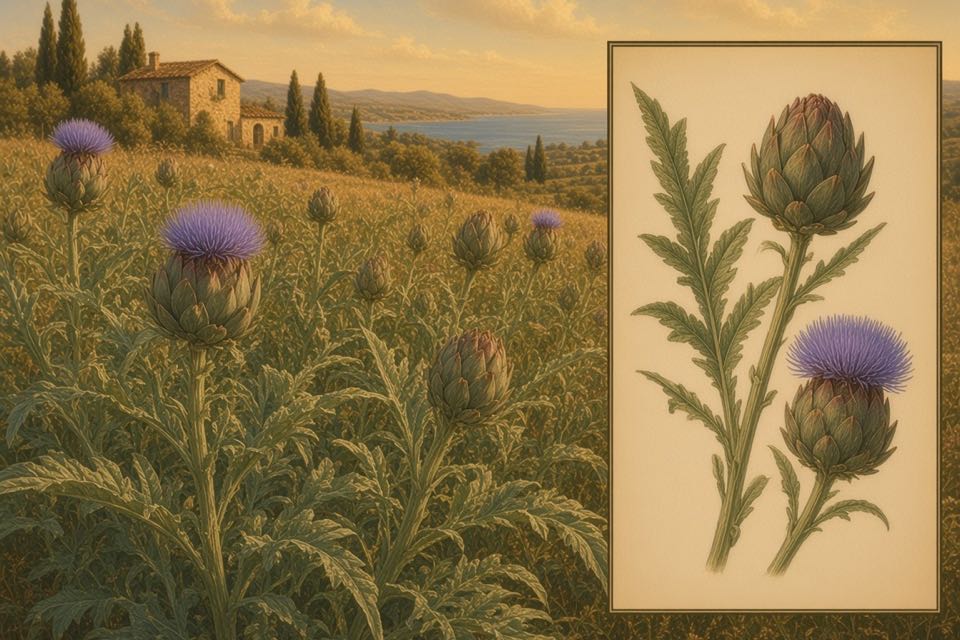
The artichoke on a dinner plate and the artichoke in a supplement capsule come from the same plant but from different parts of it. The vegetable is the immature flower head of the globe artichoke, a giant Mediterranean thistle in the daisy family; what we eat are the fleshy bases of its overlapping bracts and the heart beneath the fuzzy ‘choke’ of unopened florets. The medicine is made from the large, deeply lobed, silvery leaves, which are intensely bitter and have long been used in European folk medicine for digestion, the liver, and the gallbladder. Today artichoke leaf is sold as teas, tablets, and concentrated extracts, mainly for indigestion and, increasingly, for cholesterol and fatty liver. The leaf also flavors bitter Italian liqueurs, most famously Cynar, launched in Padua in 1952.
The best evidence is for indigestion. In a trial of 247 people with functional dyspepsia, Holtmann and colleagues (Alimentary Pharmacology and Therapeutics 2003) found that a leaf extract eased symptoms and improved quality of life more than placebo over six weeks, and a 2023 Cochrane review counted artichoke among herbs that may help, while rating the certainty of the evidence as low. The European Medicines Agency (EMA) accepts artichoke leaf as a traditional herbal medicine for indigestion with fullness, bloating, and wind, but judged the trials too small and short to support anything more. For cholesterol, a 2018 meta-analysis of nine trials found LDL cholesterol about 15 mg/dL lower than in control groups, yet a careful UK trial found no difference in LDL, and a Cochrane review called the evidence not yet convincing before it was withdrawn as a low priority in 2016. Fatty liver trials are small and early, and one recent pilot saw liver enzymes rise.
In trials artichoke leaf is generally well tolerated, with occasional mild diarrhea, cramping, nausea, or heartburn. Its main cautions follow from what it does. Because it increases bile flow, EMA lists blocked bile ducts, gallstones, inflamed bile ducts, and liver disease as reasons not to use it without medical advice, and because it belongs to the daisy family, people allergic to ragweed, chamomile, or related plants can react. People who handle artichokes for a living, including warehouse workers and a greengrocer, have developed occupational asthma and airborne skin allergy. EMA does not recommend the leaf in pregnancy, breastfeeding, or under age 12, for lack of data. Nothing here is medical advice; persistent indigestion, especially with weight loss, vomiting, black stools, or difficulty swallowing, needs a doctor’s assessment, and high cholesterol or fatty liver deserves proven care rather than a supplement alone.
In this monograph
01 The plant
Botanical profile
Cynara cardunculus L. belongs to Asteraceae (Compositae), the daisy or aster family, and NCBI Taxonomy files the globe artichoke as Cynara cardunculus var. scolymus, taxon 59895. The species is diploid (2n = 34) and mostly cross-pollinated, and Sonnante and colleagues (Annals of Botany 2007) describe three closely related forms: the wild cardoon (var. sylvestris), recognized as the ancestor of the other two; the globe artichoke, selected for large, non-spiny flower heads; and the leafy or cultivated cardoon (var. altilis), selected for tender, thick-stalked leaves. For centuries the artichoke was treated as a separate species, Cynara scolymus L., and that name still appears on many labels and in most clinical trials; the European Pharmacopoeia and EMA now use Cynara cardunculus, keeping Cynara scolymus as a synonym. Wild cardoon grows across the Mediterranean basin, from Cyprus and the Black Sea in the east to Gibraltar, Atlantic Spain, and Portugal in the west, and Britannica describes the artichoke as native to the western and central Mediterranean and North Africa. The Jerusalem artichoke (Helianthus tuberosus), grown for its edible tubers, is an unrelated plant that does not resemble it.
The globe artichoke is a large, thistle-like perennial. EMA’s assessment report describes plants 1.5–2 m tall with arching, deeply lobed, silvery glaucous-green leaves 50–80 cm long, and Britannica notes a rosette of deeply toothed leaves up to a meter long that die back each year after the plant flowers. Sturdy branched stalks carry about three to five large buds, each 8–15 cm across and covered in numerous triangular scales, the involucral bracts. Botanically each bud is a capitulum, a compound flower head made of many tiny florets on a broad base. The edible parts are the fleshy lower ends of the bracts and that base, the ‘heart’; the mass of immature florets in the center is the inedible ‘choke’. Left unpicked, the bud opens into a striking thistle-like head of numerous small purple florets. Traditionally the artichoke is mostly propagated vegetatively and grown as a perennial, while cardoons are raised from seed (Sonnante); in California, though, most artichokes are now planted annually, many as nursery-raised seedlings (California Foundation for Agriculture in the Classroom).
The medicinal part is the leaf. The European Pharmacopoeia defines artichoke leaf as the dried basal leaves, containing at least 0.8% chlorogenic acid (EMA). EMA lists phenolic acids at up to 2%, chiefly caffeoylquinic acids: chlorogenic acid (PubChem CID 1794427, C16H18O9) and cynarin (CID 5281769, C25H24O12), which PubChem identifies as 1,3-dicaffeoylquinic acid; flavonoids at 0.1–2%, mainly glycosides of luteolin such as scolymoside and cynaroside (luteolin-7-glucoside); and about 0.4% bitter sesquiterpene lactones, of which 47–83% is cynaropicrin (CID 119093). Cynaropicrin is most concentrated in young leaves and absent from the root and from fully developed flowers and fruits, which is why a leaf tea is far more bitter than a cooked heart. Ključevšek and Kreft (Health Science Reports 2025) note that sesquiterpene lactones are among the key sensitizers in the daisy family, able to irritate and inflame skin and, in sensitized people, to cause reactions when swallowed. The leaf also contains phytosterols, tannins, and inulin, and the globe vegetable is a notable source of inulin-type fructans: extracts made from bracts and stems left over from processing contained about 70% of these indigestible sugar chains (Zeaiter and colleagues, BioMed Research International 2019).
02 Lineage
History
Artichoke and cardoon are both domesticated forms of the wild cardoon, but when and where that happened is still debated. Weighing historical, linguistic, artistic, and genetic evidence, Sonnante and colleagues conclude that the artichoke was apparently domesticated in Roman times, possibly in Sicily, and spread by the Arabs in the early Middle Ages, while the cardoon was domesticated later in the western Mediterranean. Classical sources are slippery. The Greek word scolymos simply meant spiny and could refer to other thistles; one twentieth-century scholar read Theophrastus as reporting artichokes cultivated in Sicily but not in Greece; and Columella, in the first century AD, described a cultivated ‘cinara’ that was still spiny, with a head whose tip pricked. A genetic study of wild and cultivated plants from southern Europe and North Africa by Gatto and colleagues (Annals of Botany 2013) supported two separate domestication events, one for each crop, and proposed southern Italy, probably Sicily, as the artichoke’s center of origin. Britannica adds that the plant reached the eastern Mediterranean in ancient times but was then valued for its young leaves rather than its flower heads.
Britannica says the edible flower form was first recorded in Italy about 1400, and Sonnante and colleagues date the first certain record of the artichoke trade to the early fifteenth century, when Filippo Strozzi traded artichokes from Sicily to Florence. The names trace its route. Italian carciofo, Spanish alcachofa, and Portuguese alcachofra come from the Arabic al harshuff, while the English, French, and German names derive from old Italian forms such as articiocco, suggesting that Italy was the bridge to the rest of Europe. Artichokes appear in Renaissance paintings by Vincenzo Campi and in Giuseppe Arcimboldo’s fantastical vegetable portraits. EMA’s assessment report repeats the traditional stories that globe artichokes were first cultivated near Naples in the middle of the fifteenth century, were introduced to France by Catherine de’ Medici, and were growing in Henry VIII’s garden at Newhall by 1530. Medicinally, the same report says the leaf has been used in European medicine as a choleretic, a remedy that increases bile flow, and as a diuretic since Roman times, and it records folk uses from Europe to Brazil, Haiti, and Mexico for the liver, gallbladder, digestion, and cholesterol.
Artichoke leaf became a mainstream pharmacy product in twentieth-century Europe. EMA records leaf extracts on the market in France since 1976 and in Germany since 1978, and leaf teas in Spain since 1973, sold for indigestion, sluggish bile flow, and sometimes cholesterol, and notes that Germany’s Commission E reported its choleretic activity. The leaf’s bitterness also found a place behind the bar: EMA notes that alcoholic leaf extracts are used to make bitter liqueurs, at about 10 g of dried leaf per liter. Campari Group, which now owns the brand, says Angelo, Amedeo, and Mario Dalle Molle launched Cynar in Padua in 1952, an infusion of 13 herbs and botanicals including artichoke whose recipe remains secret. In the United States, Italian immigrants planted California’s first commercial artichoke fields near Half Moon Bay in the late nineteenth century, according to the California Foundation for Agriculture in the Classroom, and the modern industry began in the 1920s around Castroville, the self-proclaimed ‘Artichoke Center of the World’. California grows virtually all of the nation’s commercial artichokes, about 68% of them in Monterey County, and declared the artichoke its official state vegetable in 2013.
03 Chemistry
Active compounds and how it works
The traditional explanation for artichoke’s digestive effect is choleresis: an increase in the flow of bile, the fluid the liver makes to help digest fats. EMA’s assessment report summarizes laboratory evidence that leaf extracts increase bile secretion in cultured liver cells and in isolated rat livers, where expressed juice raised bile flow by up to 150%, with mono- and dicaffeoylquinic acids the most active fractions. Findings with single compounds have been inconsistent, and in one rat study pure cynarin and chlorogenic acid showed no choleretic effect at all. The key human evidence is a small crossover pilot study by Kirchhoff and colleagues (Phytomedicine 1994). In 20 volunteers, a single 1.92 g dose of a standardized extract, given through a tube directly into the duodenum, increased bile secretion by 127% after 30 minutes, 152% after 60 minutes, and 94% after a further hour, significantly more than placebo, with no side effects. EMA’s herbal committee kept bile-duct obstruction, gallstones, and other biliary disorders as outright contraindications precisely because this study shows that the extract stimulates bile secretion in people.
For cholesterol, the leading laboratory explanation comes from Gebhardt (Journal of Pharmacology and Experimental Therapeutics 1998). In rat liver cells grown in culture, high-dose water extracts of artichoke leaf inhibited the production of cholesterol by about 20% at low concentrations and more strongly at the highest concentration tested. The block appeared to act at HMG-CoA reductase, the enzyme that statins target, but indirectly: the extracts did not inhibit the enzyme itself, the effect built up over time and was fully reversible within 20 hours of removing the extract, and it blocked insulin’s stimulation of the enzyme. When individual constituents were screened, the flavonoid cynaroside and especially luteolin, the same molecule without its sugar, were mainly responsible, chlorogenic acid was much weaker, and cynarin had no significant effect, which undercuts the old idea that cynarin is the active principle. In a human liver cell line, Gebhardt (Phytotherapy Research 2002) found the extract only moderately active unless an enzyme first freed luteolin from cynaroside, a reminder that metabolism shapes what reaches the target. EMA concludes that rigorous trials are still needed to establish artichoke as a cholesterol-lowering agent.
Artichoke is also promoted as an antioxidant and liver-protective herb, and here the evidence is almost entirely from laboratory and animal work. In rat liver cells exposed to damaging peroxides, leaf extract and several constituents, including caffeic acid, chlorogenic acid, cynarin, and cynaroside, reduced markers of fat oxidation and cell injury (Gebhardt and Fausel, cited by EMA); in rats, extracts given before poisoning with carbon tetrachloride lowered liver enzymes, and older experiments reported faster liver regeneration after partial removal of the liver. Laboratory work also describes antispasmodic effects on guinea pig intestine, and oral extracts modestly increased gut propulsion in rats, findings that fit the traditional use for fullness and bloating. In rats given cynarin intravenously, more cholesterol was excreted in bile (EMA), another possible route to lower blood cholesterol that has not been shown in people. EMA states plainly that the liver-protective and regenerating effects documented for cynarin in test tubes and rats have not yet been documented in clinical studies. Activity in a dish or a rat is a reason to run trials, not evidence that a capsule works.
04 In practice
Common uses
Indigestion (functional dyspepsia) is the best-studied use. Holtmann and colleagues (Alimentary Pharmacology and Therapeutics 2003) enrolled 247 people with functional dyspepsia, meaning recurring upper-abdominal symptoms without an ulcer or other structural cause, in a double-blind, multicenter, placebo-controlled trial. Participants took a commercial artichoke leaf extract, two 320 mg capsules three times a day (1,920 mg daily), or placebo for six weeks. Among the 244 analyzed, overall symptom improvement was significantly greater with the extract (a score of 8.3 against 6.7 with placebo), and disease-specific quality of life on the Nepean Dyspepsia Index also improved more. Báez and colleagues (Cochrane 2023), reviewing 41 trials of 27 non-Chinese herbal medicines for functional dyspepsia, listed artichoke among the herbs that may improve symptoms, but because the finding rests on this single trial they graded the certainty of evidence as low. EMA reviewed the same evidence and concluded that artichoke leaf may improve symptoms of indigestion, but that firm conclusions could not be drawn because the studies were poorly designed, small, and short.
Earlier and larger studies were uncontrolled. In an open, dose-ranging postal study by Marakis and colleagues (Phytomedicine 2002), 516 otherwise healthy adults with self-reported indigestion took 320 or 640 mg of leaf extract a day for two months; among the 454 who finished, global dyspepsia scores fell by an average of 40%, with no difference between the two doses. Without a placebo group such improvements cannot be separated from natural recovery and expectation, and the lack of a dose effect is another reason for caution. EMA also summarizes post-marketing surveillance studies of 417 to 557 patients with indigestion or liver and bile-duct complaints, in which the extract was well tolerated. Combination products are a separate question. Giacosa and colleagues (Evidence-Based Complementary and Alternative Medicine 2015) found that capsules combining ginger and artichoke extracts improved symptoms, including nausea, fullness, upper-abdominal pain, and bloating, more than placebo in 126 people with functional dyspepsia over four weeks, but that result cannot be credited to artichoke alone.
Irritable bowel syndrome (IBS) has only uncontrolled data. In a post-marketing surveillance study, Walker and colleagues (Phytotherapy Research 2001) identified a subgroup with IBS symptoms among people taking the extract for indigestion over six weeks; symptom severity fell significantly, 96% rated it at least as good as previous treatments, and the authors concluded that a controlled trial was justified. Bundy and colleagues (Journal of Alternative and Complementary Medicine 2004) then reanalyzed the Marakis study, identifying 208 participants with IBS after the fact. After two months, the proportion meeting IBS criteria fell by 26.4%, reported bowel habit shifted away from alternating constipation and diarrhea toward normal, and dyspepsia symptom scores fell by 41%. These are interesting signals, but an open design and a subgroup chosen after the fact cannot show that artichoke works for IBS, and we found no published placebo-controlled trial in IBS. EMA’s traditional indication covers bloating and wind with indigestion rather than IBS itself.
Cholesterol trials vary widely in size and quality. Englisch and colleagues (Arzneimittel-Forschung 2000) randomized 143 adults with total cholesterol above 280 mg/dL to 1,800 mg a day of a fresh-leaf extract or placebo for six weeks; total cholesterol fell 18.5% against 8.6% with placebo, and LDL cholesterol 22.9% against 6.3%. A UK trial was more sobering. Bundy and colleagues (Phytomedicine 2008) gave 75 otherwise healthy adults with mildly to moderately raised cholesterol 1,280 mg a day of a standardized extract or placebo for 12 weeks: total cholesterol fell 4.2% with artichoke and rose 1.9% with placebo, a modest but significant difference, with no difference in LDL, HDL, or triglycerides. Wider and colleagues (Cochrane 2013) found three eligible trials with 262 participants and concluded that artichoke showed potential but that the evidence was not yet convincing; Cochrane withdrew the review in 2016, explaining that its heart group considered the topic a low priority. Sahebkar and colleagues (Critical Reviews in Food Science and Nutrition 2018) pooled nine trials with 702 participants and found total cholesterol 17.6 mg/dL, LDL 14.9 mg/dL, and triglycerides 9.2 mg/dL lower than in controls, with no change in HDL and larger LDL effects in people with higher starting levels.
Fatty liver and blood pressure: Panahi and colleagues (Phytotherapy Research 2018) randomized 100 adults with fatty liver on ultrasound to 600 mg of leaf extract a day or placebo for two months; among the 90 who finished, liver enzymes, liver size on ultrasound, and blood fats improved more with artichoke, although HDL cholesterol also fell. Rangboo and colleagues (International Journal of Hepatology 2016) reported similar enzyme and lipid improvements in 60 people with NASH taking 2,700 mg a day. But in the 2026 SteatoChoke pilot by Holländer and colleagues (Journal of Clinical Lipidology), 40 people with obesity awaiting bariatric surgery had less liver fat after six weeks on artichoke, yet their liver enzymes, particularly AST, rose. For blood pressure, Amini and colleagues (Clinical Nutrition Research 2022) pooled seven small trials with 472 participants and found systolic pressure about 2 mmHg lower. Overall, artichoke leaf has one solid positive trial in indigestion, a modest and inconsistent cholesterol effect, and early liver data based on blood tests and scans; none of it shows fewer heart attacks or less liver scarring.
05 The apothecary
Preparations and traditional use
EMA’s monograph covers six leaf preparations for adults and adolescents over 12, all for traditional use in indigestion. As a tea, it gives 1.5 g of the cut dried leaf in 150 ml of boiling water four times a day, or 3 g in 150 ml once or twice a day, for a daily total of 3–6 g. Powdered dried leaf is taken at 600–1,500 mg a day in two to four divided doses. Water-based dry extracts of dried leaf (drug-to-extract ratio 2–7.5:1) are dosed at 200–640 mg per dose and 400–1,320 mg a day, and the more concentrated dry extracts of fresh leaf (15–35:1) at 200–900 mg per dose and 600–2,700 mg a day; two soft extracts complete the list. EMA advises seeing a doctor if symptoms last more than two weeks. Trials used amounts within or near these ranges: 1,920 mg of extract a day in the Holtmann dyspepsia trial, 1,280 mg in the Bundy cholesterol trial, 1,800 mg in the Englisch trial, and 600 mg in the Panahi fatty liver trial.
Products are not interchangeable. The drug-to-extract ratio tells you how much leaf went into each unit of extract, so 300 mg of a 25–35:1 fresh-leaf extract represents far more plant material than 300 mg of powdered leaf, and extracts made with water or with dilute alcohol differ again. The European Pharmacopoeia requires artichoke leaf to contain at least 0.8% chlorogenic acid, and some European products are standardized to caffeoylquinic acids; a label that names the leaf, the extract ratio, and the daily dose makes it possible to compare a product with the research. Artichoke is also sold in multi-ingredient digestive, liver, and cholesterol formulas. Cochrane excluded combination products from its cholesterol review, and the ginger and artichoke trial shows that results from mixtures cannot be credited to one ingredient. Eating artichokes is a different matter again: Britannica calls them a rich source of potassium, vitamin C, and dietary fiber, but the cooked heart is not the leaf extract used in trials and contains little of the bitter cynaropicrin concentrated in young leaves.
Practical points: artichoke leaf is very bitter, which helps explain why tablets and capsules are more popular than tea. For indigestion, EMA’s two-week threshold for seeing a doctor is a sensible checkpoint, although the main trial measured its effect over six weeks. For cholesterol, the effects seen in trials appeared over six to twelve weeks, so a lipid test before and after is the only way to know whether it is doing anything, and it should never replace a statin or other prescribed treatment. Anyone with gallstones, a history of biliary colic, or liver disease should talk to a doctor before taking it, and anyone allergic to ragweed, chamomile, arnica, or other daisy-family plants should avoid it, as EMA advises. Single-ingredient products are easier to judge than blends, because if a side effect appears you know which plant caused it.
Safety
Before you use artichoke
06 Caution
Side effects
In clinical trials artichoke leaf has been well tolerated. Wider and colleagues found that trial reports described only mild, transient, and infrequent adverse events with short-term use; Englisch and colleagues reported no drug-related adverse events among 143 patients; and Panahi and colleagues reported no side effects among the 90 who completed their fatty liver trial. In the open Marakis study of 516 people, EMA notes only a handful of mild digestive complaints, such as constipation, loose stools, and wind. EMA’s monograph lists slight diarrhea with abdominal cramping, nausea and other upper-abdominal complaints, and heartburn, with frequency unknown. Post-marketing surveillance studies cited by EMA, each involving several hundred patients over four to six weeks, found the extract well tolerated in up to 95% of cases. Most trials lasted six to twelve weeks, so the safety of daily use over many months or years is less well documented.
Allergy is the most important specific risk. Artichoke belongs to the daisy family, and EMA contraindicates it in anyone hypersensitive to Asteraceae plants. Sesquiterpene lactones, including cynaropicrin, are sensitizers in this family that can cause skin reactions and, in sensitized people, reactions after ingestion (Ključevšek and Kreft). Occupational cases show the range: Miralles and colleagues (Annals of Allergy, Asthma and Immunology 2003) described two vegetable warehouse workers who developed rhinitis and asthma from handling artichokes, with cross-reactivity to the pollen of wall pellitory (Parietaria), and the journal Contact Dermatitis has published cases of airborne allergic contact dermatitis caused by artichoke, including one in a greengrocer. EMA also notes a case of acute tongue swelling after a meal that included artichoke, although the cause could not be confirmed, and a case of anaphylaxis to inulin-enriched foods in which cross-allergy with artichoke was suspected. Anyone who develops hives, swelling of the lips or tongue, wheezing, or trouble breathing after taking artichoke needs urgent care.
Rare liver reports deserve an honest look. EMA describes a 24-year-old woman who developed fatigue, hives, and liver enzymes about 40 times the upper limit of normal roughly three weeks after starting a commercial artichoke product taken for slimming, outside its intended use; her tests improved within three weeks of stopping. EMA’s assessors judged a causal link possible, but noted that the product was poorly described and that the case could not be transferred directly to other artichoke preparations. In the SteatoChoke pilot, liver enzymes, particularly AST, rose in people with obesity taking artichoke even as liver fat fell, the opposite of earlier trials, and the authors called for more research in this group. Stop artichoke and seek medical advice if you develop yellowing of the skin or eyes, dark urine, pale stools, itching, or pain in the upper right abdomen. EMA records no cases of overdose, and there are no studies of effects on driving.
07 Caution
Contraindications
Bile-duct and liver problems: EMA’s monograph says artichoke leaf must not be used with obstruction of the bile duct, cholangitis (inflammation of the bile ducts), liver disease, gallstones, or any other biliary disorder that requires medical supervision. EMA’s herbal committee deliberately placed these as contraindications rather than warnings, unlike turmeric, which is used for similar complaints, because of the human data showing increased bile secretion. This sits awkwardly with the marketing of artichoke for fatty liver: in the EU framework a traditional artichoke medicine is not meant for people with liver disease, even though small trials have tested extracts in fatty liver. Anyone with diagnosed fatty liver, hepatitis, cirrhosis, or a history of gallstones or biliary colic should use artichoke only with their doctor’s agreement, and anyone with jaundice, fever with pain in the upper right abdomen, or pale stools needs prompt medical care, not a bile-stimulating herb.
Daisy-family allergy: EMA contraindicates artichoke leaf in anyone hypersensitive to plants of the Asteraceae family, which includes ragweed, chamomile, arnica, marigold, chrysanthemum, and yarrow. People who have reacted to handling artichokes, who have had asthma or skin reactions at work around them, or who are known to be sensitive to sesquiterpene lactones on patch testing should avoid leaf products. Anyone who has reacted to another daisy-family herbal tea or remedy should talk to a doctor or allergist before trying artichoke.
Pregnancy, breastfeeding, and children: EMA states that safety in pregnancy and breastfeeding has not been established and, in the absence of sufficient data, does not recommend use. There are no fertility data, and adequate tests for reproductive toxicity, genotoxicity (damage to genetic material), and cancer-causing potential have not been performed. Because of the missing genotoxicity data, EMA declined to add artichoke leaf to its EU list of traditional herbal substances. Use under age 12 is not recommended for lack of data. Eating artichokes as a vegetable is a different matter from taking concentrated leaf extracts or strong leaf teas, and these cautions concern the medicinal products.
Symptoms that need a diagnosis first: indigestion that is new in an older adult, that comes with weight loss, repeated vomiting, black or bloody stools, or difficulty swallowing, or that does not settle within two weeks needs a doctor, not an herbal trial. Chest discomfort that might be heart-related is an emergency. High cholesterol should be assessed as part of overall heart risk, because people at high risk benefit from statins and other proven medicines that artichoke cannot replace. Fatty liver disease needs assessment for scarring and attention to weight, alcohol, diabetes, and blood fats; artichoke has not been shown to reduce scarring or complications.
08 Caution
Drug and herb interactions
No drug interactions have been documented. EMA’s monograph records none, and its assessment report found none reported in the literature. That is not the same as proven safety: interaction studies with modern drugs have not been done, and an absence of reports partly reflects an absence of research. If you take regular prescription medicines, tell your doctor or pharmacist before starting artichoke leaf, especially medicines with a narrow safety margin such as warfarin, anti-epileptics, immunosuppressants, or lithium, and report any new symptoms after starting it.
Because trials suggest modest effects on cholesterol, triglycerides, and possibly blood pressure, artichoke could in principle add to the effects of lipid-lowering or blood pressure medicines. Sahebkar and colleagues suggested that it may be synergistic with lipid-lowering therapy, which is a reason to keep your prescriber informed and recheck blood tests, not a reason to cut back a statin on your own. Jafari and colleagues (Diabetes and Metabolic Syndrome 2025) pooled trials showing lower insulin levels and insulin resistance but no change in fasting blood sugar or HbA1c, so there is no evidence of a glucose-lowering effect large enough to interact with diabetes medicines; people on insulin or sulfonylureas should still monitor as usual when adding any supplement.
Combination products carry the interaction risks of their other ingredients, which may be greater than artichoke’s own. Liver, digestive, and cholesterol formulas often combine several herbs, so ask a pharmacist to check every ingredient against your medicines. People already being treated for gallbladder or liver disease, for example with ursodeoxycholic acid, should ask their specialist before using artichoke, since the underlying condition is itself a contraindication. Alcoholic artichoke liqueurs such as Cynar are drinks, not medicines, and carry the usual cautions about alcohol and medication.
09 Questions
Frequently Asked Questions
It may. In a six-week trial of 247 people with functional dyspepsia, an artichoke leaf extract eased symptoms and improved quality of life more than placebo, and a 2023 Cochrane review listed artichoke among herbs that may help, while rating the certainty of evidence as low. EMA accepts it as a traditional remedy for indigestion with fullness, bloating, and wind. Better-established options include enteric-coated peppermint oil for IBS-type cramping, and ginger for queasiness. See a doctor if symptoms last more than two weeks.
No. The vegetable is the immature flower head, a good source of fiber, potassium, and vitamin C, while the supplements are made from the bitter leaves, which contain far more of the compounds studied in trials. The amounts used in research, such as 1,920 mg of extract a day for indigestion, are not reached by eating artichoke hearts. Artichoke liqueurs such as Cynar contain leaf extract but are alcoholic drinks, not medicines.
Possibly a little. A 2018 meta-analysis of nine trials found LDL cholesterol about 15 mg/dL lower than in control groups, but in a careful 12-week UK trial total cholesterol fell only about 4%, against a small rise on placebo, with no difference in LDL, and a Cochrane review judged the evidence not yet convincing. Psyllium has more consistent evidence, and garlic and green tea have also been studied. None replaces a statin when one is needed.
The evidence is early. Two small trials reported better liver enzymes and ultrasound findings with artichoke extract over two months, but a 2026 pilot in people with obesity found that liver enzymes rose even as liver fat fell. EMA lists liver disease as a contraindication for traditional artichoke medicines because they stimulate bile flow. Milk thistle is the most studied liver herb, but weight loss, activity, and managing diabetes and cholesterol remain the proven approach. Talk to your doctor before taking any liver supplement.
No, not without your doctor’s advice. Artichoke leaf increases bile secretion, and EMA lists gallstones, bile-duct obstruction, cholangitis, and other biliary disorders as contraindications. Other bitter or bile-stimulating herbs, such as dandelion root and turmeric, also carry bile-duct cautions. Sudden severe pain in the upper right abdomen, especially with fever or yellowing of the skin, needs urgent medical care.
It has not been properly tested. Two analyses of uncontrolled studies in people taking artichoke for indigestion found that IBS symptoms improved, but without a placebo group that could reflect natural fluctuation and expectation. The best-supported options for IBS are enteric-coated peppermint oil and soluble fiber such as psyllium. If you try artichoke for bloating, avoid it if you have gallstones or a daisy-family allergy.
EMA advises against it for people with bile-duct obstruction, gallstones, cholangitis, or liver disease; for anyone allergic to daisy-family plants such as ragweed, chamomile, or yarrow; in pregnancy and breastfeeding; and for children under 12. People who have developed asthma or skin reactions from handling artichokes should avoid it too. If you take prescription medicines, check with a pharmacist first.
Cardoon is the same species: the wild cardoon is the ancestor of both the globe artichoke and the cultivated cardoon, which was bred for its thick, tender leaf stalks rather than its flower heads. The Jerusalem artichoke is an unrelated sunflower grown for its knobbly tubers. Artichoke leaf research applies to the globe artichoke, often labeled Cynara scolymus, and not to Jerusalem artichoke products.
10 References
Sources
These references support the history, clinical, and safety claims on this page. They are not an endorsement of any product.
-
European Union herbal monograph on Cynara cardunculus L. (syn. Cynara scolymus L.), folium
European Medicines Agency (EMA/HMPC/194014/2017), 2018
Traditional use for indigestion with fullness, bloating, and wind; tea, powder, and extract doses; contraindications for Asteraceae allergy and bile-duct obstruction, cholangitis, liver disease, and gallstones; not recommended under 12 or in pregnancy and breastfeeding; no interactions reported.
-
Assessment report on Cynara cardunculus L. (syn. Cynara scolymus L.), folium
European Medicines Agency (EMA/HMPC/194013/2017), 2018
Botany, constituents, and Ph. Eur. 0.8% chlorogenic acid standard; history and market use since the 1970s; laboratory choleretic and liver data; clinical trials judged insufficient for well-established use; case reports of allergy and liver injury; no genotoxicity data.
-
Efficacy of artichoke leaf extract in the treatment of patients with functional dyspepsia: a six-week placebo-controlled, double-blind, multicentre trial
Alimentary Pharmacology and Therapeutics (PubMed 14653829), 2003
Holtmann et al.: 247 patients (244 analyzed), 2 × 320 mg extract three times daily vs placebo for six weeks; greater symptom improvement (8.3 vs 6.7) and quality of life on the Nepean Dyspepsia Index.
-
Non-Chinese herbal medicines for functional dyspepsia
Cochrane Database of Systematic Reviews (PubMed 37323050), 2023
Báez et al.: 41 trials, 4,477 participants, 27 herbal medicines; artichoke may improve symptoms (SMD −0.34, one study of 244, low certainty); ginger and artichoke combination also low certainty.
-
Increase in choleresis by means of artichoke extract
Phytomedicine (PubMed 23195882), 1994
Kirchhoff et al.: randomized, double-blind crossover pilot in 20 volunteers; single 1.92 g intraduodenal dose raised bile secretion by 127%, 152%, and 94% at 30, 60, and 120 minutes; basis of EMA’s biliary contraindication.
-
Inhibition of cholesterol biosynthesis in primary cultured rat hepatocytes by artichoke (Cynara scolymus L.) extracts
Journal of Pharmacology and Experimental Therapeutics (PubMed 9732368), 1998
Gebhardt: extracts inhibited cholesterol synthesis indirectly at the HMG-CoA reductase step; luteolin and cynaroside mainly responsible, cynarin without significant effect.
-
Artichoke leaf extract for treating hypercholesterolaemia
Cochrane Database of Systematic Reviews (PubMed 23543518), 2013
Wider et al.: three RCTs, 262 participants; potential to lower cholesterol but evidence not convincing; mild, transient adverse events. Withdrawn in 2016 (PubMed 27195440) because Cochrane Heart judged the topic low priority.
-
Lipid-lowering activity of artichoke extracts: A systematic review and meta-analysis
Critical Reviews in Food Science and Nutrition (PubMed 28609140), 2018
Sahebkar et al.: nine trials, 702 participants; total cholesterol −17.6 mg/dL, LDL −14.9 mg/dL, triglycerides −9.2 mg/dL, HDL unchanged; larger LDL effect with higher baseline.
-
Artichoke leaf extract (Cynara scolymus) reduces plasma cholesterol in otherwise healthy hypercholesterolemic adults: a randomized, double blind placebo controlled trial
Phytomedicine (PubMed 18424099), 2008
Bundy et al.: 75 adults, 1,280 mg extract daily for 12 weeks; total cholesterol −4.2% vs +1.9% with placebo; no differences in LDL, HDL, or triglycerides.
-
Artichoke leaf extract reduces symptoms of irritable bowel syndrome and improves quality of life in otherwise healthy volunteers suffering from concomitant dyspepsia: a subset analysis
Journal of Alternative and Complementary Medicine (PubMed 15353023), 2004
Bundy et al.: post hoc subset of 208 adults with IBS from an open postal study; IBS incidence fell 26.4% and dyspepsia scores 41% after two months; uncontrolled.
-
Efficacy of artichoke leaf extract in non-alcoholic fatty liver disease: A pilot double-blind randomized controlled trial
Phytotherapy Research (PubMed 29520889), 2018
Panahi et al.: 100 adults with ultrasound-diagnosed NAFLD, 600 mg daily or placebo for two months (90 completed); improved ALT, AST, liver size, and lipids, including lower HDL; no side effects reported.
-
Artichoke leaf extract reduces steatosis and decreases liver size in prebariatric patients: A randomized placebo-controlled pilot trial-The "SteatoChoke-Study"
Journal of Clinical Lipidology (PubMed 41274796), 2026
Holländer et al.: 40 bariatric surgery candidates, six weeks; less liver fat and smaller liver size than placebo, but transaminases, particularly AST, increased with artichoke.
-
Occupational rhinitis and bronchial asthma due to artichoke (Cynara scolymus)
Annals of Allergy, Asthma and Immunology (PubMed 12877457), 2003
Miralles et al.: two vegetable warehouse workers sensitized to artichoke; positive skin and nasal challenge tests; cross-reactivity with Parietaria pollen.
-
The domestication of artichoke and cardoon: from Roman times to the genomic age
Annals of Botany (PubMed 17611191), 2007
Sonnante et al.: wild cardoon as ancestor of artichoke and cardoon; artichoke apparently domesticated in Roman times, possibly in Sicily, and spread by the Arabs; classical sources, Strozzi trade, and names from Arabic al harshuff.
-
Artichoke
Encyclopaedia Britannica, 2026
Native to the western and central Mediterranean and North Africa; edible flower form first recorded in Italy about 1400; leaves up to a meter long; three to five buds per stalk; Jerusalem artichoke unrelated.
-
Cynarine
PubChem, National Library of Medicine (NIH), 2026
Cynarin, CID 5281769, C25H24O12; listed as 1,3-dicaffeoylquinic acid, a caffeoylquinic acid of artichoke leaf.