Monograph
Barberry
Berberis vulgaris
Updated October 10, 2026
Key points
-
01
Berberine is not barberry
Most human research tested purified berberine, often extracted from goldthread or Phellodendron. Barberry berries and juice have only a few small Iranian trials of their own.
-
02
Modest blood sugar effect
Meta-analyses of dozens of small, mostly Chinese trials found HbA1c about 0.6 to 0.7 points lower in type 2 diabetes. NCCIH still calls the evidence weak.
-
03
Not nature’s Ozempic
A 2026 meta-analysis of 23 trials found average weight loss under 1 kg with berberine, against about 15% of body weight with semaglutide in its main trial.
-
04
Real drug interactions
In healthy men, berberine inhibited CYP3A4, CYP2D6, and CYP2C9, and it raised cyclosporine levels in transplant patients. Ask a pharmacist before combining it with medicines.
-
05
Avoid in pregnancy and infancy
Berberine displaces bilirubin, which can build up in a newborn’s brain. NCCIH says avoid it in pregnancy and breastfeeding, and never give it to infants.
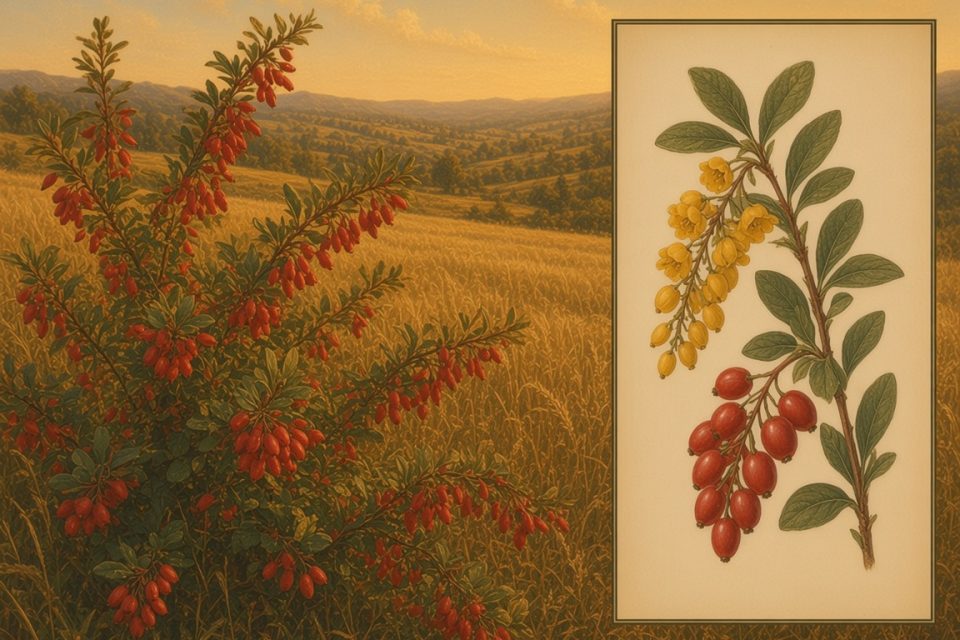
Barberry is a thorny shrub with two reputations, one in the kitchen and one in the supplement aisle. Berberis vulgaris, the common or European barberry, has arching branches armed with three-pronged spines, bright yellow inner bark and wood, and drooping clusters of sour scarlet berries. In Iran, which produces more of the fruit than any other country, the dried berries are cooked with rice (Rahimi-Madiseh and colleagues, Iranian Journal of Basic Medical Sciences 2017). In European and American folk medicine the bitter root bark was a spring tonic, a laxative, and a remedy for jaundice and diarrhea. Its chief alkaloid is berberine, a deep yellow compound that also colors the roots of goldenseal, Oregon grape, Chinese goldthread (Coptis chinensis), and Indian barberry (Berberis aristata). Today berberine capsules are sold for blood sugar, cholesterol, and weight, and social media has nicknamed them “nature’s Ozempic.” That creates a confusion this page tries to untangle. Most human research on berberine tested a purified compound, not barberry berries, tea, or root bark, and in China, where most trials were run, berberine has typically been extracted from goldthread root or Phellodendron bark (Lan and colleagues, Journal of Ethnopharmacology 2015).
The evidence for berberine is real but modest, and it comes mostly from China. The National Center for Complementary and Integrative Health (NCCIH) says there is weak evidence that berberine might help blood sugar control, citing a 2021 review of 46 studies in type 2 diabetes in which it lowered blood glucose and insulin resistance, especially alongside standard treatment, while noting that most participants were Chinese and some studies were of poor quality. A 2022 analysis of 37 trials with 3,048 patients found HbA1c, a measure of average blood sugar over about three months, roughly 0.6 percentage points lower. Pooled cholesterol trials show LDL cholesterol about 15 mg/dL lower, with a high risk of bias, and an open-label trial in 184 people with fatty liver disease found less liver fat. For weight, a 2026 meta-analysis of 23 trials found an average loss of under 1 kg (about 2 pounds), a long way from the roughly 15% loss seen with semaglutide. Trials of barberry fruit, juice, and extract are fewer and smaller: a 2025 meta-analysis found 11 trials with 718 participants, all in Iran, with modest falls in weight, blood pressure, cholesterol, and fasting glucose but no significant change in HbA1c.
Berberine is not a neutral food supplement when it comes to medicines. In healthy men, two weeks of 300 mg three times a day slowed three liver enzymes, CYP3A4, CYP2D6, and CYP2C9, that clear many prescription drugs (Guo and colleagues 2012), and in kidney transplant recipients it raised blood levels of the anti-rejection drug cyclosporine (Wu and colleagues 2005). It can add to the effect of diabetes medicines, and nausea, constipation, diarrhea, and bloating are common. Berberine can push bilirubin off its carrier protein in the blood, which is why NCCIH says it should not be used during pregnancy or breastfeeding or given to infants. LiverTox, the National Institutes of Health (NIH) liver injury database, reports that berberine has not been linked to liver enzyme rises or clinically apparent liver injury. The plant has a public history of its own: common barberry harbors wheat stem rust, and a federal and state campaign begun in 1918 destroyed about 500 million bushes. Nothing here is medical advice; anyone with diabetes, high cholesterol, fatty liver disease, or polycystic ovary syndrome (PCOS) should work with their clinician, and should never stop or reduce a prescribed medicine in favor of berberine.
In this monograph
01 The plant
Botanical profile
Berberis vulgaris L. was named by Linnaeus in 1753 and belongs to Berberidaceae, the barberry family (Kew’s Plants of the World Online). Rahimi-Madiseh and colleagues put the genus at about 500 species worldwide. Kew gives the native range of common barberry as much of continental Europe, from Spain, France, Italy, and Greece north to Germany, Poland, and the Baltic states and east through Ukraine and European Russia, together with Morocco and Algeria, Türkiye, the Caucasus, Iran, and Uzbekistan. It is listed as introduced in Great Britain, Ireland, Portugal, Scandinavia, and New Zealand, and across much of the northern United States and southern Canada. Sources differ on its origin, and the Minnesota Department of Agriculture describes it as native to Asia and naturalized in Europe. Several relatives matter for this page. Indian barberry or tree turmeric, Berberis aristata DC., is native to the Himalaya, India, Nepal, Tibet, Assam, and Myanmar (Kew) and is known in Ayurveda as daruharidra, daruhaldi, and darvi (Potdar and colleagues, Fitoterapia 2012). Oregon grape, Berberis aquifolium, still widely sold under its older name Mahonia aquifolium, is a North American member of the family. Goldenseal (Hydrastis canadensis) and Chinese goldthread (Coptis chinensis) also contain berberine but belong to a different family, Ranunculaceae.
Common barberry is an upright, deciduous shrub. King’s American Dispensatory (1898) describes it as 3 to 8 feet tall, with long, bending branches dotted with triple spines; the Minnesota Department of Agriculture gives 8 to 10 feet. The spines are modified leaves: King’s notes that the first leaves on a shoot are three-parted and spiny, and Rahimi-Madiseh and colleagues describe the leaves of long branches in Berberis as transformed into single, double, or triple spines. The true leaves grow in clusters at the nodes on short side shoots. They are oval, narrowing at the base to a very short stalk, about 2 inches long, and finely and bristly toothed. Small yellow flowers hang in drooping clusters in May and June, and King’s records that the stamens are “irritable,” springing against the stigma when touched. The fruits are bright red, oblong, intensely sour berries, each holding one to three small black seeds. Birds spread the seeds, and the plant also sprouts from creeping underground stems. The Minnesota Department of Agriculture distinguishes it from the ornamental Japanese barberry (Berberis thunbergii) by its sharply toothed leaf margins, three-pronged spines, and taller, looser branches.
Cut into a stem or root and the color explains the plant’s history. King’s describes the root bark as orange-yellow on its inner surface and vivid yellow inside, staining the saliva yellow when chewed, with the color running through the wood; the bark was once a source of yellow dye (US Department of Agriculture Agricultural Research Service, ARS). Imanshahidi and Hosseinzadeh (Phytotherapy Research 2008) name berberine, berbamine, and palmatine as the plant’s most important alkaloids, King’s adds oxyacanthine, and Rahimi-Madiseh and colleagues count more than 30 alkaloids, with the highest alkaloid content in the root bark. Berberine (PubChem CID 2353) has the formula C20H18NO4+; LiverTox describes it as a quaternary ammonium compound, meaning it carries a permanent positive charge. The berries are a different product. Rahimi-Madiseh and colleagues report vitamin C, anthocyanin pigments, more than 10 phenolic compounds, and a fruit that is about 80% water, and King’s attributes part of the sourness to malic acid. Iran is the world’s biggest producer of the fruit, with about 11,000 hectares under cultivation and more than 10,000 tons of dried berries a year, about 95% of it from Ghaenat County in South Khorasan province.
02 Lineage
History
Barberry’s medical history is long, though some of the oldest claims are hard to check. Rahimi-Madiseh and colleagues write that barberry fruit was recorded as a blood purifier on clay tablets in the library of the Assyrian king Ashurbanipal around 650 BC, that the Persian physician Rhazes was the first in Iran to describe its medicinal properties, and that medicinal use of Berberis in Chinese medicine goes back more than 3,000 years. King’s American Dispensatory, quoting the pharmacists C. G. and J. U. Lloyd, credits the twelfth-century Arabic medical writer Averroes with first applying the name berberys to the fruit. NCCIH notes that berberine-containing plants have been used in Ayurvedic and traditional Chinese medicine for thousands of years. A review by Neag and colleagues (Frontiers in Pharmacology 2018) describes Ayurvedic use of Berberis root and bark for infections of the eye, ear, and mouth, wounds, hemorrhoids, indigestion, and dysentery, and Chinese use of goldthread rhizome to lower fevers and treat diarrhea and dysentery. Chan (Biology of the Neonate 1993) gives that Chinese herb its name, huang lian. In South Asia, rasanjana, a concentrated extract of Indian barberry, is used in eye preparations; in a small 2011 study in the journal AYU, 35 people with mucopurulent conjunctivitis received rasanjana-and-honey or honey-and-rosewater eye drops, without a placebo group.
In Europe barberry was a garden and hedge plant as much as a medicine. ARS records that it was widely grown for medicinal purposes and planted in monastery gardens throughout southern Europe, that its long, straight wood made good tool handles, and that its dense, spiny growth kept livestock and poultry out. Early European settlers brought it to North America, where the fruit became a favorite for sauces, jellies, wines, and preserves and the bark was used as a yellow dye. The French name épine-vinette, King’s explains, means “acid thorn.” American domestic medicine used it widely. King’s quotes the Lloyds’ description of barberry bark tea taken in spring as a “blood purifier” and a strong decoction applied to sores on children’s lips, and calls the plant a tonic and laxative once used extensively by New England practitioners for jaundice, chronic diarrhea, and dysentery. The berries made a sour drink for fevers, and a decoction of bark or berries served as a wash for mouth ulcers and chronic eye inflammation. King’s warns that a teaspoonful of powdered root bark acts as a purgative, and the Lloyds judged a fluid extract of the bark more satisfactory than the isolated alkaloid berberine.
The plant’s biggest historical impact was on farming. Common barberry is the alternate host of the stem rust fungus, Puccinia graminis: the rust found on barberry in spring is the same fungus that attacks wheat, oats, and other small grains in summer and fall (ARS). Farmers suspected the link early. ARS notes a 1660 law against barberry in Rouen, France, nearly 200 years before the German scientist A. de Bary proved the connection, and colonial laws in Connecticut (1726), Massachusetts (1754), and Rhode Island (1766). The 1916 epidemic was the worst stem rust outbreak on record, destroying about 61% of Minnesota’s wheat and an estimated 200 million bushels, about 40% of the US crop (Peterson, Annual Review of Phytopathology 2018). Grain states passed barberry laws from 1917, and in 1918 a cooperative federal and state eradication program began under the plant pathologist E. C. Stakman, backed from 1919 by Federal Quarantine No. 38 on moving susceptible barberries between states. Government staff, farmers, and schoolchildren joined the search. By the late 1970s, when the federal program wound down, 18 states had taken part, about 800,000 square miles had been searched, and about 500 million bushes had been destroyed (Peterson). Minnesota still lists common barberry as a prohibited noxious weed.
03 Chemistry
Active compounds and how it works
Berberine’s defining trait is that very little of a swallowed dose reaches the blood. In rats, Chen and colleagues (AAPS PharmSciTech 2011) measured an absolute oral bioavailability of 0.68% and suggested that a transporter, P-glycoprotein, pumps absorbed berberine back into the gut. In the fatty liver trial by Yan and colleagues (PLoS One 2015), people taking 500 mg three times a day had average blood levels of only about 7 ng/ml, although in animals the same team found berberine concentrated in the liver. Much of each dose therefore stays in the intestine, and that may be part of how it works. Berberine has long been used as an antibiotic drug, and Zhang and colleagues (Journal of Clinical Endocrinology and Metabolism 2008) note that its glucose-lowering effect was first noticed when it was given for diarrhea to people with diabetes. In the PREMOTE trial (Zhang and colleagues, Nature Communications 2020), which described berberine as bacteriostatic, analyses of gut microbes and metabolites linked its effect on blood sugar to changes in gut bacteria, in particular reduced conversion of bile acids into deoxycholic acid by the bacterium Ruminococcus bromii. Memorial Sloan Kettering Cancer Center (MSKCC) notes that poor absorption has prompted a continuing search for better-absorbed berberine combinations, which also means trial results for one product may not transfer to another.
Two laboratory discoveries shaped the modern berberine story. Kong and colleagues (Nature Medicine 2004) reported that berberine increases LDL receptors, the docking sites liver cells use to pull LDL cholesterol out of the blood, by stabilizing the messenger RNA that codes for them. In hamsters with high blood lipids it lowered LDL cholesterol by 42% while LDL receptor messenger RNA in the liver rose 3.5-fold, and in human liver cancer cells the effect worked independently of the sterol-sensing pathway that statins rely on, which the authors called a mechanism distinct from statins. MSKCC adds preclinical evidence that berberine lowers PCSK9, a protein that breaks down LDL receptors, and improves the function of blood vessel linings. Two years later, Lee and colleagues (Diabetes 2006) showed that berberine activates AMP-activated protein kinase (AMPK), an energy sensor inside cells. In obese, diabetic db/db mice it reduced body weight and improved glucose tolerance without changing food intake, and in fat and muscle cells it increased AMPK activity, while in muscle cells it moved glucose transporters to the cell surface. These are animal and cell findings. They explain why berberine is often compared with metformin, and why UCLA Health (2025) stresses that it works differently from GLP-1 drugs such as semaglutide, which mimic a gut hormone that regulates appetite and digestion.
Barberry contains more than berberine, and the extra chemistry matters when reading fruit trials. Rahimi-Madiseh and colleagues describe berbamine as a calcium channel blocker and list vitamin C, anthocyanins, and other phenolic compounds in the berries; because alkaloids are concentrated in the root bark, berries and juice deliver a different mix from root extracts or purified berberine, and the effects seen in fruit trials cannot be credited to berberine alone. Berbamine has not been tested on its own in the human trials described on this page. Two other actions of berberine matter for safety, and both have been measured. In healthy men, two weeks of berberine slowed the breakdown of probe drugs handled by CYP3A4, CYP2D6, and CYP2C9 (Guo and colleagues, European Journal of Clinical Pharmacology 2012), which is the basis for its drug interactions. And berberine displaces bilirubin, the yellow pigment made when old red blood cells are broken down, from albumin, the blood protein that carries it. Chan (Biology of the Neonate 1993) found berberine about ten times more potent at this than phenylbutazone, a drug known for the effect, and about a hundred times more potent than papaverine, a related alkaloid; daily injections for a week also raised free and total bilirubin in adult rats.
04 In practice
Common uses
Type 2 diabetes is where berberine has the most trials. In a pilot study, Yin and colleagues (Metabolism 2008) randomized 36 adults with newly diagnosed type 2 diabetes to berberine or metformin, 0.5 g three times a day for three months; the glucose-lowering effects were similar, and HbA1c in the berberine group fell from 9.5% to 7.5%. In a second, uncontrolled group of 48 poorly controlled patients, adding berberine lowered HbA1c from 8.1% to 7.3%. Zhang and colleagues (Journal of Clinical Endocrinology and Metabolism 2008) gave 116 people with type 2 diabetes and abnormal blood lipids 1 g of berberine a day or placebo for three months, and HbA1c fell from 7.5% to 6.6% with berberine. The PREMOTE trial randomized 409 people with newly diagnosed diabetes at 20 Chinese centers; after 12 weeks HbA1c had fallen by about 1.0 percentage point with berberine versus 0.6 with placebo. Meta-analyses agree on direction. Dong and colleagues (2012) found 14 trials with 1,068 people, of generally low methodological quality, in which berberine showed no significant difference from metformin, glipizide, or rosiglitazone and improved control when added to them, and Xie and colleagues (Frontiers in Pharmacology 2022) pooled 37 trials, finding fasting glucose about 15 mg/dL and HbA1c 0.63 points lower. Most participants were Chinese and most trials were small and short, which is why NCCIH calls the evidence weak.
Cholesterol is berberine’s second major use. In the 2004 Nature Medicine paper, 32 people with high cholesterol who took berberine for three months saw total cholesterol fall 29%, triglycerides 35%, and LDL cholesterol 25%. Ju and colleagues (Phytomedicine 2018) pooled 16 randomized trials with 2,147 participants and found LDL cholesterol about 15 mg/dL (0.38 mmol/L) lower, with lower total cholesterol and triglycerides as well, but judged the trials highly variable, mostly of low methodological quality, and open to several kinds of bias. MSKCC summarizes the picture as several studies suggesting benefit with an effect that may be small, and cites an international lipid expert panel suggesting berberine may be most useful for people with mildly raised cholesterol who cannot tolerate statins or who have metabolic syndrome. Several European trials tested combination products that pair berberine with red yeast rice, policosanol, and other ingredients, and MSKCC notes that the monacolin K in red yeast rice has statin-like side effects, so results from those blends cannot be credited to berberine. None of the trials described here measured heart attacks or strokes, the outcomes that statins have been shown to reduce, so berberine is at most an adjunct for people whose clinicians agree.
Fatty liver disease and PCOS have smaller evidence bases. Yan and colleagues randomized 184 adults with non-alcoholic fatty liver disease at three Chinese centers to lifestyle advice alone, lifestyle advice plus 15 mg of the diabetes drug pioglitazone, or lifestyle advice plus berberine 0.5 g three times a day for 16 weeks. Liver fat fell by 52.7% with berberine versus 36.4% with lifestyle advice alone, with greater improvements in weight, insulin resistance, and blood lipids, but the trial was open-label, so patients and doctors knew who was taking what. A 2024 meta-analysis of 10 trials with 811 patients (Nie and colleagues, Journal of Translational Medicine) found improvements in liver enzymes, lipids, and insulin resistance, whereas an earlier analysis of 12 trials found no significant effect on the liver enzymes ALT and AST (Asbaghi and colleagues 2020). These studies tracked liver fat and enzymes rather than scarring. In PCOS, Wei and colleagues (European Journal of Endocrinology 2012) randomized 89 Chinese women with insulin resistance, all also taking a compound cyproterone acetate hormone pill, to berberine, metformin, or placebo for three months; berberine improved waist-to-hip ratio, lipids, and insulin resistance. A 2019 review of 12 trials found no solid evidence that berberine improves live birth rates, which were lower with berberine than with the fertility drug letrozole.
Weight loss is the use that made berberine famous online. UCLA Health (2025) describes it as a supplement commonly called “nature’s Ozempic,” but notes that it works differently from GLP-1 drugs and that there is no conclusive evidence yet for similar effects. The numbers bear that out. Asbaghi and colleagues (Clinical Nutrition ESPEN 2020) pooled 12 trials and found body weight about 2.1 kg (4.6 pounds) lower with berberine. A larger 2026 meta-analysis in the International Journal of Obesity (Elahi Vahed and colleagues) included 23 trials and found an average loss of only 0.88 kg (under 2 pounds), with body mass index (BMI) about 0.5 points lower and no change in waist-to-hip ratio, and the authors called for better blinding and clearer reporting of product purity and dose. By contrast, in the STEP 1 trial of 1,961 adults, weekly semaglutide injections reduced body weight by 14.9% over 68 weeks, against 2.4% with placebo (Wilding and colleagues, New England Journal of Medicine 2021). One of the largest berberine trials addressed a different question entirely. In 1,108 Chinese adults who had colorectal adenomas, precancerous polyps, removed, 0.3 g of berberine twice a day lowered the rate of new adenomas over up to two years of follow-up to 36%, compared with 47% on placebo, and no cancers were found in either group (Chen and colleagues, Lancet Gastroenterology and Hepatology 2020).
Barberry itself has a smaller and separate evidence base, almost entirely from Iran. In a double-blind trial in people with type 2 diabetes, 3 g a day of Berberis vulgaris fruit extract for three months lowered triglycerides, total and LDL cholesterol, glucose, and insulin compared with placebo, but did not change HbA1c (Shidfar and colleagues, Iranian Journal of Pharmaceutical Research 2012). Pooled analyses of these small trials differ in the details. Hadi and colleagues (2019) found LDL cholesterol about 14 mg/dL lower across 5 trials with 339 people; Safari and colleagues (2020) found lower insulin but no significant change in fasting glucose, HbA1c, or insulin resistance across 7 studies with 452 people; and a 2024 analysis of 9 trials in type 2 diabetes found fasting glucose about 15 mg/dL and HbA1c 0.3 points lower. The most recent, by Zhang and colleagues (Journal of Health, Population and Nutrition 2025), included 11 trials with 718 people, all conducted in Iran, lasting 3 to 12 weeks and using anything from 75 mg to 10 g of fruit a day or 200 to 480 ml of juice. It found modest falls in weight, blood pressure, cholesterol, triglycerides, and fasting glucose, but no significant change in HbA1c. The traditional uses of the root bark, for jaundice, diarrhea, and as a bitter tonic, rest on folk practice; the trials above tested berberine, fruit, or juice.
05 The apothecary
Preparations and traditional use
As food, barberries are eaten dried, cooked, or juiced. Rahimi-Madiseh and colleagues describe common barberry as mainly a food plant in Iran, where the dried fruit is cooked with rice and made into sauces, jelly, juice, jam, marmalade, and carbonated drinks, and is used to season and garnish dishes; the related black barberry, Berberis integerrima, is used mainly for juice and as medicine. In Iran the dried berries are called zereshk. ARS records sauces, jellies, wines, and preserves in early America. The berries are intensely sour, and King’s attributes part of that taste to malic acid. In the Iranian trials, fruit products ranged from 75 mg to 10 g a day and juice from 200 to 480 ml a day, typically for 3 to 12 weeks. Because alkaloids are concentrated in the root bark rather than the fruit, a spoonful of dried barberries in a rice dish should not be assumed to act like a berberine capsule, and the fruit trials, with their mix of pigments, acids, and alkaloids, should not be read as berberine trials either. If you enjoy barberries as food, that is a culinary choice rather than a dose.
Berberine supplements are usually sold as capsules or tablets of berberine hydrochloride; MSKCC lists berberine HCl among its common names. NCCIH considers berberine safe at the doses used in clinical situations, 200 to 1,000 mg two to three times a day. Trials used similar amounts split through the day: 0.5 g three times daily in Yin’s diabetes study and Yan’s fatty liver trial, 1 g a day in Zhang’s placebo-controlled trial, and 0.3 g twice daily in the polyp trial, for periods from 12 weeks to two years. The drug interaction study used 300 mg three times a day for two weeks, a common supplement dose, so interactions should be expected at ordinary intakes. Product quality varies. LactMed notes that dietary supplements may contain multiple ingredients, that differences are often found between labeled and actual ingredients or amounts, and that test results for one product may not apply to another. Enhanced-absorption formulas and multi-ingredient “metabolic” or “glucose support” blends add further uncertainty, and products pairing berberine with red yeast rice add monacolin K, which MSKCC notes has statin-like side effects.
Traditional preparations used the root bark. King’s describes thin pieces of bark, vivid yellow inside, given as a tea or fluid extract, with a strong decoction used as a wash, and warns that a teaspoonful of the powdered root bark acts as a purgative. In Ayurveda, rasanjana is a concentrated extract of Indian barberry used in eye preparations. These preparations deliver unknown amounts of alkaloids, and their safety has not been established. Practical points: if you want to try berberine, talk first with a pharmacist or prescriber, especially if you take any regular medicine; choose a single-ingredient product that states the amount of berberine per capsule; check your blood sugar more often if you have diabetes; and stop it if you might be pregnant or are breastfeeding. Do not make root bark teas or eye washes at home, and see a doctor about a red or painful eye. Gardeners should know that common barberry is a prohibited noxious weed in Minnesota, where it may not be sold, moved, or propagated, and that the Minnesota Department of Agriculture advises gloves, long sleeves, and long pants when digging it out because of its spines.
Safety
Before you use barberry
06 Caution
Side effects
Digestive side effects are the most common problem with berberine. In Yin’s pilot study about a third of patients (34.5%) had temporary stomach and bowel complaints, and in Zhang’s placebo-controlled trial five people taking berberine developed mild to moderate constipation. PREMOTE found more gastrointestinal side effects with berberine than without it, and in the two-year polyp trial constipation was the most common adverse event, though it affected only about 1% of those taking berberine. NCCIH lists mild-to-moderate nausea, diarrhea, bloating, and constipation as common side effects, and MSKCC adds loss of appetite, upset stomach, and rash. In Yan’s fatty liver trial, side effects were mild and mainly digestive. In meta-analyses, total adverse events were not higher with berberine than with comparison treatments, and Xie and colleagues found no significant increase in hypoglycemia, or low blood sugar, in trials of berberine alone or with diabetes tablets. That is reassuring, but the trials were mostly short, and people taking insulin or sulfonylureas, which can cause low blood sugar on their own, still need to check their glucose more closely when adding berberine.
Serious organ toxicity has not been a prominent signal in people. LiverTox, the NIH database on drug-induced liver injury, states that berberine has not been linked to rises in liver enzymes during therapy or to cases of clinically apparent liver injury, and Asbaghi’s meta-analysis found no change in the liver enzymes ALT and AST. In the kidney transplant study, three months of berberine did not significantly affect liver or kidney function tests (Wu and colleagues 2005). MSKCC does cite one notable case: a child with idiopathic nephrotic syndrome, a kidney disorder, whose tacrolimus levels rose to a clinically relevant degree, with kidney toxicity, after berberine was added to control diarrhea. Animal studies show that very high doses are not harmless. Jahnke and colleagues (Birth Defects Research Part B 2006) found reduced weight gain in pregnant rats and lower fetal weights at the highest dietary dose, and when pregnant mice were given 1,000 mg per kg a day by stomach tube, a third of them died. Those doses are far above what people take, but they are a reminder that berberine is a pharmacologically active compound. For the plant itself, King’s warned that a teaspoonful of powdered root bark acts as a purgative.
The most serious known risk concerns newborns. Free bilirubin can enter a newborn baby’s brain and cause lasting damage known as kernicterus. Chan’s 1993 study was prompted by reports that the berberine-rich herb huang lian posed a kernicterus risk in jaundiced Chinese newborns; it found that berberine displaced bilirubin from albumin about ten times more strongly than phenylbutazone, and Chan advised avoiding high-berberine herbs in jaundiced newborns and pregnant women. MotherToBaby, the pregnancy and breastfeeding information service of the Organization of Teratology Information Specialists, reviewed the evidence in 2025 and found it very limited. It is not known whether berberine increases the risk of miscarriage, one study suggests it might cause uterine contractions, and the only birth defect data come from a report of 218 pregnancies exposed to huang lian, in which three babies had nervous system defects and three had genital defects; a report of that size cannot show cause. MotherToBaby adds that berberine can pass into breast milk, in unknown amounts, and may raise the risk of bilirubin buildup in a nursing baby’s brain, especially in newborns, so it does not recommend berberine during breastfeeding unless prescribed.
07 Caution
Contraindications
Pregnancy, breastfeeding, and infants: NCCIH states that berberine should not be used during pregnancy or while breastfeeding and should not be given to infants, because exposure has been linked to a harmful buildup of bilirubin in infants, which can cause brain damage. MSKCC gives the same advice, warning that berberine may worsen jaundice in infants or lead to kernicterus. LactMed, the US government database on medicines and breastfeeding, notes that most sources recommend avoiding any exposure of newborns to goldenseal, another berberine plant, through breastfeeding or otherwise. These warnings are written about berberine and berberine-rich herbs; they do not address barberries eaten as food, but concentrated barberry extracts and root bark preparations should be treated like berberine. People with PCOS who take berberine for their cycles or fertility should stop it once they might be pregnant, since MotherToBaby notes some evidence that it may increase pregnancy rates in PCOS while its safety in pregnancy is unknown. If a newborn develops yellow skin or eyes, contact a doctor or midwife promptly and mention any supplements taken during pregnancy or breastfeeding.
Diabetes medicines: people taking insulin, sulfonylureas such as glipizide or glyburide, or other glucose-lowering drugs should start berberine only with their care team’s agreement and check their glucose more often, because berberine lowered blood sugar further when added to diabetes medicines in trials, and UCLA Health notes it could make diabetes drugs more potent. Never use berberine to replace or reduce a prescribed diabetes medicine on your own, and remember that type 1 diabetes always needs insulin. Children: the sources cited here give no dose for children, NCCIH says berberine should not be given to infants, and the case of rising tacrolimus levels and kidney toxicity in a child with nephrotic syndrome shows that children on long-term medicines are vulnerable to its interactions. Jaundice and bilirubin disorders: because berberine displaces bilirubin and raised free bilirubin in rats, people with unexplained jaundice or a known bilirubin disorder should avoid it unless their specialist agrees.
Transplant and other critical medicines: MSKCC advises people taking the immunosuppressants tacrolimus or cyclosporine not to take berberine, because it may raise their blood levels or cause kidney toxicity, and it also advises against berberine with drugs processed by CYP2D6, CYP2C9, or CYP3A4 and with the leukemia drug bosutinib. Those enzymes handle a large share of prescription drugs, so anyone on regular medicines, especially drugs where small changes in blood level matter, should ask a pharmacist before starting berberine. Surgery and sedation: berberine raised blood levels of the sedative midazolam by about 40% in healthy men, so it is sensible to stop it before planned procedures and tell the anesthesia team about any recent use. Liver disease: although LiverTox has found no liver injury from berberine, a diseased liver handles medicines less predictably, so people with cirrhosis or other serious liver disease should use it only with their specialist’s agreement.
Not a substitute for treatment: berberine is sold as a dietary supplement, not an approved medicine, and the trials described here measured blood tests, liver fat, or polyps over weeks to two years rather than heart attacks, strokes, liver failure, or deaths. People with type 2 diabetes, high cholesterol, fatty liver disease, or PCOS should keep the treatment plan their clinicians recommend, and should not use berberine as a reason to delay seeing a doctor about symptoms such as intense thirst, frequent urination, unexplained weight loss, or yellowing of the skin or eyes. Combining berberine with goldenseal, Oregon grape, or other berberine plants adds to alkaloid exposure, and such combinations have not been tested in the trials described here. Finally, think twice before planting common barberry: it is a prohibited noxious weed in Minnesota, it spreads by bird-dispersed seed and underground stems, and the Minnesota Department of Agriculture warns that new races of wheat stem rust could form on it.
08 Caution
Drug and herb interactions
Cytochrome P450 enzymes: Guo and colleagues (European Journal of Clinical Pharmacology 2012) gave healthy men 300 mg of berberine three times a day for two weeks and then measured the handling of a set of probe drugs. The urinary ratio of dextromethorphan to its breakdown product rose ninefold, showing strong inhibition of CYP2D6; the ratio for the blood pressure drug losartan doubled, indicating inhibition of CYP2C9; and blood levels of the sedative midazolam rose by about 40%, with oral clearance falling 27%, indicating inhibition of CYP3A4. Berberine did not significantly affect the probes for CYP2C19 or CYP1A2. The authors concluded that drug interactions should be considered whenever berberine is taken, and MSKCC advises against combining it with drugs processed by these enzymes. MSKCC also cites modeling that predicts about a 1.3-fold rise in exposure to the leukemia drug bosutinib. Guo’s study tested repeated dosing, the way people actually take supplements, so a lack of problems in the first few days does not show that a combination is safe. If you take any prescription medicine, ask a pharmacist to check it against berberine before you start.
Cyclosporine and tacrolimus: Wu and colleagues (European Journal of Clinical Pharmacology 2005) gave 52 kidney transplant recipients berberine 0.2 g three times a day alongside cyclosporine for three months and compared them with 52 taking cyclosporine alone. Trough cyclosporine levels ended up 29.3% higher in the berberine group, and in a detailed study of six patients, 12 days of berberine raised cyclosporine exposure by 34.5% and cut its clearance by about 40%. The authors attributed the effect to CYP3A4 inhibition in the liver or gut and suggested the combination might allow lower cyclosporine doses, but that is a decision for transplant teams with close drug-level monitoring, not something to try independently; MSKCC links these interactions to kidney toxicity. MSKCC also cites the case of a child with nephrotic syndrome whose tacrolimus levels rose, with kidney toxicity, after berberine was added for diarrhea, and lists both drugs among those not to combine with berberine. Anyone taking an anti-rejection or immunosuppressant drug should avoid berberine, barberry extracts, goldenseal, and other berberine plants unless their specialist agrees.
Diabetes medicines, statins, and other supplements: berberine has been tested alongside metformin, glipizide, and other diabetes tablets, and in Dong’s meta-analysis the combinations controlled glucose better than the drugs alone. That is the point of using it, but it also means additive effects. UCLA Health warns that berberine could make diabetes drugs more potent, and laboratory work cited by MSKCC suggests berberine and sulfonylureas may affect each other’s metabolism, with clinical relevance yet to be determined. Check your glucose more often when starting or stopping berberine and agree any medicine changes with your prescriber. In healthy Chinese volunteers, berberine taken with simvastatin or fenofibrate did not increase side effects (MSKCC, citing Li and colleagues 2019), but blends containing red yeast rice add a statin-like ingredient. Goldenseal, which contains berberine and hydrastine, has its own documented interactions, including a fall of about 25% in metformin levels in an NCCIH-funded study, so it should not be stacked with berberine. Tell every prescriber and pharmacist that you take berberine, including in multi-ingredient “metabolic,” “glucose,” or “weight” products where it may be one of several ingredients.
09 Questions
Frequently Asked Questions
No. Berberine is one alkaloid found in barberry, especially its root bark, and also in goldenseal, Oregon grape, Chinese goldthread, and Indian barberry. Berberine supplements contain a purified compound, and Chinese trials have typically used berberine extracted from goldthread or Phellodendron bark rather than from common barberry. Barberry berries and juice contain a different mix of alkaloids, vitamin C, and pigments, with alkaloids concentrated in the root bark rather than the fruit. Trials of berberine capsules therefore do not tell you what barberry tea or a dish of zereshk will do, and the reverse is also true.
Probably a little, in type 2 diabetes. Pooled analyses of dozens of trials found HbA1c about 0.6 to 0.7 percentage points lower, and in a 409-person placebo-controlled trial HbA1c fell about 1.0 point with berberine versus 0.6 with placebo over 12 weeks. NCCIH still describes the evidence as weak, because most trials were small, short, and conducted in China, and some were of poor quality. Berberine is not a replacement for diabetes medicine. Other herbs studied for blood sugar include psyllium and fenugreek.
No. Semaglutide (Ozempic, Wegovy) mimics a gut hormone that regulates appetite, while berberine acts through other routes, including the cellular energy sensor AMPK and gut bacteria, and UCLA Health notes there is no conclusive evidence that it has similar effects. A 2026 meta-analysis of 23 trials found an average weight loss of 0.88 kg (under 2 pounds) with berberine; in its main trial, weekly semaglutide reduced body weight by 14.9% over 68 weeks. Berberine may modestly improve blood sugar and cholesterol, but it brings stomach upset and drug interactions, so it is not a safe shortcut for weight loss.
Only with your care team’s agreement. Trials combining berberine with metformin, glipizide, and other tablets found better glucose control than the drugs alone, which also means the effects add up. Pooled trials did not show a significant increase in low blood sugar, but people on insulin or sulfonylureas such as glipizide are at higher risk and should check their glucose more often. Berberine also slows enzymes that clear many other drugs. Goldenseal, another berberine plant, lowered metformin levels by about a quarter in an NCCIH-funded study, so do not stack it with berberine. Never change a diabetes medicine dose on your own.
Modestly. Sixteen randomized trials with 2,147 participants found LDL cholesterol about 15 mg/dL lower, but the trials were variable and mostly of low quality, and MSKCC says the effect may be small. An expert panel suggested berberine may help most in people with mildly raised cholesterol who cannot tolerate statins. No berberine trial described here measured heart attacks or strokes, which statins prevent. Psyllium fiber has more consistent cholesterol evidence, and garlic and green tea are other options with research of their own. Blends with red yeast rice contain a statin-like compound with statin-like side effects.
It looks promising but is unproven. In an open-label Chinese trial of 184 people with non-alcoholic fatty liver disease, adding berberine to lifestyle advice for 16 weeks reduced liver fat by 52.7%, compared with 36.4% with lifestyle advice alone, and a 2024 meta-analysis of 10 trials found better liver enzymes and lipids. The studies were small and short and did not track liver scarring. LiverTox reports no liver injury linked to berberine. Milk thistle is the most studied liver herb, and weight loss, activity, and managing diabetes remain the proven approach.
Not necessarily. Dried barberries are a traditional Iranian food, cooked with rice and made into jams and juices, but the plant’s alkaloids are concentrated in the root bark rather than the fruit. Barberry fruit, juice, and extract have their own small trials, all conducted in Iran; a 2025 meta-analysis of 11 trials found modest falls in weight, blood pressure, cholesterol, and fasting glucose, but no significant change in HbA1c. Enjoy barberries as food, but do not count them as a berberine dose or a diabetes treatment. Concentrated barberry extracts should be treated with the same cautions as berberine.
Because it spreads a wheat disease. Common barberry is the alternate host of stem rust, a fungus that infects barberry in spring and then wheat, oats, and other grains. After a 1916 epidemic destroyed about 40% of the US wheat crop, grain states banned barberry, and a federal and state eradication program begun in 1918 destroyed about 500 million bushes before it wound down in the late 1970s. Minnesota still lists common barberry as a prohibited noxious weed that may not be sold, moved, or propagated. Ornamental Japanese barberry is a different species.
10 References
Sources
These references support the history, clinical, and safety claims on this page. They are not an endorsement of any product.
-
Diabetes and Dietary Supplements: What You Need To Know
National Center for Complementary and Integrative Health (NIH), 2023
Updated November 2023: berberine plants used in Ayurvedic and Chinese medicine; weak evidence for blood sugar from a 2021 review of 46 mostly Chinese studies; 200–1,000 mg two to three times daily; nausea, diarrhea, bloating, constipation; avoid in pregnancy, breastfeeding, and infants.
-
Berberine
Memorial Sloan Kettering Cancer Center, About Herbs, 2023
Clinical summary (updated June 2023): plant sources including Berberis vulgaris and B. aristata; small lipid effect and expert panel view; PCSK9 and LDL receptor mechanisms; mild side effects; cyclosporine, tacrolimus, bosutinib, sulfonylurea, and CYP interactions; avoid in pregnancy and breastfeeding.
-
Berberine
LiverTox, National Institute of Diabetes and Digestive and Kidney Diseases (PubMed 33242239), 2020
Berberine, found in goldenseal, barberry, and Oregon grape, has not been linked to serum aminotransferase elevations or to clinically apparent liver injury.
-
Berberine
MotherToBaby, Organization of Teratology Information Specialists, 2025
Fact sheet (May 2025): limited pregnancy data; possible uterine contractions; 218 huang lian–exposed pregnancies; bilirubin displacement and newborn brain risk; passes into breast milk in unknown amounts; not recommended while breastfeeding unless prescribed.
-
Berberis.—Barberry. (King’s American Dispensatory)
Felter and Lloyd, King’s American Dispensatory, via Henriette’s Herbal Homepage, 1898
Shrub with triple spines and yellow wood; sour red berries; Averroes and the name berberys; alkaloids berberine, oxyacanthine, and berbamine; spring “blood purifier” tea, tonic, laxative, jaundice, and dysentery uses; root bark purgative.
-
Barberry
USDA Agricultural Research Service, Cereal Disease Laboratory, 2020
Medicinal planting in European monastery gardens; tool handles, hedges, preserves, and yellow dye; 1660 Rouen law and colonial bans; 1917–1919 state laws; 1918 federal–state eradication program under Stakman; Federal Quarantine No. 38; program ended 1975–1980.
-
The Barberry Eradication Program in Minnesota for Stem Rust Control: A Case Study
Annual Review of Phytopathology (PubMed 29889626), 2018
Peterson: 1916 epidemic destroyed about 61% of Minnesota wheat and 200 million US bushels; 18 states, about 800,000 square miles searched, and 500 million bushes destroyed by the late 1970s.
-
Berberis vulgaris: specifications and traditional uses
Iranian Journal of Basic Medical Sciences (PubMed 28656092), 2017
Rahimi-Madiseh et al.: about 500 Berberis species; Iran the largest fruit producer; fruit cooked with rice and made into jams and juice; more than 30 alkaloids, highest in root bark; vitamin C and anthocyanins; traditional uses from Ashurbanipal to Ayurveda.
-
Berberine is a novel cholesterol-lowering drug working through a unique mechanism distinct from statins
Nature Medicine (PubMed 15531889), 2004
Kong et al.: 32 patients for three months, cholesterol down 29%, triglycerides 35%, LDL 25%; hamsters and human liver cells show LDL receptor upregulation through mRNA stabilization.
-
The Effect of Berberine on Metabolic Profiles in Type 2 Diabetic Patients: A Systematic Review and Meta-Analysis of Randomized Controlled Trials
Oxidative Medicine and Cellular Longevity (PubMed 34956436), 2021
Guo et al.: 46 trials; HbA1c 0.73 points and fasting glucose 0.86 mmol/L lower with berberine alone or added to standard therapy; the review summarized by NCCIH.
-
Gut microbiome-related effects of berberine and probiotics on type 2 diabetes (the PREMOTE study)
Nature Communications (PubMed 33024120), 2020
Zhang et al.: 409 newly diagnosed patients at 20 Chinese centers; 12 weeks; HbA1c fell 0.99 points with berberine versus 0.59 with placebo; more gastrointestinal side effects; effect linked to gut bacteria and bile acid metabolism.
-
Efficacy of Berberine in Patients with Non-Alcoholic Fatty Liver Disease
PLoS One (PubMed 26252777), 2015
Yan et al.: open-label, 184 patients, 16 weeks; berberine 0.5 g three times daily plus lifestyle reduced liver fat 52.7% versus 36.4% with lifestyle alone; serum berberine about 7 ng/ml; mild digestive side effects.
-
The effect of berberine on obesity indices: a systematic review and meta-analysis
International Journal of Obesity (PubMed 41310257), 2026
Elahi Vahed et al.: 23 trials; body weight 0.88 kg and BMI 0.48 lower; no change in waist-to-hip ratio; authors call for better blinding and reporting of purity and dose.
-
Repeated administration of berberine inhibits cytochromes P450 in humans
European Journal of Clinical Pharmacology (PubMed 21870106), 2012
Guo et al.: healthy men, 300 mg three times daily for two weeks; CYP2D6 ratio up ninefold, CYP2C9 ratio doubled, midazolam exposure up about 40%; no effect on CYP2C19 or CYP1A2.
-
Effects of berberine on the blood concentration of cyclosporin A in renal transplanted recipients: clinical and pharmacokinetic study
European Journal of Clinical Pharmacology (PubMed 16133554), 2005
Wu et al.: 52 transplant recipients on berberine versus 52 without; trough cyclosporine 29.3% higher; exposure up 34.5% in a six-patient study; attributed to CYP3A4 inhibition.
-
The effect of barberry supplementation on components of metabolic syndrome: a grade assessment systematic review and meta-analysis of randomized controlled trials
Journal of Health, Population and Nutrition (PubMed 40886028), 2025
Zhang et al.: 11 trials of barberry fruit, extract, or juice with 718 participants, all in Iran; modest falls in weight, blood pressure, lipids, and fasting glucose; no significant change in HbA1c.